Based on recorded story, mood and style. Your preferences can change the order.
Both directed by Alfred Hitchcock.
Investigation · Espionage and covert operations
What changes Torn Curtain: mission-driven and improvisational. Topaz: episodic and international itinerary.
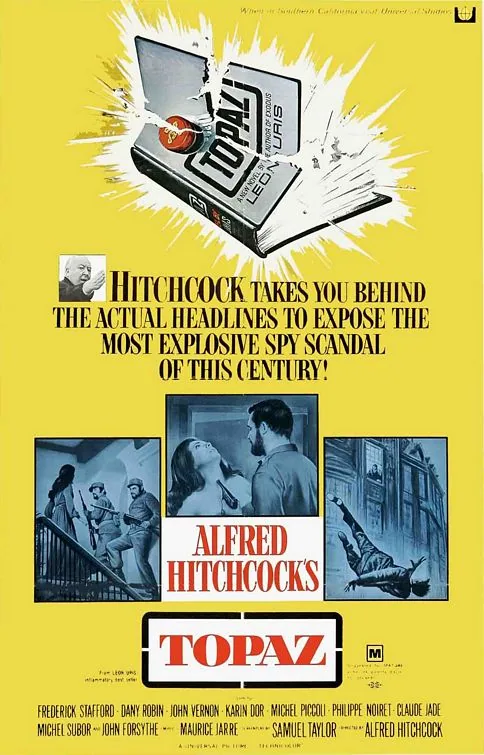
During the Cuban Missile Crisis, French intelligence officer André Devereaux is approached by a defecting Soviet agent and becomes involved in tracing a spy network linked to the crisis. His work takes him from Copenhagen toward Cuba and Washington, while his family and professional relationships are pulled into the consequences of intelligence gathering. An American agent helps direct the inquiry, but political alliances make information unreliable and turn exposure into a personal danger. Hitchcock frames espionage as a chain of compromised trust rather than a single hero’s technical mastery. Different intelligence services and unreliable contacts make the plot less a single spy hunt than a widening systems investigation.
Based on recorded story, mood and style. Your preferences can change the order.
Investigation · Escape and pursuit
What changes Torn Curtain: mission-driven and improvisational. RED 2: fast-moving and set-piece driven.
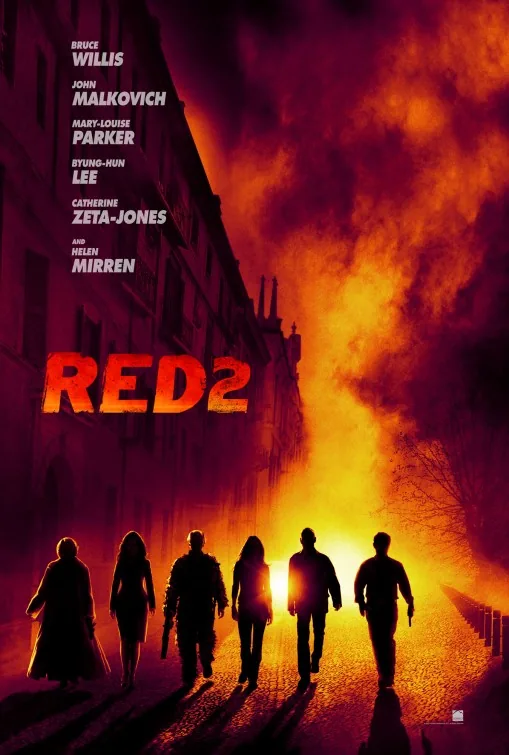
Retired operative Frank Moses is trying to maintain an ordinary relationship when a Cold War weapons secret makes him and his former associates international targets. His girlfriend joins the flight from competing intelligence agencies and assassins, discovering an enthusiasm for the danger he wants to manage. The mission mixes shifting allegiances, old professional grudges and romantic insecurity with a broadly comic ensemble of veteran spies.
Based on recorded story, mood and style. Your preferences can change the order.
Investigation
What changes Torn Curtain: mission-driven and improvisational. Official Secrets: press investigation, legal escalation and steady procedural tension.
In 2003, GCHQ translator Katharine Gun sees a request for intelligence that could help secure support for the invasion of Iraq. Believing the request is illegal and morally indefensible, she leaks a memo to the press, then faces arrest under Britain's Official Secrets Act. The film follows the effort to verify the story, the mounting pressure on Gun and her husband, and a legal case whose outcome depends on whether the government will disclose its own conduct.
Based on recorded story, mood and style. Your preferences can change the order.
Investigation · Escape and pursuit
What changes Torn Curtain: mission-driven and improvisational. Heart of Stone: fast-moving and set-piece driven.
Rachel Stone appears to be a technical specialist on an MI6 team, but she is secretly an operative for the Charter, a global organization that uses advanced intelligence to prevent catastrophic threats. When a hacker targets the Charter’s most powerful asset, Rachel must protect it while navigating betrayal within the mission. Tom Harper’s action thriller follows a globe-spanning spy operation with high-tech surveillance, shifting loyalties, and large stunt sequences, positioning Rachel as the person caught between human judgment and a system that can predict events at scale.
Based on recorded story, mood and style. Your preferences can change the order.
Investigation · Escape and pursuit
What changes Torn Curtain: mission-driven and improvisational. Jack Reacher: Never Go Back: fast and escalating.
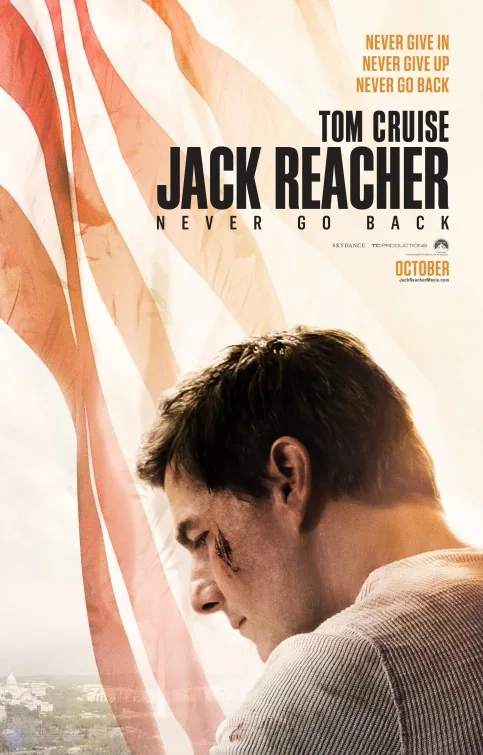
A former investigator returns to his old command and finds its current leader accused of espionage. Efforts to help expose a wider military contracting scheme and leave both of them framed, while a teenager who may be his daughter becomes another target. Flight requires the two experienced adults to negotiate authority rather than assume one can direct the other. The sequel adds provisional family responsibility to the familiar outsider pursuit, making protection difficult when the supposedly inexperienced person can also expose their blind spots.
Based on recorded story, mood and style. Your preferences can change the order.
Investigation · Escape and pursuit
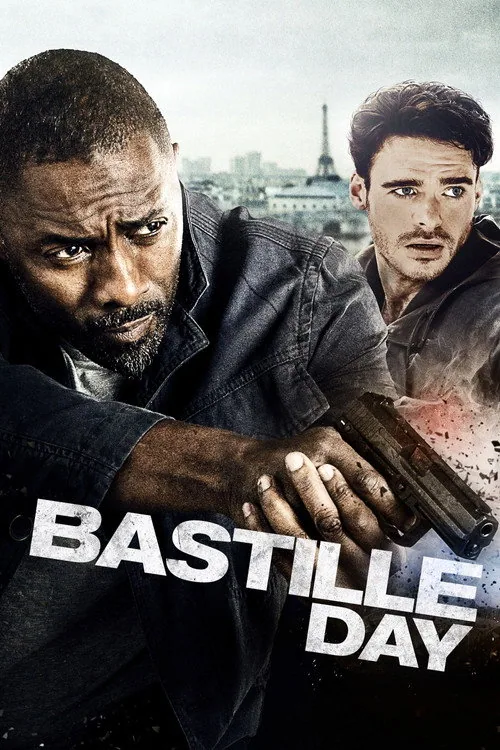
What changes Torn Curtain: mission-driven and improvisational. Bastille Day: bombing and capture, citywide investigation and chase-heavy action climax.
American pickpocket Michael Mason steals a bag in Paris without realizing it contains a bomb, then becomes the chief suspect after the device kills several people. CIA agent Sean Briar captures him, but evidence suggests that a corrupt police unit arranged the bombing to cover a bank robbery. Briar and Michael form an uneasy alliance and race through the city to expose the plot before the officers can carry out their next move. The action thriller pairs an impulsive thief with a rule-breaking agent in a compact conspiracy story.
Both centre on concealed identity and communication and trust.
Why this matches +
Genres: Action comedy / spy film
Shared film traits
Based on recorded story, mood and style. Your preferences can change the order.
Investigation · Espionage and covert operations
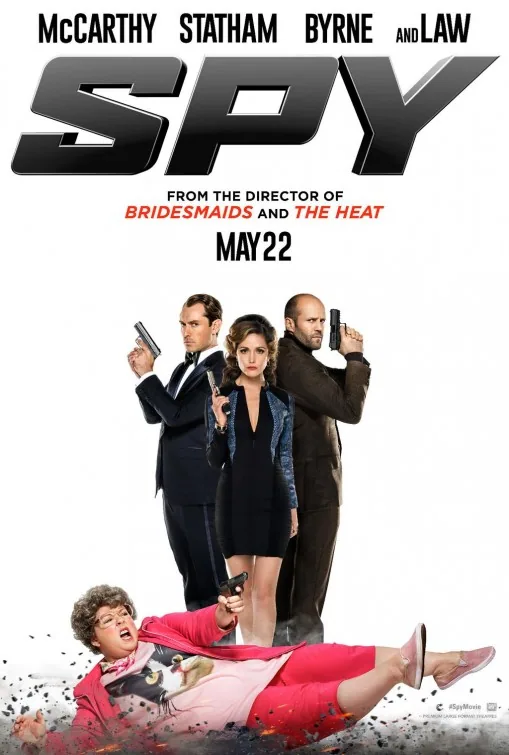
What changes Torn Curtain: mission-driven and improvisational. Spy: fast, episodic and action-comedy.
CIA analyst Susan Cooper works remotely with field agent Bradley Fine until a failed operation leaves the agency’s known operatives exposed. Because Rayna, the arms dealer’s daughter, does not know Susan’s identity, Susan volunteers to enter the field. Her first missions take her from Paris to Rome and Budapest, where she must pursue the threat while contending with rogue agent Rick Ford and her own inexperience. The operation’s danger is real, but the film treats status, spy gadgets and action-hero expectations as material for a broad comedy.
Based on recorded story, mood and style. Your preferences can change the order.
Investigation · Espionage and covert operations
What changes Torn Curtain: mission-driven and improvisational. Dr. No: steady.
An intelligence operative investigates the disappearance of a colleague in Jamaica and follows clues towards an isolated facility connected to interference with American rocket launches. Local assistance and attacks on the investigation reveal an opponent using commercial secrecy and technical resources to conceal a wider objective. Reaching the site requires dependence on companions whose exposure to danger exceeds the professional protections his role appears to promise.
Based on recorded story, mood and style. Your preferences can change the order.
Investigation
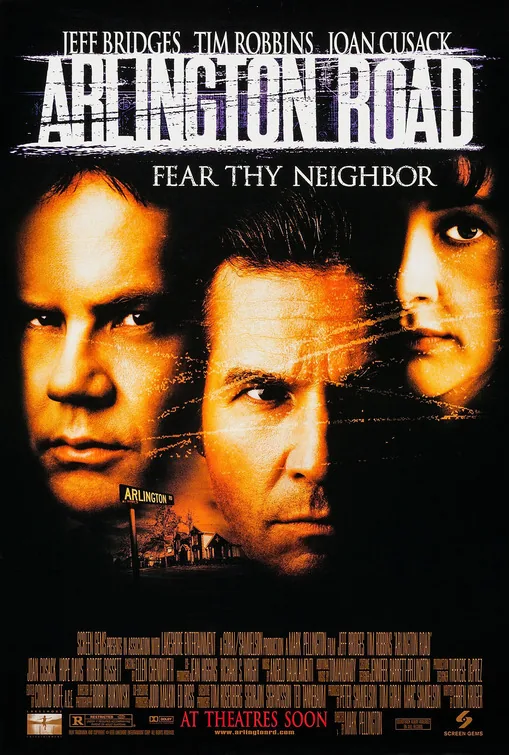
What changes Torn Curtain: mission-driven and improvisational. Arlington Road: slow-burn suspicion escalates into a conspiracy thriller.
After his wife dies in a violent incident, university professor Michael Faraday becomes convinced that his new neighbors are hiding a terrorist plan. As he gathers clues, his fear and personal grief make it harder to judge what is evidence and what is suspicion. The suburban conspiracy thriller uses ordinary neighborly contact and civic anxiety to build toward a final deception.
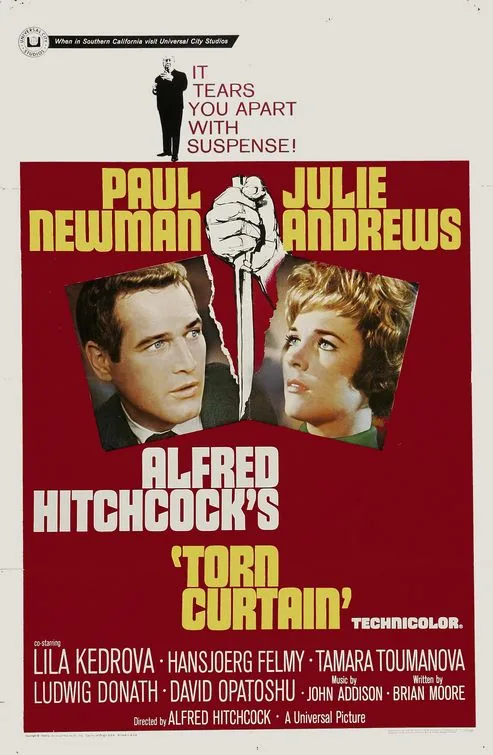
American physicist Michael Armstrong appears to defect to East Germany with his assistant and fiancée Sarah Sherman, but his real purpose is to reach a scientist who may help him solve a crucial technical problem. Once across the border, Michael has to keep his cover from the security services while Sarah discovers that she cannot treat his mission as a private professional decision. Their attempt to leave with the information turns espionage into a chain of hurried improvisations and mistrust. The film’s central suspense comes from how long a convincing lie can survive under scrutiny. Sarah’s decision to accompany Michael shifts from an act of loyalty into a question of whether either can trust the other’s account.
What drives the story
A physicist’s apparent defection is a cover for extracting information, but the deception pulls his partner into danger and forces constant improvisation.
The people at its centre
Michael treats Sarah’s involvement as manageable until her presence changes the mission; her anger makes the costs of secrecy explicit rather than decorative.
What it feels like
The film mixes travel suspense with a few unusually physical set pieces, including a prolonged struggle that refuses the elegance of routine spy combat.
Worth knowing
For viewers interested in a Cold War escape thriller about cover identities and a couple under pressure. It is more procedural and physically awkward than a suave action-spy adventure.