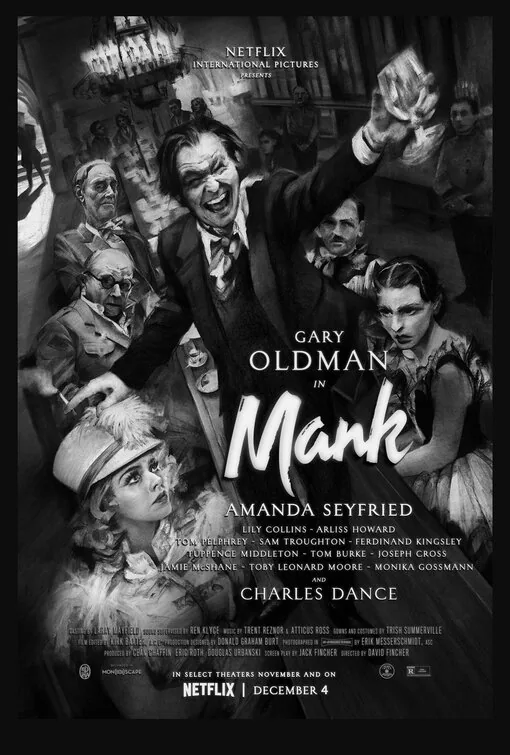
A screenwriter works through illness and deadlines on the script that will become Citizen Kane.
Why this matches +
Related viewing experiences with the specific differences recorded for each pair.
An adjacent discovery: a related idea with a different viewing experience.
Genres: Drama / Biography
Shared film traits
Based on recorded story, mood and style. Your preferences can change the order.
Memory and identity
What changes Mank follows a writer whose creative work depends on powerful figures in American industry, focusing on Hollywood screenwriting rather than a refugee architect's monument.
Screenwriter Herman J. Mankiewicz works on the screenplay that will become Citizen Kane while recovering at a secluded ranch. Flashbacks follow his encounters with Hollywood power brokers, political campaigning, and the film industry's social circles as he develops a story shaped by personal observation. David Fincher's black-and-white drama explores creative credit and influence through a stylized portrait of a writer navigating a system that rewards access while contesting who authored a celebrated film.
Maria’s efforts to survive become increasingly entangled with the economic recovery around her, so success carries both agency and moral cost.
Why this matches +
Related viewing experiences with the specific differences recorded for each pair.
An adjacent discovery: a related idea with a different viewing experience.
Genres: Drama / Art
Shared film traits
Based on recorded story, mood and style. Your preferences can change the order.
War and civilian life
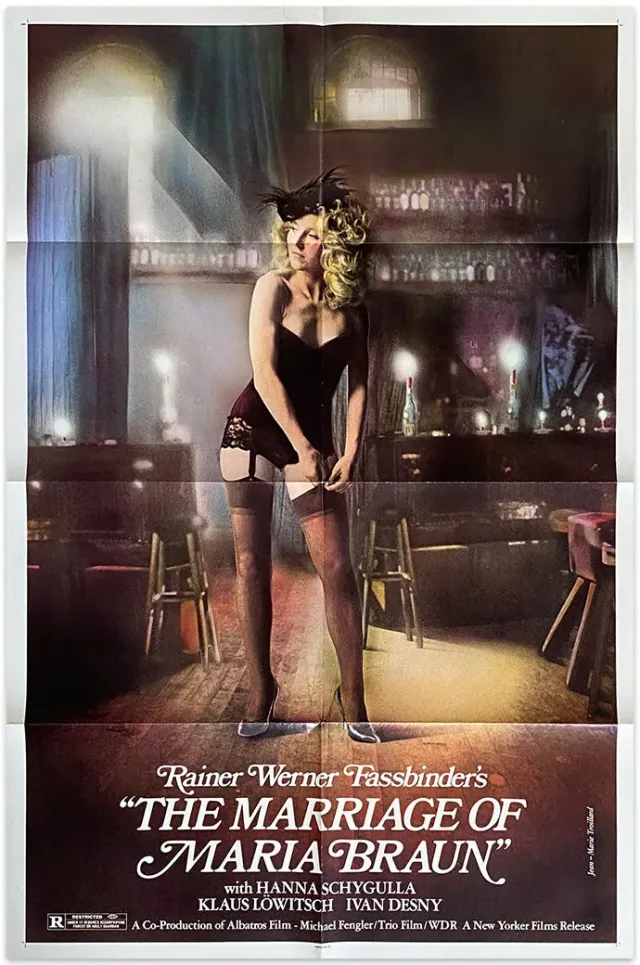
What changes The Marriage of Maria Braun follows a survivor rebuilding a life through postwar economic opportunity and unequal relationships, set in Germany rather than an immigrant architect's America.
Maria Berger marries Hermann Braun during a wartime air raid, then loses him to the front and the uncertainty of Germany’s defeat. Believing him dead, she finds work in the unstable postwar economy and uses her intelligence and charm to secure a future for herself and her family. A relationship with American soldier Bill brings affection as well as practical support, while Maria continues to hold onto the idea of Hermann. As she rises from precarious survival into financial success, the film links her private compromises to a country rebuilding itself and postponing its reckoning with the past.
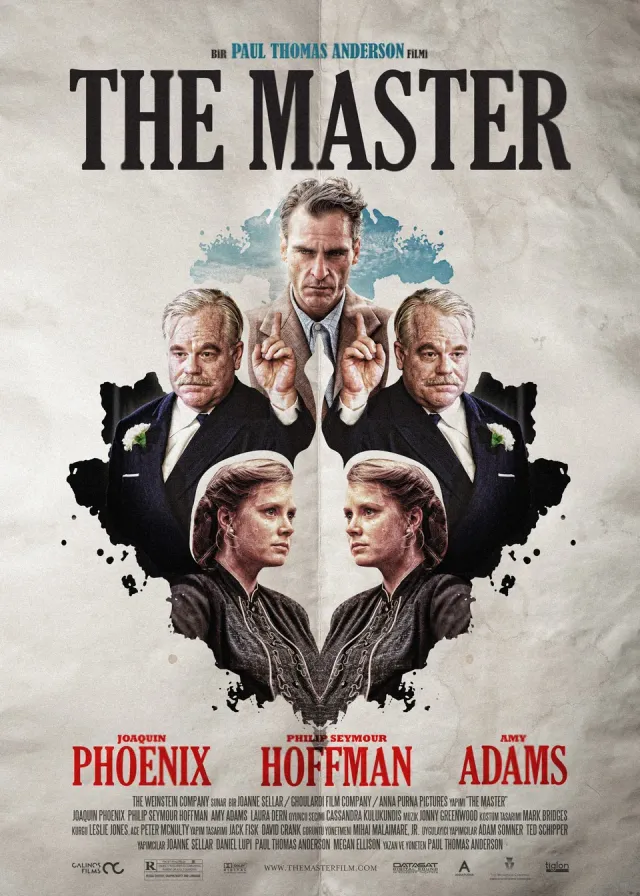
A restless veteran enters the orbit of a movement leader whose confidence both attracts and confines him.
Why this matches +
Related viewing experiences with the specific differences recorded for each pair.
An adjacent discovery: a related idea with a different viewing experience.
Genres: Drama
Shared film traits
Based on recorded story, mood and style. Your preferences can change the order.
Memory and identity
What changes A psychologically damaged postwar outsider enters an unequal relationship with a charismatic American authority figure; its volatile mentor-follower bond replaces immigrant architectural labor, patronage and a decades-spanning family history.
After World War II, troubled sailor Freddie Quell drifts through jobs and encounters Lancaster Dodd, the charismatic leader of a movement called The Cause. Dodd draws Freddie into its community and methods of self-examination, but Freddie's resistance and volatility unsettle the group's claims to authority. Paul Thomas Anderson's drama studies power, belief and the uneasy bond between a volatile follower and an assured guide.
A resource entrepreneur and a religious performer compete for authority over the same community, converting practical bargains into escalating struggles for humiliation and dominance.
Why this matches +
Related viewing experiences with the specific differences recorded for each pair.
An adjacent discovery: a related idea with a different viewing experience.
Genres: Drama / Thriller
Shared film traits
Based on recorded story, mood and style. Your preferences can change the order.
What changes An expansive American period drama stages wealth, domination and monumental ambition through a volatile male relationship; it follows the industrialist rather than an immigrant artist dependent on a patron.
An independent prospector builds an oil business through dangerous labour and a public image of familial reliability. Acquiring drilling rights in a small community puts him into conflict with a young preacher who also recognises the value of controlling access and public belief. As wealth expands, distrust and contempt corrode the relationship used to humanise his enterprise, making commercial victory increasingly indistinguishable from emotional isolation.
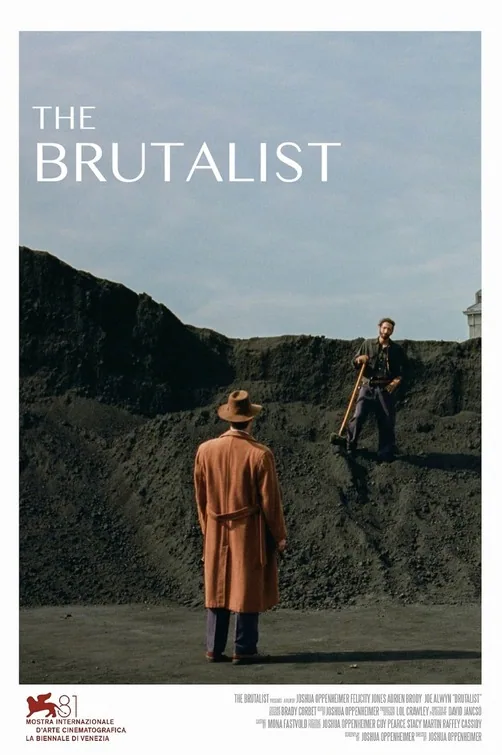
Hungarian-Jewish architect László Tóth reaches the United States after the Holocaust, separated from his wife Erzsébet and niece Zsófia. In Pennsylvania, a commission from wealthy industrialist Harrison Lee Van Buren brings his modernist work to public attention, but the patron's money and influence shape the project as much as László's design. His reunion with family and his dependence on Van Buren complicate the promise of a new life. The film follows decades of artistic labor, migration and power, asking who controls a monument and whose story it preserves.
What drives the story
László's commission offers a route back to architectural work, but the patron's control over funding and access makes recognition inseparable from dependence.
The people at its centre
László and Erzsébet pursue survival and reunion under different constraints; Van Buren's patronage shifts between opportunity and a claim on the architect's labor.
What it feels like
A long, chaptered period drama combines austere architectural images with an intermission, making duration and scale part of its account of ambition.
Worth knowing
A fit for an epic about migration, art and patronage, but László is fictional; the film should not be treated as a factual biography of a particular Bauhaus architect.
AmbitionExileArtistic authorship
Mood
Austere · Ambitious · Bleak
Pacing
Long-form chapter structure · Patient escalation
Visual style
Monumental architecture · Wide compositions · Period design