Both share rescue mission, plus a romantic and playful atmosphere.
Why this matches +
Genres: Action / Comedy
Shared film traits
Based on recorded story, mood and style. Your preferences can change the order.
Escape and pursuit
What changes The Castle of Cagliostro: kinetic, set-piece driven, escalating and light-footed. Shanghai Noon: brisk, journey-based and comic.
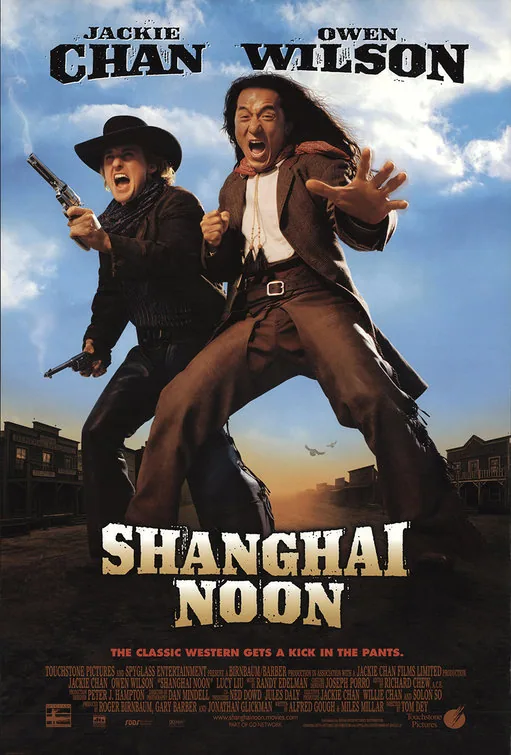
Chinese Imperial Guard Chon Wang travels to Nevada when Princess Pei-Pei is kidnapped from the Forbidden City, and ends up partnering with outlaw Roy O’Bannon after a train robbery goes wrong. Pei-Pei initially believes she has escaped an arranged marriage, then learns that rebel Lo Fong has used her flight to secure a ransom. Wang and Roy follow her trail through frontier towns while Roy teaches him cowboy habits and Wang’s martial-arts skill repeatedly overturns their plans. A parallel relationship with Falling Leaves makes Wang question his assumptions about belonging and romance.
Both share themes of freedom and ingenuity, plus a playful atmosphere.
Why this matches +
Genres: Action / Comedy
Shared film traits
Based on recorded story, mood and style. Your preferences can change the order.
Escape and pursuit
What changes The Castle of Cagliostro: kinetic, set-piece driven, escalating and light-footed. Hudson Hawk: episodic caper with broad reversals.
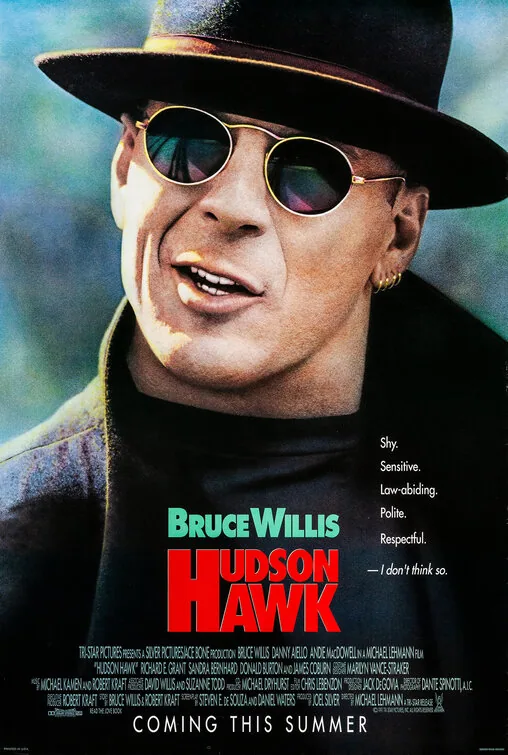
Recently released thief Eddie Hawkins is pulled into an elaborate scheme involving priceless Renaissance inventions and wealthy conspirators. To carry out a sequence of robberies, he and his partner Tommy time their break-ins by singing popular songs, while trying to understand who is manipulating them. The caper grows into a cartoonish collision of art theft, secret plans and slapstick danger.
Based on recorded story, mood and style. Your preferences can change the order.
Investigation
Expect playful and absurd, with brisk and escalating pacing.
A disgraced spy returns from a period of retreat when an assassination plot appears connected to the mission that ruined him. Recovering his memory and locating three parts of a weapon require cooperation with a junior agent whose warnings he is too ready to dismiss. Trusted colleagues and recurring mistaken identities make institutional familiarity a poor guide to safety. The sequel adds fragments of genuine discipline to its hero's comic vanity, turning redemption into a struggle to distinguish a flattering ally from a useful subordinate.
Both share themes of freedom, plus a romantic atmosphere.
Why this matches +
Genres: Comedy / Crime
Shared film traits
Based on recorded story, mood and style. Your preferences can change the order.
Escape and pursuit
What changes The Castle of Cagliostro: kinetic, set-piece driven, escalating and light-footed. Bandits: episodic and character-led.
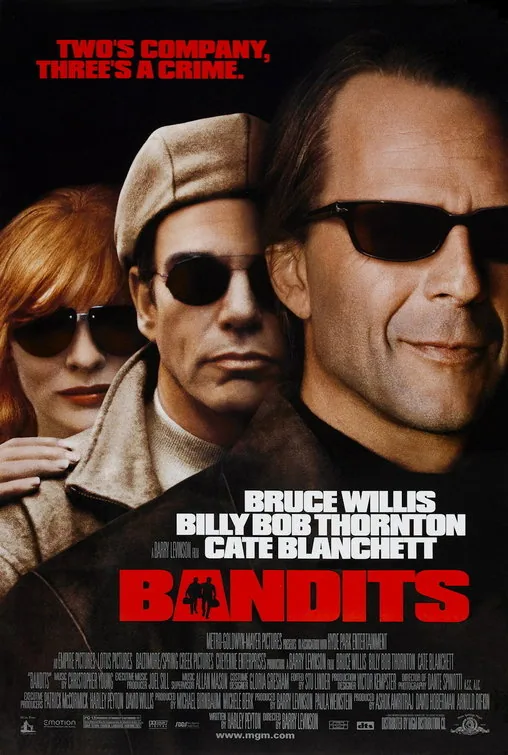
Two escaped convicts become unlikely bank robbers, using a hostage-friendly approach that makes them folk heroes and draws the police into pursuit. Their partnership changes when a restless woman joins them and both men begin to care for her. The film mixes criminal escapades with romantic uncertainty, asking whether the trio can maintain its unconventional freedom once affection, jealousy and public attention alter the terms of their arrangement.
Based on recorded story, mood and style. Your preferences can change the order.
Escape and pursuit
What changes The Castle of Cagliostro: kinetic, set-piece driven, escalating and light-footed. After the Sunset: easygoing and caper rhythm.
A master jewel thief appears to have retired to a tropical island with his partner, but an FBI agent remains convinced that he is planning one last theft. Their cat-and-mouse contest grows more complicated when a valuable diamond and new visitors disrupt the supposed quiet. The light caper leans on flirtation and bluffing, treating professional rivalry as a game where the characters enjoy one another’s company almost as much as the score.
Based on recorded story, mood and style. Your preferences can change the order.
Power and authority · Investigation
Expect playful and absurd, with episodic and brisk pacing.
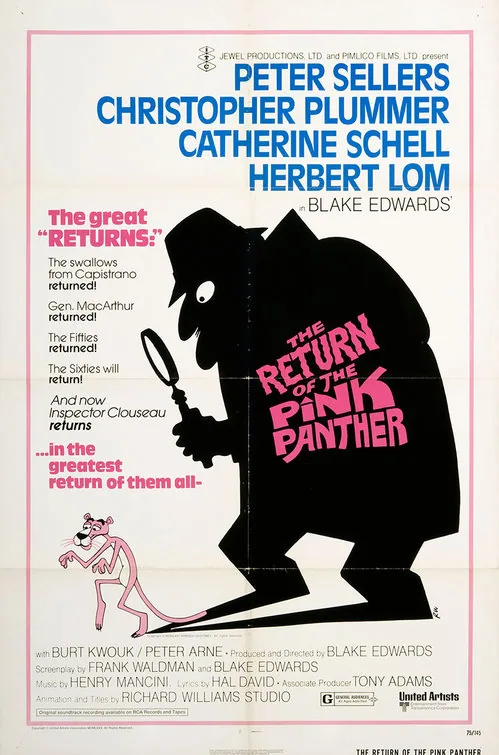
When the Pink Panther diamond is stolen from the fictional nation of Lugash, clumsy Inspector Jacques Clouseau is recalled to investigate. A glove left at the museum points suspicion toward jewel thief Sir Charles Litton, but the evidence may have been planted. Clouseau’s disastrous surveillance, Dreyfus’s growing hatred and Litton’s efforts to clear his name keep the case moving through a chain of farcical misunderstandings.
Based on recorded story, mood and style. Your preferences can change the order.
Power and authority · Family and care
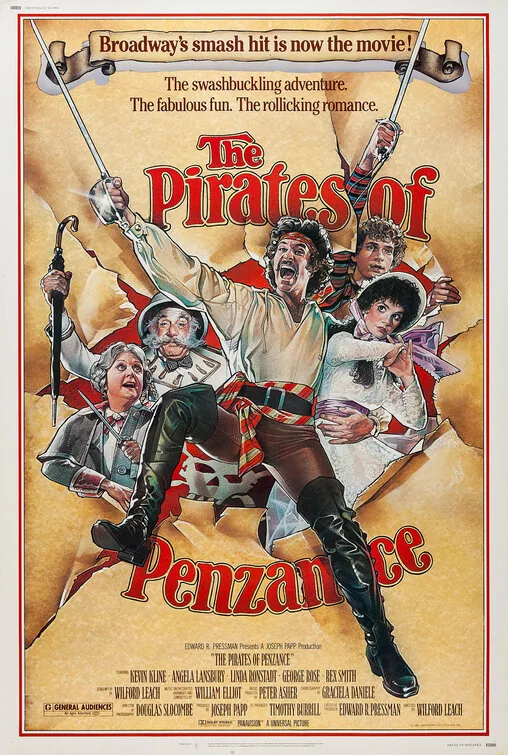
What changes The Castle of Cagliostro: kinetic, set-piece driven, escalating and light-footed. The Pirates of Penzance: song-driven, episodic, escalating reversals and celebratory finale.
Frederic reaches adulthood believing his apprenticeship to the Pirate King is finally over, only to learn that the nursemaid who placed him there misheard her instructions. Eager to leave piracy and live honestly, he meets Mabel, one of Major-General Stanley’s daughters, and falls in love. The Pirate King’s crew returns to claim the young women, while Stanley attempts to protect his family with a lie that plays on the pirates’ own code. Frederic recruits the local constabulary, but the contract’s leap-year clause threatens to keep him bound to his former companions for decades. The operetta’s romantic complications and legal absurdity eventually bring pirates, police and family into a comic confrontation.
Based on recorded story, mood and style. Your preferences can change the order.
Escape and pursuit · Investigation
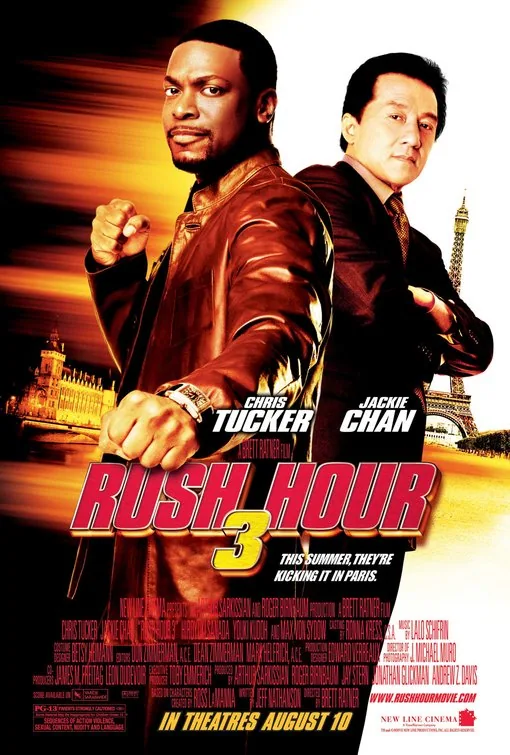
Expect kinetic and playful, with rapid and escalating pacing.
When an assassin shoots Chinese ambassador Han during a Los Angeles address about the Triads, Chief Inspector Lee chases the gunman and discovers it is Kenji, his foster brother. Lee’s hesitation gives Kenji time to escape and makes the case an intimate conflict, while Carter is pulled back from traffic duty to help. Their search for the identity of Shy Shen leads through Paris, where singer Geneviève becomes both a target and the key to the conspiracy. The partners’ loyalty is tested by blood ties, professional duty and the film’s deliberately absurd international detours.
Both share themes of freedom, plus a playful atmosphere.
Why this matches +
Genres: Crime / Comedy
Shared film traits
Based on recorded story, mood and style. Your preferences can change the order.
Escape and pursuit
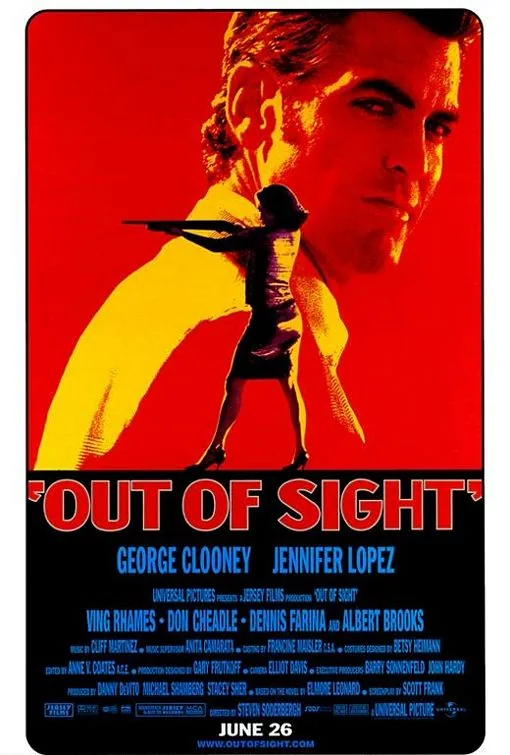
What changes The Castle of Cagliostro: kinetic, set-piece driven, escalating and light-footed. Out of Sight: nonlinear and dialogue-led.
Bank robber Jack Foley escapes from a Florida prison and crosses paths with U.S. Marshal Karen Sisco during the getaway. Their mutual attraction persists even as Karen pursues Jack and he plans another robbery with his partners. The crime story moves between flirtation, professional duty and shifting alliances, using a cool, nonlinear rhythm to make each encounter feel like both a negotiation and a possible betrayal.
After a casino robbery yields counterfeit bills, master thief Lupin III and his partner Jigen travel to the small European state of Cagliostro to find their source. They cross paths with Clarisse, a princess escaping an unwanted marriage to the country’s powerful Count, and become entangled in the castle’s secrets. Lupin’s old acquaintance Fujiko works her own angle, while Inspector Zenigata continues his pursuit. The adventure turns into a rescue caper through hidden passages, guarded towers, and clockwork mechanisms, with Lupin’s plans depending as much on improvisation as on his skill as a thief.
What drives the story
A counterfeit-money clue pulls Lupin from a routine heist into a rescue plot involving a princess, a corrupt ruler, and a hidden estate.
The people at its centre
Lupin, Jigen, Fujiko, and Zenigata each bring different motives, so alliances remain lively and provisional even when they share a target.
What it feels like
The animation favors readable movement and inventive geography, turning the castle, its mechanisms, and its approaches into part of the caper.
Worth knowing
This is an animated Lupin adventure with a fairy-tale rescue shape and comic action, not a solemn historical account of European politics.