A dictator’s death turns terrified officials’ jostling for survival and authority into a fast, vicious ensemble farce whose jokes never erase state violence.
What should feel similar?
Find your next favourite
4 films · Closest overall matches
Hide films you’ve seen or don’t want. Saved on this device.
No matches for this combination yet.
Try another option or reset your choices to see more films.
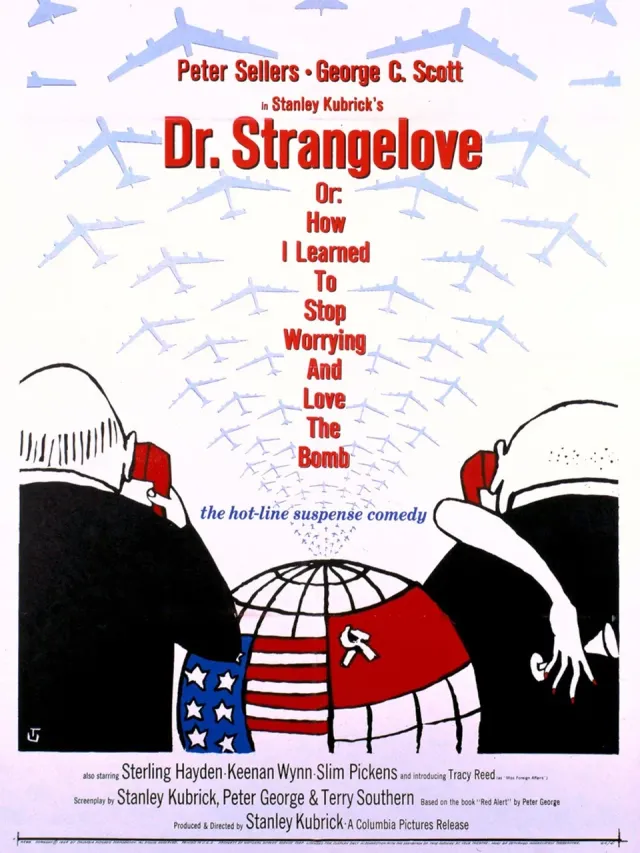
A unilateral order activates a security system whose own rules repeatedly obstruct attempts to undo an irreversible escalation.
Why this matches +
Selected for the central appeal: A dictator’s death turns terrified officials’ jostling for survival and authority into a fast, vicious ensemble farce whose jokes never erase state violence.
Genres: Comedy / War
Shared film traits
Based on recorded story, mood and style. Your preferences can change the order.
What changes Senior officials make frantic, absurd calculations inside rooms of power while institutional procedure turns their rivalry and incompetence toward catastrophe. Its nuclear-war emergency is fictional and more openly apocalyptic than a struggle to inherit an existing dictatorship.
An American military commander initiates a nuclear attack through a system designed to preserve retaliation even when ordinary leadership is unavailable. Officials attempting to recall the aircraft discover that procedural safeguards and political pride can make stopping catastrophe harder than starting it. Simultaneous efforts in a command room, an airbase and a bomber expose a logic in which individuals behave purposefully while the organisation of their purposes moves towards collective annihilation.
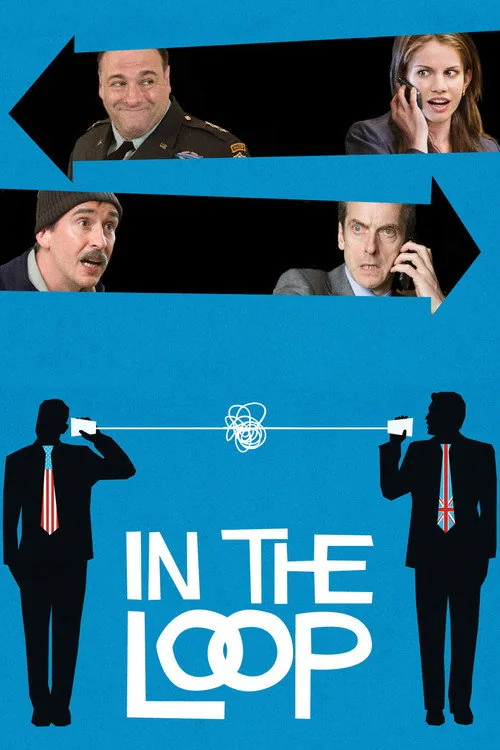
A minister's careless phrase draws him into a transatlantic policy debate whose participants try to control how war is described.
Why this matches +
Selected for the central appeal: A dictator’s death turns terrified officials’ jostling for survival and authority into a fast, vicious ensemble farce whose jokes never erase state violence.
Genres: Comedy / Dark comedy
Shared film traits
Based on recorded story, mood and style. Your preferences can change the order.
What changes An ensemble of officials and aides use furious language, shifting alliances and bureaucratic maneuvering to pursue power as decisions carry grave consequences. Its invented British and American war-policy crisis replaces a historical Soviet succession and the immediate machinery of purges.
After a British minister casually describes a possible war as unforeseeable, his remark is seized on by political aides in London and Washington as policy begins drifting toward military intervention. The minister, his advisers, and a furious communications director are pulled into meetings where every phrase can be spun into support or resistance. Armando Iannucci's ensemble satire follows the bureaucratic scramble behind public decisions, using rapid insults and conflicting agendas to show how momentum can outpace judgment. Its comedy targets the machinery and language of government rather than the battlefield.
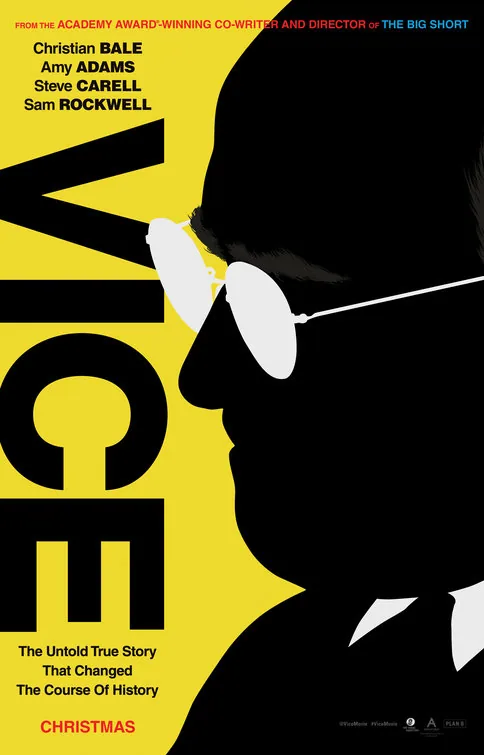
A political biography tracks Cheney's path into the vice presidency and the expansion of executive authority.
Why this matches +
Related viewing experiences with the specific differences recorded for each pair.
An adjacent discovery: a related idea with a different viewing experience.
Genres: Drama / Comedy
Shared film traits
Based on recorded story, mood and style. Your preferences can change the order.
What changes Political ambition and institutional maneuvering are satirized through real figures whose decisions exert power over others. A decades-long American biographical essay with narration and formal asides replaces a compressed ensemble scramble for succession.
Dick Cheney moves from a troubled early adulthood into a career of political influence, working through presidential administrations and eventually becoming vice president under George W. Bush. The film follows his rise alongside the expansion of executive power and decisions surrounding the Iraq War. Its satirical narration and formal tricks interrupt the biography to question how ambition, institutional systems and public fear can change a government.
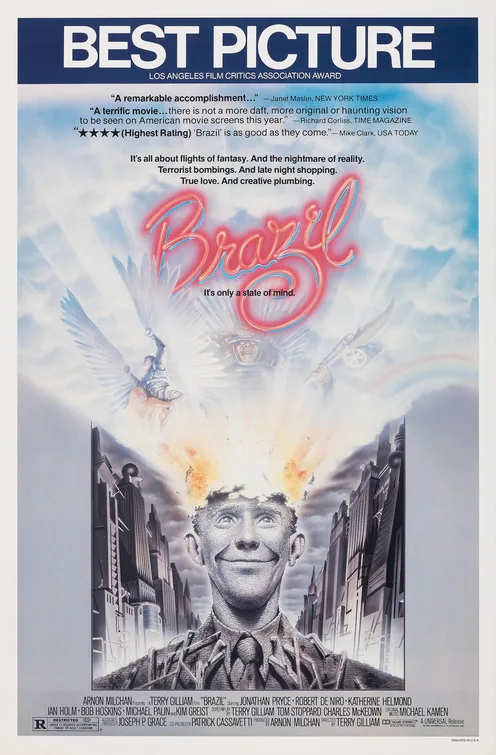
An office worker's attempt to correct a bureaucratic injustice makes him increasingly vulnerable to the system he serves.
Why this matches +
Related viewing experiences with the specific differences recorded for each pair.
An adjacent discovery: a related idea with a different viewing experience.
Genres: Science fiction / Drama
Shared film traits
Based on recorded story, mood and style. Your preferences can change the order.
What changes Absurd bureaucracy and casual official cruelty coexist in an oppressive system where people protect themselves through institutional routines. A low-ranking clerk’s surreal escape fantasy replaces the leaders’ historically grounded succession struggle.
A low-ranking bureaucrat escapes a suffocating state through elaborate fantasies, until an administrative error draws him into the machinery of detention and interrogation. His search for a woman resembling his dream companion places romantic longing against an institution that treats responsibility as a paperwork problem. Absurd inventions, domestic vanity and casual official cruelty turn a personal escape story into a nightmare of organised incompetence.
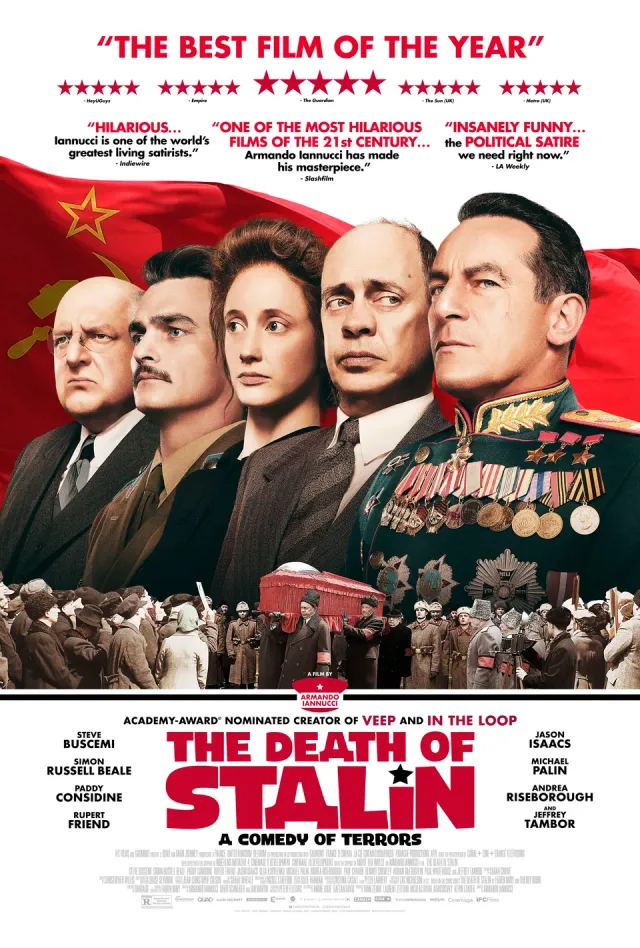
Joseph Stalin’s death in 1953 opens a struggle among the Soviet leaders who had served his regime. Lavrentiy Beria uses the security apparatus, Nikita Khrushchev builds support among colleagues, and Georgy Malenkov is named head of government as officials compete to control the party and state. Public mourning, arrests and displays of loyalty reveal a system built on fear. The film compresses events that unfolded over months into a brisk ensemble farce, inventing and rearranging scenes for comic effect. It uses historical figures to satirize the absurdity and brutality of authoritarian power, but its rapid succession plot is not a literal chronology of the succession crisis.
What drives the story
Stalin’s death leaves control of the police, party and public mourning contested. The film compresses months of political maneuvering into a farcical sprint, so its reversals serve comic timing rather than a reliable event-by-event chronology.
The people at its centre
Beria's coercive confidence and Khrushchev's tactical humor create opposing styles of political survival, while the others shift between fear and opportunism.
What it feels like
Rapid dialogue, abrupt violence and absurd ceremony make bureaucracy feel like a farce with lethal consequences.
Worth knowing
Choose it for dark political satire about a lethal power vacuum, not as a history lesson on the 1953 succession. The characters are historical figures, but dialogue, timing and many incidents are deliberately invented or rearranged.
PowerCrueltyHypocrisy
Mood
Satirical · Absurd · Uneasy
Pacing
Ensemble farce · Rapid reversals
Visual style
Claustrophobic period interiors · Dark comic staging · Historical satire
Storytelling
Leadership succession · Political purges · Bureaucratic scheming