Stalin’s death leaves control of the police, party and public mourning contested. The film compresses months of political maneuvering into a farcical sprint, so its reversals serve comic timing rather than a reliable event-by-event chronology.
Why this matches +
These offer a related experience with a meaningful difference in story, tone, or presentation.
An adjacent discovery: a related idea with a different viewing experience.
Genres: Drama / Comedy
Shared film traits
Based on recorded story, mood and style. Your preferences can change the order.
What changes Political insiders compete for influence through darkly comic portrayals of hierarchy, fear and state machinery; Soviet leadership after Stalin's death.
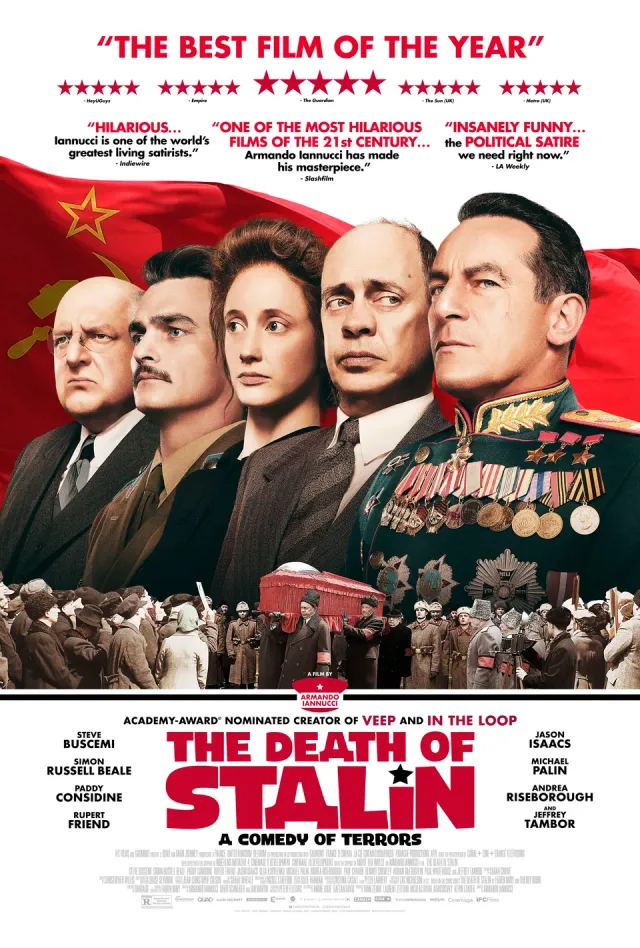
Joseph Stalin’s death in 1953 opens a struggle among the Soviet leaders who had served his regime. Lavrentiy Beria uses the security apparatus, Nikita Khrushchev builds support among colleagues, and Georgy Malenkov is named head of government as officials compete to control the party and state. Public mourning, arrests and displays of loyalty reveal a system built on fear. The film compresses events that unfolded over months into a brisk ensemble farce, inventing and rearranging scenes for comic effect. It uses historical figures to satirize the absurdity and brutality of authoritarian power, but its rapid succession plot is not a literal chronology of the succession crisis.
Bush's personal and political history unfolds through formative failures, family pressure, electoral success, and arguments over Iraq.
Why this matches +
These offer a related experience with a meaningful difference in story, tone, or presentation.
An adjacent discovery: a related idea with a different viewing experience.
Genres: Biography / Comedy
Shared film traits
Based on recorded story, mood and style. Your preferences can change the order.
Political resistance · War and civilian life
What changes A U.S. president's rise and administration are dramatized with attention to family, advisers and the Iraq War; George W. Bush rather than his vice president.
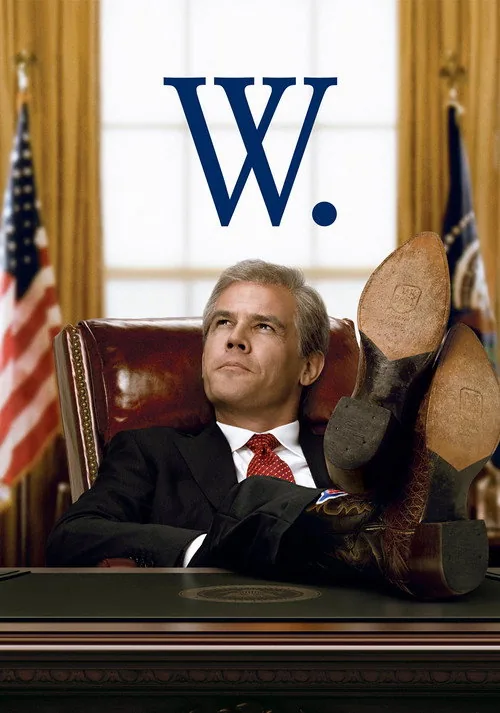
Oliver Stone's biographical drama follows George W. Bush from his restless student and young-adult years through his family relationships, political rise, presidency, and the decision to invade Iraq. The film moves among periods rather than offering a single continuous campaign, using conversations with advisers and family to portray a leader shaped by ambition, rivalry, faith, and the burden of his father's legacy. Its satirical tone makes political history personal, asking how private insecurity and public power meet inside decisions with global consequences.
A minister's careless phrase draws him into a transatlantic policy debate whose participants try to control how war is described.
Why this matches +
These offer a related experience with a meaningful difference in story, tone, or presentation.
An adjacent discovery: a related idea with a different viewing experience.
Genres: Comedy / Dark comedy
Shared film traits
Based on recorded story, mood and style. Your preferences can change the order.
What changes Officials use bureaucratic maneuvering and calculated language to steer a government toward war, exposing the absurdity of institutional power; a fictional British-American satire.
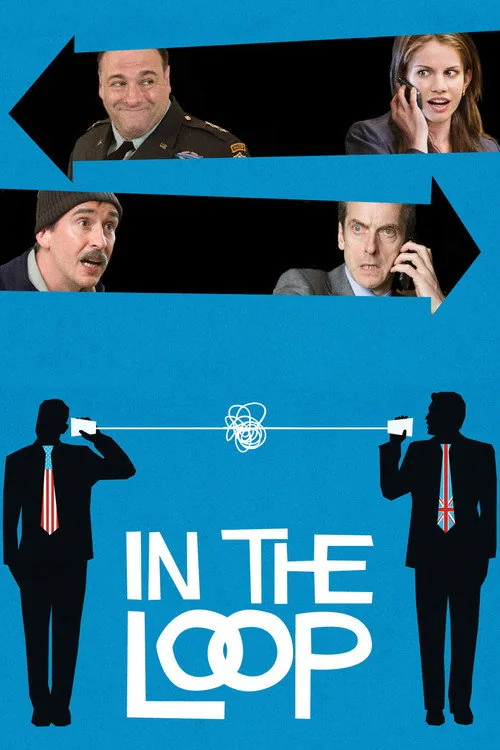
After a British minister casually describes a possible war as unforeseeable, his remark is seized on by political aides in London and Washington as policy begins drifting toward military intervention. The minister, his advisers, and a furious communications director are pulled into meetings where every phrase can be spun into support or resistance. Armando Iannucci's ensemble satire follows the bureaucratic scramble behind public decisions, using rapid insults and conflicting agendas to show how momentum can outpace judgment. Its comedy targets the machinery and language of government rather than the battlefield.
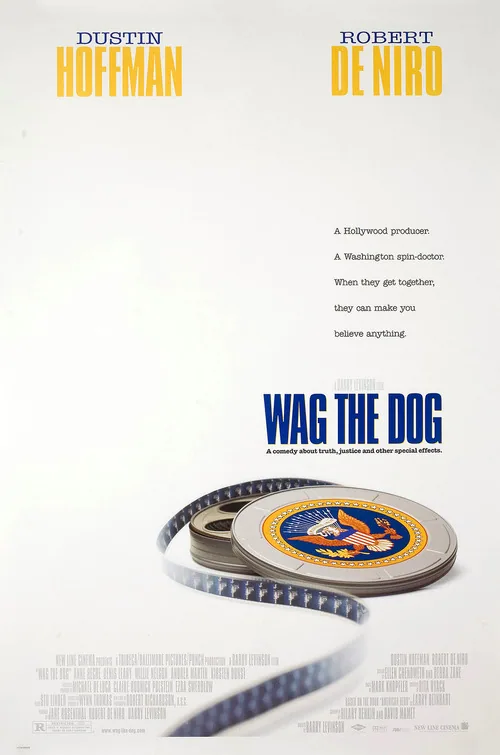
A political crisis becomes a media production in which a fictional war is assembled from repeatable images and a marketable narrative.
Why this matches +
These offer a related experience with a meaningful difference in story, tone, or presentation.
An adjacent discovery: a related idea with a different viewing experience.
Genres: Drama / Comedy
Shared film traits
Based on recorded story, mood and style. Your preferences can change the order.
What changes Political operatives manipulate public fear and media narratives to serve those in power; a fabricated foreign conflict.
With a presidential sex scandal threatening an election, political consultant Conrad Brean hires Hollywood producer Stanley Motss to invent a distant war that can redirect the news. Motss treats the crisis as a production problem, assembling images, slogans, music and a fictional hero with the same craft he would use for a movie. Brean manages government messaging while the fabricated conflict begins to acquire an independent life in the media. The film’s comedy comes from watching public belief depend on the details of a story that exists mainly because two professionals know how to stage it. As the campaign grows, it becomes less controllable, even for the people who made it. The satire targets both political spin and entertainment’s ability to make images feel like evidence.
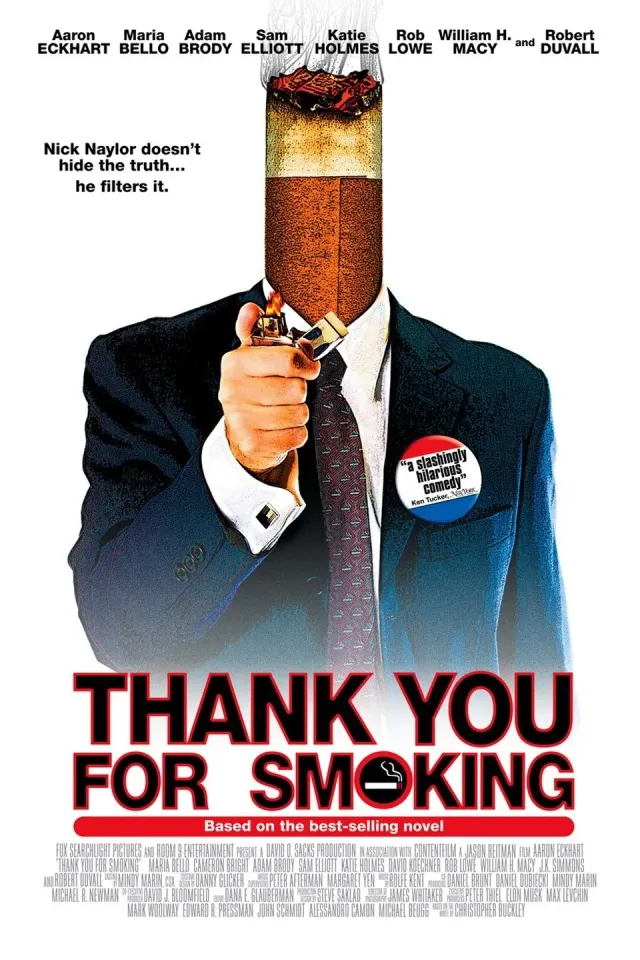
Nick’s public defense of tobacco makes persuasion visible as both professional skill and moral evasion.
Why this matches +
These offer a related experience with a meaningful difference in story, tone, or presentation.
An adjacent discovery: a related idea with a different viewing experience.
Genres: Drama / Comedy
Shared film traits
Based on recorded story, mood and style. Your preferences can change the order.
Political resistance
What changes A gifted advocate uses rhetorical skill and institutional access to shape public understanding of a harmful policy; tobacco-industry lobbying.
A skilled lobbyist for the tobacco industry travels the talk-show and debate circuit, turning arguments about smoking into an opportunity to display verbal dexterity. His work becomes harder to keep separate from family life when his young son watches how he persuades people. The satire makes rhetoric its main action, examining how a talented advocate can defend an indefensible product while sincerely believing that argument itself is a kind of freedom.
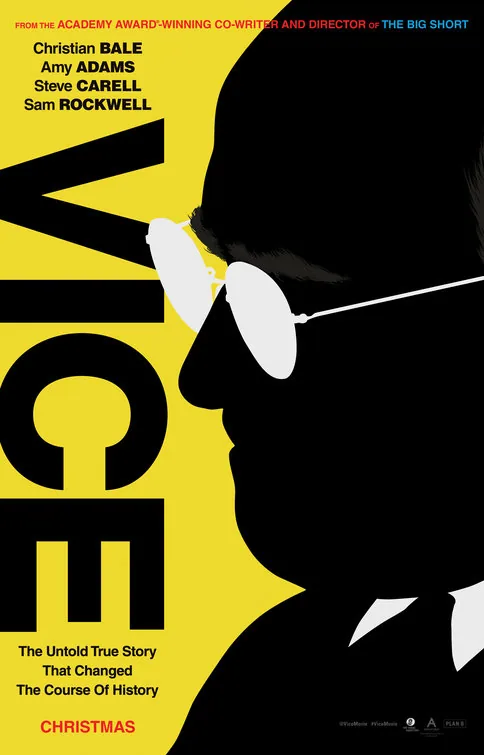
Dick Cheney moves from a troubled early adulthood into a career of political influence, working through presidential administrations and eventually becoming vice president under George W. Bush. The film follows his rise alongside the expansion of executive power and decisions surrounding the Iraq War. Its satirical narration and formal tricks interrupt the biography to question how ambition, institutional systems and public fear can change a government.
What drives the story
A political biography tracks Cheney's path into the vice presidency and the expansion of executive authority.
The people at its centre
His personal ambition operates through institutions that can magnify individual choices into national consequences.
What it feels like
Satirical interludes and direct formal disruptions make the film's interpretation visible rather than neutral.
Worth knowing
It focuses on one administration's power and political decisions, not a conventional campaign biography.
PowerAmbitionAccountability
Mood
Satirical · Provocative · Uneasy
Pacing
Nonlinear · Essay-like
Visual style
Archival montage · Stylized transitions · Period recreation
Storytelling
Political ascent · Executive influence · Government decisions