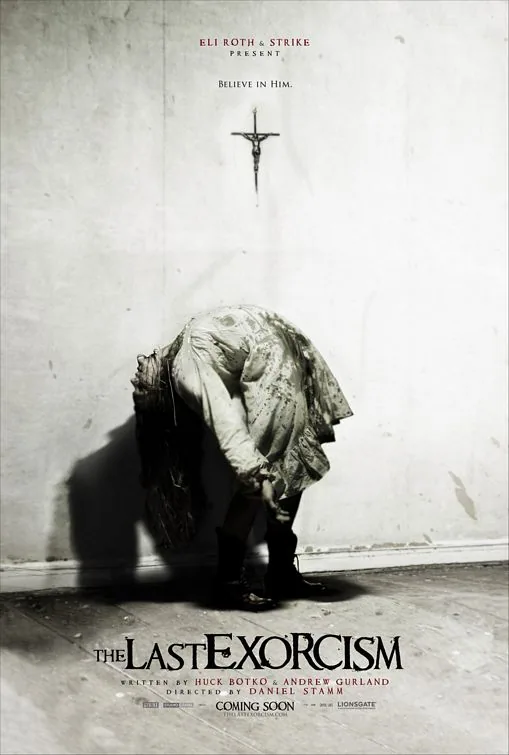
Cotton’s stated mission to expose fraud shapes how he interprets each disturbing event.
Why this matches +
Selected for the central appeal: A woman films an investigation into her mother's exorcism and violent history.
Genres: Horror / Thriller
Shared film traits
Based on recorded story, mood and style. Your preferences can change the order.
Investigation · Survival
What changes A documentary crew records an exorcism investigation in which a minister's explanations become uncertain as events escalate.
Reverend Cotton Marcus, a disillusioned minister who has staged fraudulent exorcisms, invites a documentary crew to record what he presents as one final exposure of the practice. At a Louisiana farm, the family’s request concerning their daughter Nell unsettles his skeptical explanations. The found-footage horror shifts from a debunking project toward uncertainty, testing the distance between performance, belief and what the camera can establish.
A Vatican priest investigating a boy's possession uncovers a secret beneath an abandoned abbey.
Why this matches +
These offer a related experience with a meaningful difference in story, tone, or presentation.
An adjacent discovery: a related idea with a different viewing experience.
Genres: Horror / Thriller
Shared film traits
Based on recorded story, mood and style. Your preferences can change the order.
Investigation
What changes A priest investigates possession through interviews and religious rituals while confronting an unsettling family history.
Vatican exorcist Father Gabriele Amorth is sent to investigate a boy's possession at an isolated Spanish abbey, where the case opens onto a buried history connected to the church. As Amorth works with the boy's mother and another priest, the story links a personal rescue to institutional secrecy. Julius Avery's supernatural horror film combines possession conventions with a detective-like inquiry and a charismatic clerical protagonist.
The prosecution and defense reconstruct the ritual through witnesses, allowing the trial to function as an investigation into responsibility and belief.
Why this matches +
These offer a related experience with a meaningful difference in story, tone, or presentation.
An adjacent discovery: a related idea with a different viewing experience.
Genres: Crime / Drama
Shared film traits
Based on recorded story, mood and style. Your preferences can change the order.
Investigation
What changes A young woman's apparent possession and a priest's intervention become subjects of competing claims about faith and evidence.
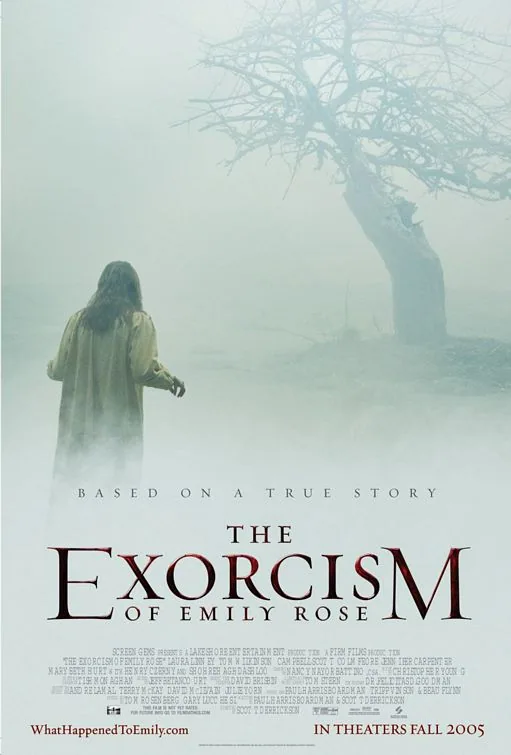
The Exorcism of Emily Rose (2005), directed by Scott Derrickson, follows A priest faces a criminal trial after performing an exorcism on a young woman who died during the ritual. A defense attorney initially approaches the case as a legal problem, then encounters testimony that challenges her certainty about the limits of rational explanation. The courtroom structure places questions of evidence and faith side by side, treating belief as a conflict of interpretation rather than an easy supernatural answer.
Each police case reveals details that make a purely ordinary explanation harder for the investigators to sustain.
Why this matches +
These offer a related experience with a meaningful difference in story, tone, or presentation.
An adjacent discovery: a related idea with a different viewing experience.
Genres: Horror / Thriller
Shared film traits
Based on recorded story, mood and style. Your preferences can change the order.
Investigation
What changes An investigator works with a priest to understand disturbing events and apparent possession that resist ordinary explanation.
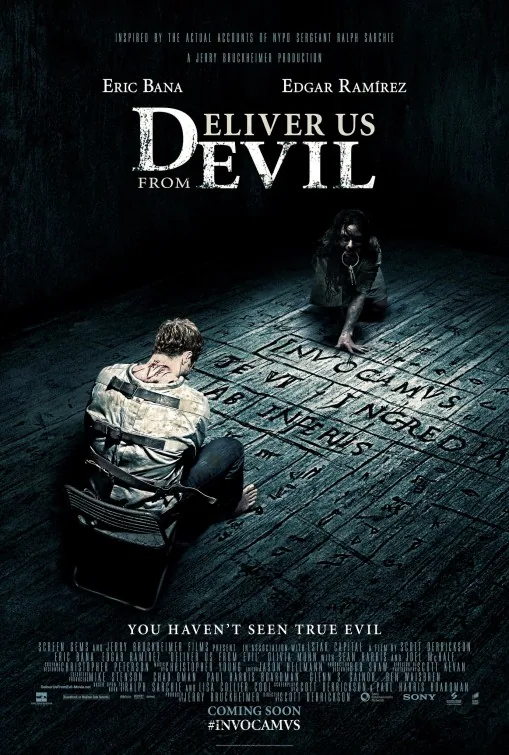
A New York police officer investigating a string of disturbing crimes meets a priest who believes the cases have a supernatural cause. Their uneasy partnership joins police procedure with religious ritual as the evidence points beyond ordinary criminal explanation. The horror thriller moves between family life and violent investigation, building its tension around whether skeptical institutions can respond to a threat they cannot classify.
Ann seeks formal exorcism training and is assigned a case that connects a young girl’s possession to her own family history.
Why this matches +
These offer a related experience with a meaningful difference in story, tone, or presentation.
An adjacent discovery: a related idea with a different viewing experience.
Genres: Horror
Shared film traits
Based on recorded story, mood and style. Your preferences can change the order.
Survival
What changes A trainee encounters dangerous possession cases while questioning institutional rules and her own connection to a troubled past.
Sister Ann wants to train as an exorcist after a professor recognizes her ability to empathize with possessed people. At the Church’s reopened training school, she faces resistance to a nun learning a rite reserved for priests and is drawn into the case of a young girl whose possession echoes Ann’s memories of her mother. The horror drama links a supernatural confrontation with questions of authority, vocation and care for people in crisis.
Isabella travels to Rome to learn more about her mother, Maria, who has spent years in a psychiatric hospital after committing murders during an exorcism. Filming the investigation with a documentary crew, Isabella consults priests and witnesses while confronting events that resist clear explanation. The found-footage horror blends family history, religious ritual and investigative uncertainty, letting the camera’s limited access become part of the threat.
What drives the story
Isabella’s search for an explanation gives the documentary form a personal stake beyond sensational evidence.
The people at its centre
Her relationship with Maria complicates the crew’s effort to treat the case as material.
What it feels like
The film withholds stable visual confirmation, sustaining uncertainty through fragmented recorded scenes.
Worth knowing
It is found-footage possession horror shaped by a mother-daughter investigation, not a conventional exorcist procedural.