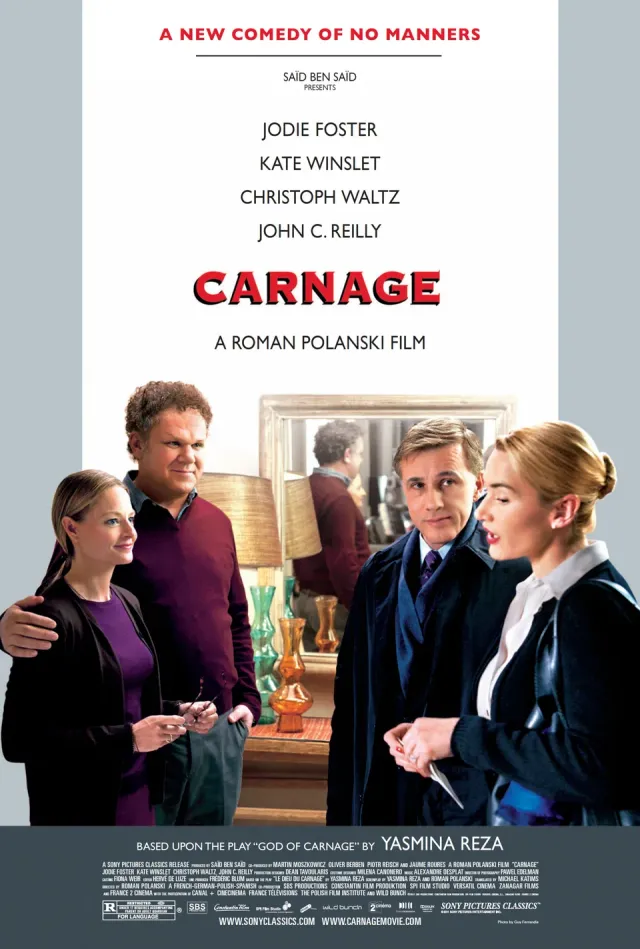
A meeting between two couples over a playground fight gradually becomes a battle over adult identity.
Why this matches +
Selected for the central appeal: Surreal social satires about wealthy guests, disrupted rituals and self-serving manners.
Genres: Comedy / Drama
Shared film traits
Based on recorded story, mood and style. Your preferences can change the order.
What changes Carnage confines polite adults together until social manners collapse into accusations and selfishness.
After their children fight at a Brooklyn playground, two sets of parents meet to discuss what happened and how to address it. A polite conversation about responsibility gradually breaks down as the adults expose their own resentments, status anxieties, and marital frustrations. Roman Polanski's chamber comedy-drama confines most of its action to one apartment, using the changing tone of a single meeting to examine civility as a fragile social performance.
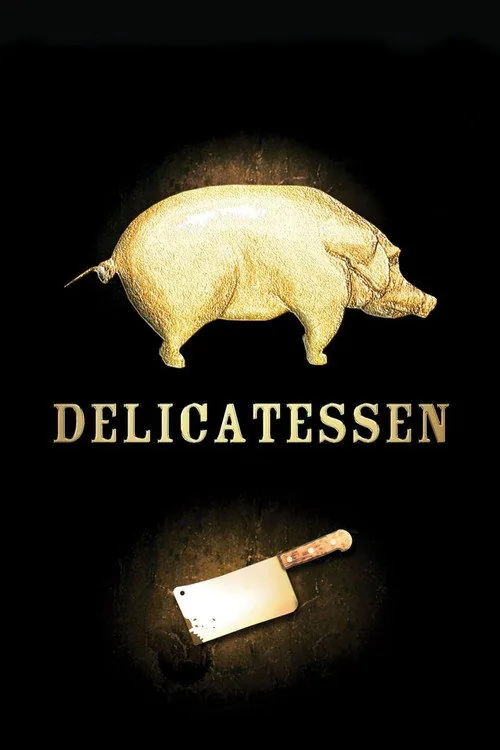
A clown takes a job in a building where its landlord secretly kills workers for food, then joins an unexpected community.
Why this matches +
These offer a related experience with a meaningful difference in story, tone, or presentation.
An adjacent discovery: a related idea with a different viewing experience.
Genres: Comedy / Drama
Shared film traits
Based on recorded story, mood and style. Your preferences can change the order.
What changes Delicatessen blends surreal comedy and appetite with a grotesque portrait of social arrangements.
In a post-apocalyptic French apartment building where food is scarce, landlord and butcher Clapet lures workers there and kills them for meat. When former circus clown Louison takes the latest job, he wins over tenants and falls for Clapet’s daughter Julie. She knows her father’s secret and looks for allies among vegetarian rebels. Jean-Pierre Jeunet and Marc Caro’s black comedy turns hunger, romance, and household routines into a stylized fable about survival and collective resistance.
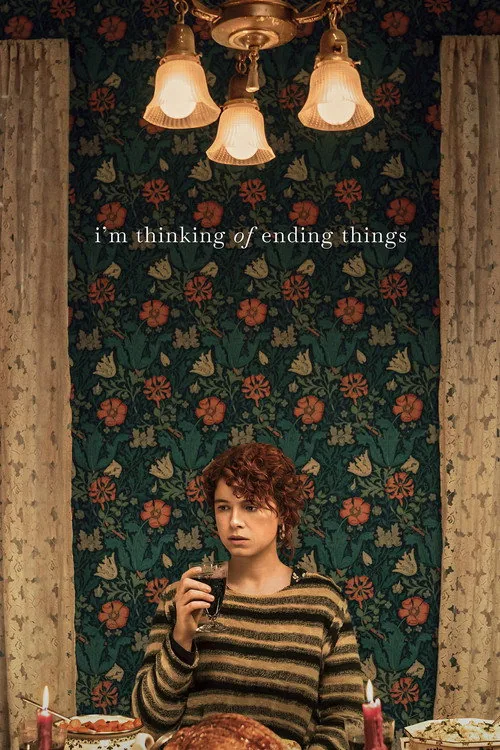
The young woman and Jake travel to the farm and later return toward the school where the janitor works.
Why this matches +
These offer a related experience with a meaningful difference in story, tone, or presentation.
An adjacent discovery: a related idea with a different viewing experience.
Genres: Drama / Thriller
Shared film traits
Based on recorded story, mood and style. Your preferences can change the order.
What changes I'm Thinking of Ending Things uses an unsettling visit and shifting reality to expose anxieties around social ritual.
A young woman travels with her boyfriend Jake to meet his parents at their remote farmhouse, while an elderly school janitor’s workday is shown in parallel. The woman’s name, past, and account of how she met Jake shift, and the visit grows stranger as his parents change age and the couple’s drive home moves into a snowstorm. Charlie Kaufman’s adaptation of Iain Reid’s novel links the trip to the janitor’s memories and fantasies, using theatre, poetry, and film references to leave the story’s reality open to interpretation.
A stalled production forces an artist to confront the personal evasions he has tried to convert into creative authority.
Why this matches +
These offer a related experience with a meaningful difference in story, tone, or presentation.
An adjacent discovery: a related idea with a different viewing experience.
Genres: Fantasy / Drama
Shared film traits
Based on recorded story, mood and style. Your preferences can change the order.
What changes 8½ blurs dreams, social performance and desire in a fragmented, self-conscious narrative.
A celebrated film director arrives at a production unable to explain clearly what he intends to make. Meetings with collaborators, family and lovers send him into memories and fantasies that repeatedly interrupt professional obligations. His apparent crisis of artistic inspiration exposes a larger habit of organising other people around incompatible wishes, making the search for a coherent film inseparable from the difficulty of taking responsibility for a contradictory life.
Paul's attempt to make one social visit becomes a night-long struggle to get safely back home.
Why this matches +
These offer a related experience with a meaningful difference in story, tone, or presentation.
An adjacent discovery: a related idea with a different viewing experience.
Genres: Comedy / Thriller
Shared film traits
Based on recorded story, mood and style. Your preferences can change the order.
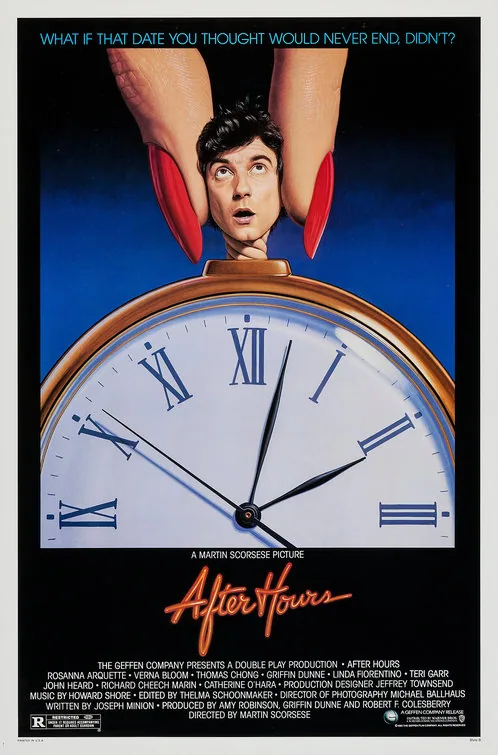
What changes After Hours sends a protagonist through a succession of increasingly absurd urban interruptions.
After meeting a woman who invites him to SoHo, computer specialist Paul Hackett leaves his ordinary Manhattan routine for what should be a short evening visit. A chain of misunderstandings, strange encounters, and escalating mishaps leaves him unable to get home as the neighborhood grows more hostile and unpredictable. Each attempted solution creates another complication, turning a single night into an anxious comedy of chance, embarrassment, and urban disorientation.
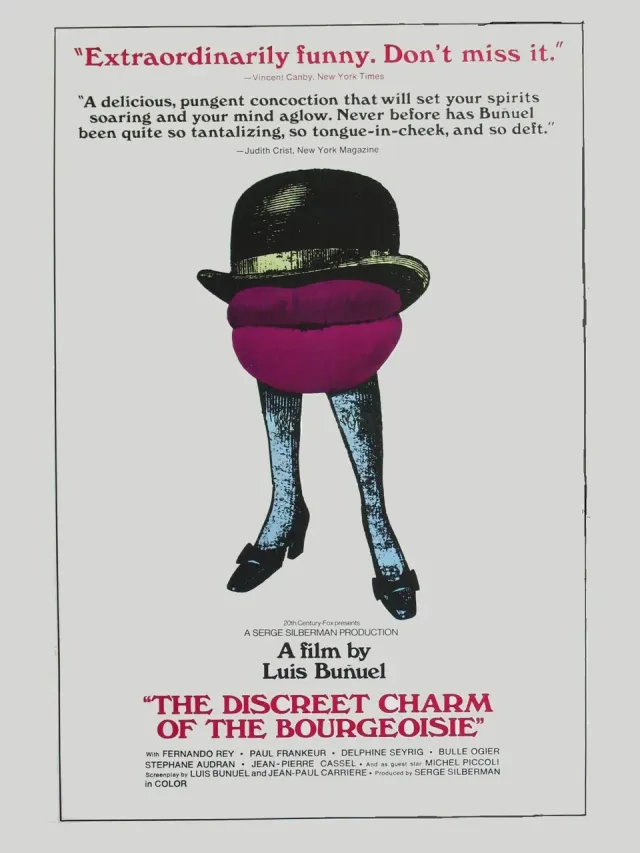
A group of wealthy friends repeatedly tries to sit down to dinner, but each plan is interrupted by a strange event: a dead restaurant manager, a military exercise, unexpected visitors or a dream that shifts the rules again. The central party includes the Sénéchals, the Thévenots and Miranda’s ambassador, Don Rafael Acosta, whose social ease coexists with criminal dealings. Meals are postponed, abandoned or revealed to be scenes within someone else’s dream. The characters move through a world where politeness hides appetite, violence and self-interest, while the ordinary business of eating becomes almost impossible. Rather than resolving into a conventional mystery, the film returns to the guests walking together along a country road.
What drives the story
The repeated failed dinners give the film a simple surface goal, while dreams and interruptions keep the audience from treating any one explanation as final.
The people at its centre
The guests maintain class manners even when exposed as hypocritical or absurd. Their shared status links them more strongly than affection or trust.
What it feels like
Surreal repetition, abrupt shifts and deadpan performances make the comedy feel dreamlike. The movie invites interpretation but withholds a stable puzzle solution.
Worth knowing
A fit for absurdist, formally playful satire of bourgeois rituals; viewers wanting a linear plot or a single definitive explanation may find its structure deliberately elusive.
Social hypocrisyDesireStatus
Mood
Surreal · Dry · Disorienting
Pacing
Recurring failed ritual · Unstable episodes
Visual style
Deadpan surrealism · Formal repetition
Storytelling
Interrupted dinner plans · Dream within a dream · Bourgeois satire