NJ’s attempt to revisit a decision from his youth unfolds alongside the demands of his present family.
Why this matches +
Selected for the central appeal: A wedding cover story gathers a dispersed family around a grandmother’s illness and makes collective concealment a disputed form of care.
Genres: Drama
Shared film traits
Based on recorded story, mood and style. Your preferences can change the order.
What changes A wedding and a grandmother’s medical crisis gather generations whose ordinary gestures reveal different understandings of obligation. A longer Taipei family portrait and an unresponsive grandmother replace an active elder kept unaware of her diagnosis.
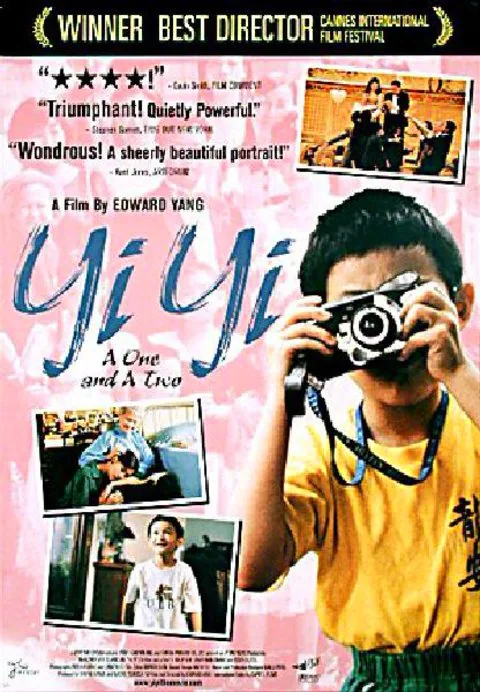
Over the course of a year in Taipei, the middle-class Jian family faces a wedding, a grandmother’s stroke, business troubles and the strains of ordinary family life. Father NJ reconnects with a former love while negotiating a new business deal; his wife Min-Min leaves for a Buddhist retreat; daughter Ting-Ting navigates adolescent relationships; and young Yang-Yang observes the adults with unusual curiosity. Each family member sees only part of the whole, and the film follows how private choices ripple through the household and its wider community.
A risky farming venture turns competing ideas of security and success into daily disputes over money, care and where the family should live.
Why this matches +
Related viewing experiences with the specific differences recorded for each pair.
An adjacent discovery: a related idea with a different viewing experience.
Genres: Drama
Shared film traits
Based on recorded story, mood and style. Your preferences can change the order.
What changes An immigrant family’s everyday tenderness and friction come into focus through a grandmother whose arrival changes what home means. Rural settlement in America and the child’s relationship with his grandmother replace an adult’s return to China and a disputed decision about disclosure.
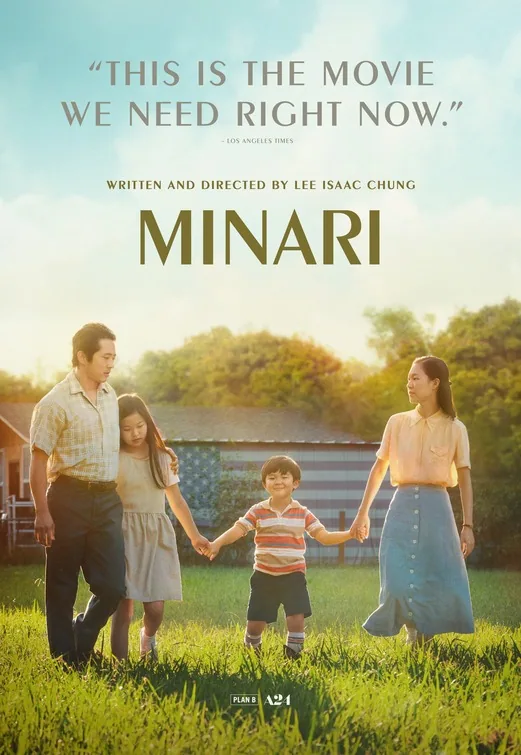
A Korean immigrant family moves to rural Arkansas, where the father hopes to build a farm supplying vegetables to other Korean households. His confidence in the land creates new strains for a marriage already stretched by insecure work, distance from familiar support and their son's health needs. The arrival of the children's grandmother offers another form of continuity, making the family's effort to put down roots both practical and deeply personal.
The Sunday dinner ritual gives the family a structure for reconnecting even as each member resists the role others expect.
Why this matches +
Related viewing experiences with the specific differences recorded for each pair.
An adjacent discovery: a related idea with a different viewing experience.
Genres: Drama / Comedy
Shared film traits
Based on recorded story, mood and style. Your preferences can change the order.
What changes Family gatherings use food and restrained humor to expose care, secrecy and the pressure of changing roles. A father and daughters negotiate independence over recurring meals instead of using one wedding to conceal terminal illness.
Semi-retired Taipei chef Chu prepares an elaborate Sunday dinner for his three adult daughters, whose lives are moving in different directions. Jia-Jen is a chemistry teacher and Christian; Jia-Chien is an airline executive with a suppressed love of cooking; and Jia-Ning is a college student working at a fast-food restaurant. The family meal gives each woman a place to announce changes, while Chu’s own decisions unsettle the household’s assumptions about him. Across repeated dinners, food becomes both an expression of care and a way to avoid difficult conversation. Ang Lee’s ensemble drama observes how changing relationships can renew a family’s connection.
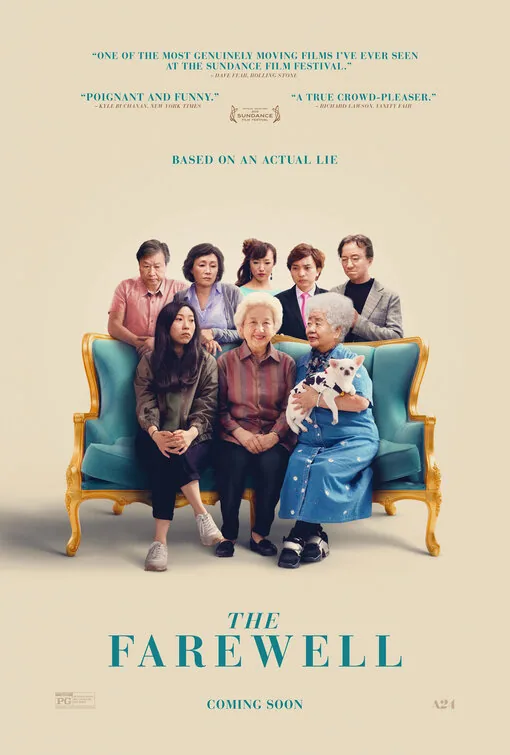
A Chinese American woman learns that her grandmother in China has received a terminal diagnosis that the family intends to conceal from her. A hastily arranged wedding creates a reason for relatives living abroad to gather without revealing why they have come. Returning against her parents' advice, the granddaughter struggles with a form of care that depends on collective concealment, while recognising that migration has already complicated what belonging and responsibility mean.
What drives the story
A staged family celebration turns knowledge of approaching loss into a practical dispute over who should carry emotional responsibility.
The people at its centre
The granddaughter's commitment to disclosure meets relatives who view shared concealment as protection, exposing generational and cross-cultural differences without a simple villain.
What it feels like
Restrained domestic observation and awkward ceremonial comedy allow anticipatory grief to surface through meals, silences and competing explanations.
Worth knowing
The family deception concerns care and mortality, rather than a criminal conspiracy or proof that one culture has a single uniform response to illness.