Explore films connected to The Heartbreak Kid through desire and dissatisfaction, honesty, self-deception. Choose the qualities you want to carry into your next watch.
What should feel similar?
Find your next favourite
9 films · Closest overall matches
Hide films you’ve seen or don’t want. Saved on this device.
No matches for this combination yet.
Try another option or reset your choices to see more films.
Both share themes of self-deception, plus an awkward atmosphere.
Why this matches +
Genres: comedy / romance
Shared film traits
Based on recorded story, mood and style. Your preferences can change the order.
Coming of age
What changes The Heartbreak Kid: misunderstandings, comic escalation and romantic triangle. Splitsville: quick, episodic and escalating.
Carey and Ashley’s marriage breaks apart after Ashley proposes opening their relationship, and Carey seeks refuge with his friends Julie and Paul. Their apparent model of non-monogamy proves unstable, pulling four adults into a comic contest of desire, jealousy, loyalty, and self-deception. The film uses physical comedy and awkward social encounters to treat romantic freedom as a practice that demands honesty, rather than a simple route out of commitment.
Based on recorded story, mood and style. Your preferences can change the order.
Coming of age
Expect playful and awkward, with dialogue-led and ensemble-driven pacing.
Ashish, a 51-year-old London investor, travels to meet the family of his 27-year-old girlfriend Ayesha, hoping to win their approval. Ayesha is unsure how to introduce him, and her parents quickly sense that she is hiding his age. The sequel moves its age-gap romance into a family setting where affection must face awkward questions, generational expectations, and the difference between accepting a relationship privately and welcoming it into a household.
Based on recorded story, mood and style. Your preferences can change the order.
Coming of age
What changes The Heartbreak Kid: misunderstandings, comic escalation and romantic triangle. Submarine: episodic, reflective and gentle.
Fifteen-year-old Oliver Tate observes his school and family life with elaborate seriousness, hoping to understand how to become an adult on his own terms. He begins a relationship with Jordana, whose bluntness challenges his romantic plans, while also trying to prevent his parents' marriage from falling apart. The Welsh coming-of-age comedy follows these two rescue missions with dry humor, handwritten schemes, and a narrator whose imagination is more confident than his understanding.
Based on recorded story, mood and style. Your preferences can change the order.
Coming of age
What changes The Heartbreak Kid: misunderstandings, comic escalation and romantic triangle. La Dolce Villa: easygoing, relationship-led and gentle progression.
Successful Ohio businessman Eric travels to Tuscany to stop his daughter Olivia from spending her inheritance on a crumbling villa. Once there, he meets local people who see opportunity in the restoration and finds that the place offers more than another problem to manage. The romantic comedy follows a father's effort to protect his daughter from risk as both reconsider what makes a life worthwhile, using renovation, small-town connection, and Italian scenery to soften his practical outlook.
Based on recorded story, mood and style. Your preferences can change the order.
Coming of age
Expect sunny and awkward, with alternating vignettes and group exercises pacing.
Four couples travel to a tropical resort expecting a relaxing vacation, only to discover that relationship counseling is built into the package. The resort's therapy sessions and group exercises force each pair to confront habits they had hoped to leave at home, while the mismatched friends amplify one another's doubts. The comedy moves between vacation fantasy and uncomfortable honesty, asking whether a shared escape can help couples face problems they have been postponing.
Based on recorded story, mood and style. Your preferences can change the order.
Coming of age
What changes The Heartbreak Kid: misunderstandings, comic escalation and romantic triangle. Our Fault: relationship-centered, slow-burn tension and social-event structure.
Four years after their breakup, Noah and Nick are brought back together at their friends' Ibiza wedding. Nick has become a powerful executive, while Noah must stand beside him as maid of honor, reviving attraction and old antagonisms in equal measure. The romantic drama concludes the Culpables adaptation trilogy by returning its leads to the social circle where their relationship began and forcing them to confront what remains unresolved. A destination wedding supplies the pressure and glamour for a story about whether former lovers can choose one another again.
Based on recorded story, mood and style. Your preferences can change the order.
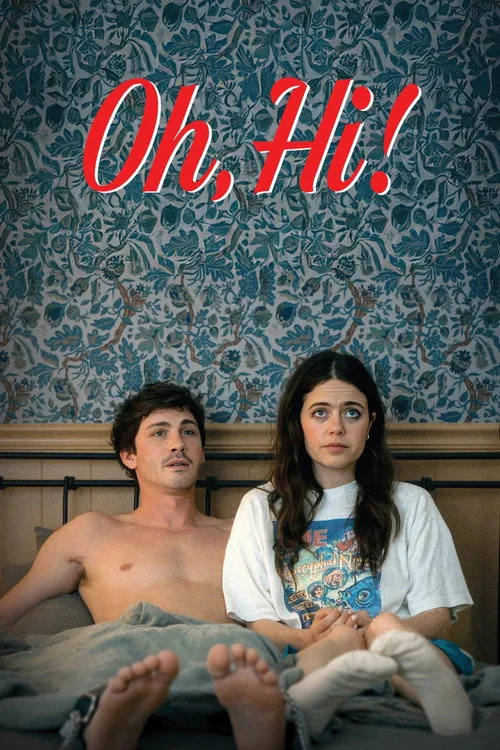
What changes The Heartbreak Kid: misunderstandings, comic escalation and romantic triangle. Oh, Hi!: contained, dialogue-driven and escalating.
Iris and Isaac take their first weekend trip as a couple to a rented farmhouse after dating for four months. Their intimacy turns sharply uncomfortable when Isaac admits that he is not seeking commitment and has been seeing other women, while Iris believed they were exclusive. With Isaac still cuffed to the bed, Iris responds by keeping him hostage rather than accepting the mismatch. The dark romantic comedy stretches a relationship conversation into an absurd, increasingly tense standoff about consent, expectation, and whether affection can survive incompatible assumptions.
Based on recorded story, mood and style. Your preferences can change the order.
Expect chaotic and affectionate, with comic escalation and character-led pacing.
A meticulous real-estate agent has built a picture-perfect life, but his eccentric younger brother's sudden return disrupts the image he has carefully maintained. Their reunion forces him to deal with old family patterns, a spouse skeptical of the newcomer, and a sibling who refuses to fit into the polished version of adulthood. The comedy uses the contrast between public composure and intimate chaos to explore how family can unsettle a life organized around control.
Based on recorded story, mood and style. Your preferences can change the order.
Coming of age
What changes The Heartbreak Kid: misunderstandings, comic escalation and romantic triangle. The Map That Leads to You: gentle, travelogue and relationship-led.
Before beginning the orderly career she has planned, Heather travels through Europe with her friends and meets Jack on a train to Barcelona. He is following a diary connected to his great-grandfather's postwar journey, and their shared interest in a novel sparks a relationship that changes the course of the trip. The romantic drama places an emerging love story against travel, inherited histories, and the tension between a carefully mapped future and choices made along the way.
Eddie, a sporting-goods store owner, impulsively marries Lila and takes her to Mexico for their honeymoon. There he becomes infatuated with Miranda, a woman whose easy charm seems to embody the life he imagines he has missed. Lila's intrusive habits and Eddie's weak boundaries complicate the situation, turning a vacation flirtation into an increasingly public series of bad decisions in this Farrelly brothers remake of a 1972 comedy.
What drives the story
A new husband becomes infatuated with another vacationer before his honeymoon has barely begun.
The people at its centre
Eddie's indecision and Lila's abrasive manner feed a farcical conflict that affects everyone around them.
What it feels like
Broad embarrassment and escalating misunderstandings keep the romantic premise deliberately uncomfortable.
Worth knowing
The comedy follows a newlywed's impulsive betrayal, not the slower courtship of a conventional love story.