Based on recorded story, mood and style. Your preferences can change the order.
What changes The Machine: fast, action-driven, comic and flashback-structured. You Don't Mess with the Zohan: broad escalation.
Zohan Dvir is an elite Israeli counterterrorism operative who secretly wants to leave combat and become a hairdresser in New York. He fakes his death, finds work in a salon run by Dalia, and tries to build a peaceful life while keeping his identity hidden. His former enemies and the expectations attached to his old role eventually follow him, forcing the skilled fighter to decide what a new identity means when the past is still visible. Adam Sandler’s broad action-comedy mixes physical gags with a deliberately exaggerated conflict between public image and private ambition. The premise aims for absurdity, but its humour can date unevenly because it depends on ethnic caricature.
Based on recorded story, mood and style. Your preferences can change the order.
What changes The Machine: fast, action-driven, comic and flashback-structured. The Jerk: loose episodic structure and gag-driven.
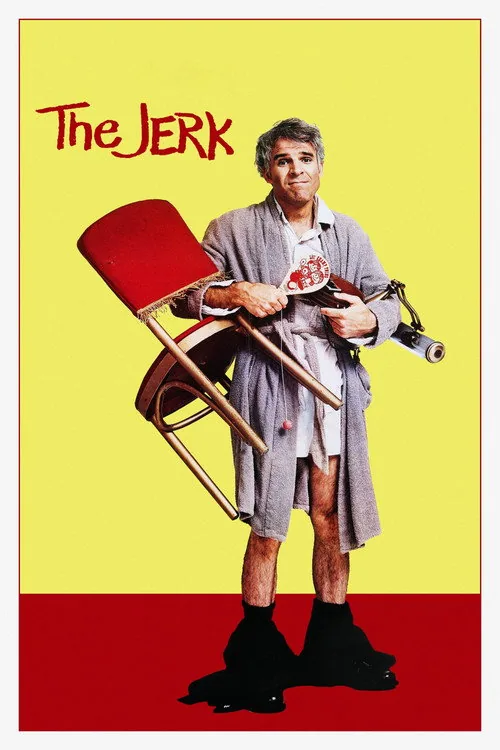
Navin Johnson leaves the loving family that raised him after learning that he was adopted, convinced that the outside world is waiting for him. His cheerful ignorance leads him through a series of jobs, romances, sudden wealth, and absurd setbacks as he tries to find where he belongs. Carl Reiner directs Steve Martin in an episodic comedy that turns a rags-to-riches story into a satire of luck, ambition, and self-importance, with physical gags and a deliberately foolish central character carrying the journey.
Based on recorded story, mood and style. Your preferences can change the order.
What changes The Machine: fast, action-driven, comic and flashback-structured. Weird: The Al Yankovic Story: childhood establishes musical rebellion, career milestones escalate into absurdity and biopic conventions collapse into comic excess.
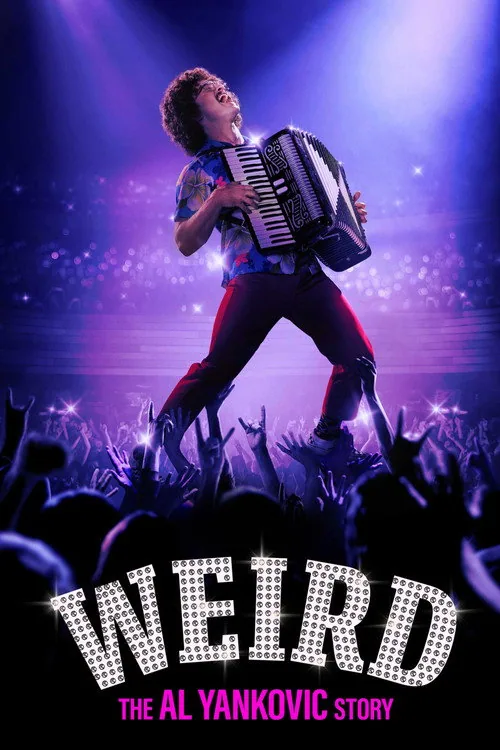
A young Alfred Yankovic loves polka and parody, despite his father's disapproval, and eventually turns a joke song inspired by a radio hit into a recording career. The film follows his rise through deliberately fabricated encounters with musicians, celebrity excess, and a growing public profile. Its biographical form is repeatedly disrupted by absurd inventions, treating the pop musician's familiar career milestones as raw material for a spoof of prestige music biopics.
Based on recorded story, mood and style. Your preferences can change the order.
What changes The Machine: fast, action-driven, comic and flashback-structured. Whatever Works: dialogue-driven, episodic relationship turns and comic reversals.
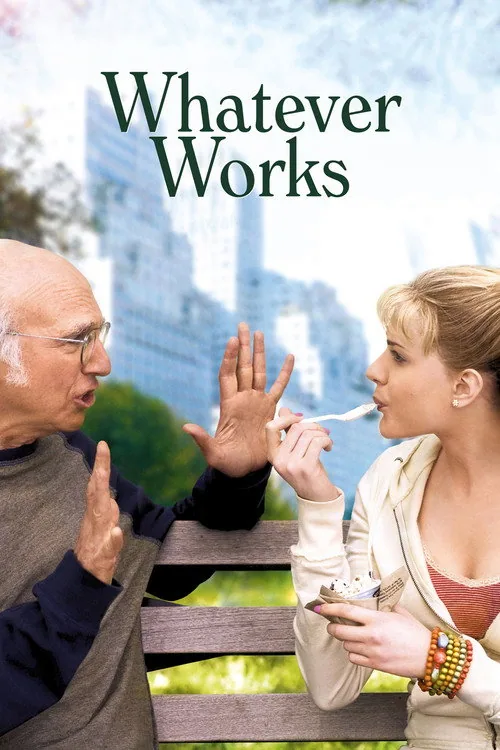
Boris Yellnikoff, a misanthropic former physics professor living in New York, takes in Melody, a young runaway from Mississippi who has left her conventional family behind. Their unlikely relationship changes when Melody’s parents arrive and begin questioning the life she has chosen. Woody Allen’s comedy follows a collection of people who reconsider their identities and relationships, using Boris’s cynical narration to contrast intellectual certainty with the unpredictability of love and everyday life.
Based on recorded story, mood and style. Your preferences can change the order.
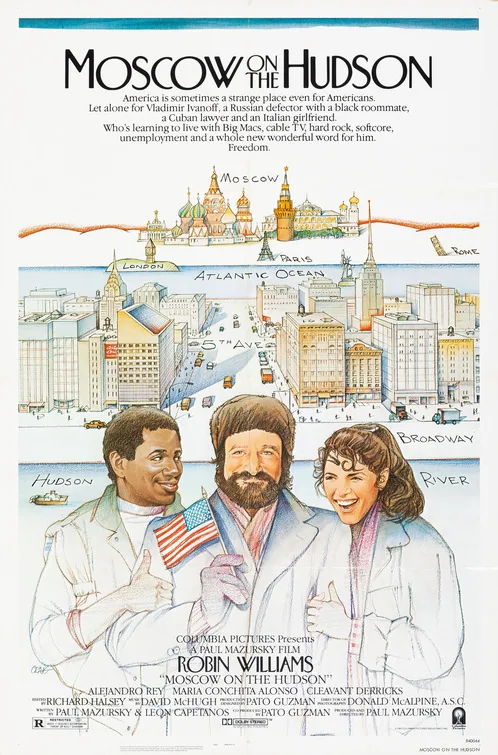
What changes The Machine: fast, action-driven, comic and flashback-structured. Moscow on the Hudson: character-led and measured.
Vladimir Ivanoff, a Soviet circus musician, defects while his troupe is visiting New York and must build a new life in a city he has only known from the outside. Everyday choices about work, housing, money and friendship replace the simple idea of freedom he carried with him. The comedy-drama follows cultural disorientation with sympathy, finding both humor and loneliness in the work of becoming at home.
Based on recorded story, mood and style. Your preferences can change the order.
Criminal underworld
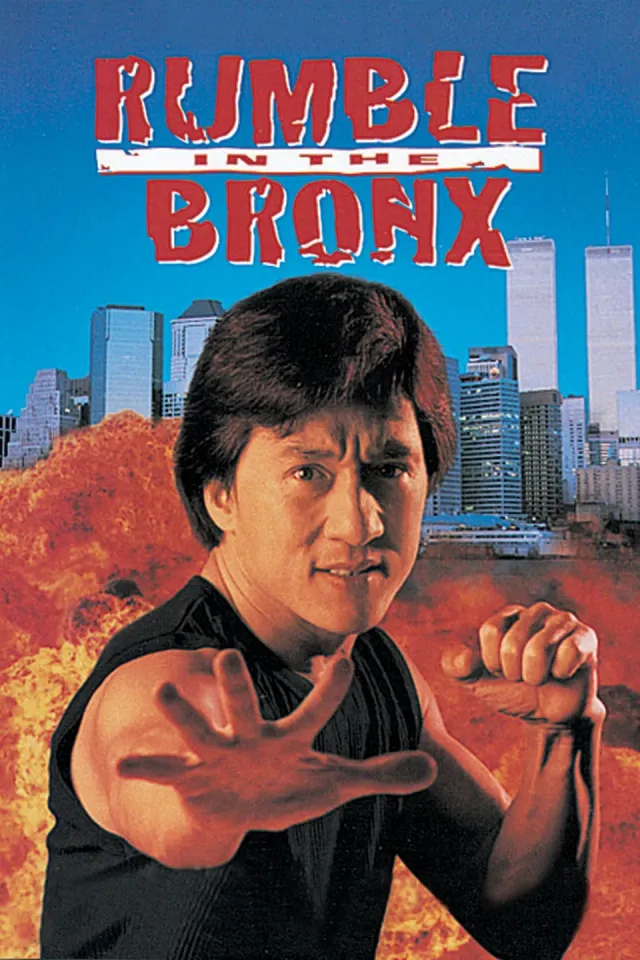
What changes The Machine: fast, action-driven, comic and flashback-structured. Rumble in the Bronx: set-piece driven and escalating.
Hong Kong police officer Keung travels to New York for his uncle's wedding and becomes involved in a local gang conflict. His efforts to help a shop owner bring him into escalating chases and confrontations across the neighborhood. The action comedy uses the fish-out-of-water premise to introduce fast physical set pieces and a hero who relies on agility more than weapons.
Based on recorded story, mood and style. Your preferences can change the order.
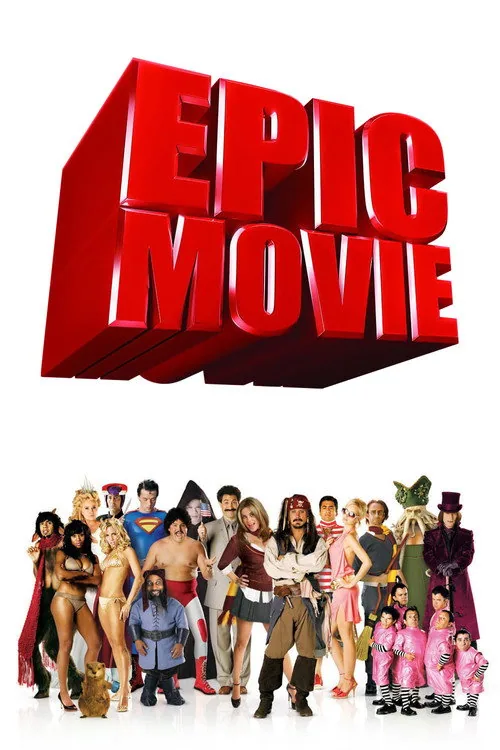
What changes The Machine: fast, action-driven, comic and flashback-structured. Epic Movie: a golden ticket contest sends four strangers into a parody kingdom with a familiar fantasy villain..
Four unrelated young people discover Golden Tickets and are brought together at Willy’s Chocolate Factory, where they learn that Willy plans to use them as an ingredient. After escaping through a wardrobe into the snowy kingdom of Gnarnia, they join Mr. Tumnus and Harry Beaver in a fight against the White Bitch. Jason Friedberg and Aaron Seltzer’s parody assembles jokes and references from contemporary fantasy, adventure, and comedy hits, following the loose shape of an ensemble quest rather than sustaining one target or comic style.
Based on recorded story, mood and style. Your preferences can change the order.
What changes The Machine: fast, action-driven, comic and flashback-structured. Jackass 3D: rapid-fire and segmented.
Johnny Knoxville and the Jackass crew turn stunts, public pranks and physical challenges into a sequence of filmed set pieces. The movie relies on the performers’ willingness to expose themselves to pain and embarrassment, with the camera making impacts and reactions part of the joke. Its loose structure favors escalation, surprise and familiar group chemistry over a continuous story.
Based on recorded story, mood and style. Your preferences can change the order.
What changes The Machine: fast, action-driven, comic and flashback-structured. Brüno: episodic and improvised.
A flamboyant Austrian fashion reporter travels to the United States seeking celebrity and attention, staging encounters that expose the prejudices and social performance he meets. The mockumentary uses provocation and awkward improvisation to challenge its subjects while also relying on the comic persona’s excess. Its satire asks who is being observed and what a performance can reveal about an audience.
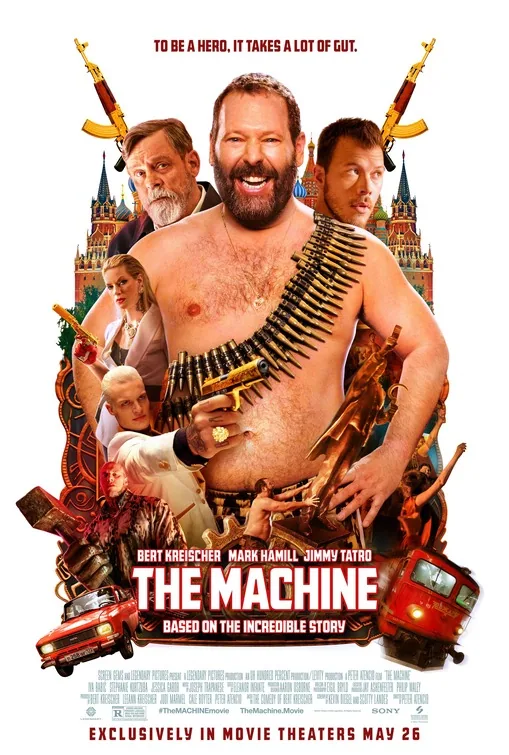
Stand-up comedian Bert Kreischer has built a career around recounting a wild college trip to Russia, where he became known as “The Machine.” Years later, the old story returns when his estranged father and family are pulled into a confrontation with people connected to that journey. Peter Atencio’s action comedy blends the performer’s stage persona with a fictionalized crime adventure about sobriety, parenting and the gap between a public tall tale and adult responsibility.
What drives the story
An old college story draws Bert and his father into a present-day conflict that puts his family and public persona under pressure.
The people at its centre
Bert confronts the limits of the reckless character he performs as he tries to become more dependable for his wife and daughters.
What it feels like
The film expands a real comedian’s signature routine into an over-the-top action plot with a father-daughter thread.
Worth knowing
A broad action comedy for viewers familiar with Bert Kreischer’s stand-up and comfortable with loud, crude humor.
familysobrietypublic image
Mood
raucous · action-packed · absurd · affectionate
Pacing
fast · action-driven · comic · flashback-structured
Visual style
1990s college flashbacks · modern stand-up imagery · Russian action settings · physical comedy
Storytelling
action comedy · stand-up persona · Russia flashbacks · family conflict · crime adventure