Explore films connected to The Star Chamber through Justice and due process, Institutional power, Revenge. Choose the qualities you want to carry into your next watch.
What should feel similar?
Find your next favourite
9 films · Closest overall matches
Hide films you’ve seen or don’t want. Saved on this device.
No matches for this combination yet.
Try another option or reset your choices to see more films.
Based on recorded story, mood and style. Your preferences can change the order.
Investigation
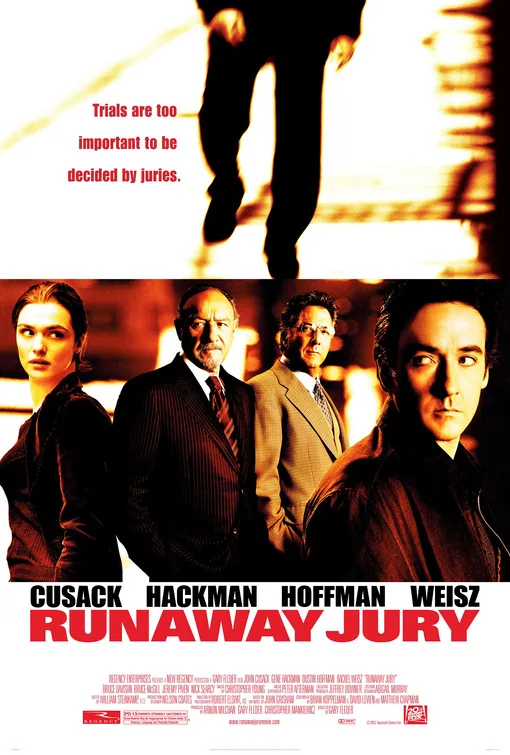
What changes The Star Chamber: case-based opening, gradual moral turn, investigation-led and escalating consequences. Runaway Jury: measured and cat-and-mouse.
A high-profile lawsuit against a gun manufacturer draws the attention of a skilled jury consultant willing to manipulate the selection process for a paying client. Inside the courtroom, one juror and an outside ally attempt to influence the verdict from a different direction. The legal thriller turns the jury into contested territory and examines how money, information and pressure can shape public justice.
Based on recorded story, mood and style. Your preferences can change the order.
Criminal underworld · Investigation
What changes The Star Chamber: case-based opening, gradual moral turn, investigation-led and escalating consequences. The Rip: pressure-cooker escalation and contained timeline.
Miami police officers discover a cache of cash, and suspicion over the money strains trust within their team. The crime thriller turns a single discovery into a pressure test for loyalty, procedure and personal temptation. Its focus stays close to the officers, making evidence handling and changing trust among colleagues the engine of danger rather than a case-of-the-week structure.
Based on recorded story, mood and style. Your preferences can change the order.
Criminal underworld · Investigation
What changes The Star Chamber: case-based opening, gradual moral turn, investigation-led and escalating consequences. Street Kings: escalating and confrontational.
Los Angeles detective Tom Ludlow works within a violent police unit and becomes entangled in an investigation after his former partner is murdered. As colleagues offer competing explanations, he must question the loyalty and authority of the group he depends on. The crime drama follows his pursuit of evidence through a city where the distinction between policing and personal vengeance grows increasingly difficult to maintain.
Based on recorded story, mood and style. Your preferences can change the order.
Criminal underworld · Investigation
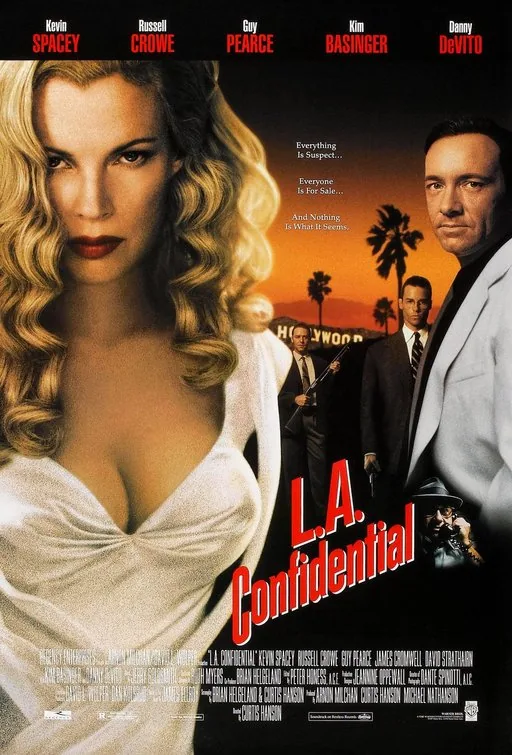
What changes The Star Chamber: case-based opening, gradual moral turn, investigation-led and escalating consequences. L.A. Confidential: measured.
Three Los Angeles policemen with conflicting ambitions become connected to a massacre at an all-night diner. Their investigation leads through celebrity publicity, organised crime and arrangements that protect the department's public image. As apparently settled evidence begins to unravel, each man must confront how his preferred route to success has made him useful to people who manipulate both justice and appearances.
Based on recorded story, mood and style. Your preferences can change the order.
Criminal underworld · Investigation
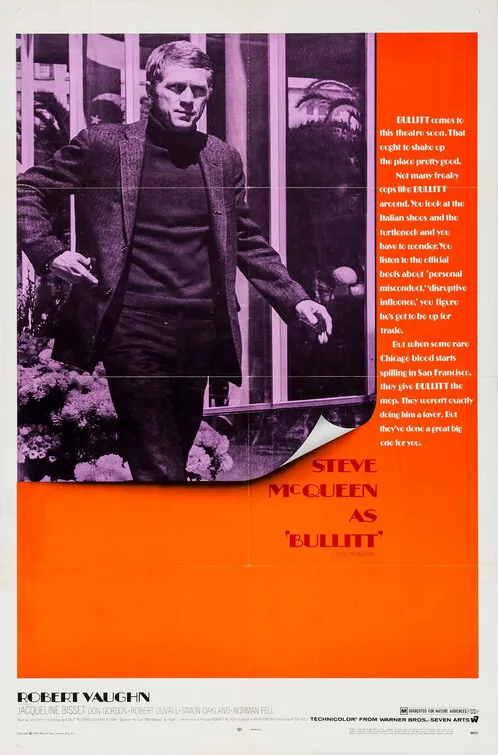
What changes The Star Chamber: case-based opening, gradual moral turn, investigation-led and escalating consequences. Bullitt: measured.
A San Francisco detective is assigned to protect a witness whose testimony could advance an ambitious politician's public agenda. After an attack undermines the arrangement, the detective pursues discrepancies that the sponsor would prefer subordinated to immediate blame and control. Street-level investigation and careful attention to identities expose the distance between protecting a person, producing a useful witness, and preserving the appearance of official competence.
Based on recorded story, mood and style. Your preferences can change the order.
Investigation
What changes The Star Chamber: case-based opening, gradual moral turn, investigation-led and escalating consequences. The Life of David Gale: deadline-driven and revelatory.
A journalist interviews death-row activist David Gale in the days before his execution, then pieces together his account and the circumstances of the crime for which he was convicted. Her reporting becomes a race to assess evidence, motive and the possibility of a wrongful sentence. The mystery uses a compressed deadline to examine capital punishment, public conviction and the risks of turning a cause into spectacle.
Based on recorded story, mood and style. Your preferences can change the order.
Investigation
What changes The Star Chamber: case-based opening, gradual moral turn, investigation-led and escalating consequences. Magnum Force: steady and escalating.
A detective known for pushing against official limits investigates killings that seem to remove people the courts failed to punish. The precision of the attacks points toward an organization within the police rather than a lone frustrated citizen. His reputation makes the perpetrators imagine he will recognize them as allies, forcing him to state a boundary his own methods have often blurred. The sequel turns familiar anti-bureaucratic competence against a system of organized extrajudicial execution, testing the difference between criticizing legal failure and claiming unrestricted power to replace it.
Based on recorded story, mood and style. Your preferences can change the order.
Investigation
What changes The Star Chamber: case-based opening, gradual moral turn, investigation-led and escalating consequences. Dirty Harry: measured.
A San Francisco detective pursues a sniper who uses threats and public fear to force the city into a sequence of demands. The officer's impatience with negotiation and legal restraint becomes central when his methods undermine the usable case against the suspect. Renewed danger makes the conflict more than a question of catching the right man: the film invites, and requires scrutiny of, a fantasy in which certainty of guilt appears to authorize power beyond ordinary accountability. The film’s thriller momentum depends on keeping viewers close to a detective whose certainty exceeds his legal authority.
Based on recorded story, mood and style. Your preferences can change the order.
Criminal underworld · Investigation
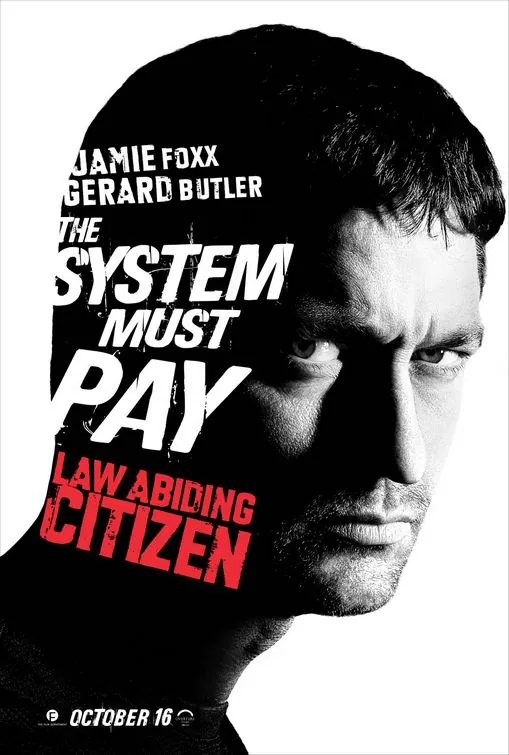
What changes The Star Chamber: case-based opening, gradual moral turn, investigation-led and escalating consequences. Law Abiding Citizen: fast and escalating.
A man whose family was murdered watches a prosecutor accept a deal that protects a conviction record rather than satisfy his demand for justice. Years later, an elaborate retaliatory campaign continues even after he allows himself to be imprisoned, making confinement appear unable to limit his reach. The prosecutor must uncover how the attacks are organized while confronting his own earlier compromises. The thriller turns institutional grievance into a claim of unlimited punitive authority, exposing how the pursuit of exemplary justice can reproduce the disregard for persons it condemns.
Los Angeles judge Steven Hardin becomes disillusioned when procedural rules and mishandled evidence prevent convictions in cases he believes involve serious violence. His colleague Judge Caulfield introduces him to a secret group of judges who choose extrajudicial punishments for defendants they consider guilty but beyond the reach of ordinary courts. Hardin is drawn to the promise of preventing future crimes, then begins to see how secrecy shifts power away from evidence and public accountability. As the group’s actions escalate, his own understanding of justice is tested by a system that claims to repair legal failure while reproducing it in a more dangerous form.
What drives the story
Hardin’s frustration with acquittals makes the secret group appealing before its hidden decision-making is fully exposed.
The people at its centre
Caulfield offers institutional access and moral certainty, while Hardin’s changing role puts conscience against professional duty.
What it feels like
Courtroom argument gives way to a covert investigation, keeping legal procedure central even when the judges reject it.
Worth knowing
This is a judicial vigilante thriller about bypassing due process, not a standard courtroom victory story.