Based on recorded story, mood and style. Your preferences can change the order.
Investigation
What changes Touch of Evil: investigative and escalating. The Infiltrator: steady escalation, operation-driven and suspenseful.
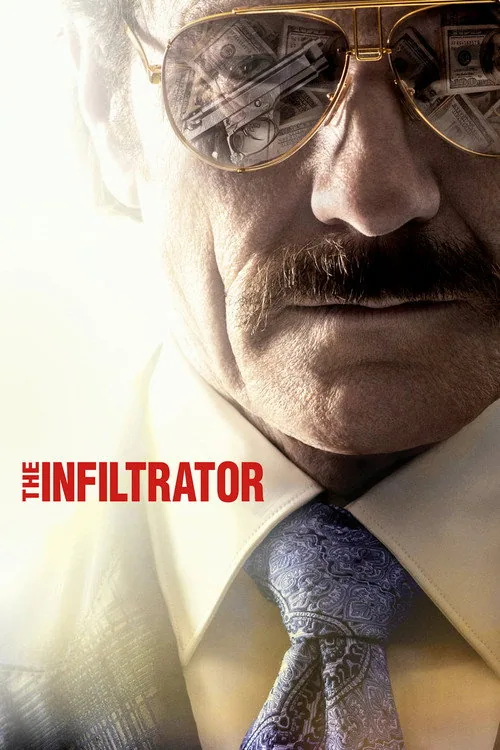
In the 1980s, U.S. Customs agent Robert Mazur takes on the identity of businessman Bob Musella and enters the financial networks that help drug traffickers move money. His undercover work brings him close to Colombian cartel associates and the Bank of Credit and Commerce International, while requiring him to maintain a convincing double life. With fellow agent Kathy Ertz posing as his fiancée and other colleagues supporting the operation, Mazur faces mounting danger as the investigation builds toward a public sting. This fact-based crime thriller focuses on money laundering and undercover pressure.
Based on recorded story, mood and style. Your preferences can change the order.
Investigation
What changes Touch of Evil: investigative and escalating. The French Connection: intense.
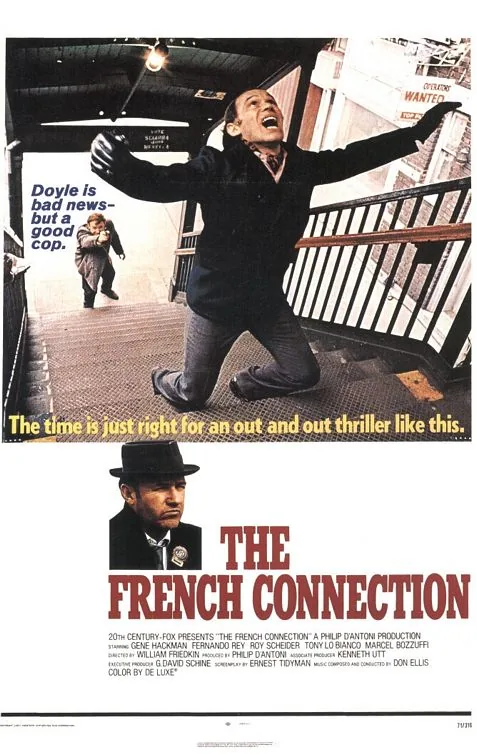
Two New York detectives notice a small-time criminal spending beyond his apparent means and begin following a possible connection to an international heroin shipment. Surveillance links local intermediaries with a sophisticated French trafficker, but certainty remains difficult to translate into a successful interception. One detective's aggressive persistence brings dangerous public confrontations and personal fixation, making the pursuit's momentum increasingly hard to separate from its cost.
Based on recorded story, mood and style. Your preferences can change the order.
Investigation
What changes Touch of Evil: investigative and escalating. Traffic: multi-strand and gradual convergence.
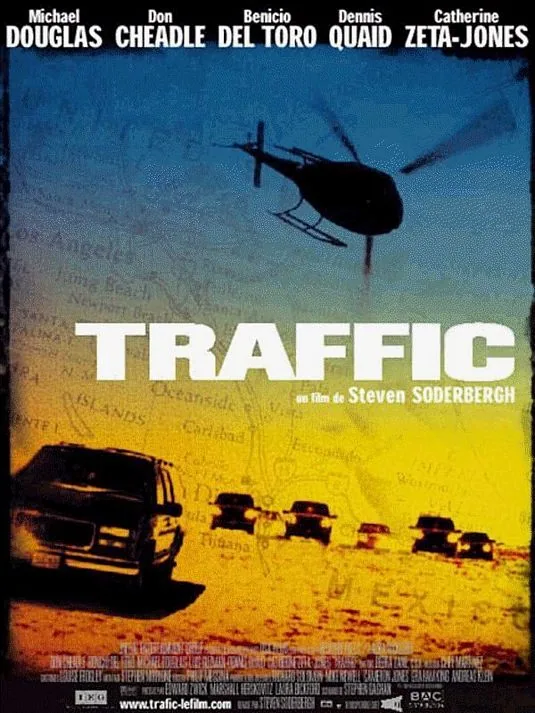
A newly appointed American drug czar discovers that the policy he is meant to oversee reaches directly into his own family when his teenage daughter develops a dependency. At the same time, a Mexican police officer tries to protect a partner and maintain a moral line inside a system where corruption is routine, while two San Diego agents pursue a case that connects local enforcement to a powerful cartel. In another strand, a wealthy businessman’s arrest leaves his sheltered wife to confront the machinery behind their comfortable life. The stories remain distinct but echo one another through uneven power, compromised institutions and the way a public drug war enters private homes. The film asks what control can mean when each level of the system depends on what the others conceal.
Based on recorded story, mood and style. Your preferences can change the order.
Investigation
What changes Touch of Evil: investigative and escalating. Serpico: measured, chronological and pressure-building.
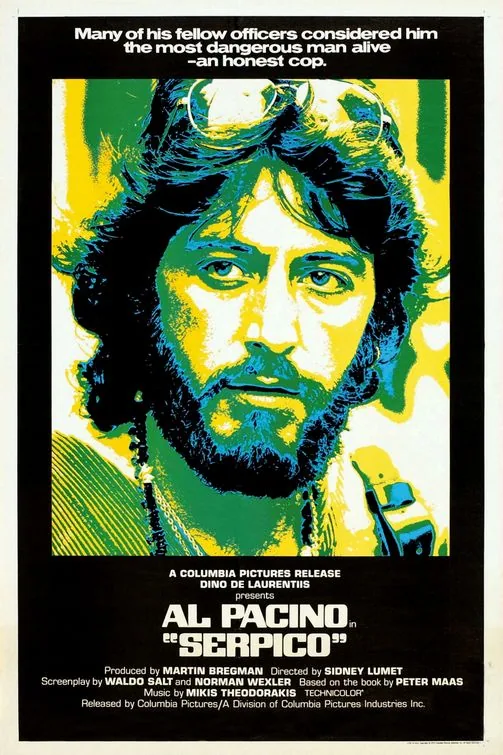
New York police officer Frank Serpico begins his career hoping to serve the public, but his unconventional style and refusal to accept bribes isolate him from colleagues who profit from a widespread corruption system. As he reports misconduct through official channels, indifference and retaliation make his own department an obstacle to the investigation. During a Brooklyn drug raid he is shot in the face, a turning point that exposes how isolated he has become within the force. His recovery and testimony before the Knapp Commission help bring the corruption into public view, but his relationship with the department is permanently changed.
Based on recorded story, mood and style. Your preferences can change the order.
Investigation
What changes Touch of Evil: investigative and escalating. The Secret in Their Eyes: nonlinear and patiently unfolding.
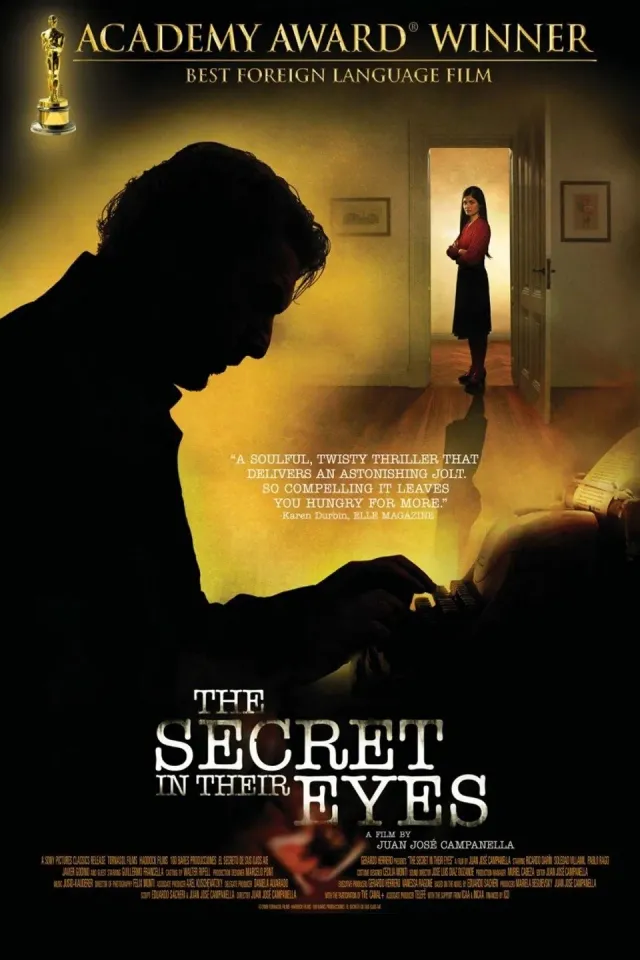
Retired legal investigator Benjamín Espósito begins writing about a rape and murder case that has haunted him for decades. Reconstructing the investigation takes him back to 1970s Argentina, where he worked with his superior Irene and encountered Ricardo Morales, the victim's grieving husband. The search for the killer was shaped by institutional corruption and the political climate, while Benjamín's restrained feelings for Irene remained unresolved. In the present, details that seemed settled become newly uncertain as memory and evidence are tested against one another. Benjamín's decision to revisit the case is not only professional: the act of writing forces him to confront what he has avoided in both the investigation and his personal life.
Based on recorded story, mood and style. Your preferences can change the order.
Investigation
What changes Touch of Evil: investigative and escalating. Prince of the City: procedural and accumulative.
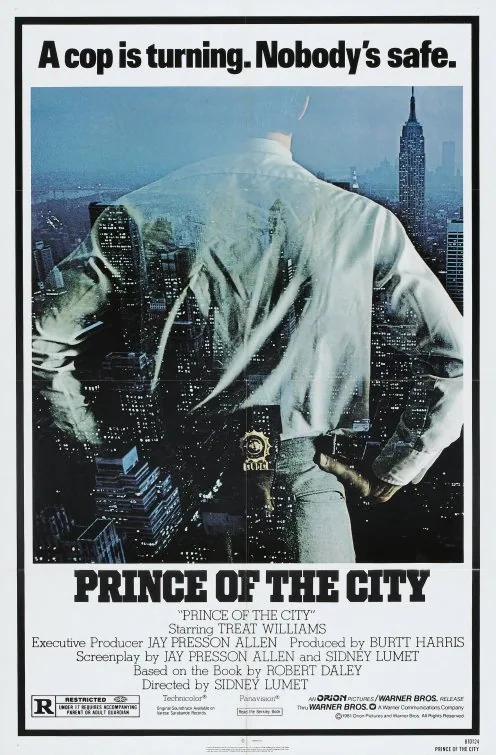
New York detective Daniel Ciello agrees to cooperate with prosecutors investigating corruption inside the police department. The decision places him between former colleagues, federal investigators and the criminal sources he once relied on, while every disclosure threatens relationships and self-respect. The film follows an extended investigation with procedural detail, showing how a witness can expose systemic wrongdoing and still struggle with his own part in it.
Based on recorded story, mood and style. Your preferences can change the order.
What changes Touch of Evil: investigative and escalating. Tango & Cash: action-comedy escalation and buddy-cop rhythm.
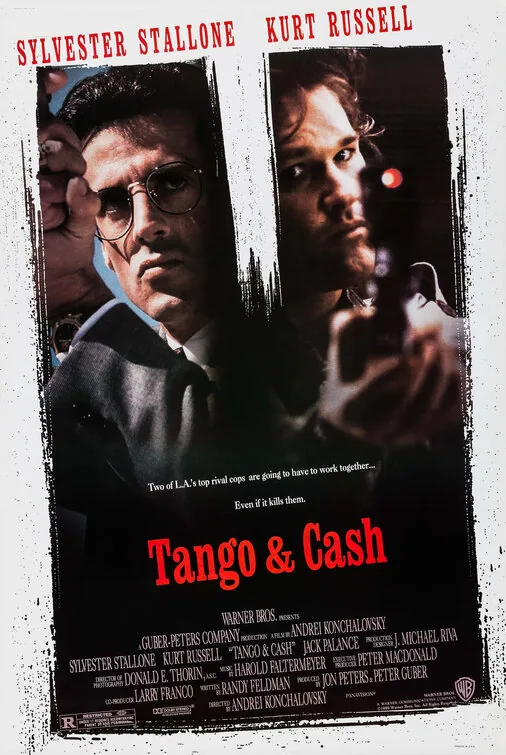
Raymond Tango and Gabriel Cash are rival Los Angeles narcotics detectives whose separate investigations threaten crime boss Yves Perret. Perret frames them for murder and sends them to prison, where the two officers initially distrust each other more than their captors. When they escape, they have to share information and work with Tango's sister to expose the evidence that ruined them. Their contrasting styles become useful only when they stop treating every encounter as a competition.
Based on recorded story, mood and style. Your preferences can change the order.
Investigation
What changes Touch of Evil: investigative and escalating. Sabotage: violent escalation and clue-led pursuit.
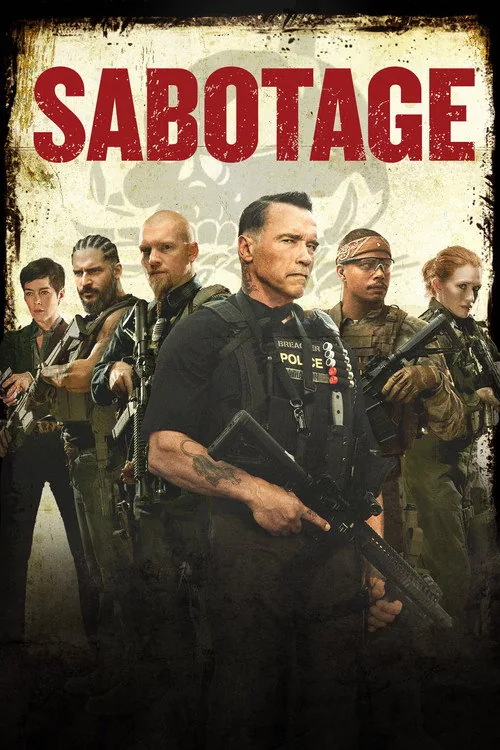
John Wharton leads an elite DEA team that raids a drug cartel safe house and secretly takes millions from its hidden cash. After the money disappears, members of the team are targeted and killed, turning their suspicions inward as investigators try to understand what happened. David Ayer’s action thriller follows a hard-edged group of agents whose loyalty and criminal entanglements are tested by violence, corruption, and a search for the source of the betrayal.
Based on recorded story, mood and style. Your preferences can change the order.
Investigation
What changes Touch of Evil: investigative and escalating. The Invisible Guest: a confined preparation session unfolds through competing flashbacks.
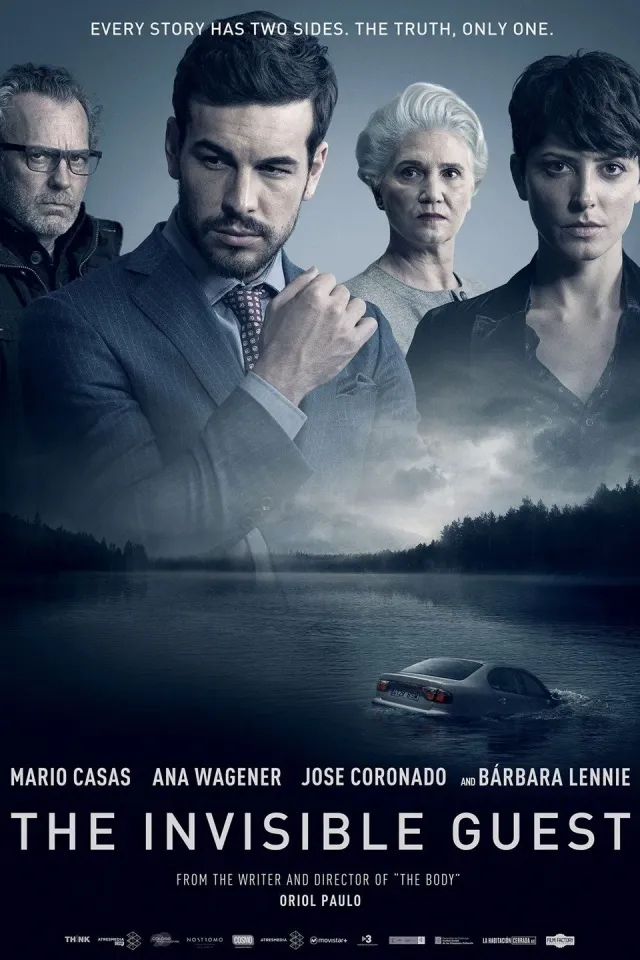
Businessman Adrián Doria is accused of murdering his lover and hires renowned attorney Virginia Goodman to prepare a defense before a key witness testifies. Over one tense meeting, they reconstruct competing versions of the crime and test what each account leaves out. The Spanish mystery thriller treats storytelling as a legal weapon, asking how much of a narrative can be trusted when every character has reason to conceal something.
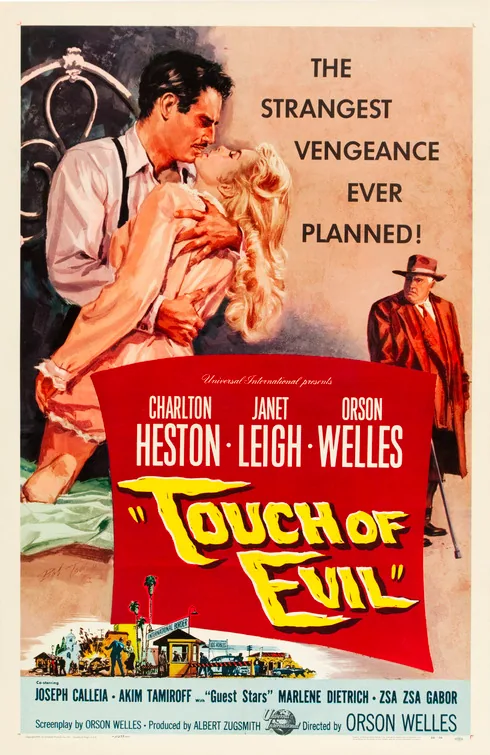
Mexican narcotics official Miguel “Mike” Vargas and his American wife Susan are honeymooning near the border when a car bomb leads to a murder investigation. Vargas becomes concerned that local police captain Hank Quinlan is manipulating evidence, especially after Susan is drawn into a separate coercive scheme. Quinlan’s reputation and alliances make it difficult to challenge him through ordinary channels, while his loyal partner Pete Menzies must decide what loyalty means when doubt grows. The investigation exposes a corrupt border authority whose power depends on controlling the story of who is guilty. Quinlan’s planted evidence reveals how institutional authority can manufacture its own proof, not merely win a single case.
What drives the story
A cross-border bombing investigation becomes a conflict over whether a powerful police captain has fabricated evidence to secure his convictions.
The people at its centre
Vargas’s commitment to procedure conflicts with Susan’s vulnerability, while Menzies’s loyalty to Quinlan is tested by the evidence he can no longer ignore.
What it feels like
The celebrated opening tracking shot, distorted compositions and shadow-heavy border settings establish a world where official authority feels physically unstable.
Worth knowing
For viewers drawn to expressionist noir, police corruption and morally compromised investigations. It is more atmospheric and formally audacious than a tidy detective procedural.