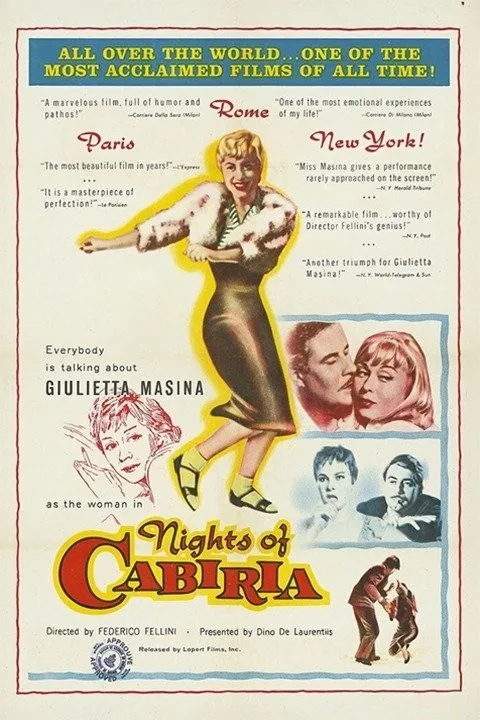
A chain of encounters repeatedly lets Cabiria imagine a new life, then tests whether optimism can survive exploitation without becoming foolishness.
Why this matches +
Related viewing experiences with the specific differences recorded for each pair.
An adjacent discovery: a related idea with a different viewing experience.
Genres: Drama / Romance
Shared film traits
Based on recorded story, mood and style. Your preferences can change the order.
What changes Roman street life and an independent sex worker bring vulnerability and humor into encounters shaped by desire and money. A single heroine’s much sadder trajectory replaces the source’s three comic roles and lighter ending.
Roman sex worker Cabiria survives a riverbank robbery by her lover Giorgio, then returns to her small home and tries to rebuild her faith in happiness. A chance night with a film star and a later pilgrimage briefly offer forms of recognition and hope, but a magician’s public hypnosis exposes how deeply she longs for marriage. When Oscar courts her and promises a future, Cabiria sells her home and trusts him with her savings. His betrayal leaves her walking alone through Rome, where a group of young revelers draws a tentative smile from her.
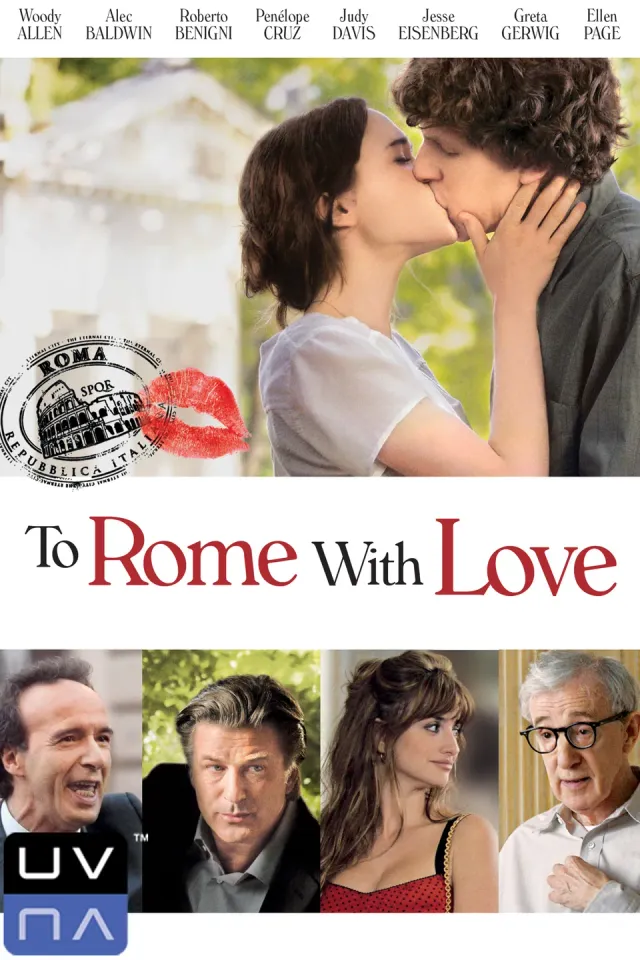
Separate visitors and residents navigate romance, celebrity and performance during an eventful stay in Rome.
Why this matches +
Related viewing experiences with the specific differences recorded for each pair.
An adjacent discovery: a related idea with a different viewing experience.
Genres: Comedy / Romance
Shared film traits
Based on recorded story, mood and style. Your preferences can change the order.
What changes Several comic stories use Italian urban spaces and social performance to expose sexual or professional pretensions. Its separate ensembles and celebrity fantasy replace recurring stars and the shift across Italian class settings.
Several stories unfold in Rome: an ordinary man becomes a sudden celebrity, a young couple are separated by a visit from relatives, an architect revisits the city of his youth, and an opera director pursues an unusual stage idea. Woody Allen's ensemble comedy uses the city as both backdrop and participant, moving among tourists, residents and performers in a light collection of romantic and comic episodes.
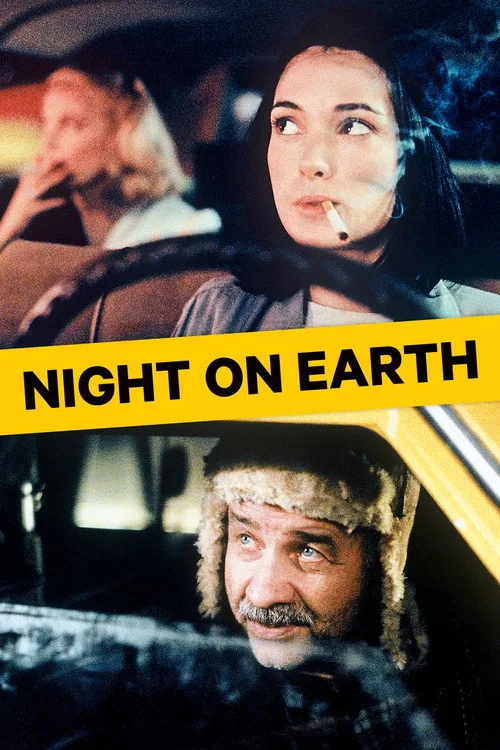
A sequence of rides creates a loose structure in which brief encounters and conversation carry each episode.
Why this matches +
Related viewing experiences with the specific differences recorded for each pair.
An adjacent discovery: a related idea with a different viewing experience.
Genres: Comedy / Drama
Shared film traits
Based on recorded story, mood and style. Your preferences can change the order.
What changes Brief encounters in distinct cities change the comic meaning of class, work and intimacy from episode to episode. Taxi conversations and a more melancholy register replace star-led erotic farce.
Five taxi rides unfold during one night in Los Angeles, New York, Paris, Rome, and Helsinki. Each vignette pairs a driver with passengers whose brief conversation reveals differences in language, work, class, family, or temperament. Jim Jarmusch keeps the action largely inside the taxis, making the rides feel like small temporary worlds where strangers can talk more freely than they might elsewhere. The film is an ensemble anthology of comic, awkward, and unexpectedly intimate encounters rather than one continuous plot.
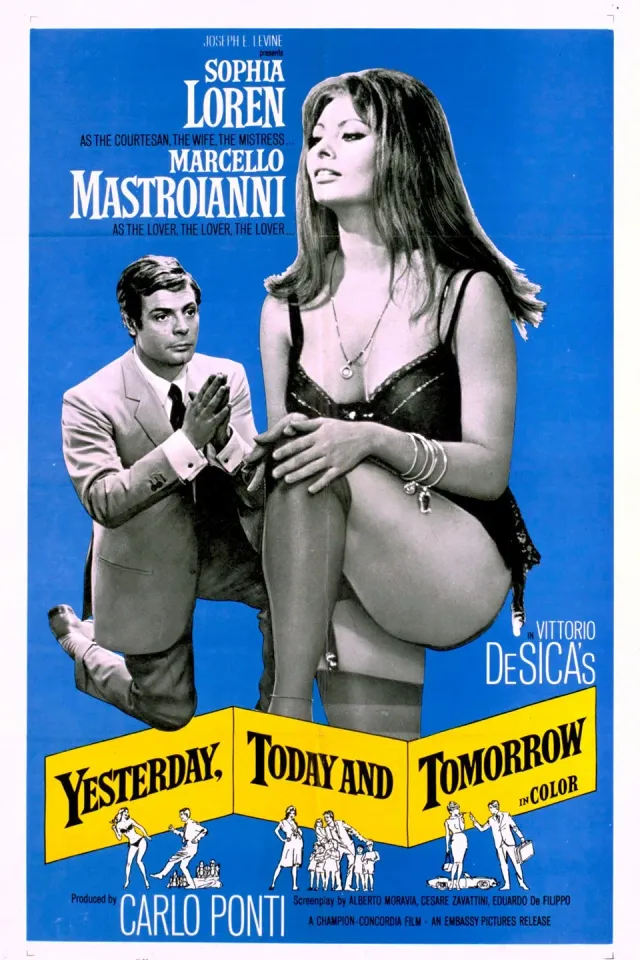
Vittorio De Sica’s comedy follows Sophia Loren and Marcello Mastroianni through three separate stories set in different parts of Italy. In Naples, Adelina’s cigarette smuggling and repeated pregnancies complicate her effort to avoid prison. In Milan, wealthy Anna grows restless during a drive with her lover. In Rome, sex worker Mara’s relationship with a young seminarian is interrupted by a promise that tests her generosity. The recurring performers and contrasting social worlds give the film a triptych structure, moving from street-level survival to wealth, desire and romantic comedy. The recurring stars make the changing roles part of the movie’s comic design.
What drives the story
Three stories use the same pair of stars to contrast how money, law, desire and social position shape people’s choices across different Italian settings.
The people at its centre
Loren and Mastroianni change roles and status between episodes, so the film’s central relationship is less a continuous couple than a playful study of shifting power and attraction.
What it feels like
A bright, episodic comedy with sharply different rhythms and a famous final sequence built around performance and flirtation. Its adult sexual humour sits alongside social observation.
Worth knowing
A fit for star-driven European comedies told as linked episodes. It is a three-part anthology rather than a single continuous romance, and its sexual comedy is more adult than the light tone can suggest.
desireclassgender roles
Mood
playful · sensual · wry
Pacing
triptych
Visual style
star performance · episodic contrast
Storytelling
three-part anthology · changing social roles · romantic comedy