Explore films connected to Youth in Revolt through Identity and self-invention, First love and obsession, Rebellion and consequences. Choose the qualities you want to carry into your next watch.
What should feel similar?
Find your next favourite
9 films · Closest overall matches
Hide films you’ve seen or don’t want. Saved on this device.
No matches for this combination yet.
Try another option or reset your choices to see more films.
Based on recorded story, mood and style. Your preferences can change the order.
Coming of age
What changes Youth in Revolt: episodic misadventures, voice-over reflection and comic escalation. Agent Cody Banks: fast.
A teenager trained by the CIA receives an assignment to approach a classmate whose scientist father is connected to a dangerous technology. His technical and physical preparation has not taught him how to behave confidently around someone he likes. The mission turns adolescent awkwardness into an operational weakness, requiring him to combine ordinary social risk with the responsibilities and gadgets of a deliberately exaggerated secret-agent fantasy.
Based on recorded story, mood and style. Your preferences can change the order.
Coming of age · Memory and identity
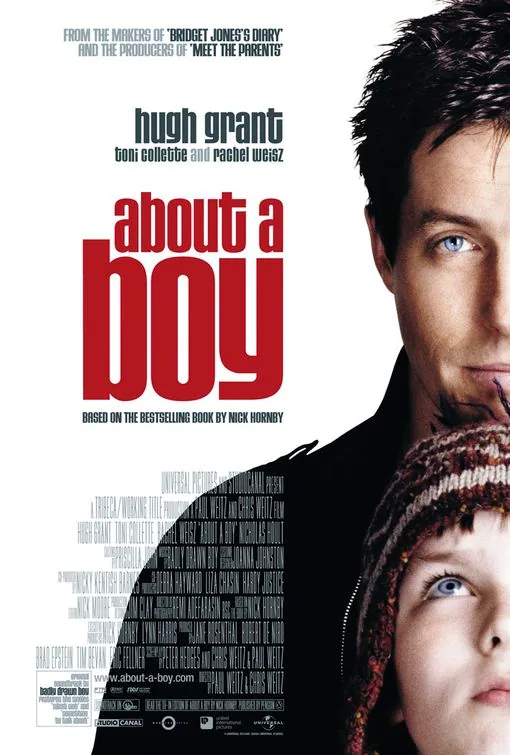
What changes Youth in Revolt: episodic misadventures, voice-over reflection and comic escalation. About a Boy: measured and character-led.
Will Freeman has arranged a comfortable life around avoiding obligations, until an invented family connection brings him into contact with isolated schoolboy Marcus. Their reluctant friendship draws Will into the boy’s family difficulties and forces both to reconsider their habits. The comedy balances dry observation with a gradual movement from self-protection toward care and responsibility.
Based on recorded story, mood and style. Your preferences can change the order.
Coming of age
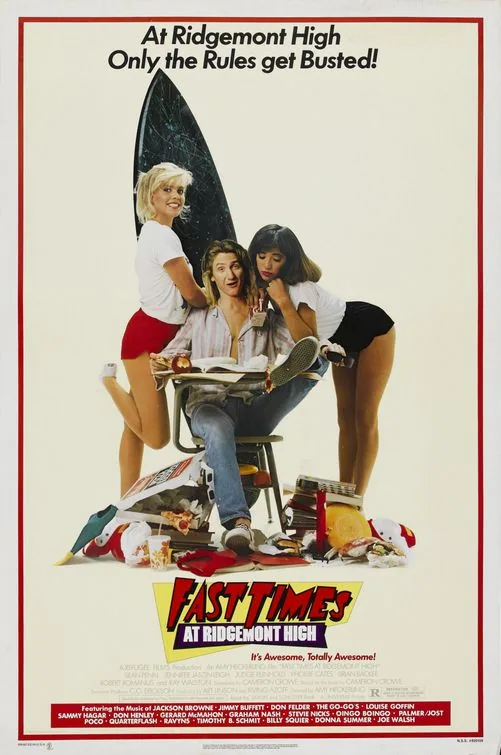
What changes Youth in Revolt: episodic misadventures, voice-over reflection and comic escalation. Fast Times at Ridgemont High: loose and ensemble-paced.
At a Southern California high school, teenagers navigate attraction, awkward sex, early work, friendship, and the uncertainty of becoming adults. Their intersecting experiences range from a confident senior's romantic misjudgments to a younger student's first crush and a fast-food job's daily frustrations. The film treats adolescence as funny and consequential, observing how peer pressure and small choices shape self-understanding.
Based on recorded story, mood and style. Your preferences can change the order.
Coming of age
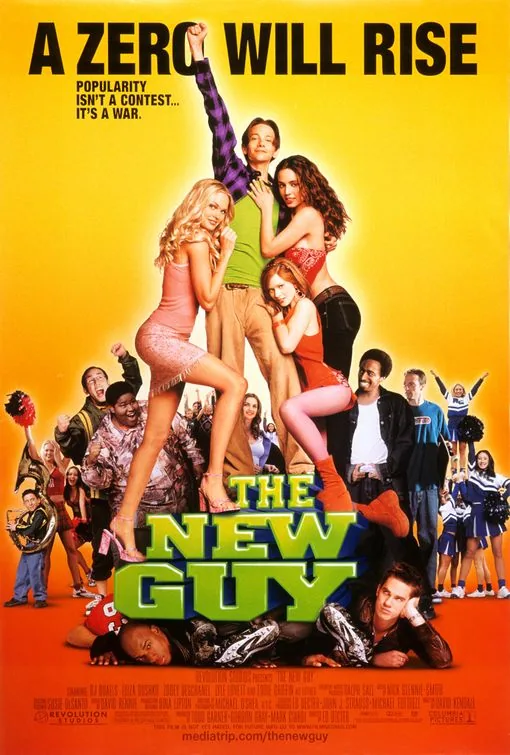
What changes Youth in Revolt: episodic misadventures, voice-over reflection and comic escalation. The New Guy: fast and episodic.
A socially awkward student gets expelled and decides to start over at a new school with a tougher identity. Advice from an unlikely mentor helps him construct the persona of a confident outsider, but the reinvention attracts attention and relationships that make the deception harder to maintain. The teen comedy follows how performance can open doors while also creating the fear of being known as the person one was trying to leave behind.
Based on recorded story, mood and style. Your preferences can change the order.
Coming of age · Memory and identity
What changes Youth in Revolt: episodic misadventures, voice-over reflection and comic escalation. Y tu mamá también: meandering and accumulating.
Two teenage friends take a road trip with an older woman who is dealing with a private loss, and their shifting trio turns a carefree journey into a reckoning with desire, class and growing up. A candid voice-over widens the story beyond the travelers’ self-image. The film’s erotic humor sits beside an attentive portrait of Mexican places and inequalities.
Based on recorded story, mood and style. Your preferences can change the order.
Coming of age
What changes Youth in Revolt: episodic misadventures, voice-over reflection and comic escalation. Election: a teacher’s private grudge turns a routine school election into an exercise in ballot manipulation..
At Carver High School in Omaha, high-achieving student Tracy Flick runs for student-government president without a challenger. Teacher Jim McAllister, still resentful over a scandal involving his friend and colleague, encourages popular football player Paul Metzler to run against her; Paul’s sister Tammy then enters as a protest candidate. As the campaign turns into a contest over power and reputation, Jim’s attempt to manipulate the vote threatens his career and marriage. Alexander Payne’s satire shifts among characters’ points of view to examine ambition and small-scale political corruption.
Based on recorded story, mood and style. Your preferences can change the order.
Coming of age · Memory and identity
What changes Youth in Revolt: episodic misadventures, voice-over reflection and comic escalation. The Rules of Attraction: interwoven character stories, nonlinear transitions and bleak convergence.
At Camden College, students Sean Bateman, Lauren Hynde, and Paul Denton move through parties, hookups, drugs, and private disappointments with little ability to communicate honestly. Lauren longs for her former boyfriend Victor, while Sean reads anonymous love letters as a sign of connection and Paul struggles with rejection. Their overlapping stories reveal a campus culture where desire is frequently unreturned and consequences are displaced onto others. The dark comedy adapts Bret Easton Ellis through fragmented chronology, shifting viewpoints, and a deliberately disaffected tone.
Based on recorded story, mood and style. Your preferences can change the order.
Coming of age · Memory and identity
What changes Youth in Revolt: episodic misadventures, voice-over reflection and comic escalation. The Art of Getting By: a school-year romance develops through small academic and personal choices.
George, a bright but disengaged Manhattan student, avoids schoolwork because he believes effort cannot change life’s meaning. His friendship and attraction to classmate Sally force him to reconsider his distance from other people and the future he has been refusing to plan. The coming-of-age drama keeps its scale intimate, following how a teenager’s self-protective cynicism begins to give way to ordinary responsibility.
Based on recorded story, mood and style. Your preferences can change the order.
Coming of age · Memory and identity
What changes Youth in Revolt: episodic misadventures, voice-over reflection and comic escalation. My Girl 2: a personal search unfolds alongside family transition.
Teenager Vada Sultenfuss is adjusting to her father's new marriage and an expected baby when a school assignment sends her to Los Angeles to learn about her late mother. With help from a new friend, she searches through family traces and encounters young romance while reconsidering the stories she has been told. The sequel shifts from childhood grief toward adolescence and family change.
Shy teenager Nick Twisp meets Sheeni during a family trip to a trailer park and quickly becomes determined to win her affection. When distance and family circumstances keep them apart, Nick invents François Dillinger, a bolder alter ego who encourages him to rebel against the adults controlling his life. His schemes grow increasingly destructive even as he tries to become the person he thinks Sheeni wants. Miguel Arteta’s dark coming-of-age comedy adapts C. D. Payne’s novel about adolescent desire and self-invention.
What drives the story
Nick’s effort to return to Sheeni leads him to construct a reckless persona that quickly takes on a life of its own.
The people at its centre
His affection for Sheeni, resentment toward adults, and friendship with his imagined self complicate his sense of agency.
What it feels like
The comedy combines teen longing with darkly absurd schemes, stylized narration, and a deliberately awkward romantic tone.
Worth knowing
It is an eccentric adolescent adaptation of C. D. Payne’s novel, not a straightforward high-school romance.
Identity and self-inventionFirst love and obsessionRebellion and consequences