The invasion depends on timing and coordination across airborne and seaborne forces, while weather, confusion and German defenses disrupt the plan.
Why this matches +
Selected for the central appeal: An ambitious historical operation fractures across interdependent units as command optimism collides with intelligence, logistics and resistance.
Genres: Drama / Action
Shared film traits
Based on recorded story, mood and style. Your preferences can change the order.
War and civilian life
What changes A large international ensemble reconstructs a coordinated WWII operation across commanders, airborne troops and ground forces; successful invasion objectives provide a different trajectory from Market Garden’s increasingly costly failure.
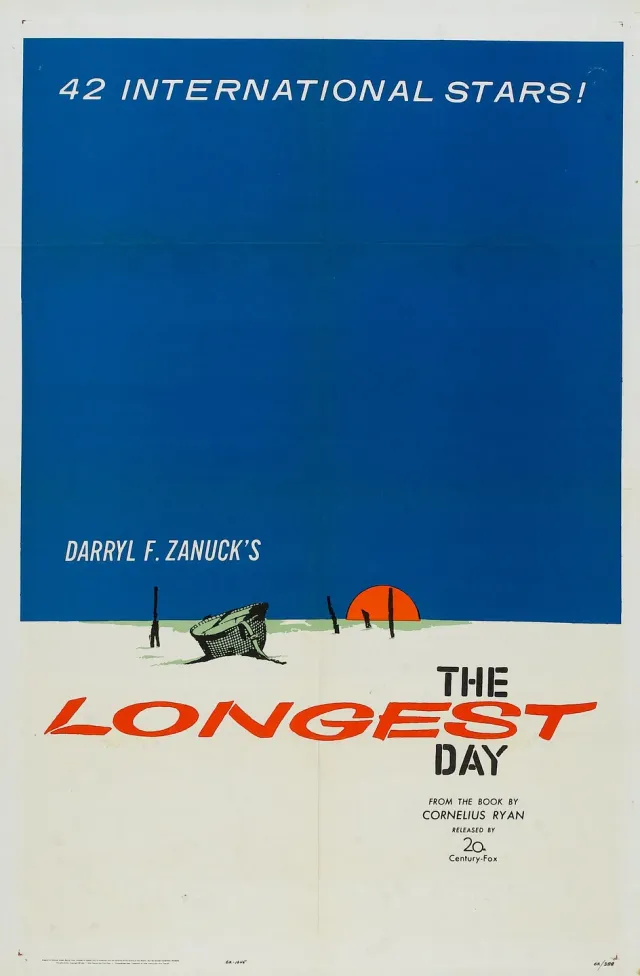
On June 6, 1944, Allied forces launch the D-Day invasion of German-occupied Normandy. The film follows the operation across several locations and perspectives: commanders planning the assault, paratroopers scattered inland, French resistance members aiding the effort and soldiers confronting the beach landings. Rather than following one protagonist, it builds a large-scale account from linked episodes of preparation, confusion and combat. Adapted from Cornelius Ryan’s nonfiction book, it dramatizes a historic military operation through a 1960s international ensemble.
A planned raid becomes an expanding rescue problem in which each attempt to retrieve stranded personnel creates further tactical vulnerability.
Why this matches +
Selected for the central appeal: An ambitious historical operation fractures across interdependent units as command optimism collides with intelligence, logistics and resistance.
Genres: Drama / Thriller
Shared film traits
Based on recorded story, mood and style. Your preferences can change the order.
What changes An operation assumed to be manageable fragments into trapped units, failed movement and increasingly costly efforts to reach colleagues; modern urban combat is more immediate and graphically immersive than the expansive WWII strategic ensemble.
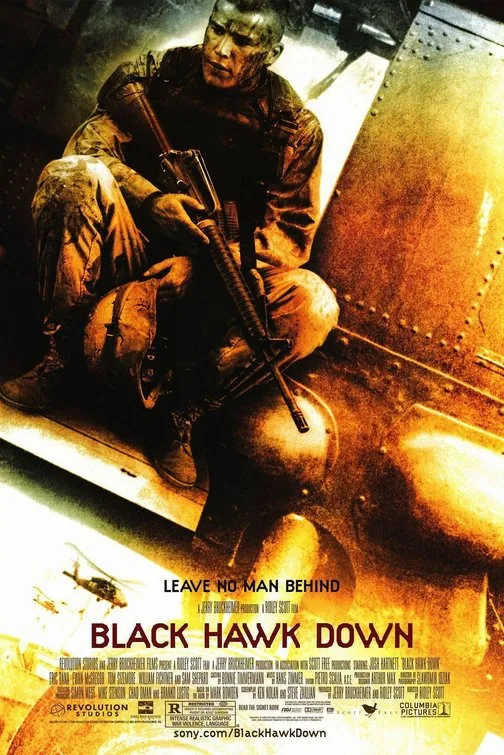
American troops enter Mogadishu expecting a brief operation to capture members of an armed faction. When helicopters are brought down, separate groups become trapped in unfamiliar streets and efforts at extraction multiply the number of people exposed. The immediate demands of reaching injured colleagues dominate a mission whose original objectives recede behind survival, communication failures and the difficulty of finding routes through an urban battlefield.
A sequence of military and diplomatic choices converges on a surprise attack, with each side interpreting incomplete information under pressure.
Why this matches +
Selected for the central appeal: An ambitious historical operation fractures across interdependent units as command optimism collides with intelligence, logistics and resistance.
Genres: War
Shared film traits
Based on recorded story, mood and style. Your preferences can change the order.
War and civilian life
What changes Historical military planning unfolds through many officials and units, with misunderstood intelligence and communication delays producing catastrophe; the dual-national account of a surprise attack replaces following one coalition’s overambitious offensive.
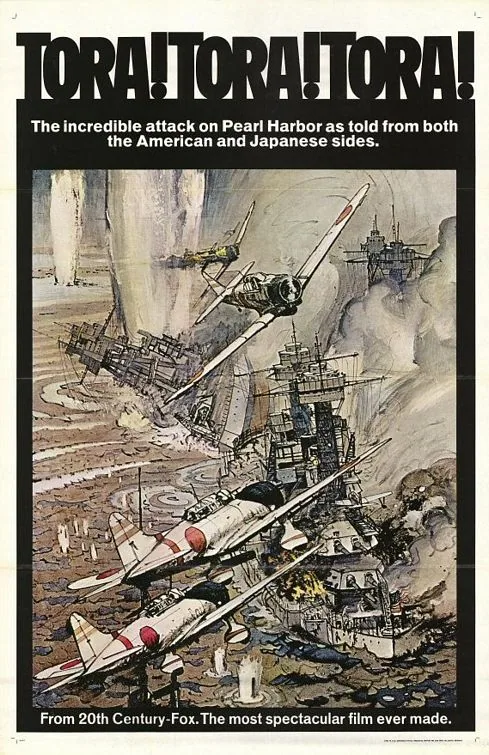
This Japanese-American production reconstructs the decisions and communication failures leading to the December 1941 attack on Pearl Harbor from both Japanese and American perspectives. Japanese military leaders debate the risks and objectives of the operation, while U.S. officials and commanders struggle to interpret intelligence and coordinate a response. The narrative follows diplomatic messages, naval planning and the unfolding air assault rather than a single fictional hero. Its dual structure gives attention to decision-making on both sides, but it remains a dramatization shaped by the historical record and the film’s own era. The attack’s surprise results from accumulated choices and intelligence misreadings rather than one isolated failure.
An evacuation is assembled through intersecting efforts whose different clocks and incomplete information create repeated risks of misinterpretation and delay.
Why this matches +
Related viewing experiences with the specific differences recorded for each pair.
An adjacent discovery: a related idea with a different viewing experience.
Genres: Drama / Historical
Shared film traits
Based on recorded story, mood and style. Your preferences can change the order.
War and civilian life
What changes Multiple military perspectives expose survival dependent on movement and coordination after an operation has failed; compressed intercut subjective time and evacuation replace a conventional chronological account of offensive planning.
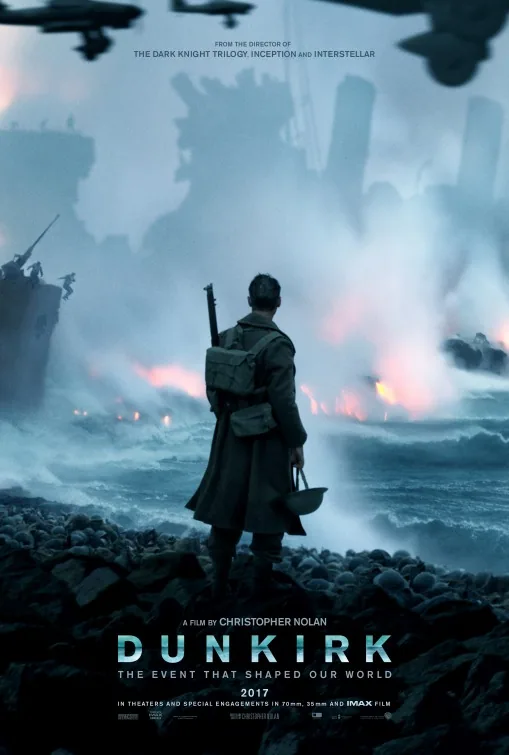
Soldiers trapped on a French beach seek a way home while small civilian boats cross the Channel and pilots attempt to protect the withdrawal. The three strands unfold over different spans of time, repeatedly exposing how one group's temporary safety can depend on work occurring elsewhere. Limited knowledge and overwhelming material danger leave little room for a conventional account of personal heroism, making survival a collective achievement that no participant can see in full.
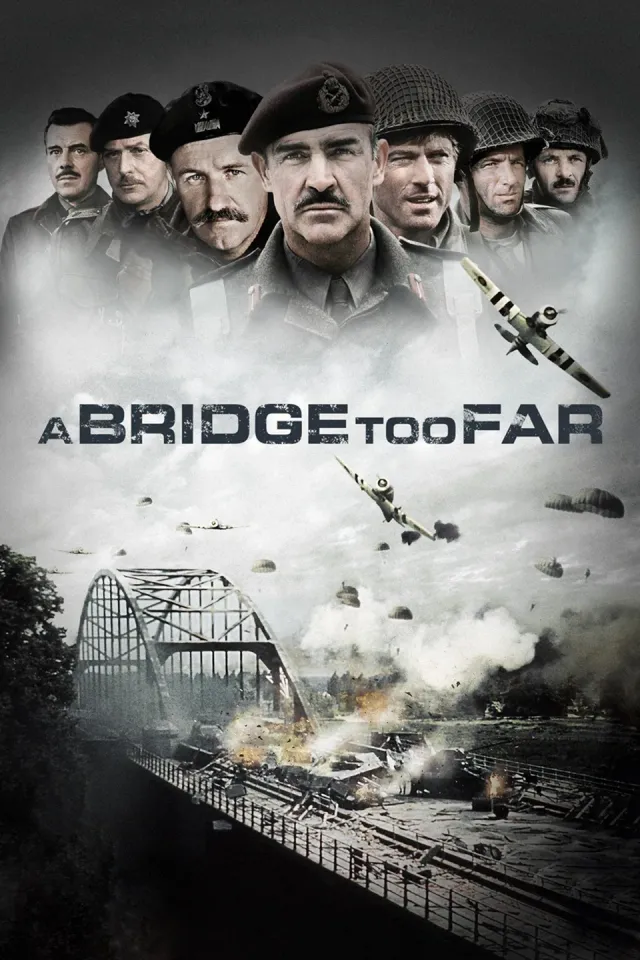
Allied commanders launch an ambitious operation to seize a chain of bridges in the Netherlands and open a rapid route into Germany. Airborne troops and advancing ground forces depend on tightly connected objectives, but intelligence failures, communication problems, and fierce resistance unravel the plan. The ensemble follows officers and soldiers confronting the growing distance between strategic optimism and what individual units can actually survive.
What drives the story
An interdependent military plan breaks down as delays and faulty assumptions compound across separate bridge objectives.
The people at its centre
Command decisions made at a distance leave dispersed soldiers and local civilians to bear increasingly unequal risks.
What it feels like
A wide ensemble and large scale combat emphasize logistical fragility, endurance, and the accumulating cost of institutional overconfidence.
Worth knowing
The central comparison is an operation failing through connected assumptions, not a single commando mission with clean tactical triumph.
WarInstitutional failureDuty
Mood
Epic · Solemn · Bleak
Pacing
Measured · Epic
Visual style
Grounded · Expansive
Storytelling
Military operation · Ensemble · Logistical collapse