An interdependent military plan breaks down as delays and faulty assumptions compound across separate bridge objectives.
Why this matches +
Selected for the central appeal: Large-scale World War II films depicting military operations through multiple perspectives.
Genres: War / Drama
Shared film traits
Based on recorded story, mood and style. Your preferences can change the order.
War and civilian life
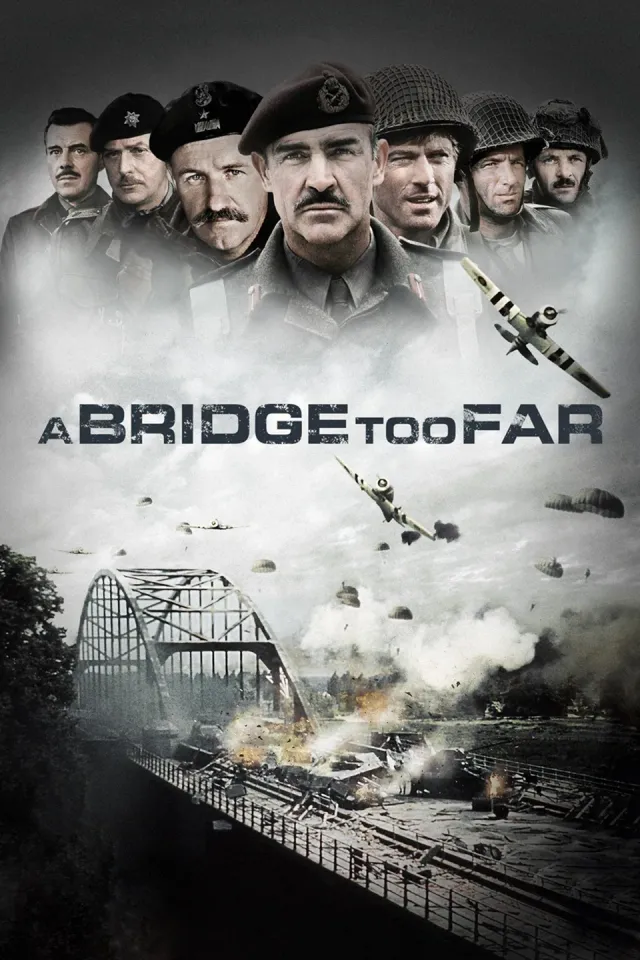
What changes A Bridge Too Far follows a major Allied operation through an international ensemble of commanders and soldiers.
Allied commanders launch an ambitious operation to seize a chain of bridges in the Netherlands and open a rapid route into Germany. Airborne troops and advancing ground forces depend on tightly connected objectives, but intelligence failures, communication problems, and fierce resistance unravel the plan. The ensemble follows officers and soldiers confronting the growing distance between strategic optimism and what individual units can actually survive.
A rescue order sends an exhausted combat unit across hostile territory, repeatedly forcing tactical decisions against the moral arithmetic of the mission.
Why this matches +
Selected for the central appeal: Large-scale World War II films depicting military operations through multiple perspectives.
Genres: Drama / Action
Shared film traits
Based on recorded story, mood and style. Your preferences can change the order.
War and civilian life
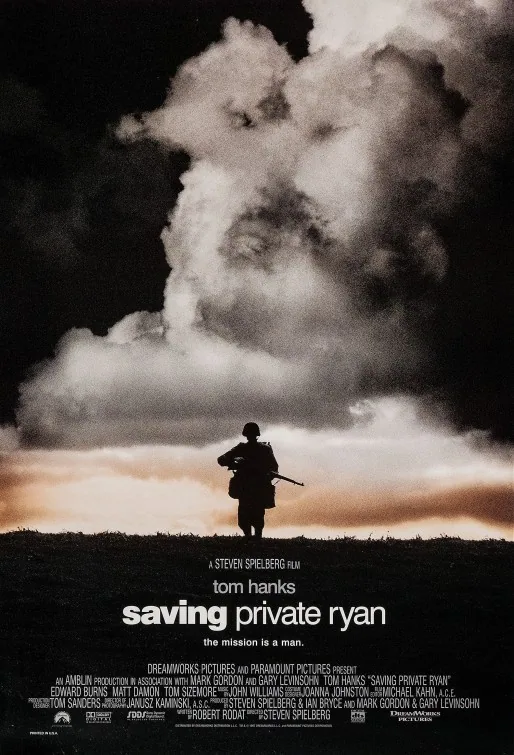
What changes Saving Private Ryan depicts the Normandy landings and a mission through the ensuing battlefield.
Following the Normandy landings, a squad of American soldiers is ordered to locate a paratrooper whose brothers have been killed and send him home. Their movement through contested French territory exposes them to repeated losses and disagreements about the value of risking several lives for one. A captain's authority must hold the unit together as the mission tests duty, compassion and the uneasy meaning of deserving survival.
A sequence of military and diplomatic choices converges on a surprise attack, with each side interpreting incomplete information under pressure.
Why this matches +
Selected for the central appeal: Large-scale World War II films depicting military operations through multiple perspectives.
Genres: War
Shared film traits
Based on recorded story, mood and style. Your preferences can change the order.
War and civilian life
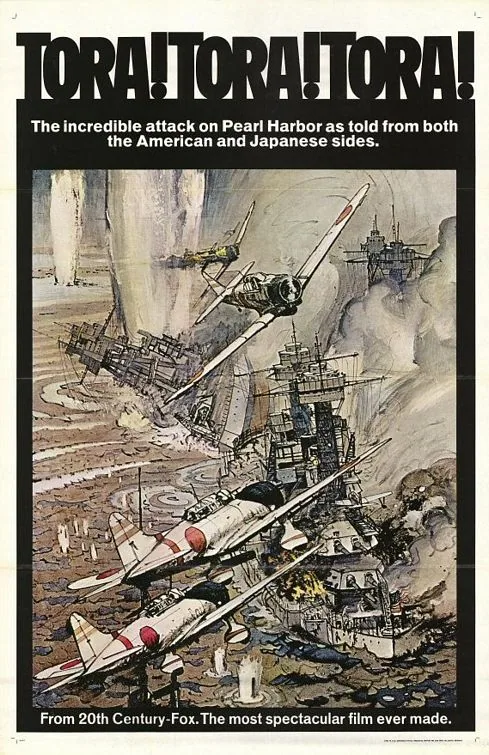
What changes Tora! Tora! Tora! reconstructs a major World War II attack through multiple national and military perspectives.
This Japanese-American production reconstructs the decisions and communication failures leading to the December 1941 attack on Pearl Harbor from both Japanese and American perspectives. Japanese military leaders debate the risks and objectives of the operation, while U.S. officials and commanders struggle to interpret intelligence and coordinate a response. The narrative follows diplomatic messages, naval planning and the unfolding air assault rather than a single fictional hero. Its dual structure gives attention to decision-making on both sides, but it remains a dramatization shaped by the historical record and the film’s own era. The attack’s surprise results from accumulated choices and intelligence misreadings rather than one isolated failure.
American forces respond to Pearl Harbor by preparing for a decisive carrier battle in the Pacific.
Why this matches +
These offer a related experience with a meaningful difference in story, tone, or presentation.
An adjacent discovery: a related idea with a different viewing experience.
Genres: Drama / Action
Shared film traits
Based on recorded story, mood and style. Your preferences can change the order.
War and civilian life
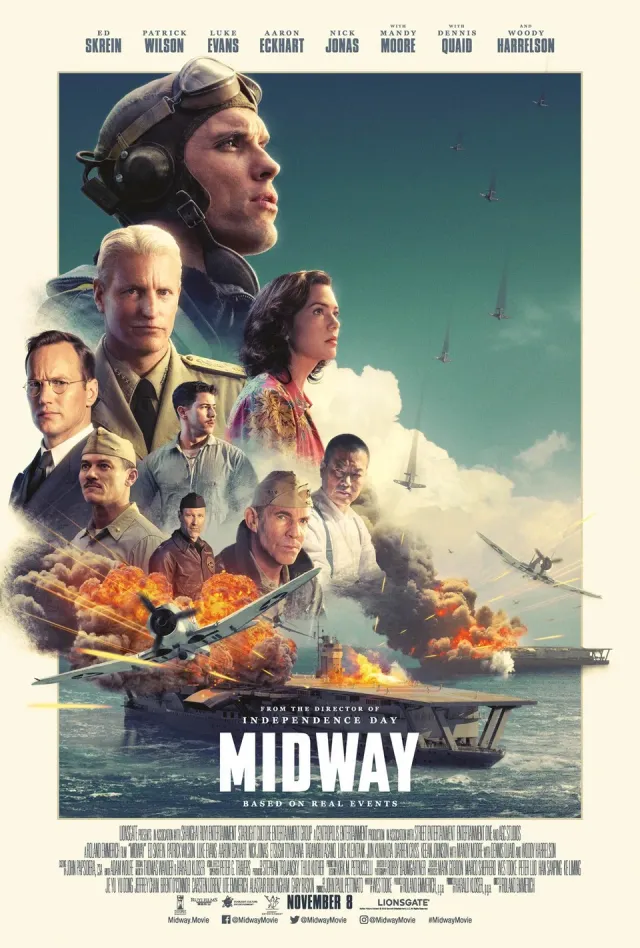
What changes Midway follows the planning and combat of a decisive World War II operation.
The attack on Pearl Harbor brings Navy aviator Dick Best and other American service members into the Pacific War. The film follows military decisions and air operations from the surprise attack through the Battle of Midway, moving between pilots, intelligence staff and commanders. Large-scale combat scenes frame a story about preparation, coordination and the consequences of decisions made with incomplete information.
Weather data becomes a source of human responsibility rather than background detail.
Why this matches +
These offer a related experience with a meaningful difference in story, tone, or presentation.
An adjacent discovery: a related idea with a different viewing experience.
Genres: Drama / History
Shared film traits
Based on recorded story, mood and style. Your preferences can change the order.
War and civilian life
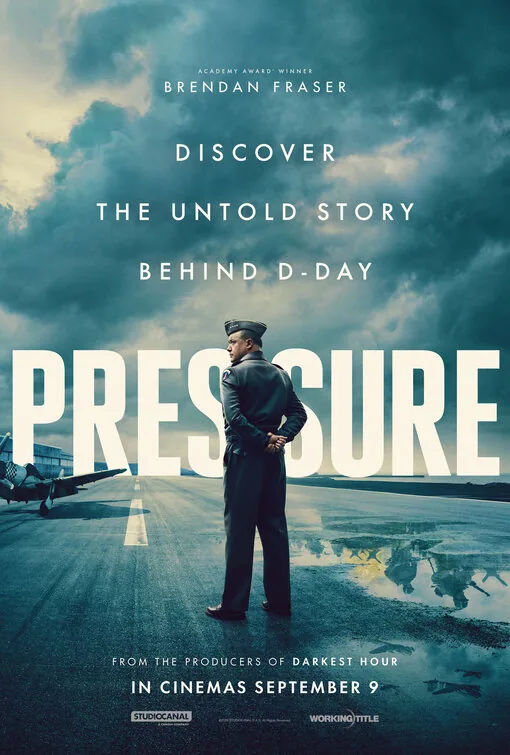
What changes Pressure dramatizes the difficult forecasting and leadership decisions preceding the D-Day landings.
In the days before the Allied invasion of Normandy, meteorologist James Stagg must advise General Eisenhower whether the weather will permit the operation to begin. The decision involves uncertain forecasts, military urgency, and the lives of troops and civilians on both sides of the Channel. This historical drama turns planning and disagreement into suspense, showing how a small group weighs incomplete evidence before an irreversible military commitment.
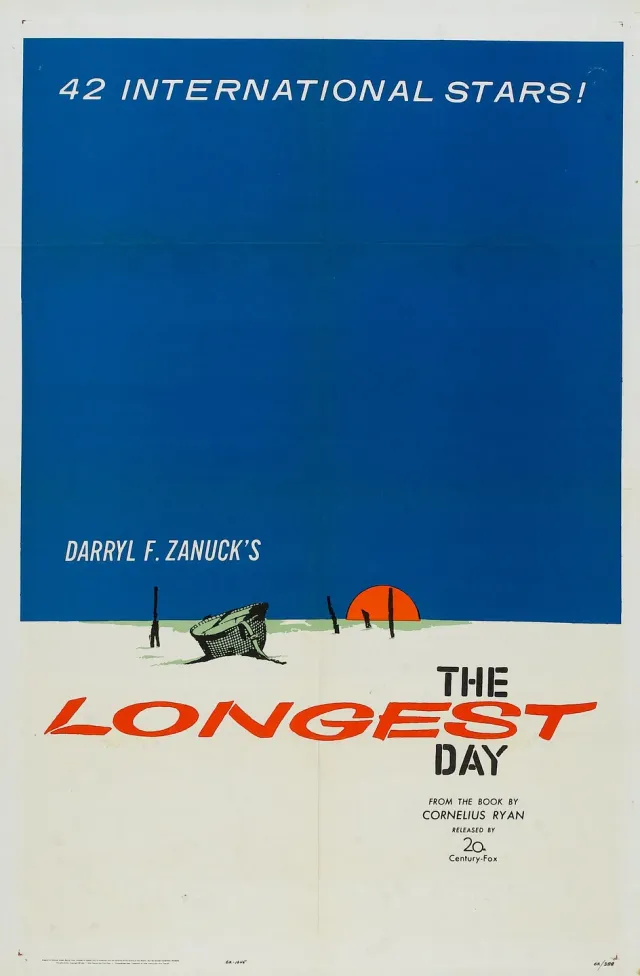
On June 6, 1944, Allied forces launch the D-Day invasion of German-occupied Normandy. The film follows the operation across several locations and perspectives: commanders planning the assault, paratroopers scattered inland, French resistance members aiding the effort and soldiers confronting the beach landings. Rather than following one protagonist, it builds a large-scale account from linked episodes of preparation, confusion and combat. Adapted from Cornelius Ryan’s nonfiction book, it dramatizes a historic military operation through a 1960s international ensemble.
What drives the story
The invasion depends on timing and coordination across airborne and seaborne forces, while weather, confusion and German defenses disrupt the plan.
The people at its centre
The ensemble does not have one central relationship arc; the film moves among soldiers, commanders and civilians to show different stakes within the same operation.
What it feels like
Black-and-white widescreen photography and a large international cast give the battle scenes scale, but the episodes are staged for dramatic clarity and contain documented factual errors. The film’s breadth should not be confused with a neutral documentary record.
Worth knowing
A fit for classic multi-perspective war epics about a major military operation. It is a 1960s dramatization shaped by its production period, with errors and uneven national perspectives; pair it with historical accounts of D-Day rather than treating it as a complete record.
CoordinationDutySurvival
Mood
Grave · Large-scale · Heroic
Pacing
Intercut preparation and battle · Ensemble progression
Visual style
Black-and-white widescreen · Battlefield realism
Storytelling
D-Day operation · Multi-perspective war story · Invasion logistics