An austere supernatural drama follows a sheet-covered ghost who stays near his former home as grief expands into a meditation on time, place and impermanence.
What should feel similar?
Find your next favourite
4 films · Closest overall matches
Hide films you’ve seen or don’t want. Saved on this device.
No matches for this combination yet.
Try another option or reset your choices to see more films.
Adam’s romance with Harry and visits with his parents intersect as he tries to understand what intimacy and loss mean to him.
Why this matches +
An austere supernatural drama follows a sheet-covered ghost who stays near his former home as grief expands into a meditation on time, place and impermanence.
Genres: Drama / Romance
Shared film traits
Based on recorded story, mood and style. Your preferences can change the order.
Memory and identity
What changes Conversation, queer romance and imagined parental reunions replace the ghost’s almost wordless watch over changing occupants.
Adam, a screenwriter living alone in a nearly empty London tower block, begins a tentative relationship with his neighbor Harry. He also returns to the suburban home of his childhood, where his long-deceased parents appear as they were when he was young. Through these impossible conversations and his present-day romance, Adam revisits grief, loneliness, sexuality, and the bullying that shaped his sense of self. Andrew Haigh’s film blends romantic drama with a quiet, subjective ghost story.
The young woman and Jake travel to the farm and later return toward the school where the janitor works.
Why this matches +
Pair notes distinguish the viewing experiences.
An adjacent discovery: a related idea with a different viewing experience.
Genres: Drama / Thriller
Shared film traits
Based on recorded story, mood and style. Your preferences can change the order.
Memory and identity · Constructed reality
What changes Its uneasy conversations and fragmented road trip have a sharper psychological and comic edge.
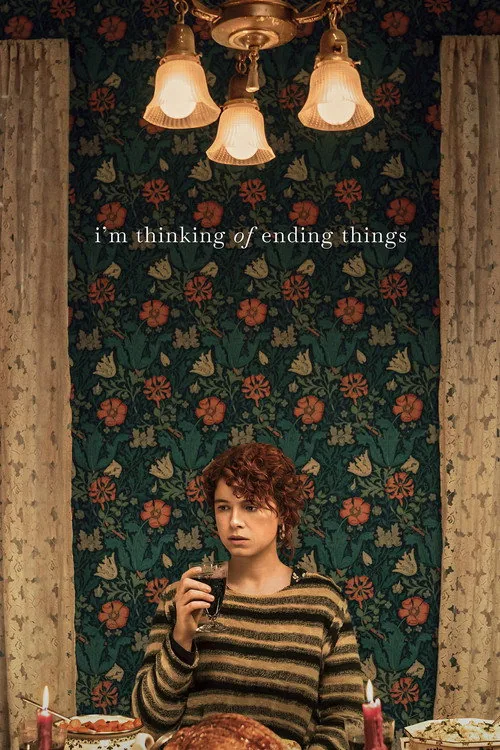
A young woman travels with her boyfriend Jake to meet his parents at their remote farmhouse, while an elderly school janitor’s workday is shown in parallel. The woman’s name, past, and account of how she met Jake shift, and the visit grows stranger as his parents change age and the couple’s drive home moves into a snowstorm. Charlie Kaufman’s adaptation of Iain Reid’s novel links the trip to the janitor’s memories and fantasies, using theatre, poetry, and film references to leave the story’s reality open to interpretation.
Damiel’s desire to become human grows from listening to countless separate lives and recognizing the limits of distant compassion.
Why this matches +
Pair notes distinguish the viewing experiences.
An adjacent discovery: a related idea with a different viewing experience.
Genres: Fantasy / Drama
Shared film traits
Based on recorded story, mood and style. Your preferences can change the order.
Memory and identity
What changes The angels roam Berlin and one wants to become human, rather than a dead man being bound to one place.
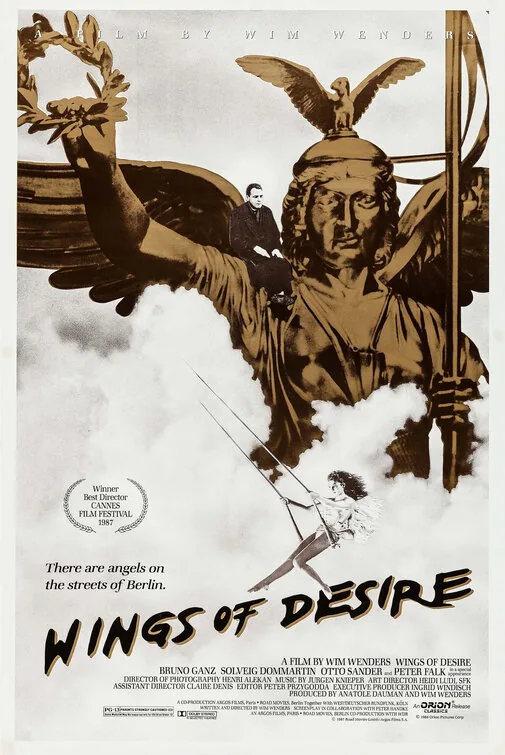
In divided Berlin, angels Damiel and Cassiel observe people’s private thoughts and sorrows while remaining unable to participate in ordinary sensation. Damiel becomes increasingly drawn to human experience and to Marion, a trapeze artist whose own life is changing. Peter Falk’s arrival as a visiting actor, who seems aware of the angels, helps connect Damiel’s abstract longing to the physical routines of city life. Wim Wenders places the love story among Berlin’s streets, memories and postwar histories, making the city itself part of the film’s meditation. By listening to individual voices, the film makes inward life its dramatic landscape. Actor Peter Falk links angelic distance to a human who has chosen embodiment.
An adult revisits family memories and a sibling's death while the film places his private grief beside an immense cosmic history.
Why this matches +
Pair notes distinguish the viewing experiences.
An adjacent discovery: a related idea with a different viewing experience.
Genres: Drama / Coming-of-age
Shared film traits
Based on recorded story, mood and style. Your preferences can change the order.
Memory and identity
What changes Family memory and spiritual questioning organize the film rather than one silent ghost anchored to a house.
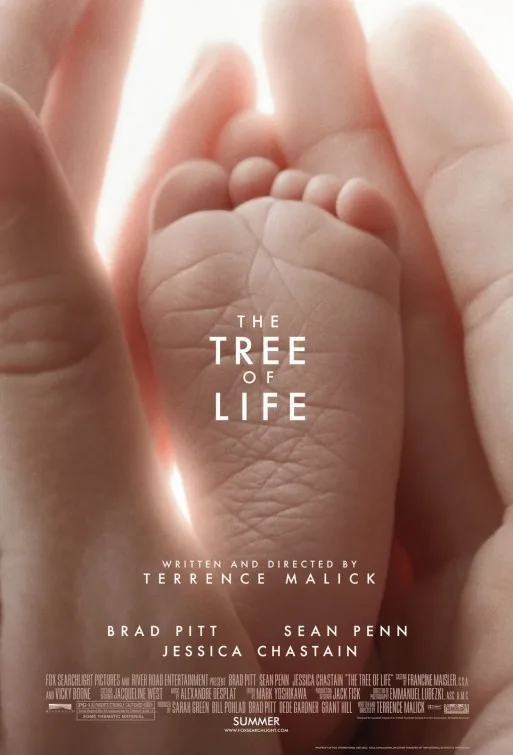
Adult Jack reflects on his childhood in 1950s Texas, where his mother's warmth and his father's strict, ambitious parenting shaped his ideas about love and power. The memory of a family loss runs through his recollections, making ordinary moments of play, discipline and sibling rivalry feel charged with questions he could not answer as a child. The film moves between Jack's present, fragmented family memories and vast images of the universe's origins, placing private grief beside the scale of creation. Rather than offer a single explanatory account of the past, it lets images, music and recurrence carry much of the emotional argument. Jack's adult search is for a way to hold anger, love and absence together.
After musician C dies in a car accident, he returns to the house he shared with his wife M beneath a white sheet. Unable to communicate, he watches her grieve and eventually leave, while the house passes through new residents and changing eras. The ghost’s experience stretches across time as he remains attached to a hidden note in the home. David Lowery’s supernatural drama uses long still compositions and a deliberately slow pace to explore memory, grief, and the persistence of place.
What drives the story
A ghost remains in a house across changing occupants and eras, attached to a note hidden by his wife.
The people at its centre
The dead husband watches M’s grief and later lives without her, while the living continue to alter the shared home.
What it feels like
Contains death, grief, loneliness, and an extended scene involving distressing eating behavior.
Worth knowing
The film is a philosophical ghost story shaped by duration and repetition rather than a plot-driven haunting.