A vulnerable succession becomes a struggle to concentrate authority, requiring the queen to turn private disappointment and political threat into a deliberately managed sovereign image. Threats to a weak succession press Elizabeth to consolidate authority while counselors treat marriage as state policy.
Why this matches +
Selected for the central appeal: Historical dramas about conscience, law and resistance to political pressure.
Genres: Historical / Drama
Shared film traits
Based on recorded story, mood and style. Your preferences can change the order.
What changes Elizabeth follows Tudor court politics, religious conflict and the personal consequences of royal authority.
A young queen inherits an English throne surrounded by financial weakness, religious conflict and advisers who view marriage as a means of stabilizing her rule. Private attachment becomes increasingly difficult to separate from the alliances through which others hope to control her. Discovering betrayal pushes her toward constructing a public identity that can claim authority beyond the available roles of wife, dependent successor or favored companion. The “Virgin Queen” image becomes a political instrument, even as it limits how the young ruler can express private life.
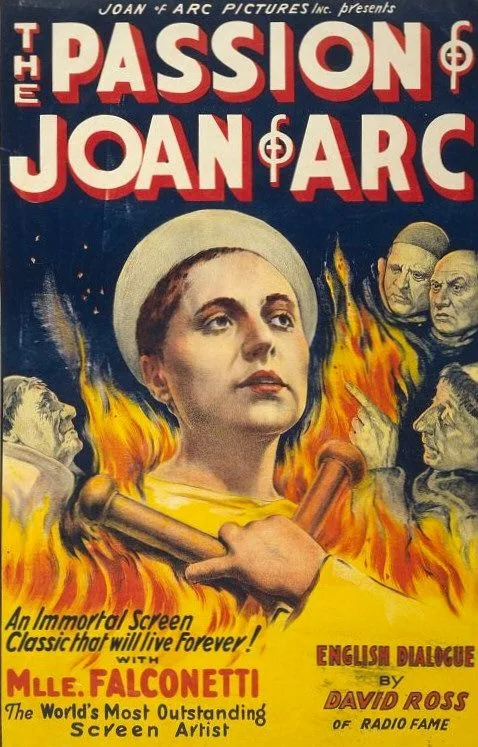
The court uses questioning, deception and threat to make Joan renounce her mission; her recantation and withdrawal shape the movement toward execution.
Why this matches +
Selected for the central appeal: Historical dramas about conscience, law and resistance to political pressure.
Genres: Drama / Silent
Shared film traits
Based on recorded story, mood and style. Your preferences can change the order.
What changes The Passion of Joan of Arc centers a trial in which religious and political authorities demand a declaration against private conviction.
Captured near Compiègne, Joan of Arc is brought before a clerical court in Rouen, where judges loyal to the English seek to discredit her claim that God called her to drive the occupiers from France. Their questions move from doctrine to her visions, clothing and authority, turning the trial into a battle over who has the right to define her. Deception and threats of torture pressure Joan to sign a confession, but she later withdraws it and faces execution. Carl Theodor Dreyer compresses the historical proceedings into an intensely immediate ordeal, focusing on Joan's face and the reactions of the men judging her rather than recreating her military campaign. The film's emotional force comes from the conflict between institutional power and private conviction.
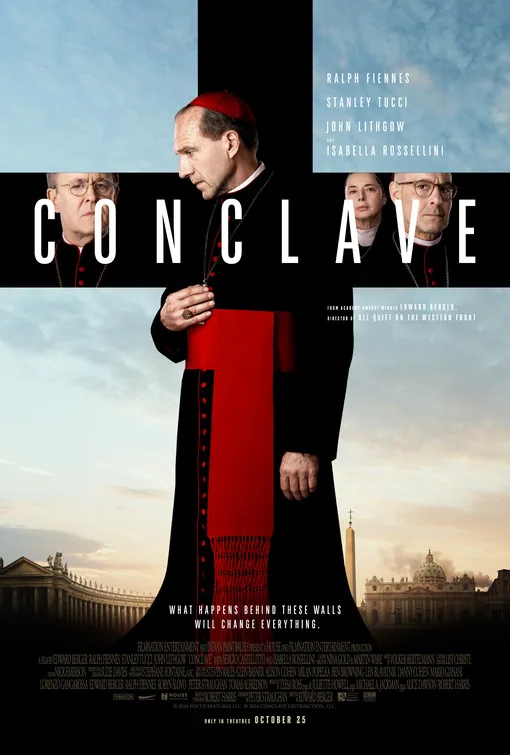
A papal election becomes an investigation as new evidence reorders the candidates and forces Lawrence to weigh institutional stability against conscience.
Why this matches +
These offer a related experience with a meaningful difference in story, tone, or presentation.
An adjacent discovery: a related idea with a different viewing experience.
Genres: Drama / Thriller
Shared film traits
Based on recorded story, mood and style. Your preferences can change the order.
What changes Conclave examines conscience, institutional procedure and competing ambitions during a consequential religious decision.
After a pope dies, Cardinal Lawrence leads the secluded conclave that must choose a successor while rival clerics negotiate alliances and a series of disclosures alters the field. The closed setting turns procedure, rumor and moral compromise into a political thriller. A final revelation about Cardinal Benitez's intersex embodiment changes how characters and viewers interpret the election, but it must not be framed as proof of deception or as a claim about intersex people generally. The film is speculative fiction, not an authoritative guide to church law or actual conclaves. Lawrence's search for the source of each revelation unfolds inside the election's strict seclusion.
A newsroom's evidence-based challenge to political intimidation tests how far a commercial broadcaster will support the independence it publicly endorses.
Why this matches +
These offer a related experience with a meaningful difference in story, tone, or presentation.
An adjacent discovery: a related idea with a different viewing experience.
Genres: Drama / History
Shared film traits
Based on recorded story, mood and style. Your preferences can change the order.
What changes Good Night, and Good Luck. follows people defending principle under powerful political pressure.
A television news team challenges accusations and procedures associated with Senator McCarthy while working inside a network vulnerable to sponsors and political pressure. Decisions about evidence, wording and airtime make editorial independence a practical risk rather than an abstract professional virtue. Personal consequences unfold around the broadcasts, including scrutiny of colleagues whose lives do not fit institutional rules. The restrained historical drama presents journalism as coordinated work whose public authority depends on choices made under commercial and political constraint.
Serpico’s refusal to participate turns routine police work into an institutional conflict, and each attempt to report the bribes exposes another layer of protection for the system.
Why this matches +
These offer a related experience with a meaningful difference in story, tone, or presentation.
An adjacent discovery: a related idea with a different viewing experience.
Genres: Crime / Drama
Shared film traits
Based on recorded story, mood and style. Your preferences can change the order.
Political resistance
What changes Serpico follows a principled insider whose refusal to accept institutional corruption isolates him.
New York police officer Frank Serpico begins his career hoping to serve the public, but his unconventional style and refusal to accept bribes isolate him from colleagues who profit from a widespread corruption system. As he reports misconduct through official channels, indifference and retaliation make his own department an obstacle to the investigation. During a Brooklyn drug raid he is shot in the face, a turning point that exposes how isolated he has become within the force. His recovery and testimony before the Knapp Commission help bring the corruption into public view, but his relationship with the department is permanently changed.
Thomas More tries to retain both his conscience and legal safety as Henry VIII demands support for a new marriage and royal supremacy over the Church. Resigning and refusing to explain himself seem to preserve a narrow space in which he need not openly defy the king. As allies seek compromise and ambitious officials manufacture a case, silence becomes a test of whether law can protect private conviction when political authority requires a public declaration of loyalty.
What drives the story
More uses resignation and legally guarded silence to avoid endorsing royal supremacy, but a state demanding explicit assent turns his refusal into a prosecution sustained by purchased testimony.
The people at its centre
His family presses him to survive, Norfolk treats friendship as grounds for compromise, and Richard Rich converts personal disappointment into career advancement through the authority pursuing More.
What it feels like
Controlled period rooms and measured verbal exchanges concentrate suspense in definitions, omissions and coercive requests, so an apparent lack of action becomes the method by which pressure accumulates.
Worth knowing
Compare principled refusal defended through legal restraint against a demand for public conformity, rather than collapsing private conscience into generic religious desire, armed rebellion or royal spectacle.
ConscienceFaithPower
Mood
Solemn · Tense · Restrained
Pacing
Measured
Visual style
Controlled · Period detail
Storytelling
Political pressure · Legal conflict · Principled refusal