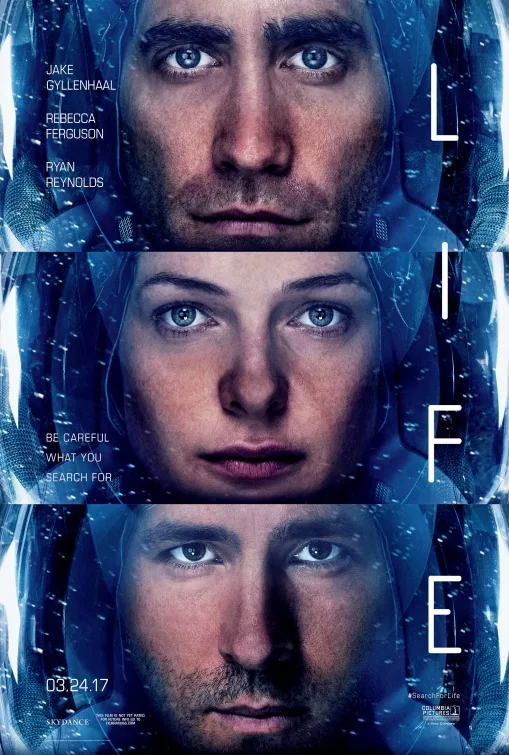
A rapidly adaptive organism escapes research containment, turning crew rescue and station repair into decisions about whether anyone can safely return to Earth.
Why this matches +
Selected for the central appeal: Science-fiction creature horror about human experimentation, altered identity and survival aboard an isolated vessel.
Genres: Science Fiction / Horror
Shared film traits
Based on recorded story, mood and style. Your preferences can change the order.
Survival
What changes Life traps a space crew with a dangerous alien organism that threatens the entire vessel.
An orbital research crew revives a cell recovered from Mars and watches the discovery outgrow its containment faster than its knowledge can adapt. Attempts to rescue one another repeatedly give the organism access to new spaces, while declining station systems threaten to move the danger closer to Earth. The crew must weigh individual survival against preventing a much wider exposure. The science-fiction horror makes scientific wonder and protective instinct part of the same causal trap, with each local solution narrowing the remaining possibilities.
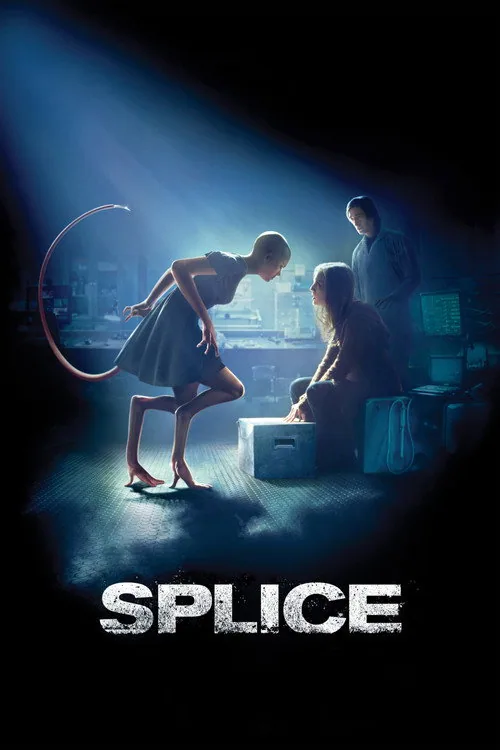
Clive and Elsa’s choices about Dren become entangled with their own rivalry and desire for recognition.
Why this matches +
Selected for the central appeal: Science-fiction creature horror about human experimentation, altered identity and survival aboard an isolated vessel.
Genres: Horror / Science Fiction
Shared film traits
Based on recorded story, mood and style. Your preferences can change the order.
Artificial life
What changes Splice follows researchers whose engineered human-animal hybrid exposes unsettling questions of identity and responsibility.
Geneticists Clive Nicoli and Elsa Kast secretly combine human and animal DNA to create a hybrid organism they name Dren. Although the experiment was meant to stop before a viable being developed, Elsa persuades Clive to let Dren live, and the pair raise her in isolation while concealing the project from their employer. As Dren grows rapidly and develops unexpected physical and behavioral traits, the scientists’ professional partnership and ethical boundaries deteriorate. Vincenzo Natali’s science-fiction horror film examines parental projection, scientific ambition, and the consequences of treating a living being as research property.
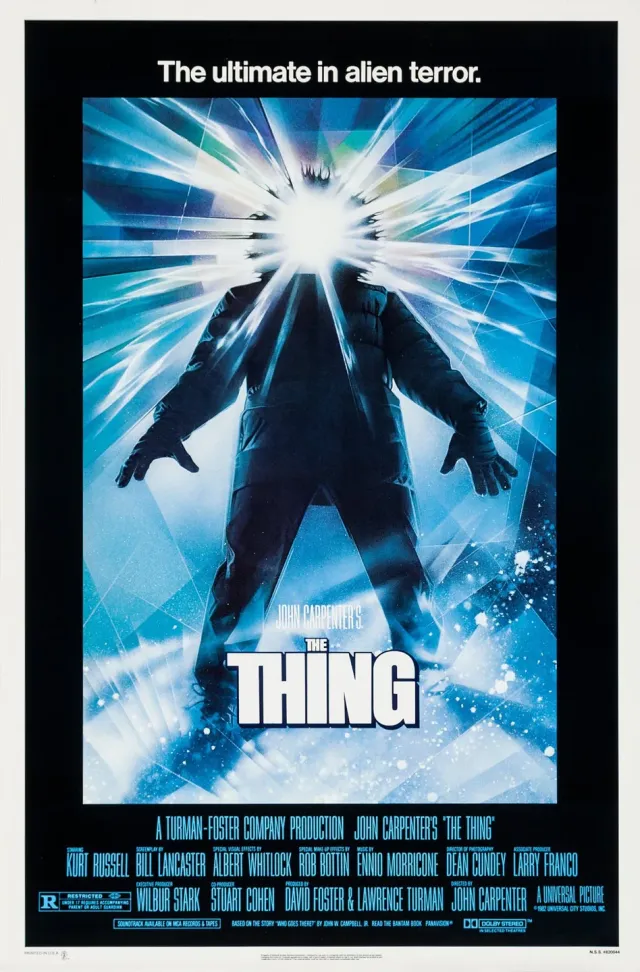
A threat that can reproduce trusted appearances destroys the evidence on which a small group's cooperation normally depends.
Why this matches +
These offer a related experience with a meaningful difference in story, tone, or presentation.
An adjacent discovery: a related idea with a different viewing experience.
Genres: Horror / Science fiction
Shared film traits
Based on recorded story, mood and style. Your preferences can change the order.
Survival
What changes The Thing isolates people with an alien threat that blurs the boundary between human and creature.
An isolated Antarctic research team takes in a dog from a neighbouring station without understanding the pursuit that brought it there. Discovering a life form capable of imitating living bodies makes every familiar colleague a possible threat. Limited transport, extreme weather and uncertain tests turn cooperation into a series of fragile bargains, with survival potentially conflicting with the obligation to prevent the organism from reaching anyone else.
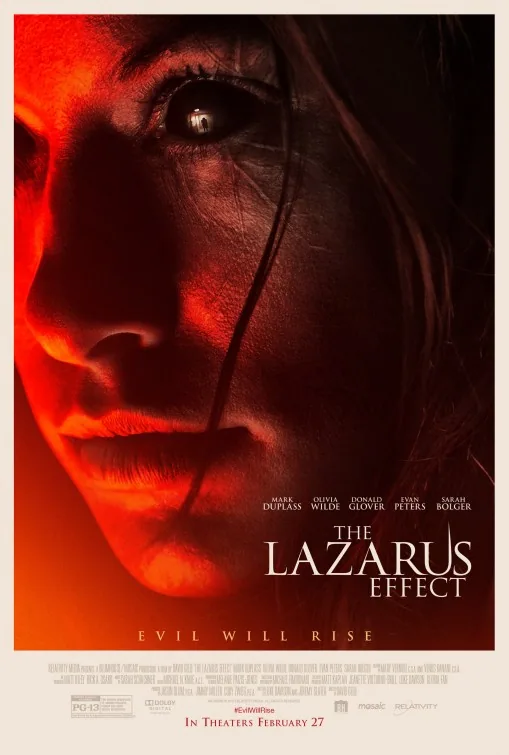
The experiment turns an abstract debate about mortality into a crisis the team must manage inside its own workplace.
Why this matches +
These offer a related experience with a meaningful difference in story, tone, or presentation.
An adjacent discovery: a related idea with a different viewing experience.
Genres: Horror / Science Fiction
Shared film traits
Based on recorded story, mood and style. Your preferences can change the order.
What changes The Lazarus Effect follows scientists whose attempt to restore life creates a dangerous altered being.
A medical research team develops a process that can restore life after death, but an experiment produces a result more dangerous than anyone anticipated. The scientists’ desire to extend knowledge collides with their fear of losing control over what they have created. This contained science-fiction horror uses a laboratory setting to explore the boundary between research ambition and moral responsibility.
A containment mission reveals an experiment's human consequences, forcing the squad to distinguish rescue from an order to eradicate uncertainty through indiscriminate force.
Why this matches +
These offer a related experience with a meaningful difference in story, tone, or presentation.
An adjacent discovery: a related idea with a different viewing experience.
Genres: Science fiction / Horror
Shared film traits
Based on recorded story, mood and style. Your preferences can change the order.
Survival
What changes Doom confines an armed team with lethal creatures produced by biological experimentation.
A military team enters a research station on Mars after a distress call interrupts secret experiments. Searching for survivors reveals that the creatures attacking them are connected to human testing rather than an external enemy easily separated from the institution. An operative's reunion with his scientist sister creates another source of divided knowledge, while the commander's escalating response makes obeying the mission increasingly difficult to reconcile with protecting people still capable of being saved.
Two centuries after Ripley's death, military researchers clone her to recover the alien queen that died with her. The resulting experiment mixes human and alien traits, making her identity uncertain even before captive creatures escape. Joining smugglers and another concealed outsider, she must navigate a failing research vessel while deciding what solidarity means when her own body connects her to both victims and threat.
What drives the story
A militarized cloning project creates unstable biological continuity and then loses containment, turning its recovered subject into an uneasy escape ally.
The people at its centre
Ripley's altered loyalties and a synthetic companion's hidden identity complicate trust among mercenaries whose own choices helped supply victims for the experiment.
What it feels like
Grotesque bodily imagery and abrasive ensemble humor give the confined escape a stranger, more exaggerated register than a purely austere survival thriller.
Worth knowing
Compare exploitative recovery of a body followed by unstable kinship and escape, rather than treating cloning as a straightforward restoration of the earlier protagonist.