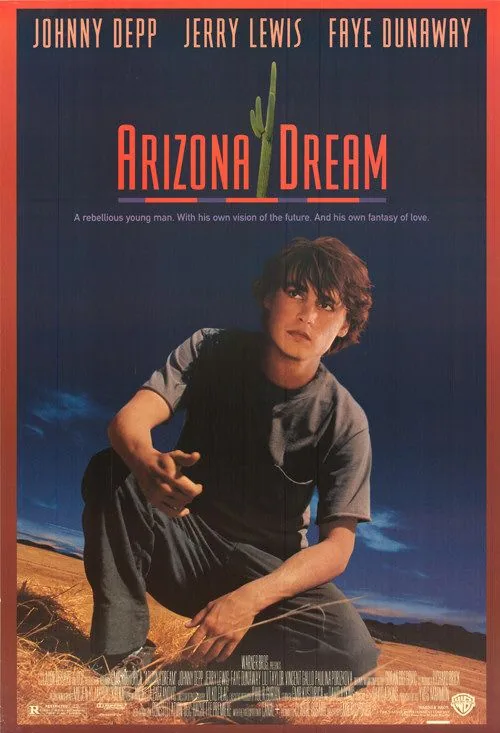
A New York fish counter returns to his uncle’s Arizona car dealership and becomes entangled with a widow who dreams of flight and her troubled stepdaughter in a surreal tragicomedy.
What should feel similar?
Find your next favourite
5 films · Closest overall matches
Hide films you’ve seen or don’t want. Saved on this device.
No matches for this combination yet.
Try another option or reset your choices to see more films.
Stéphane’s elaborate dreams keep intruding into his attempts to work, communicate, and build a relationship with Stéphanie.
Why this matches +
A New York fish counter returns to his uncle’s Arizona car dealership and becomes entangled with a widow who dreams of flight and her troubled stepdaughter in a surreal tragicomedy.
Genres: Fantasy / Comedy
Shared film traits
Based on recorded story, mood and style. Your preferences can change the order.
What changes A Paris office worker’s neighbor romance and craftlike dream imagery replace the Arizona family, car lot and widow’s flying machine.
After his father’s death, Stéphane returns to Paris and takes an unsatisfying job, where he meets his neighbor Stéphanie. His dreams are vivid, handmade worlds that increasingly spill into his waking life, making it hard to know whether a conversation, invention, or romantic gesture has actually happened. Michel Gondry’s French-language comedy blends fantasy, romance, and surreal craft imagery to follow a shy man whose imagination both connects him with another person and complicates ordinary intimacy.
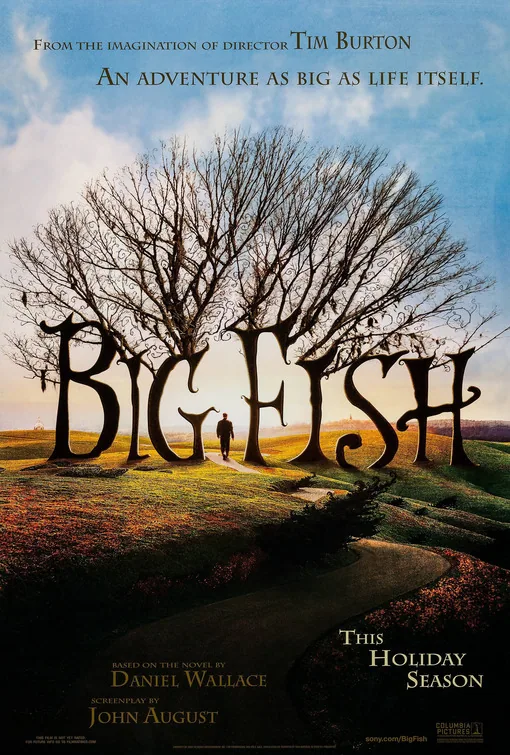
Will's investigation into Edward's tall tales becomes a last attempt to know his father, but each factual check raises a deeper question about what a story can communicate.
Why this matches +
Pair notes distinguish story, format and tone.
An adjacent discovery: a related idea with a different viewing experience.
Genres: Drama / Fantasy
Shared film traits
Based on recorded story, mood and style. Your preferences can change the order.
What changes A son investigates his dying father’s tall tales rather than a young man entering a volatile household and love triangle.
Will Bloom returns to Alabama when his father Edward is dying, still frustrated that the man tells extravagant stories instead of speaking plainly about their relationship. He investigates the people and places behind those tales, hoping to separate verifiable fact from performance before it is too late. The stories make Edward's life larger but also conceal disappointments and private choices. As father and son approach a final conversation, Will must consider whether accepting a story means abandoning truth or recognizing the kind of intimacy Edward knew how to offer. The fantasy remains an emotional language, not a verified history.
The road offers the lovers a chance at freedom, but Lula’s family history and the people they encounter keep turning escape into danger.
Why this matches +
Pair notes distinguish story, format and tone.
An adjacent discovery: a related idea with a different viewing experience.
Genres: Crime / Drama
Shared film traits
Based on recorded story, mood and style. Your preferences can change the order.
What changes Fugitive lovers face violent criminals in a much harsher road movie, without Arizona Dream’s family dealership and flying ambition.
After leaving prison, Sailor Ripley reunites with Lula Fortune, and the couple set out on the road while Lula’s mother tries to separate them by hiring a killer. Their journey crosses a violent Southern landscape of unstable strangers, impulsive choices and pop-cultural fantasies. Sailor’s devotion to Elvis-style performance and Lula’s imagined Wizard of Oz references give their romance a deliberately heightened, dreamlike frame. David Lynch adapts Barry Gifford’s novel as a story of outlaw love that is repeatedly interrupted by menace and grotesque comedy. Their loyalty is sincere, but grotesque disruptions undercut their romantic ideals. Encounters with violent strangers keep the road from settling into a safe couple's getaway.
The film accumulates seasons, ceremonies and neighborhood encounters rather than following one escalating goal. Recurring rituals show how private growing up and public political performance occupy the same community.
Why this matches +
Pair notes distinguish story, format and tone.
An adjacent discovery: a related idea with a different viewing experience.
Genres: Comedy / Drama
Shared film traits
Based on recorded story, mood and style. Your preferences can change the order.
What changes A 1930s Italian town’s collective memories replace an American newcomer’s romantic and family conflicts.
Federico Fellini's Amarcord moves through a year in a coastal Italian town during the 1930s, following Titta, his family, neighbors and schoolmates through seasonal rituals, adolescent fascination and public spectacle. Fascist pageantry enters the same episodic world as family arguments and local gossip, so political authority can seem at once theatrical and ordinary. The film's title evokes the sound of remembering, and the scenes feel like a deliberately shaped mixture of recollection, invention and grotesque humor. It offers a subjective portrait of a place, not a reliable documentary of Rimini or a single childhood.
Roy’s story changes as Alexandria recasts its heroes using the people and feelings around her.
Why this matches +
Pair notes distinguish story, format and tone.
An adjacent discovery: a related idea with a different viewing experience.
Genres: Adventure / Drama
Shared film traits
Based on recorded story, mood and style. Your preferences can change the order.
What changes A hospitalized stuntman tells a child an invented adventure, rather than dreams intruding on an Arizona romantic tragicomedy.
In a 1920s Los Angeles hospital, injured stuntman Roy tells young patient Alexandria an elaborate story about a masked bandit and a band of heroes. Alexandria imagines the characters through people she sees around her, and her contributions gradually shape a fantasy that reflects Roy’s private pain. Tarsem Singh’s film moves between intimate hospital scenes and vivid landscapes, exploring storytelling as a shared act that can comfort, manipulate, and give a listener a voice.
Axel leaves his settled life in New York for Arizona after his uncle Leo asks him to help with the family Cadillac business. There he becomes involved with Elaine, a widow determined to fly, and her stepdaughter Grace, whose own fantasies carry more danger than play. The three do not share a single plan for escape: Axel's uncle expects succession, Elaine imagines flight, and Grace turns despair into performance. Emir Kusturica's film lets dreams and odd inventions intrude on ordinary scenes, making longing feel both playful and difficult to survive.
What drives the story
A family business summons Axel home, but the plot drifts into competing escape fantasies whose emotional stakes exceed the practical projects they attach to. No single dream offers a stable route out.
The people at its centre
Axel is pulled between Leo's expectations and attraction to Elaine, while Grace's jealousy and despair challenge the adults' romanticized notions of reinvention. Their desires overlap without becoming mutually protective.
What it feels like
Surreal images, eccentric comedy and abrupt tragedy keep the tone from settling into a conventional romance. Dream motifs echo real choices but do not confirm an alternate reality or a solvable symbolic code.
Worth knowing
Compare drifting, dream-led films about people inventing escape from inherited roles. The film's surrealism is not an invitation to diagnose its characters or to treat every fantasy as a literal event.