A 1950s desert junior-stargazer convention is quarantined after an alien encounter, while a grieving father and actress connect inside a self-conscious televised play about loss, art and uncertainty.
What should feel similar?
Find your next favourite
5 films · Closest overall matches
Hide films you’ve seen or don’t want. Saved on this device.
No matches for this combination yet.
Try another option or reset your choices to see more films.
An unexpected bequest turns a concierge and apprentice into fugitives defending their loyalty against a powerful family.
Why this matches +
A 1950s desert junior-stargazer convention is quarantined after an alien encounter, while a grieving father and actress connect inside a self-conscious televised play about loss, art and uncertainty.
Genres: Comedy / Adventure
Shared film traits
Based on recorded story, mood and style. Your preferences can change the order.
What changes A hotel concierge’s interwar caper centers on friendship and political upheaval rather than alien visitation and a theatrical production.
A former hotel owner recounts his apprenticeship under a celebrated concierge in a mountain resort between the wars. An inheritance dispute draws the pair into accusations, flight and a struggle to protect both a friendship and a particular code of hospitality. The adventure is filtered through layers of recollection, giving its comic movement the sadness of remembering a social world that violence and history have already erased.
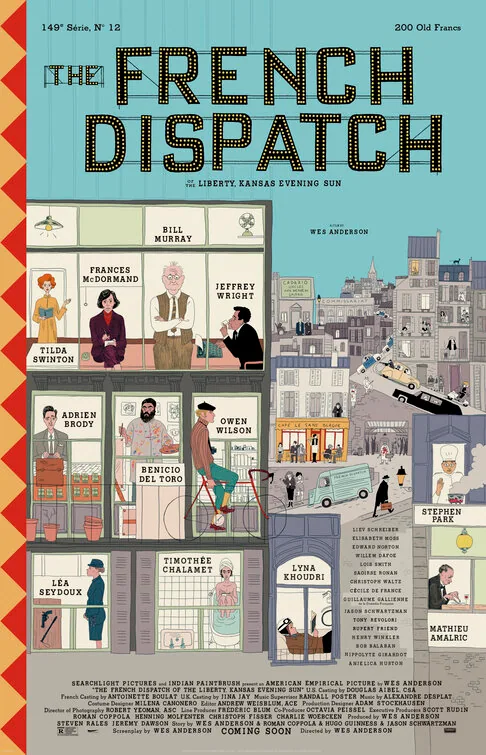
A final issue gathers three reported stories after the death of the magazine's American editor in France.
Why this matches +
A 1950s desert junior-stargazer convention is quarantined after an alien encounter, while a grieving father and actress connect inside a self-conscious televised play about loss, art and uncertainty.
Genres: Drama / Romance
Shared film traits
Based on recorded story, mood and style. Your preferences can change the order.
What changes Its magazine and separate journalistic stories replace the play, desert quarantine and grieving family.
At a fictional American newspaper's French outpost, the death of its editor prompts a final issue assembled from stories written by the staff. The film moves through an art-world profile, a student revolt and a crime report, each with its own characters and visual language. Together the episodes celebrate the eccentric craft of journalism while showing how an editor's attention gives separate observations a shared home.
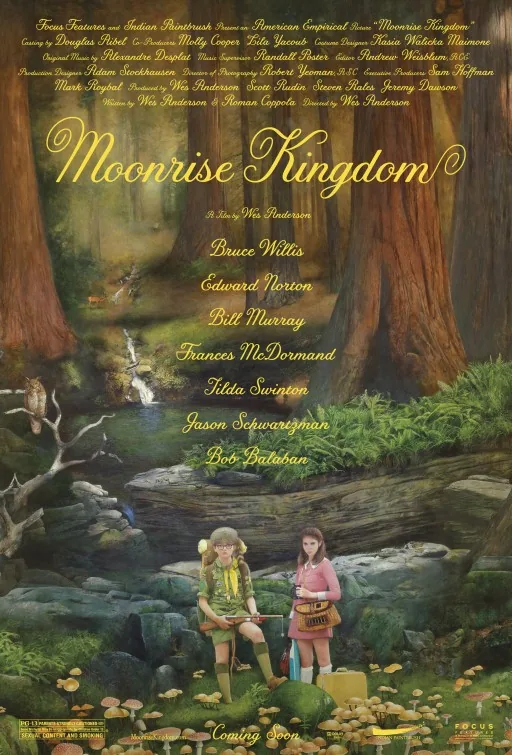
A planned childhood elopement creates a search that exposes failures of attention among the adults responsible for the missing pair.
Why this matches +
A 1950s desert junior-stargazer convention is quarantined after an alien encounter, while a grieving father and actress connect inside a self-conscious televised play about loss, art and uncertainty.
Genres: Comedy / Drama
Shared film traits
Based on recorded story, mood and style. Your preferences can change the order.
What changes A runaway island romance drives the plot without the alien quarantine or play-within-a-television-show structure.
Two isolated children secretly arrange to leave their families and scout routines to live together on a New England island. Their disappearance draws troubled adults into a search as an approaching storm raises the practical risks of the plan. What begins as an idealised escape reveals how little emotional security the surrounding institutions provide, while affection and makeshift alliances offer imperfect alternatives to simply returning each child to the old arrangement.
A stalled production forces an artist to confront the personal evasions he has tried to convert into creative authority.
Why this matches +
Pair notes distinguish story, setting and tone.
An adjacent discovery: a related idea with a different viewing experience.
Genres: Fantasy / Drama
Shared film traits
Based on recorded story, mood and style. Your preferences can change the order.
What changes Fellini’s dreamlike, adult autobiographical cinema lacks the desert ensemble and extraterrestrial comedy.
A celebrated film director arrives at a production unable to explain clearly what he intends to make. Meetings with collaborators, family and lovers send him into memories and fantasies that repeatedly interrupt professional obligations. His apparent crisis of artistic inspiration exposes a larger habit of organising other people around incompatible wishes, making the search for a coherent film inseparable from the difficulty of taking responsibility for a contradictory life.
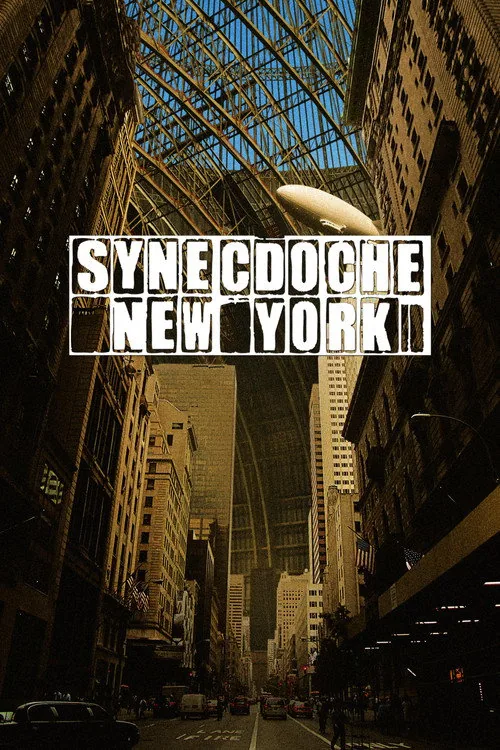
Caden’s effort to make his play truthful blurs the difference between directing life and living it.
Why this matches +
Pair notes distinguish story, setting and tone.
An adjacent discovery: a related idea with a different viewing experience.
Genres: Drama
Shared film traits
Based on recorded story, mood and style. Your preferences can change the order.
What changes Its sprawling, bleak psychological drama is much less playful and visually restrained than Anderson’s retro science-fiction comedy.
Theater director Caden Cotard receives a large arts grant and decides to create a radically realistic play based on his life. He builds a full-scale replica of New York inside a warehouse, hires actors to play people he knows, and eventually casts doubles who reenact the actors themselves. As Caden’s relationships falter and decades pass, the boundaries between his life and the production become increasingly difficult to locate. Charlie Kaufman’s drama uses an expanding theatrical project to explore mortality, artistic ambition, memory, and the impossibility of representing a whole life.
In a fictional 1955 desert town, a convention for young astronomers is interrupted by an extraterrestrial event and a government quarantine. Families, children and strangers improvise ways to live through the suspension, while a bereaved war photographer and a movie star form an uneasy connection. The town's story is also presented as a play within a television program, with actors and creators discussing the work around it. Wes Anderson uses the layered construction to make uncertainty, grief and performance part of the same question: how can people continue when they do not understand what has happened?
What drives the story
A strange interruption suspends the convention, but the nesting play and television frames shift attention from solving the event to watching people make meanings inside a staged world.
The people at its centre
A grieving father and an actress recognize each other's loneliness without becoming simple rescuers. Children, parents and actors occupy different layers of the story, each with partial access to what is being performed.
What it feels like
Wide tableaux, precise blocking, desert colors and monochrome backstage scenes make the film's construction visible. Deadpan comedy sits alongside bereavement, so formal artifice does not cancel sincere feeling.
Worth knowing
Compare ensemble films where nested performance mediates grief and uncertainty. The alien event is not merely a conventional first-contact mystery, and the film's levels should not be collapsed into one hidden reality twist.
GriefMeaningPerformance
Mood
Deadpan · Melancholic · Humorous
Pacing
Measured
Visual style
Geometric tableaux · Saturated color · Monochrome framing