A communal departure, wartime captivity and fractured return reveal how violence changes the possibility of resuming an earlier life.
Why this matches +
These offer a related experience with a meaningful difference in story, tone, or presentation.
An adjacent discovery: a related idea with a different viewing experience.
Genres: Drama / War
Shared film traits
Based on recorded story, mood and style. Your preferences can change the order.
War and civilian life
What changes Wartime captivity and trauma reshape friendships, family relationships and the possibility of returning to ordinary life; a Vietnam War ensemble.
Three friends from a Pennsylvania steelworking community leave for service in Vietnam after a wedding that draws together their social world. Captivity and extreme coercion rupture their shared assumptions, and returning home does not restore the relationships or confidence the departure seemed to guarantee. A renewed effort to recover a missing friend makes survival inseparable from confronting damage that cannot be solved by reproducing familiar rituals.
The film’s central action is Conrad’s attempt to live with grief, while the family’s outward order repeatedly blocks honest mourning.
Why this matches +
These offer a related experience with a meaningful difference in story, tone, or presentation.
An adjacent discovery: a related idea with a different viewing experience.
Genres: Drama
Shared film traits
Based on recorded story, mood and style. Your preferences can change the order.
Memory and identity
What changes A family struggles to communicate through grief and psychological trauma after a devastating loss; a suburban family rather than a returning soldier.
After the accidental drowning death of their eldest son Buck, the affluent Jarrett family tries to resume ordinary routines. Younger son Conrad returns home after a suicide attempt and psychiatric hospitalization, struggling with guilt and the belief that he should have died instead. Therapy with Dr. Berger helps him name grief and anger, while his father Calvin tries to reconnect with both sons’ absence. His mother Beth maintains control through social appearances and finds Conrad’s vulnerability intolerable. Their conflict forces Calvin to recognize that family recovery may not mean preserving the household intact.
Repeated deployment reinforces a protective military identity while making withdrawal from threat and responsibility increasingly difficult at home.
Why this matches +
These offer a related experience with a meaningful difference in story, tone, or presentation.
An adjacent discovery: a related idea with a different viewing experience.
Genres: War / Drama
Shared film traits
Based on recorded story, mood and style. Your preferences can change the order.
War and civilian life
What changes A serviceman's experiences abroad affect his marriage, children and ability to adjust at home; a sniper's biography.
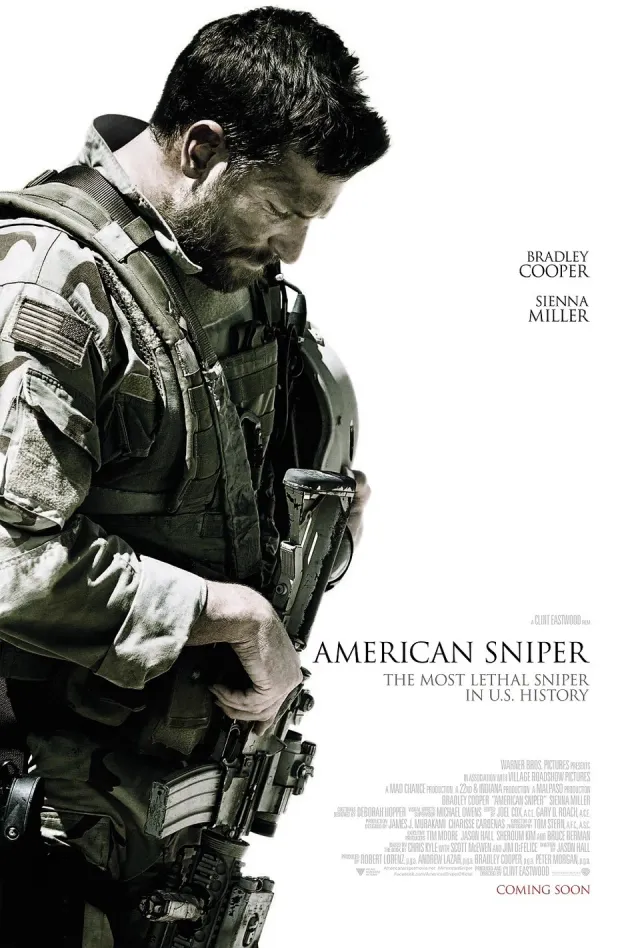
A Navy SEAL becomes known for his skill as a sniper during repeated deployments to Iraq, where protecting fellow soldiers supplies a clear sense of duty. Returning home does not restore the ease or attention his family needs. The film follows the widening distance between battlefield usefulness and domestic presence, as exposure to threat and a continuing identification with military responsibility make civilian life another difficult environment to inhabit.
A medal review forces Serling to test incompatible testimonies against his own compromised memory.
Why this matches +
These offer a related experience with a meaningful difference in story, tone, or presentation.
An adjacent discovery: a related idea with a different viewing experience.
Genres: Drama / War
Shared film traits
Based on recorded story, mood and style. Your preferences can change the order.
War and civilian life
What changes A military investigation reconstructs traumatic combat experiences and conflicting accounts of duty; a Gulf War officer rather than a domestic love triangle.
During the Gulf War, Lieutenant Colonel Nathaniel Serling is assigned to review whether Captain Karen Walden should receive a posthumous medal for courage. Interviews with surviving members of her crew yield conflicting accounts, and Serling's own wartime mistake makes the inquiry harder to approach impartially. The investigation becomes both a search for a reliable account and a reckoning with the difference between public honor and private guilt.
Hank follows his son’s movements after military officials cannot explain the disappearance, and Emily’s casework exposes gaps in the account.
Why this matches +
These offer a related experience with a meaningful difference in story, tone, or presentation.
An adjacent discovery: a related idea with a different viewing experience.
Genres: Crime / Drama
Shared film traits
Based on recorded story, mood and style. Your preferences can change the order.
Memory and identity · War and civilian life
What changes A military family's private life is disrupted by wartime trauma and a troubling search for the truth; a father investigates his soldier son's death.
Retired military police sergeant Hank Deerfield learns that his son, a soldier recently returned from Iraq, is missing from his base. He travels to Tennessee and works with detective Emily Sanders to reconstruct the young man’s last days, despite resistance from the military and limits in the available evidence. Paul Haggis’s crime drama gradually shifts from a missing-person investigation to a reflection on what deployment and combat can do to soldiers and families. It includes war trauma and murder themes.
Marine Sam Cahill is presumed dead after a mission in Afghanistan, and his brother Tommy steps in to support Sam’s wife Grace and their children. When Sam returns home, his experiences of captivity and violence alter the family’s fragile arrangements. The drama follows loyalty, grief and trauma through a domestic setting, focusing on how an event far from home continues to shape relationships after a soldier’s return.
What drives the story
Sam’s return after captivity destabilizes the family bonds formed during his presumed death.
The people at its centre
Two brothers and Grace struggle with trust as care and resentment become difficult to separate.
What it feels like
Close performances and domestic spaces keep the war’s psychological consequences present.
Worth knowing
Its family-centered aftermath differs from battlefield action focused on military objectives.
FamilyTraumaWar
Mood
Tense · Intimate · Somber
Pacing
Slow-building · Emotionally escalating
Visual style
Restrained domestic war drama
Storytelling
Military captivity · Family adjustment · Return from war