Both share themes of friendship and responsibility, plus a sunny atmosphere.
Why this matches +
Genres: Adventure / Family
Shared film traits
Based on recorded story, mood and style. Your preferences can change the order.
Coming of age · Family and care
What changes Camp Nowhere: a playful deception grows more complicated as the camp expands and the children must maintain the story. Flipper: sandy’s summer shifts from boredom to protecting flipper and exposing a fisherman’s illegal dumping.
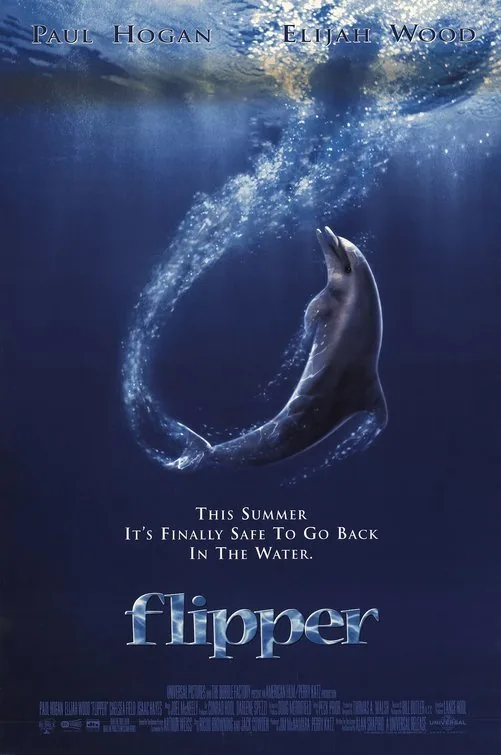
Teenager Sandy Ricks spends a reluctant summer with his uncle Porter in the Florida Keys, far from the concert he hoped to attend. He befriends Kim and encounters a dolphin he names Flipper after local fisherman Dirk Moran shoots at the animal’s pod. Sandy and Porter try to protect the dolphin while discovering that Moran is dumping toxic waste. A dangerous search at sea brings Sandy face to face with a shark, and Flipper’s pod helps turn the rescue into a chance for the boy and dolphin to part on better terms.
Based on recorded story, mood and style. Your preferences can change the order.
Coming of age
What changes Camp Nowhere: a playful deception grows more complicated as the camp expands and the children must maintain the story. Holes: interwoven and steady.
A teenager sent to a harsh desert camp is ordered to dig holes each day alongside other boys, supposedly to build character. He suspects the warden is searching for something hidden and gradually uncovers links between the camp’s present and old family histories. The story interweaves friendship, injustice and inherited consequences, using a mystery structure to connect the boys’ immediate survival with a wider account of the community around them.
Both share themes of responsibility and childhood, plus a mischievous and comic atmosphere.
Why this matches +
Genres: Comedy / Family
Shared film traits
Based on recorded story, mood and style. Your preferences can change the order.
Coming of age · Family and care
What changes Camp Nowhere: a playful deception grows more complicated as the camp expands and the children must maintain the story. Blank Check: a wish-fulfillment spree escalates into a pursuit while preston attempts to hide the fortune from adults.
Eleven-year-old Preston Waters feels overlooked beside his entrepreneurial older brothers and a frugal father. After a careless accident leaves him holding a blank check, Preston writes in an enormous amount and a bank mistakenly pays it. He begins spending freely on a mansion, a limousine and a life far beyond his family’s means, while the criminal who intended to use the check tries to recover the money. FBI agent Shay Stanley becomes suspicious of Preston’s sudden wealth. The comedy follows the child’s fantasy of control as the spending draws him into a chase and forces a reckoning with what money can and cannot fix.
Based on recorded story, mood and style. Your preferences can change the order.
Coming of age · Family and care
What changes Camp Nowhere: a playful deception grows more complicated as the camp expands and the children must maintain the story. House Party: one-night journey builds through comic encounters and party performances.
Teenager Kid wants to attend his friend Play’s house party, but a school fight leads his father Pop to ground him. Kid slips out after his father falls asleep and heads across the neighborhood, where police, bullies and the hazards of the night repeatedly threaten to send him home. The gathering becomes a showcase for friendships, courtship, dancing and hip-hop performance, with DJ Bilal keeping the music moving. The comedy’s home-to-party journey follows Kid as he tries to enjoy one night of freedom while managing the expectations of family and the rivalries of his community.
Based on recorded story, mood and style. Your preferences can change the order.
Coming of age · Family and care
What changes Camp Nowhere: a playful deception grows more complicated as the camp expands and the children must maintain the story. The Package: escalating misadventure, fast comic reversals and group-driven.
During a spring-break camping trip, a group of high-school friends face a medical emergency after a clumsy accident leaves one of them badly injured. They rush to get help, but the trip’s distance from town and a series of panicked decisions make it difficult to protect their friend and keep the group together. The teenagers’ attempt to handle the crisis becomes an unruly road-and-camping comedy about friendship under pressure.
Both share themes of friendship and family, plus a nostalgic atmosphere.
Why this matches +
Genres: Comedy / Drama
Shared film traits
Based on recorded story, mood and style. Your preferences can change the order.
Coming of age · Family and care
What changes Camp Nowhere: a playful deception grows more complicated as the camp expands and the children must maintain the story. Dìdi: episodic, youthful and reflective.
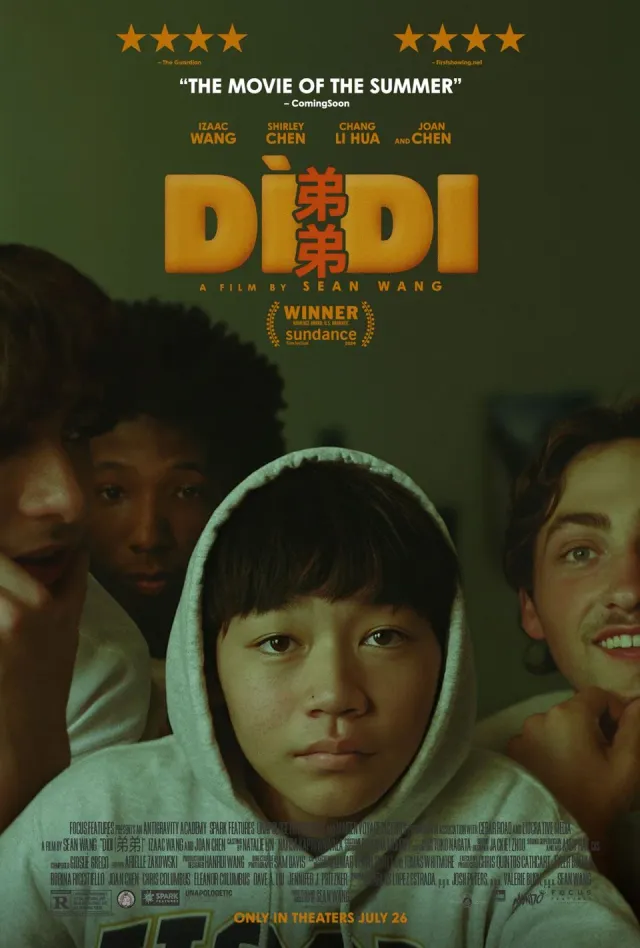
In 2008, thirteen-year-old Chris Wang is finishing summer in Fremont, California, before starting high school. He experiments with skateboarding, friendships and online video, trying to appear more confident than he feels while misunderstanding the social rules around him. At home, his relationship with his Taiwanese American family is also changing as he notices generational distance and his mother's sacrifices. Sean Wang's autobiographical coming-of-age film follows a season of awkward learning and small acts of care.
Based on recorded story, mood and style. Your preferences can change the order.
Coming of age
What changes Camp Nowhere: a playful deception grows more complicated as the camp expands and the children must maintain the story. Drillbit Taylor: school-comedy episodes, comic training scenes and youthful action climax.
On their first day of high school, Wade, Ryan, and Emmit become targets of bullies and realize the adults around them are unlikely to intervene. They pool their money to hire a bodyguard and end up with Drillbit Taylor, an apparently capable protector who is actually a drifter with his own motives. As the boys gain confidence and form a friendship, Drillbit's reluctant role changes too. The teen comedy combines school bullying, disguises, and a mismatched mentor relationship, giving its young characters a chance to stand up for themselves.
Based on recorded story, mood and style. Your preferences can change the order.
Coming of age
What changes Camp Nowhere: a playful deception grows more complicated as the camp expands and the children must maintain the story. Heavyweights: camp routines shift into an organized revolt against the new program.
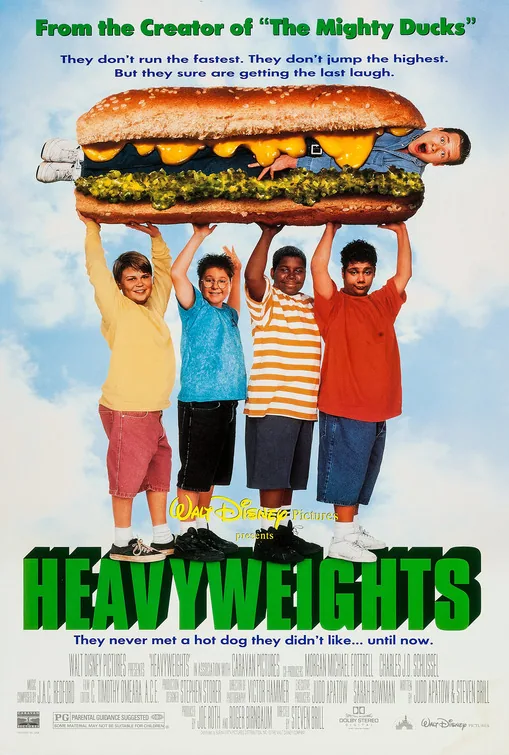
Gerry Garner is sent to Camp Hope, a summer weight-loss camp, where he makes friends among the boys and discovers their stash of junk food. The camp changes hands to fitness entrepreneur Tony Perkis, who replaces its games with punishing workouts and plans to use the campers in an infomercial. The boys organize against him, turning a camp comedy into a story about friendship and self-respect.
Based on recorded story, mood and style. Your preferences can change the order.
Coming of age · Family and care
What changes Camp Nowhere: a playful deception grows more complicated as the camp expands and the children must maintain the story. Summer School: classroom ensemble, comic episodes, gradual mentor bond and school-year resolution.
Physical-education teacher Freddy Shoop expects to spend the summer in Hawaii, but his vice principal corners him into teaching a remedial English class. The students include a football player, a dyslexic girl, a pregnant teenager, a budding actor and two horror-film obsessives, each carrying a different reason for struggling at school. Shoop initially treats the assignment as an obstacle to his vacation, while the class tests his patience and the school’s low expectations. He gradually finds ways to make the material engaging, and his connection with history teacher Robin Bishop gives him another reason to stay. The comedy turns a disposable summer job into a loose story of teaching, self-respect and students discovering what they can do.
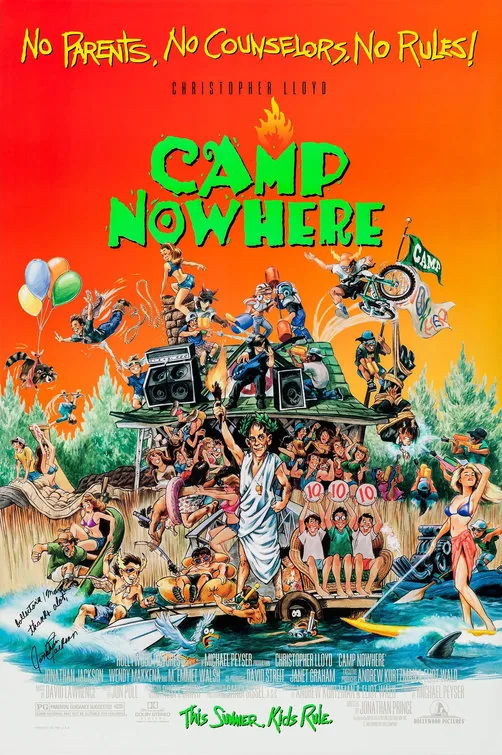
Twelve-year-old Mud Himmel and his friends want to avoid the summer camps their parents have chosen for them. They persuade former drama teacher Dennis Van Welker to help invent Camp Nowhere, a fictional camp with no adults, counselors or rules, and attract more children by promising freedom from parental supervision. Keeping the plan secret requires parents to believe the campers are elsewhere and requires Dennis to keep up a series of disguises. As the group enjoys its improvised summer, the children discover that independence brings responsibilities, and that the friendships holding the camp together matter more than the fantasy of having no rules.
What drives the story
Mud’s plan depends on sustaining a lie, but the growing camp forces him to account for other children’s needs.
The people at its centre
The friends discover that freedom without trust and responsibility can threaten the community they have created.
What it feels like
The film pairs summer-camp fantasy with light farce about children trying to negotiate independence from adults.
Worth knowing
Its central conceit is a secret summer camp invented by kids who are tired of being sent to organized camps.
independencefriendshipresponsibility
Mood
mischievous · sunny · comic · nostalgic
Pacing
A playful deception grows more complicated as the camp expands and the children must maintain the story
Visual style
Outdoor camp settings · summer landscapes and comic disguises for the adult accomplice
Storytelling
Children invent a no-rules summer camp; adults are misled; improvised freedom attracts a larger group