A vulnerable succession becomes a struggle to concentrate authority, requiring the queen to turn private disappointment and political threat into a deliberately managed sovereign image. Threats to a weak succession press Elizabeth to consolidate authority while counselors treat marriage as state policy.
Why this matches +
Selected for the central appeal: Lavish historical epics about rulers, political alliances and romance intertwined with sovereignty.
Genres: Historical / Drama
Shared film traits
Based on recorded story, mood and style. Your preferences can change the order.
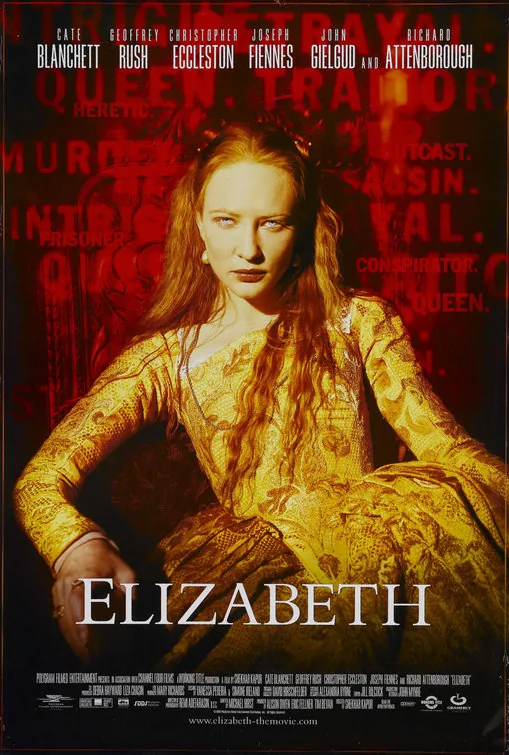
What changes Elizabeth follows a queen whose political authority is challenged by advisers and intimate alliances.
A young queen inherits an English throne surrounded by financial weakness, religious conflict and advisers who view marriage as a means of stabilizing her rule. Private attachment becomes increasingly difficult to separate from the alliances through which others hope to control her. Discovering betrayal pushes her toward constructing a public identity that can claim authority beyond the available roles of wife, dependent successor or favored companion. The “Virgin Queen” image becomes a political instrument, even as it limits how the young ruler can express private life.
Conquest gives Alexander power and a public identity, but each expansion creates new strains on loyalty and succession. The retrospective frame makes the film's account a shaped recollection rather than a transparent record of motive.
Why this matches +
These offer a related experience with a meaningful difference in story, tone, or presentation.
An adjacent discovery: a related idea with a different viewing experience.
Genres: Drama / History
Shared film traits
Based on recorded story, mood and style. Your preferences can change the order.
What changes Alexander depicts an ancient ruler's ambitions and relationships through expansive historical spectacle.
Oliver Stone's 2004 theatrical cut follows the Macedonian king from family conflict and accession through campaigns that carry his army across Persia toward India. The victories expand Alexander's authority and the distance between his vision and his soldiers' exhaustion. Retrospective narration frames the action as shaped recollection, while his ties to Olympias, Philip, Hephaistion and his commanders complicate a portrait built around conquest. Stone later recut the film in materially different versions; this catalogue profile refers to the original theatrical release and does not blend their scene order or emphasis.
Marcus’s pursuit of Lygia brings him into conflict with the imperial system that first treated her as a reward for his military service.
Why this matches +
These offer a related experience with a meaningful difference in story, tone, or presentation.
An adjacent discovery: a related idea with a different viewing experience.
Genres: Drama / Romance
Shared film traits
Based on recorded story, mood and style. Your preferences can change the order.
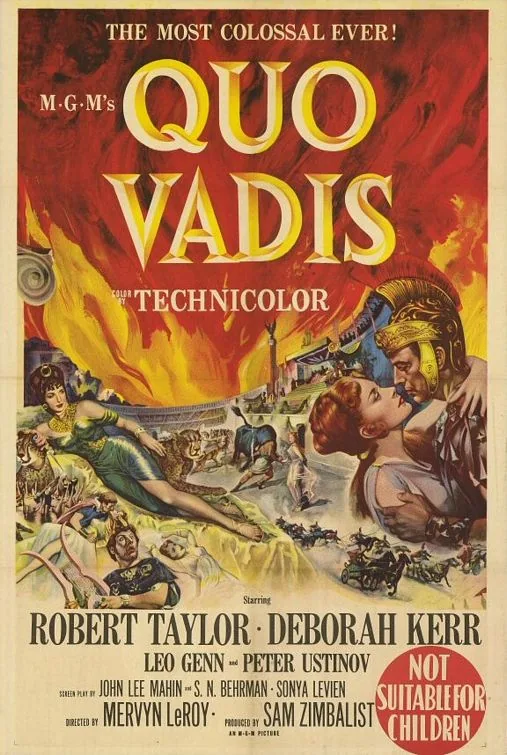
What changes Quo Vadis combines Roman political power, personal relationships and large-scale period spectacle.
Roman commander Marcus Vinicius returns from war and becomes attracted to Lygia, a Christian hostage living in the household of retired general Aulus Plautius. Marcus’s uncle Petronius persuades Nero to give Lygia to him, but Lygia’s faith and resistance change the relationship. As Nero’s rule grows more destructive and Rome burns, he blames the Christians and orders persecution. Marcus tries to protect Lygia and the people she loves while confronting the cruelty of the court he once served. Their fate intersects with the Christian community’s public trials, where belief and imperial power collide.
Mastani’s place at court is contested even as Bajirao publicly recognizes her.
Why this matches +
These offer a related experience with a meaningful difference in story, tone, or presentation.
An adjacent discovery: a related idea with a different viewing experience.
Genres: Drama / History
Shared film traits
Based on recorded story, mood and style. Your preferences can change the order.
What changes Bajirao Mastani entwines political leadership and romantic attachment in a lavish historical drama.
In eighteenth-century India, Maratha leader Bajirao falls in love with Mastani, a warrior princess, while he is already married to Kashibai. His military campaigns and political status place the relationship inside a court divided by religion, family expectations, and succession. The historical romance balances battle spectacle with intimate conflict, portraying devotion as a challenge to the institutions that define who can belong.
The family's bid for status becomes a succession contest that changes as Henry's favor moves between the sisters and the rules of marriage are rewritten.
Why this matches +
These offer a related experience with a meaningful difference in story, tone, or presentation.
An adjacent discovery: a related idea with a different viewing experience.
Genres: Drama / Romance
Shared film traits
Based on recorded story, mood and style. Your preferences can change the order.
What changes The Other Boleyn Girl treats romance at court as part of a struggle for dynastic influence.
At the Tudor court, the Boleyn family hopes to improve its standing by placing Mary in the path of Henry VIII, while her sister Anne returns from France with ambitions of her own. Mary becomes the king's mistress and gives birth to his child, but family strategy shifts when Anne captures his attention and aims to replace Queen Catherine. The sisters are made to compete within a system where access to the monarch determines their safety and influence, even as both have desires and relationships the family tries to control. Mary's position changes from favored instrument to witness and potential ally as Anne's ascent brings the king, court and church into conflict. The film turns dynastic politics into an intimate story of sibling loyalty under pressure.
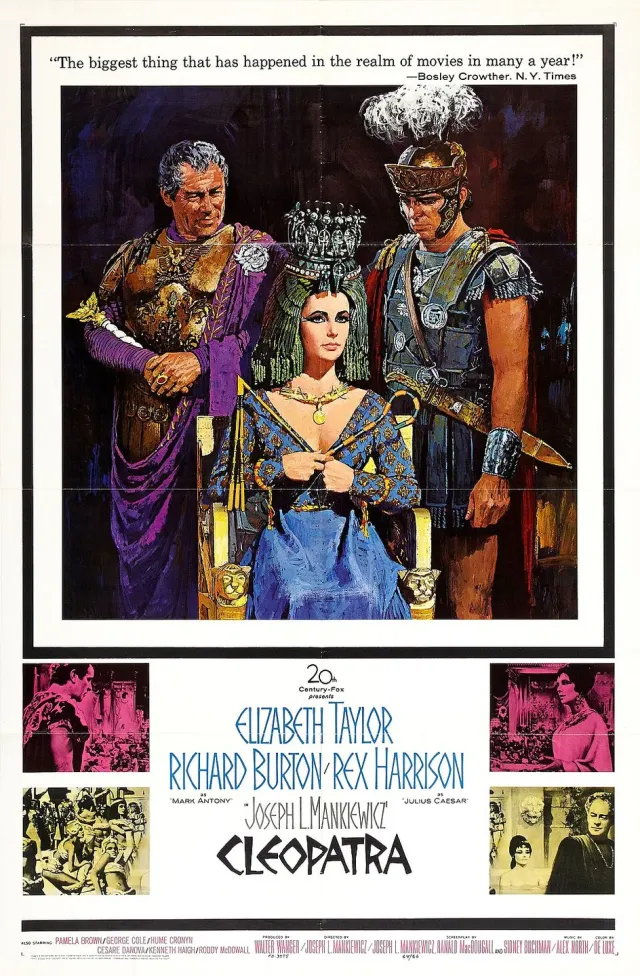
Egypt's ruler Cleopatra negotiates Roman power through shifting alliances with Julius Caesar and Mark Antony, balancing personal attachment with dynastic survival and the sovereignty of her kingdom. The story's scale moves from Egyptian court to Roman politics and military conflict, making her romantic relationships part of a larger struggle over legitimacy rather than its only subject. The film's elaborate spectacle comes through a mid-century Hollywood interpretation, not a transparent reconstruction of ancient history; its characterization and political simplifications need to be kept distinct from historical evidence. Her alliances shift from Caesar's Roman campaign to Antony's contest with Octavian.
What drives the story
Cleopatra's changing alliances with Roman leaders test how much political independence Egypt can retain as succession and imperial power tighten around her.
The people at its centre
Cleopatra's strategy and attachments coexist, while Caesar and Antony bring different forms of Roman authority; neither relationship alone explains her political position. Cleopatra's strategic ambition persists even as the film frames her through romance and spectacle.
What it feels like
Monumental sets, large public scenes and intimate romantic exchanges frame a long historical melodrama whose spectacle can overshadow its political simplifications. Court ceremony and military spectacle sit beside private negotiations.
Worth knowing
Match on sovereignty, dynastic legitimacy and political intimacy, not as a reliable biography of Cleopatra or an account of ancient Egypt verified by the film's pageant.
PowerLoveIdentity
Mood
Epic · Romantic · Tragic
Pacing
Epic
Visual style
Monumental sets · Historical tableaux · Lush
Storytelling
Successive political intimacies · Dynastic legitimacy · Imperial succession conflict