Both share themes of love, plus a grand and romantic atmosphere.
Why this matches +
Genres: Action / Drama
Shared film traits
Based on recorded story, mood and style. Your preferences can change the order.
What changes Quo Vadis: expansive, building and spectacular. Pompeii: escalating and action-led.
A Celtic slave and skilled gladiator named Milo is sent to Pompeii, where he meets Cassia, the daughter of a wealthy merchant. Their attraction develops as a Roman official seeks to control Cassia and Vesuvius shows signs of eruption. Paul W. S. Anderson's disaster film combines a classical rescue story with a spectacle of a city threatened by volcanic catastrophe.
Based on recorded story, mood and style. Your preferences can change the order.
What changes Quo Vadis: expansive, building and spectacular. Risen: procedural search turns toward spiritual inquiry.
A Roman tribune is assigned to investigate rumors surrounding the disappearance of Jesus’s body after the crucifixion. His search begins as a political and military duty but gradually challenges the assumptions that have organized his life. The historical drama uses an outsider’s investigation to tell a story of faith, evidence and personal transformation, placing familiar religious events inside an imperial power structure.
Based on recorded story, mood and style. Your preferences can change the order.
Political resistance
Expect romantic and grand, with expansive and romantic adventure pacing.
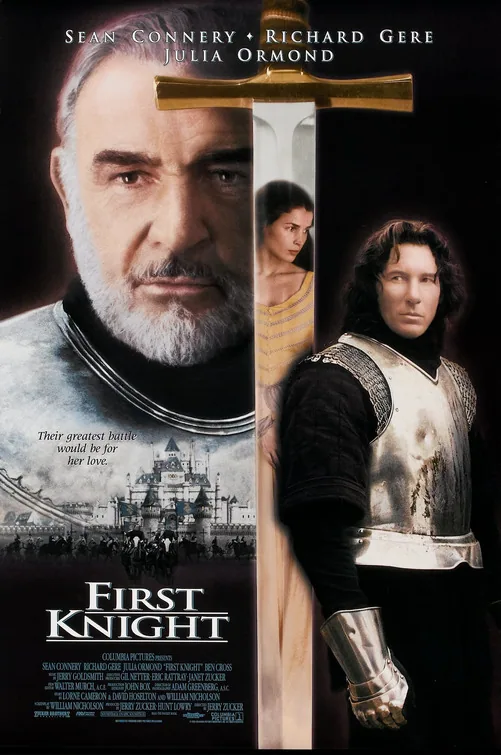
Guinevere is drawn to Lancelot's courage while facing an arranged future with King Arthur, whose vision of Camelot rests on justice and public duty. Their private attraction threatens a political alliance and exposes tensions within the kingdom. The medieval romance reworks familiar Arthurian figures through a triangle of desire, loyalty and leadership rather than focusing on a quest for magical objects.
Based on recorded story, mood and style. Your preferences can change the order.
What changes Quo Vadis: expansive, building and spectacular. Nights of Cabiria: measured and episodic.
Roman sex worker Cabiria survives a riverbank robbery by her lover Giorgio, then returns to her small home and tries to rebuild her faith in happiness. A chance night with a film star and a later pilgrimage briefly offer forms of recognition and hope, but a magician’s public hypnosis exposes how deeply she longs for marriage. When Oscar courts her and promises a future, Cabiria sells her home and trusts him with her savings. His betrayal leaves her walking alone through Rome, where a group of young revelers draws a tentative smile from her.
Based on recorded story, mood and style. Your preferences can change the order.
What changes Quo Vadis: expansive, building and spectacular. Romeo and Juliet: measured, theatrical and climactic.
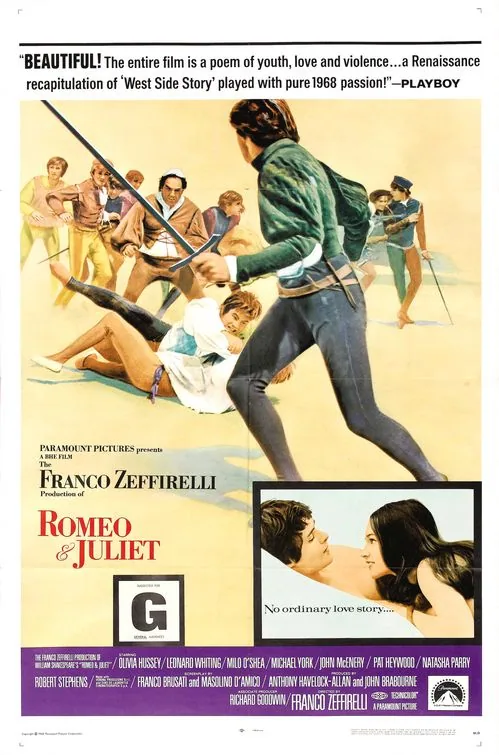
In Renaissance Verona, the feud between the Montagues and Capulets repeatedly erupts into public violence. Romeo and Juliet meet at a Capulet gathering, fall in love and marry in secret with Friar Laurence’s help. When Romeo refuses to fight Juliet’s cousin Tybalt, his friend Mercutio intervenes and is killed; Romeo then kills Tybalt and is banished. Juliet’s parents arrange a marriage to Paris, so Friar Laurence gives her a potion intended to let her escape with Romeo. A failed message makes Romeo believe she is dead, and both young lovers die before the families reconcile.
Based on recorded story, mood and style. Your preferences can change the order.
Political resistance
What changes Quo Vadis: expansive, building and spectacular. Padmaavat: epic and escalating.
Queen Padmavati and King Ratan Singh's rule is threatened when the ambitious Alauddin Khilji becomes fixated on possessing the queen. Sanjay Leela Bhansali stages the conflict through courtly alliances, political strategy and large-scale battles, placing personal loyalty inside an ornate historical spectacle. The film's romanticized legend foregrounds honor and resistance, while its stylized production design and music give every encounter a ceremonial scale.
Based on recorded story, mood and style. Your preferences can change the order.
What changes Quo Vadis: expansive, building and spectacular. Maid in Manhattan: brisk and light.
Marisa Ventura works in a Manhattan hotel while raising her son, and a guest mistakes her for someone from a wealthier world when she tries on a designer coat. The misunderstanding leads to romance with a visiting politician, but the truth of Marisa’s position is difficult to hide. The fairy-tale premise keeps class and self-presentation central.
Both share themes of power and love, plus a romantic atmosphere.
Why this matches +
Genres: Historical / Drama
Shared film traits
Based on recorded story, mood and style. Your preferences can change the order.
What changes Quo Vadis: expansive, building and spectacular. Cleopatra: epic.
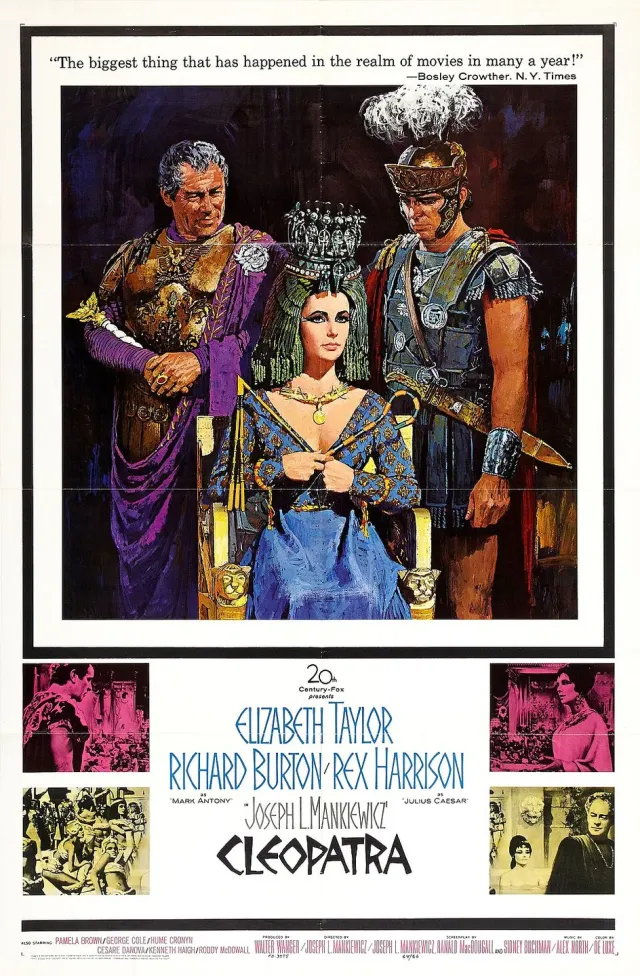
Egypt's ruler Cleopatra negotiates Roman power through shifting alliances with Julius Caesar and Mark Antony, balancing personal attachment with dynastic survival and the sovereignty of her kingdom. The story's scale moves from Egyptian court to Roman politics and military conflict, making her romantic relationships part of a larger struggle over legitimacy rather than its only subject. The film's elaborate spectacle comes through a mid-century Hollywood interpretation, not a transparent reconstruction of ancient history; its characterization and political simplifications need to be kept distinct from historical evidence. Her alliances shift from Caesar's Roman campaign to Antony's contest with Octavian.
Based on recorded story, mood and style. Your preferences can change the order.
Political resistance
What changes Quo Vadis: expansive, building and spectacular. Bajirao Mastani: a sweeping period romance develops across campaigns and court disputes.
In eighteenth-century India, Maratha leader Bajirao falls in love with Mastani, a warrior princess, while he is already married to Kashibai. His military campaigns and political status place the relationship inside a court divided by religion, family expectations, and succession. The historical romance balances battle spectacle with intimate conflict, portraying devotion as a challenge to the institutions that define who can belong.
Roman commander Marcus Vinicius returns from war and becomes attracted to Lygia, a Christian hostage living in the household of retired general Aulus Plautius. Marcus’s uncle Petronius persuades Nero to give Lygia to him, but Lygia’s faith and resistance change the relationship. As Nero’s rule grows more destructive and Rome burns, he blames the Christians and orders persecution. Marcus tries to protect Lygia and the people she loves while confronting the cruelty of the court he once served. Their fate intersects with the Christian community’s public trials, where belief and imperial power collide.
What drives the story
Marcus’s pursuit of Lygia brings him into conflict with the imperial system that first treated her as a reward for his military service.
The people at its centre
His attraction grows into a moral break from Nero’s authority, while Lygia’s faith remains a choice rather than a prize he can claim.
What it feels like
A large-scale historical epic stages Rome through spectacle, chariot action, palace intrigue and public martyrdom.
Worth knowing
It is a mid-century adaptation of Sienkiewicz’s Christian romance and a dramatic religious epic, not a neutral reconstruction; the historical persecution associated with Nero is tied to Rome after the fire, not an established empire-wide policy.