An imprisoned general uses the institution's own military codes to challenge the commandant's control over the inmates.
Why this matches +
Selected for the central appeal: Prison dramas about defiance, harsh authority and the solidarity of fellow inmates.
Genres: Drama / Action
Shared film traits
Based on recorded story, mood and style. Your preferences can change the order.
What changes The Last Castle follows prisoners whose resistance to a cruel command becomes a collective symbol.
A decorated general is sent to a military prison after a court-martial and clashes with the commandant over the treatment of the inmates. What begins as a dispute over authority develops into an organized challenge to the prison's abusive system, drawing former soldiers into a difficult test of discipline and solidarity. The film frames rebellion as a conflict between rank and moral leadership, with the prison's structure turning every act of resistance into a public choice.
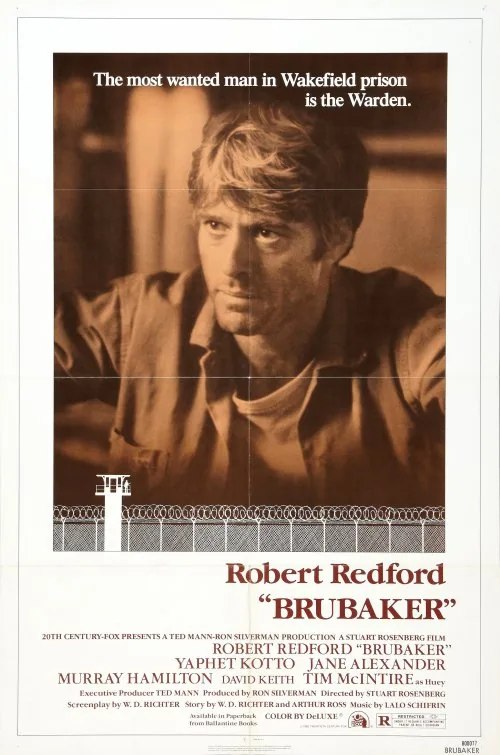
An undercover investigation reveals an entrenched system that resists reform once Brubaker takes charge.
Why this matches +
Selected for the central appeal: Prison dramas about defiance, harsh authority and the solidarity of fellow inmates.
Genres: Drama / Crime
Shared film traits
Based on recorded story, mood and style. Your preferences can change the order.
What changes Brubaker confronts a brutal prison system and the people who resist its entrenched authority.
Henry Brubaker arrives at a Southern prison undercover as an inmate so he can see how the institution actually operates. Once appointed warden, he tries to expose corruption, forced labor and abuse, but reforms threaten networks that extend beyond the prison walls. The film is a procedural account of institutional change, where moral resolve is repeatedly tested by political pressure and the human cost of speaking openly.
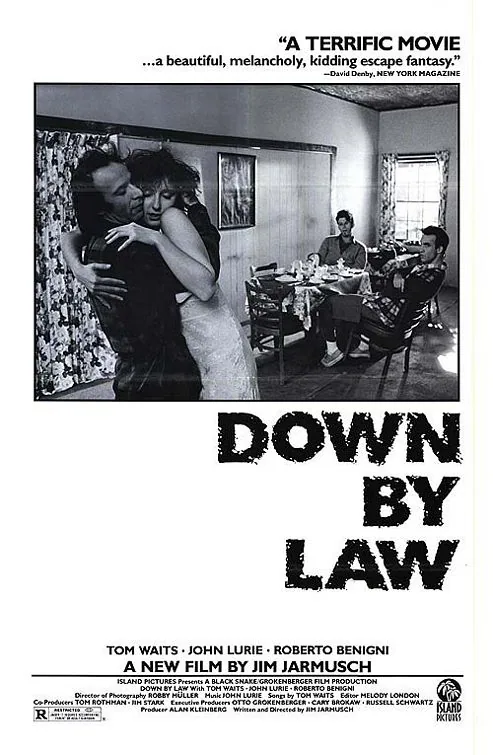
A shared escape exposes incompatible temperaments to the need for mutual survival, while an outsider's imperfect language keeps generating connections the others initially dismiss.
Why this matches +
These offer a related experience with a meaningful difference in story, tone, or presentation.
An adjacent discovery: a related idea with a different viewing experience.
Genres: Comedy / Drama
Shared film traits
Based on recorded story, mood and style. Your preferences can change the order.
Escape and pursuit
What changes Down by Law follows prisoners forming an unlikely bond while resisting confinement.
Two men framed in separate schemes share a Louisiana jail cell, where mutual irritation seems to offer no useful basis for companionship. An Italian immigrant's arrival introduces language mistakes, unexpected warmth and eventually a way out. Flight into the bayou replaces institutional confinement with aimless dependence, making the practical question of staying together compete with each man's impulse to recover independence before he knows where it would take him.
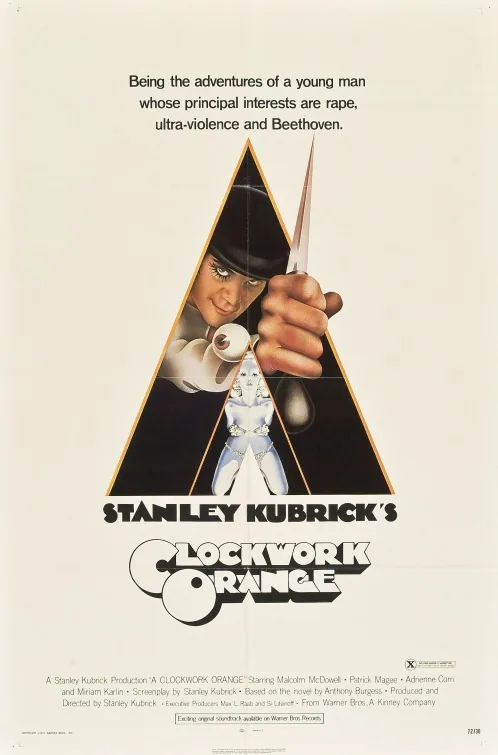
An offender's punishment transfers control over his behaviour to authorities whose apparent solution creates a different ethical violation.
Why this matches +
These offer a related experience with a meaningful difference in story, tone, or presentation.
An adjacent discovery: a related idea with a different viewing experience.
Genres: Science fiction / Crime
Shared film traits
Based on recorded story, mood and style. Your preferences can change the order.
What changes A Clockwork Orange examines coercive punishment and the cost of forcing a person into submission.
A young gang leader moves through a near-future society inflicting violence for pleasure before imprisonment places him under a state experiment designed to remove his capacity for aggression. What initially appears to be a story about an offender's freedom becomes a confrontation between coercive treatment, political expediency and the problem of moral choice. His return to society exposes institutions and former associates whose civility offers little reassurance.
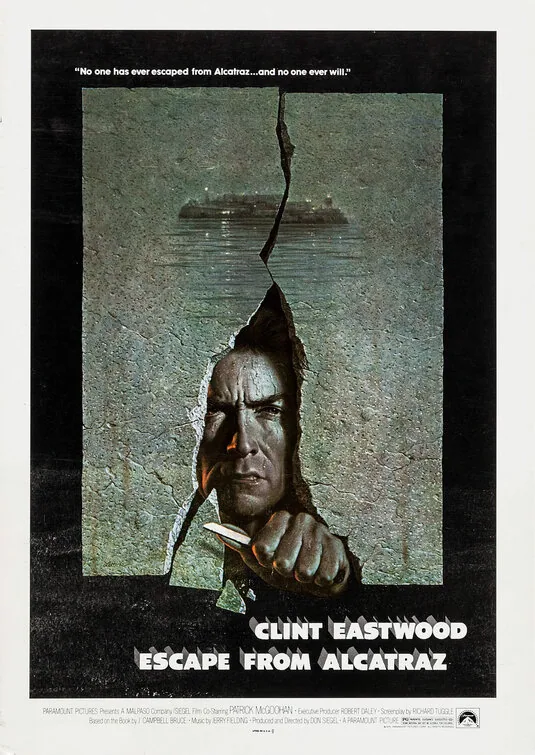
An institution's claim of total containment is tested through incremental observation and improvised construction, with everyday routines supplying both cover and deadlines.
Why this matches +
These offer a related experience with a meaningful difference in story, tone, or presentation.
An adjacent discovery: a related idea with a different viewing experience.
Genres: Drama / Thriller
Shared film traits
Based on recorded story, mood and style. Your preferences can change the order.
Escape and pursuit
What changes Escape from Alcatraz follows inmates challenging a prison's claim to complete control.
A prisoner transferred to Alcatraz encounters a regime whose confidence depends on making escape seem materially and psychologically impossible. Small observations of objects, routines and deteriorating surfaces gradually reveal a different set of possibilities. Building an alliance allows repeated acts of patient preparation to become a collective plan, while the warden's treatment of other inmates makes departure a refusal of humiliation as well as a practical contest with walls and surveillance.
Sent to a Southern chain gang for a minor offense, Luke Jackson refuses to perform submission and becomes a source of hope for the other prisoners. His defiance is often playful, and the inmates build it into a legend that Luke cannot always sustain. The camp responds through physical punishment and rigid authority, making his resistance both a communal resource and an increasingly costly role. Religious imagery adds another possible meaning without settling whether Luke is a redeemer, a rebel or simply a vulnerable man who cannot comply. The chain gang's egg-eating contest turns bodily endurance into a legend among the inmates.
What drives the story
Small refusals escalate into a struggle between a prisoner's autonomy and an institution determined to make every body and action governable. Repeated escapes and punishments deepen the gap between resistance and control.
The people at its centre
Dragline's admiration helps turn Luke into a symbol, but that collective hope risks replacing the man with an impossible expectation of invulnerability. Dragline's devotion can support Luke and burden him at the same time.
What it feels like
Labor rhythms, comic endurance tests and sudden punishment create an expansive prison drama whose charismatic humor repeatedly collides with bodily coercion. Comic bravado often arrives directly before another display of institutional force.
Worth knowing
Match on defiance becoming communal myth and punitive spectacle, not a simple escape story; the prisoners' need for a hero does not prove Luke is invulnerable. Religious imagery invites readings but does not settle Luke's identity as a savior.