Both centre on protective flight and communication and trust.
Why this matches +
Genres: Drama / Thriller
Shared film traits
Based on recorded story, mood and style. Your preferences can change the order.
Escape and pursuit
What changes Down by Law is tagged deadpan and warm; Escape from Alcatraz is tagged tense and restrained.
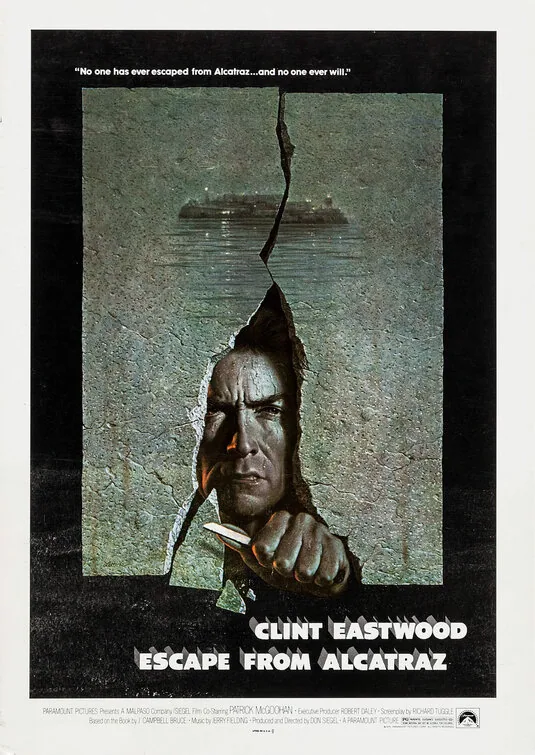
A prisoner transferred to Alcatraz encounters a regime whose confidence depends on making escape seem materially and psychologically impossible. Small observations of objects, routines and deteriorating surfaces gradually reveal a different set of possibilities. Building an alliance allows repeated acts of patient preparation to become a collective plan, while the warden's treatment of other inmates makes departure a refusal of humiliation as well as a practical contest with walls and surveillance.
Both share themes of friendship, plus a warm and reflective atmosphere.
Why this matches +
Genres: Drama / Comedy
Shared film traits
Based on recorded story, mood and style. Your preferences can change the order.
Expect warm and reflective, with measured and character-led pacing.
Philip, a wealthy man living with quadriplegia, hires Dell, a recently paroled man who needs work, as his live-in caregiver. Their arrangement begins as a practical exchange and unsettles both men’s expectations: Philip rejects pity, while Dell is still trying to rebuild contact with his family. The comedy-drama follows how daily routines, blunt conversation and shared risk can grow into friendship without erasing the unequal conditions that brought them together.
Based on recorded story, mood and style. Your preferences can change the order.
Escape and pursuit
What changes Down by Law is tagged deadpan and warm; A Perfect World is tagged tender and tense.
An escaped convict takes a young boy hostage during his flight through Texas, while a veteran lawman directs the pursuit. What begins as coercion becomes an uneasy companionship, shaped by the child's restrictive upbringing and the fugitive's memories of his own father. Moments of freedom coexist with the man's capacity for frightening violence, leaving both the pursuers and the boy unable to reduce him to a single reassuring role.
Based on recorded story, mood and style. Your preferences can change the order.
Escape and pursuit
What changes Down by Law: measured. Butch Cassidy and the Sundance Kid: variable.
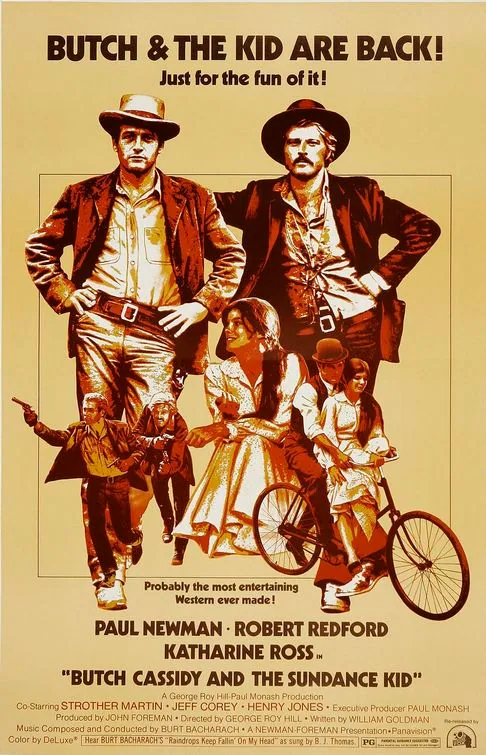
Two outlaws accustomed to reliable skills and easy movement discover that the force pursuing them will not be distracted by the familiar rules of their trade. Flight across the American West and then abroad offers temporary reinvention without eliminating the habits that made them recognizable. Their friendship and a companion's presence give escape warmth and comic rhythm, but changing geography does not guarantee a future outside the economy of pursuit.
Based on recorded story, mood and style. Your preferences can change the order.
Expect warm and wistful, with measured pacing.
In 1941, an Italian unit is stranded on the Greek island of Megisti after its transport is destroyed. The villagers, who had fled under earlier German occupation, gradually return; the soldiers settle into local routines and relationships while the wider war recedes from view. When news of Italy’s surrender reaches the island, the men face a choice between leaving and the life they have made there. Salvatores frames the story as a sunlit comic fable told from the soldiers’ point of view. That perspective makes the occupation’s unequal relationship with Greek residents easy to overlook, especially when one character says, ‘one face, one race.’ The line signals a breezy Italian self-image, not a neutral statement about local experience or wartime history.
Based on recorded story, mood and style. Your preferences can change the order.
Escape and pursuit
What changes Down by Law: measured. Thelma & Louise: steady and escalating.
Two friends leave home for a short holiday that becomes a flight from the law after violence at a roadside bar. Their attempts to reach safety are complicated by mistrust, theft and encounters exposing the constraints of their previous lives. As practical options narrow, their friendship supports a growing refusal to return to the roles that made escape seem necessary.
Both share themes of freedom and trust, plus a warm atmosphere.
Why this matches +
Genres: Action / Crime
Shared film traits
Based on recorded story, mood and style. Your preferences can change the order.
Escape and pursuit
What changes Down by Law: measured. Fast Five: fast.
Fugitives arriving in Rio become entangled in a theft that exposes the financial structure of a local criminal empire. Planning to take its stored cash offers a chance to stop running, but assembling a skilled crew also concentrates their exposure to a determined federal agent. Protecting a growing family turns another job into a wager on a shared future, while official and criminal pursuit become harder to separate through appearances alone.
Both share themes of freedom, plus a warm atmosphere.
Why this matches +
Genres: Drama / Crime
Shared film traits
Based on recorded story, mood and style. Your preferences can change the order.
Escape and pursuit
Expect defiant and warm, with measured pacing.
Sent to a Southern chain gang for a minor offense, Luke Jackson refuses to perform submission and becomes a source of hope for the other prisoners. His defiance is often playful, and the inmates build it into a legend that Luke cannot always sustain. The camp responds through physical punishment and rigid authority, making his resistance both a communal resource and an increasingly costly role. Religious imagery adds another possible meaning without settling whether Luke is a redeemer, a rebel or simply a vulnerable man who cannot comply. The chain gang's egg-eating contest turns bodily endurance into a legend among the inmates.
Based on recorded story, mood and style. Your preferences can change the order.
What changes Down by Law is tagged deadpan and warm; Gangs of New York is tagged tense and epic.
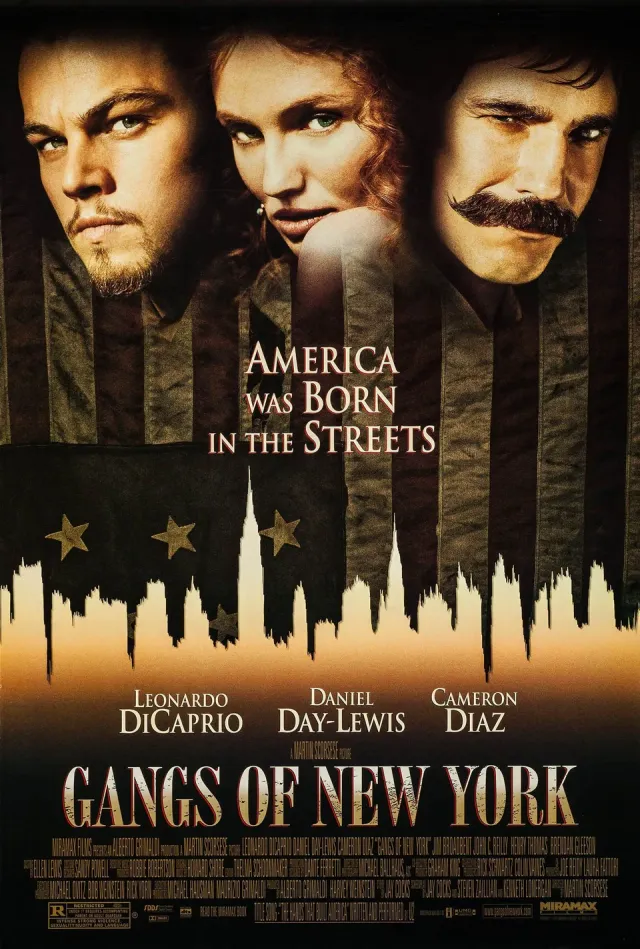
An Irish immigrant returns to a New York neighbourhood seeking revenge against the nativist gang leader who killed his father. Working his way into the man's circle offers access but also exposes the charisma and practical protection through which local authority is maintained. Criminal rivalry intersects with electoral manipulation, conscription and class anger, turning an inherited personal conflict into one part of a city whose violence serves interests larger than any single gang.
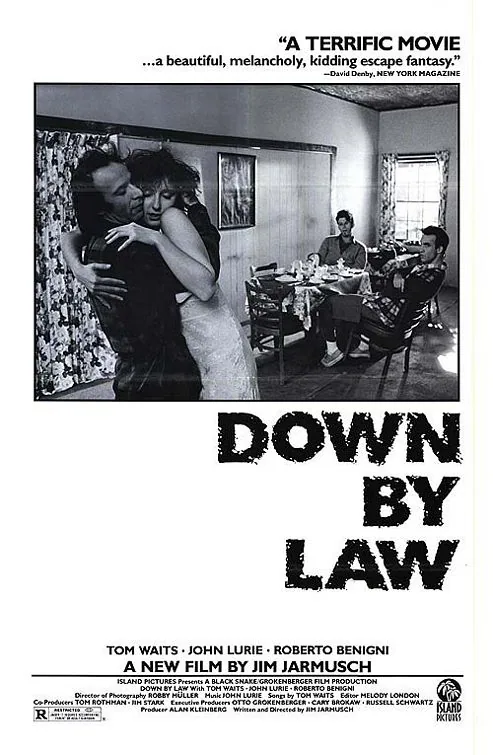
Two men framed in separate schemes share a Louisiana jail cell, where mutual irritation seems to offer no useful basis for companionship. An Italian immigrant's arrival introduces language mistakes, unexpected warmth and eventually a way out. Flight into the bayou replaces institutional confinement with aimless dependence, making the practical question of staying together compete with each man's impulse to recover independence before he knows where it would take him.
What drives the story
A shared escape exposes incompatible temperaments to the need for mutual survival, while an outsider's imperfect language keeps generating connections the others initially dismiss.
The people at its centre
Zack and Jack protect wounded pride through hostility, whereas Bob's willingness to risk friendliness creates both an escape opportunity and a different possibility of belonging.
What it feels like
Black-and-white compositions, deliberate pauses and dry comic repetition make the prison story drift into an offbeat journey rather than a tightly engineered breakout thriller.
Worth knowing
Match on reluctant companionship formed through confinement and shared wandering, not procedural escape ingenuity alone; the uncertain destination matters as much as leaving the prison.