A probation countdown turns a witnessed police killing into a conflict between silence, public action and personal safety. The film uses Collin's friendship with Miles to show how shared choices can carry unequal costs.
Why this matches +
Selected for the central appeal: A Brooklyn neighborhood's everyday humor and accumulated racial tensions converge on a hot day and erupt into tragedy.
Genres: Drama / Comedy
Shared film traits
Based on recorded story, mood and style. Your preferences can change the order.
What changes Friends navigate race, policing and community tensions in a changing city using humor and urgent drama; Oakland rather than Brooklyn.
Collin is nearing the end of probation and trying to stay out of trouble while working as a mover in a rapidly changing Oakland. His longtime friend Miles is more willing to provoke conflict, but the consequences of their shared behavior are not distributed equally. After Collin witnesses a police officer shoot a Black man, silence becomes another condition of his release and safety. The film brings gentrification, racialized policing and male friendship into a story that shifts from naturalistic work routines to spoken-word bursts and subjective imagery, making the city and its unequal risks part of its form.
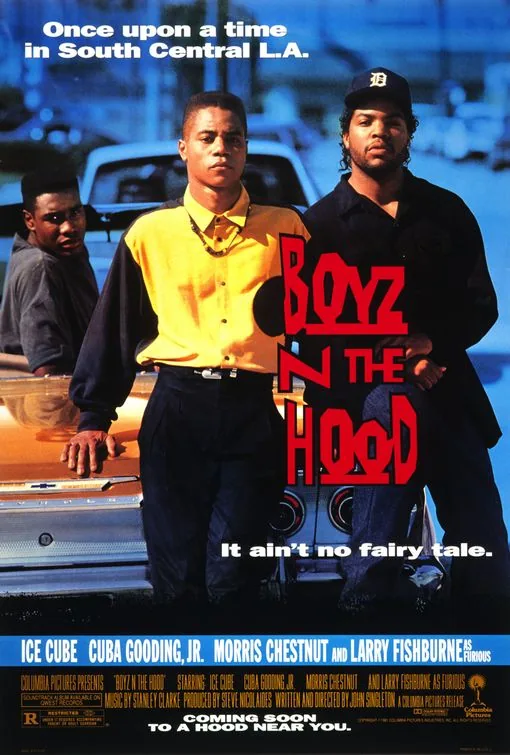
Tre's move into adolescence brings neighborhood dangers into sharper focus without making violence his only possible future.
Why this matches +
Selected for the central appeal: A Brooklyn neighborhood's everyday humor and accumulated racial tensions converge on a hot day and erupt into tragedy.
Genres: Drama / Crime
Shared film traits
Based on recorded story, mood and style. Your preferences can change the order.
What changes Young Black residents confront community ties, systemic racism and violence in a city neighborhood; a longer coming-of-age story.
Tre Styles grows up in South Central Los Angeles, where his father tries to give him discipline and options amid neighborhood violence. His closest friends make different choices as they move through adolescence, and the consequences of those decisions become increasingly difficult to escape. The film centers family bonds, community pressures and young men's search for a future within a setting shaped by structural neglect and gun violence.
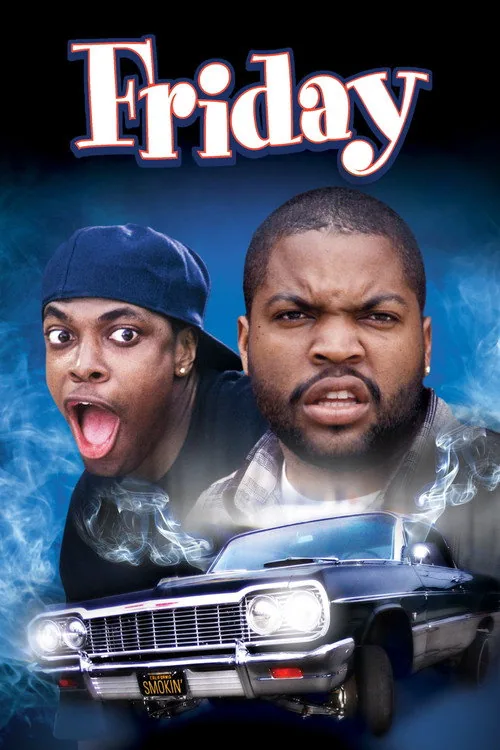
Craig and Smokey have until the evening to pay a debt after Smokey loses the product he was meant to sell.
Why this matches +
These offer a related experience with a meaningful difference in story, tone, or presentation.
An adjacent discovery: a related idea with a different viewing experience.
Genres: Comedy / Crime
Shared film traits
Based on recorded story, mood and style. Your preferences can change the order.
What changes A neighborhood's residents and conversations drive a day-in-the-life portrait; a lighter comedy without the same racial confrontation.
Recently fired Craig Jones spends a Friday in South Central Los Angeles with his friend Smokey, who has accidentally smoked part of a marijuana consignment he was supposed to sell. Their supplier demands repayment by nightfall, while the neighborhood bully Deebo creates another threat close to home. F. Gary Gray’s comedy keeps the story within one community and one day, finding humor in its neighbors’ arguments and favors while letting Craig’s choices about self-respect shape the climax.
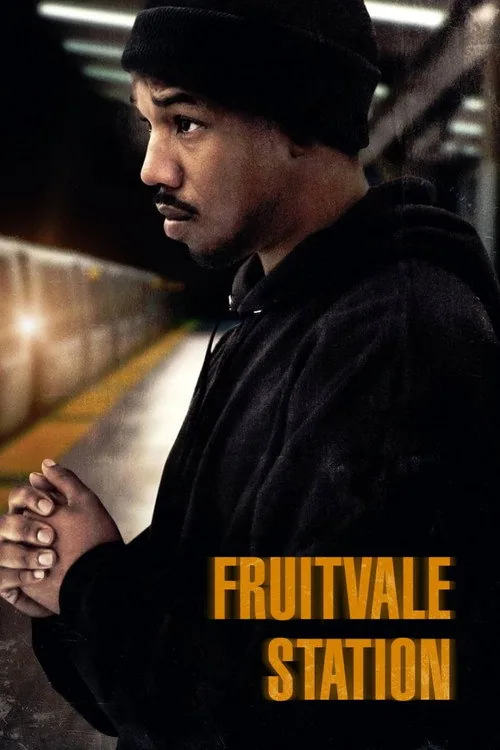
A reconstruction of Oscar Grant’s last day places family life and ordinary plans beside the fatal police encounter at Fruitvale station.
Why this matches +
These offer a related experience with a meaningful difference in story, tone, or presentation.
An adjacent discovery: a related idea with a different viewing experience.
Genres: Drama / Biography
Shared film traits
Based on recorded story, mood and style. Your preferences can change the order.
What changes A day in the life of a young Black man culminates in police violence and community grief; a biographical drama with less ensemble satire.
Fruitvale Station follows Oscar Grant during the final day of his life in Oakland on December 31, 2008. He tries to regain a grocery-store job, spends time with his partner Sophina and their daughter, and attends his mother’s birthday before taking the train into San Francisco. Earlier footage of his encounter with police frames the day as the film moves between ordinary family decisions and the events at Fruitvale station. Ryan Coogler’s drama reconstructs a real death while emphasizing the person and relationships behind the news.
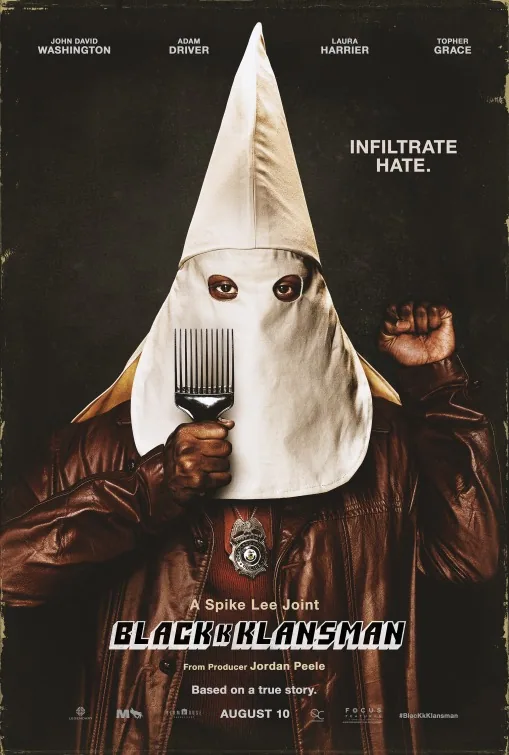
The operation requires Ron and Flip to share one false identity across phone and in-person contact. The split makes racialized access visible while also testing how far a police investigation can challenge the institution's limits.
Why this matches +
These offer a related experience with a meaningful difference in story, tone, or presentation.
An adjacent discovery: a related idea with a different viewing experience.
Genres: Crime / Drama
Shared film traits
Based on recorded story, mood and style. Your preferences can change the order.
What changes Racial injustice is confronted through humor and political anger in another Spike Lee film; a historical undercover investigation.
In 1970s Colorado Springs, Black police officer Ron Stallworth contacts the Ku Klux Klan by phone while a white Jewish colleague appears in person as the same undercover recruit. Their split performance exposes how access changes with the body attached to the same voice, while Ron's relationship with student activist Patrice raises questions about what police work can do against racist power. The operation achieves exposure but cannot settle the difference between an individual sting and the institution that employs it. Spike Lee combines comedy and suspense with a contemporary ending that deliberately breaks period distance; some events are heightened or invented.
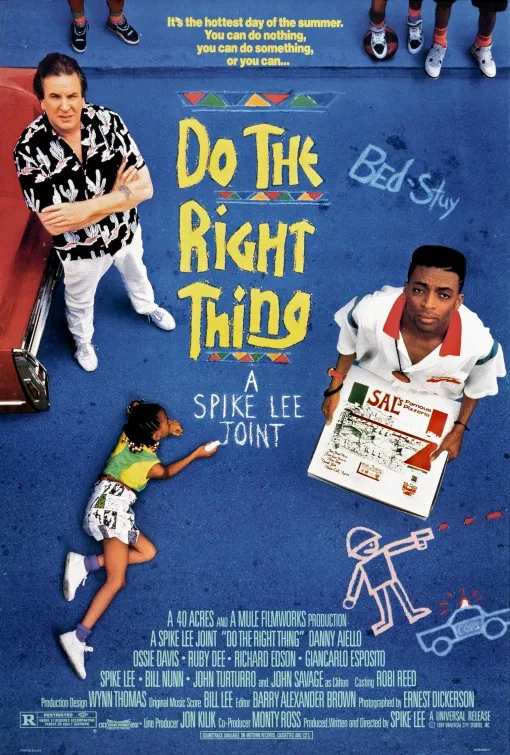
On the hottest day of the year in a Brooklyn neighborhood, a dispute over the pictures displayed on a pizzeria's wall becomes a flashpoint for accumulated racial tensions. Mookie, who delivers for the pizzeria's Italian American owner, moves among residents whose jokes, grievances, and loyalties reveal sharply different experiences of the same block. As the heat rises, the film asks what responsibility means when anger meets injustice.
What drives the story
A neighborhood's daily tensions escalate around a pizzeria, making private grievances impossible to keep separate.
The people at its centre
Mookie moves between his employer, friends, and neighbors, with divided loyalties exposing the limits of easy moral answers.
What it feels like
The film shifts from vibrant street comedy to mounting unease, leaving its central ethical questions deliberately unresolved.
Worth knowing
Its conflict is a community portrait and moral provocation rather than a conventional tale of individual reconciliation.
RacismCommunityResponsibility
Mood
Vibrant · Tense · Unsettling
Pacing
Gradual · Pressurized
Visual style
Expressive color · Street-level ensemble
Storytelling
Ensemble portrait · Escalating conflict · Public injustice