The procedural engine follows a blocked investigation: each official denial forces the agents to find witnesses, protect them and pursue a federal route around local impunity.
Why this matches +
Selected for the central appeal: Crime dramas about undercover investigations into racist violence and the institutions surrounding them.
Genres: Crime / Drama
Shared film traits
Based on recorded story, mood and style. Your preferences can change the order.
Investigation
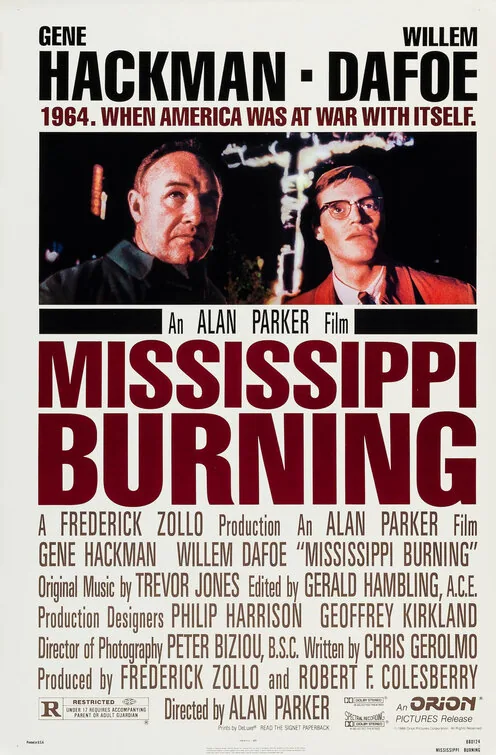
What changes Mississippi Burning follows investigators confronting the Ku Klux Klan and obstructive local authorities.
In 1964, FBI agents Alan Ward and Rupert Anderson investigate the disappearance of three civil-rights workers in fictional Jessup County, Mississippi. Local law enforcement obstructs the inquiry and is tied to the Ku Klux Klan. Ward's formal approach and Anderson's local knowledge clash as intimidation prevents residents from speaking. A witness's family is attacked, and Anderson builds a relationship with Deputy Pell's wife, whose testimony helps locate the victims' bodies. The agents pursue federal civil-rights charges when local courts will not deliver justice, using coercive tactics that raise questions about the investigation even as the film frames the case as a reckoning with racist violence.
A probation countdown turns a witnessed police killing into a conflict between silence, public action and personal safety. The film uses Collin's friendship with Miles to show how shared choices can carry unequal costs.
Why this matches +
These offer a related experience with a meaningful difference in story, tone, or presentation.
An adjacent discovery: a related idea with a different viewing experience.
Genres: Drama / Comedy
Shared film traits
Based on recorded story, mood and style. Your preferences can change the order.
What changes Blindspotting uses humor and a close friendship to examine racism and policing in contemporary America.
Collin is nearing the end of probation and trying to stay out of trouble while working as a mover in a rapidly changing Oakland. His longtime friend Miles is more willing to provoke conflict, but the consequences of their shared behavior are not distributed equally. After Collin witnesses a police officer shoot a Black man, silence becomes another condition of his release and safety. The film brings gentrification, racialized policing and male friendship into a story that shifts from naturalistic work routines to spoken-word bursts and subjective imagery, making the city and its unequal risks part of its form.
A murder investigation repeatedly stalls because local power and racist assumptions determine whom the authorities are prepared to suspect.
Why this matches +
These offer a related experience with a meaningful difference in story, tone, or presentation.
An adjacent discovery: a related idea with a different viewing experience.
Genres: Crime / Drama
Shared film traits
Based on recorded story, mood and style. Your preferences can change the order.
Investigation
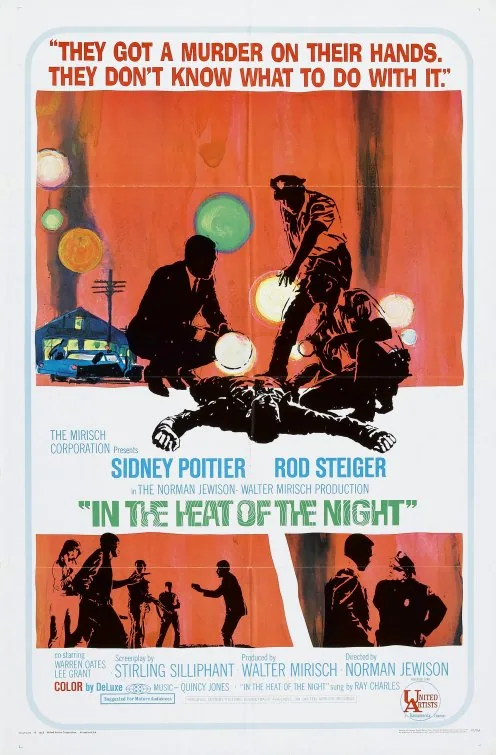
What changes In the Heat of the Night follows a Black investigator confronting racism during a Southern murder case.
A Black homicide detective passing through a Mississippi town is arrested after a wealthy visitor is found dead. Once his profession is established, local authorities reluctantly accept his help, but his expertise does not protect him from racist hostility. The investigation requires an uneasy partnership with the white police chief, forcing both men to confront how pride, prejudice and local influence distort the search for evidence.
A spy assignment against a culture-shaping corporation lets the film turn style, image and identity into both comic weapons and targets.
Why this matches +
These offer a related experience with a meaningful difference in story, tone, or presentation.
An adjacent discovery: a related idea with a different viewing experience.
Genres: Comedy / Action
Shared film traits
Based on recorded story, mood and style. Your preferences can change the order.
Investigation
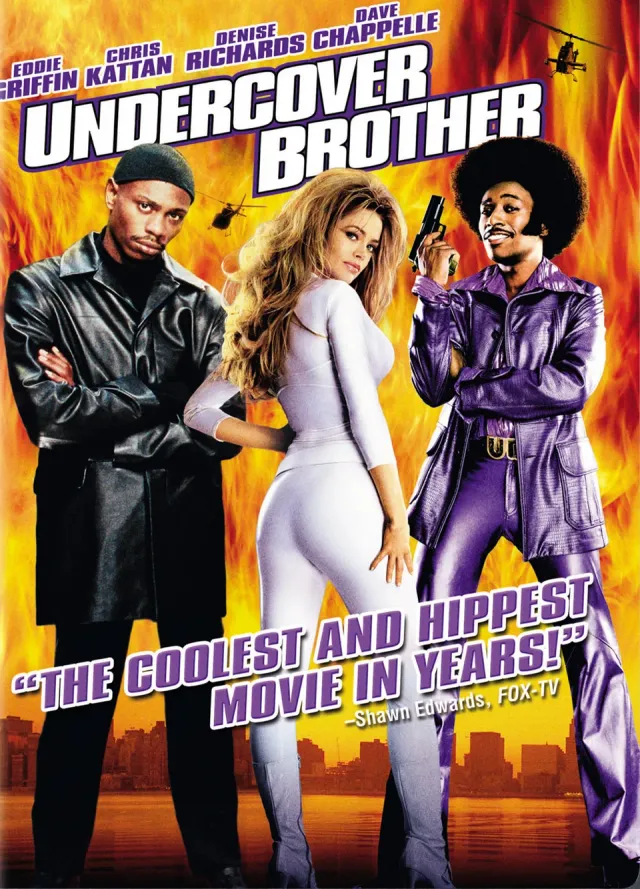
What changes Undercover Brother uses comedy and undercover work to satirize racism and political power.
An undercover operative joins a secret organization to investigate a corporation whose leadership is working to weaken Black cultural influence. The mission draws on a parody of 1970s spy and blaxploitation conventions, with the hero's style and confidence treated as part of the joke and the strategy. The comedy uses exaggerated villains and pop-cultural references to satirize corporate control and the way images can be used to shape public identity.
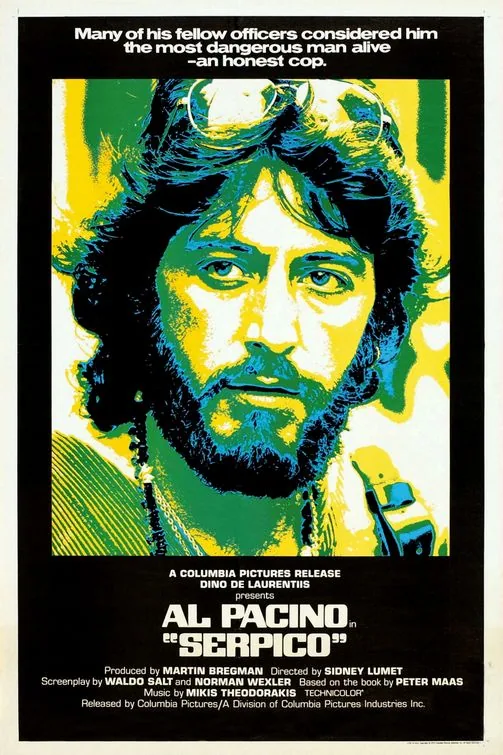
Serpico’s refusal to participate turns routine police work into an institutional conflict, and each attempt to report the bribes exposes another layer of protection for the system.
Why this matches +
These offer a related experience with a meaningful difference in story, tone, or presentation.
An adjacent discovery: a related idea with a different viewing experience.
Genres: Crime / Drama
Shared film traits
Based on recorded story, mood and style. Your preferences can change the order.
Investigation
What changes Serpico follows an officer whose investigation exposes wrongdoing within the institution employing him.
New York police officer Frank Serpico begins his career hoping to serve the public, but his unconventional style and refusal to accept bribes isolate him from colleagues who profit from a widespread corruption system. As he reports misconduct through official channels, indifference and retaliation make his own department an obstacle to the investigation. During a Brooklyn drug raid he is shot in the face, a turning point that exposes how isolated he has become within the force. His recovery and testimony before the Knapp Commission help bring the corruption into public view, but his relationship with the department is permanently changed.
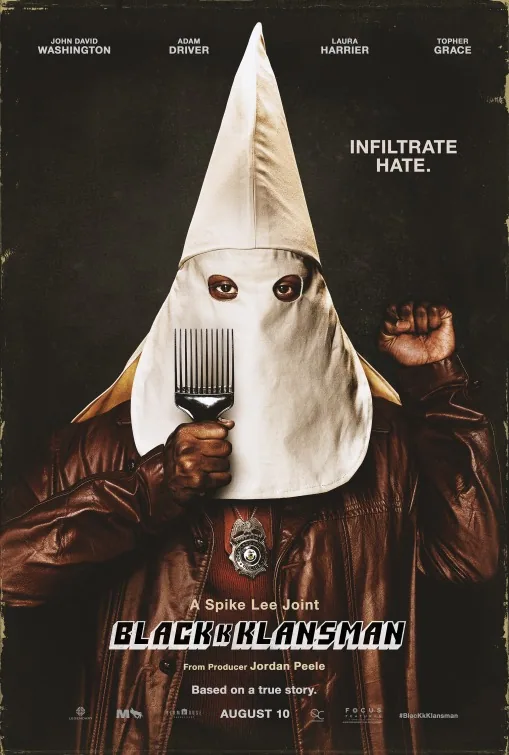
In 1970s Colorado Springs, Black police officer Ron Stallworth contacts the Ku Klux Klan by phone while a white Jewish colleague appears in person as the same undercover recruit. Their split performance exposes how access changes with the body attached to the same voice, while Ron's relationship with student activist Patrice raises questions about what police work can do against racist power. The operation achieves exposure but cannot settle the difference between an individual sting and the institution that employs it. Spike Lee combines comedy and suspense with a contemporary ending that deliberately breaks period distance; some events are heightened or invented.
What drives the story
The operation requires Ron and Flip to share one false identity across phone and in-person contact. The split makes racialized access visible while also testing how far a police investigation can challenge the institution's limits.
The people at its centre
Ron balances loyalty to his partner and profession against Patrice's critique of policing. Flip's Jewish identity makes the undercover role personally consequential, but the partnership does not erase the different risks they face.
What it feels like
Biting comedy and procedural suspense give the historical operation momentum before the film cuts to contemporary footage. That ending changes the scale of the story from one undercover success to continuing political conflict.
Worth knowing
Compare undercover stories that expose racialized access and contested institutional legitimacy. Distinguish documented events from composites and inventions; defeating one extremist group does not prove that policing stands outside the wider problem.