A murder investigation repeatedly stalls because local power and racist assumptions determine whom the authorities are prepared to suspect.
Why this matches +
Selected for the central appeal: Investigative dramas confronting racist violence and institutional obstruction.
Genres: Crime / Drama
Shared film traits
Based on recorded story, mood and style. Your preferences can change the order.
Investigation
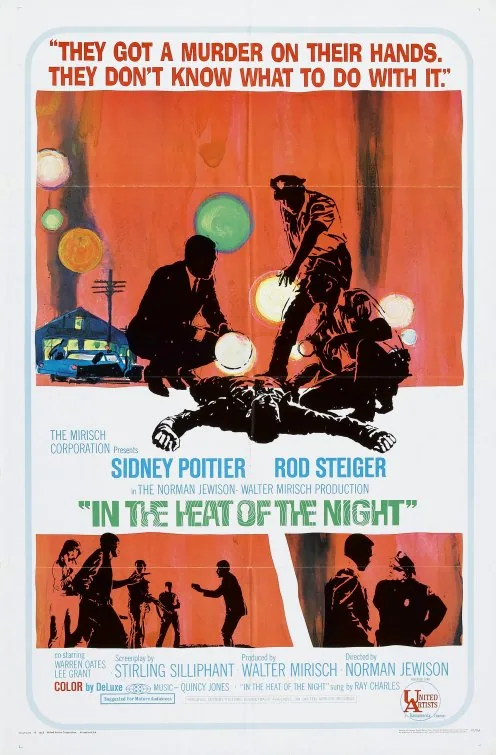
What changes In the Heat of the Night follows an investigation exposing entrenched racism within a Southern community.
A Black homicide detective passing through a Mississippi town is arrested after a wealthy visitor is found dead. Once his profession is established, local authorities reluctantly accept his help, but his expertise does not protect him from racist hostility. The investigation requires an uneasy partnership with the white police chief, forcing both men to confront how pride, prejudice and local influence distort the search for evidence.
A Black JAG captain investigates the murder of a sergeant inside a segregated unit.
Why this matches +
Selected for the central appeal: Investigative dramas confronting racist violence and institutional obstruction.
Genres: War / Drama
Shared film traits
Based on recorded story, mood and style. Your preferences can change the order.
Investigation · Political resistance
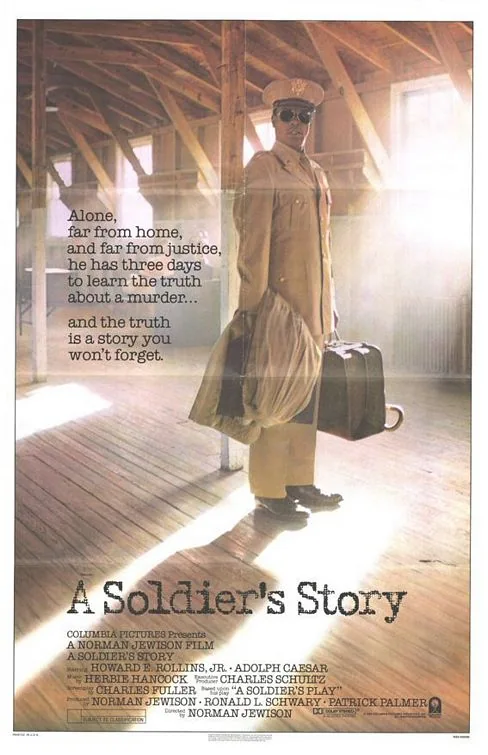
What changes A Soldier's Story investigates a killing amid institutional racism and military hierarchy.
At a segregated Army base in Louisiana during World War II, Captain Davenport investigates the killing of a Black drill sergeant whose blunt authority made him unpopular with white officers and Black enlisted men alike. Flashbacks complicate the case, showing how racism and military rank shaped the regiment's memories. The mystery becomes a study of testimony under unequal power.
The operation requires Ron and Flip to share one false identity across phone and in-person contact. The split makes racialized access visible while also testing how far a police investigation can challenge the institution's limits.
Why this matches +
Selected for the central appeal: Investigative dramas confronting racist violence and institutional obstruction.
Genres: Crime / Drama
Shared film traits
Based on recorded story, mood and style. Your preferences can change the order.
Investigation
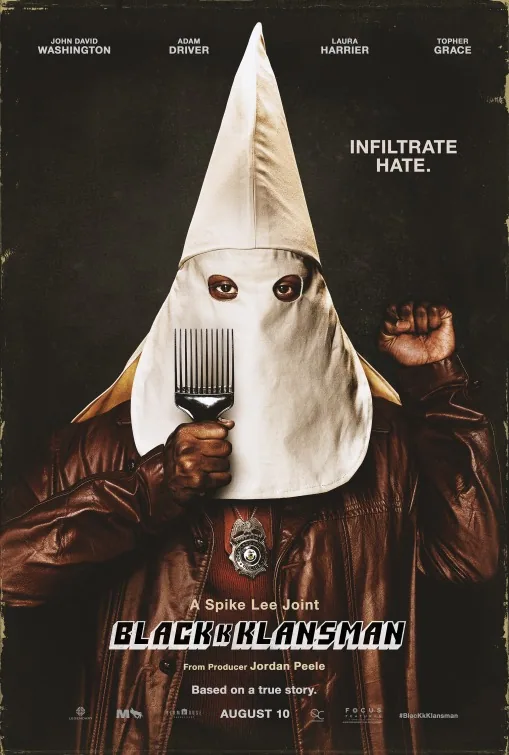
What changes BlacKkKlansman follows investigators confronting the Ku Klux Klan and racist violence.
In 1970s Colorado Springs, Black police officer Ron Stallworth contacts the Ku Klux Klan by phone while a white Jewish colleague appears in person as the same undercover recruit. Their split performance exposes how access changes with the body attached to the same voice, while Ron's relationship with student activist Patrice raises questions about what police work can do against racist power. The operation achieves exposure but cannot settle the difference between an individual sting and the institution that employs it. Spike Lee combines comedy and suspense with a contemporary ending that deliberately breaks period distance; some events are heightened or invented.
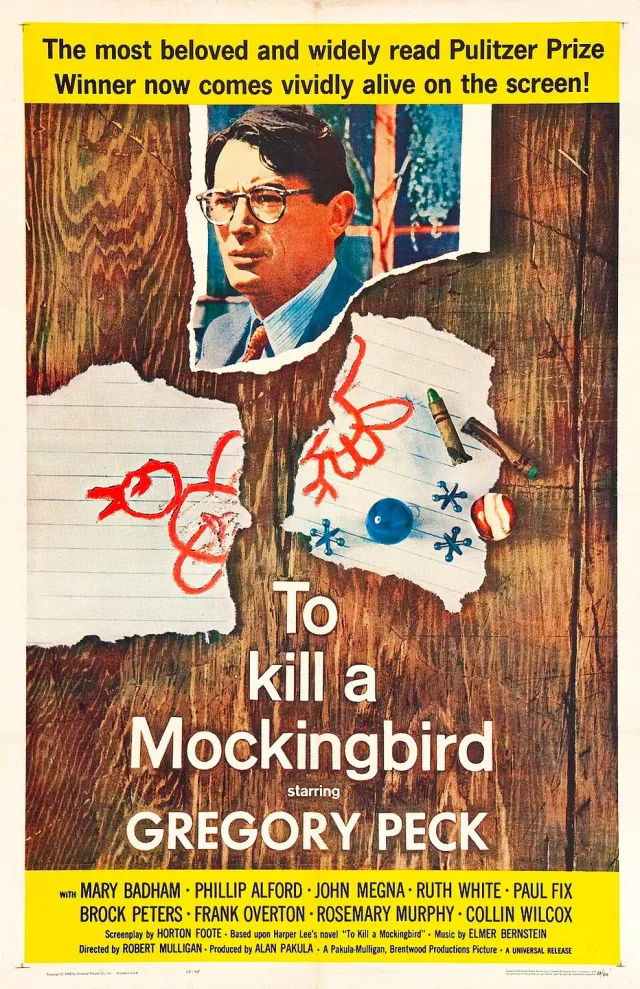
A child's imaginative account of local danger is transformed by a trial in which publicly available evidence cannot overcome entrenched racial authority.
Why this matches +
These offer a related experience with a meaningful difference in story, tone, or presentation.
An adjacent discovery: a related idea with a different viewing experience.
Genres: Crime / Drama
Shared film traits
Based on recorded story, mood and style. Your preferences can change the order.
What changes To Kill a Mockingbird exposes racial injustice and community hostility through a Southern criminal case.
Children growing up in a Depression-era Alabama town turn a reclusive neighbour into the subject of stories and dares. Their father's defence of a Black man accused of assault brings them into contact with the racial violence and social expectations those childhood games have not prepared them to understand. The trial's evidence and the community's response expose a painful gap between a principled adult's example and the power of the surrounding system.
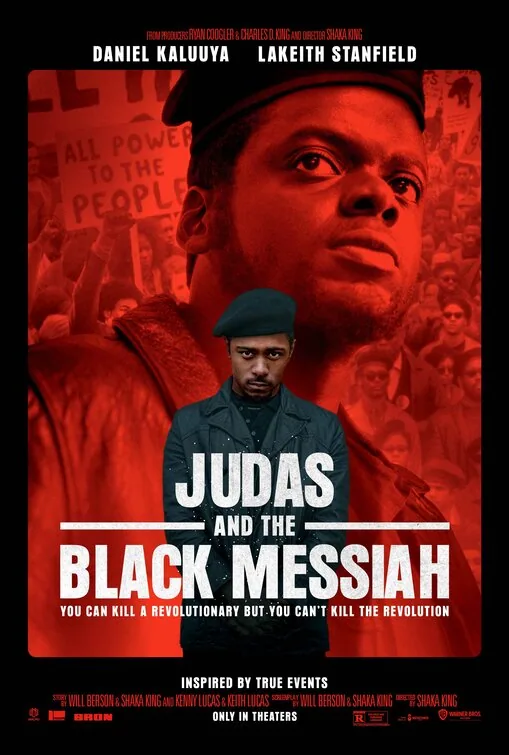
The informant arrangement makes every act of trust vulnerable to surveillance.
Why this matches +
These offer a related experience with a meaningful difference in story, tone, or presentation.
An adjacent discovery: a related idea with a different viewing experience.
Genres: Biography / Crime
Shared film traits
Based on recorded story, mood and style. Your preferences can change the order.
Political resistance
What changes Judas and the Black Messiah examines a federal operation and the devastating consequences of political and racial repression.
FBI informant William O’Neal infiltrates the Illinois Black Panther Party and grows close to its chairman Fred Hampton. The film follows the pressure between O’Neal’s coercive bargain with federal agents and Hampton’s political organizing, community programs, and coalition-building. Its dual focus keeps personal betrayal beside institutional power, asking how surveillance and self-preservation shape lives during a charged historical moment.
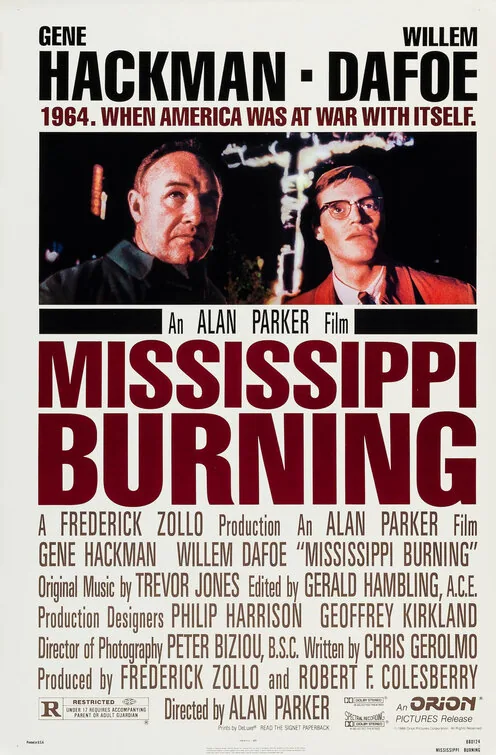
In 1964, FBI agents Alan Ward and Rupert Anderson investigate the disappearance of three civil-rights workers in fictional Jessup County, Mississippi. Local law enforcement obstructs the inquiry and is tied to the Ku Klux Klan. Ward's formal approach and Anderson's local knowledge clash as intimidation prevents residents from speaking. A witness's family is attacked, and Anderson builds a relationship with Deputy Pell's wife, whose testimony helps locate the victims' bodies. The agents pursue federal civil-rights charges when local courts will not deliver justice, using coercive tactics that raise questions about the investigation even as the film frames the case as a reckoning with racist violence.
What drives the story
The procedural engine follows a blocked investigation: each official denial forces the agents to find witnesses, protect them and pursue a federal route around local impunity.
The people at its centre
Ward's rule-bound certainty gives way to Anderson's more coercive methods; the film centers white FBI agents while Black residents' agency and perspectives receive less space.
What it feels like
A tense crime drama builds through intimidation, interrogation and the discovery of institutional complicity, with violence treated as an escalating threat.
Worth knowing
The fictional Jessup County story draws on the real 1964 Neshoba County murders of three civil-rights workers, but its white-agent-centered resolution and the deputy's wife's role are inventions. Historians note that the real FBI case relied on an informant and that the film sidelines Black activists' agency; read it as a political thriller, not a faithful account of the investigation.