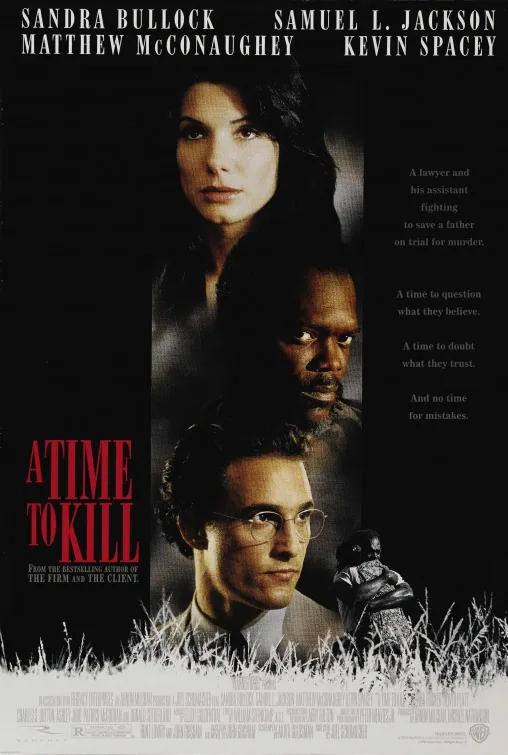
A retaliatory killing produces a defense case whose legal questions are inseparable from racist intimidation and unequal public identification with the victims.
Why this matches +
Selected for the central appeal: Moral and legal dramas confronting racial prejudice, injustice and their effects on communities.
Genres: Drama / Crime
Shared film traits
Based on recorded story, mood and style. Your preferences can change the order.
What changes A Time to Kill centers a racially charged Southern trial and a lawyer confronting the prejudices around him.
After a Black girl is brutally attacked in Mississippi, her father kills the accused men and faces a murder trial. A young white lawyer agrees to defend him as racial intimidation and public anger spread beyond the courtroom. Preparing the case endangers colleagues and family, turning a legal argument about responsibility into a confrontation with the unequal sympathy and institutional power shaping the surrounding community.
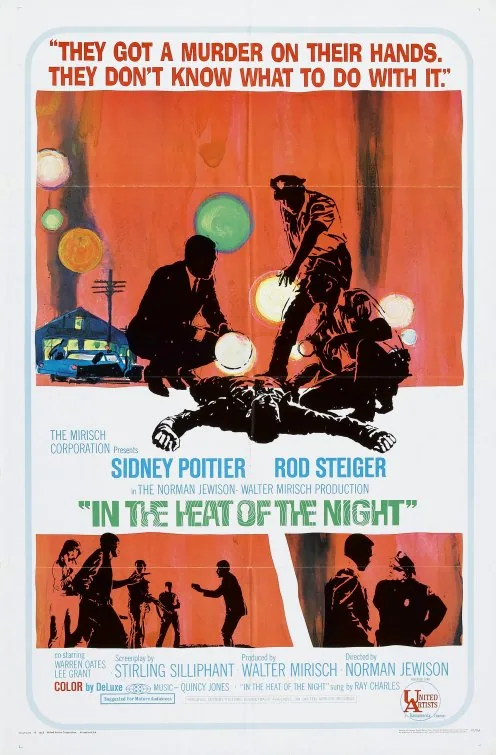
A murder investigation repeatedly stalls because local power and racist assumptions determine whom the authorities are prepared to suspect.
Why this matches +
Selected for the central appeal: Moral and legal dramas confronting racial prejudice, injustice and their effects on communities.
Genres: Crime / Drama
Shared film traits
Based on recorded story, mood and style. Your preferences can change the order.
What changes In the Heat of the Night exposes entrenched Southern racism through a criminal investigation.
A Black homicide detective passing through a Mississippi town is arrested after a wealthy visitor is found dead. Once his profession is established, local authorities reluctantly accept his help, but his expertise does not protect him from racist hostility. The investigation requires an uneasy partnership with the white police chief, forcing both men to confront how pride, prejudice and local influence distort the search for evidence.
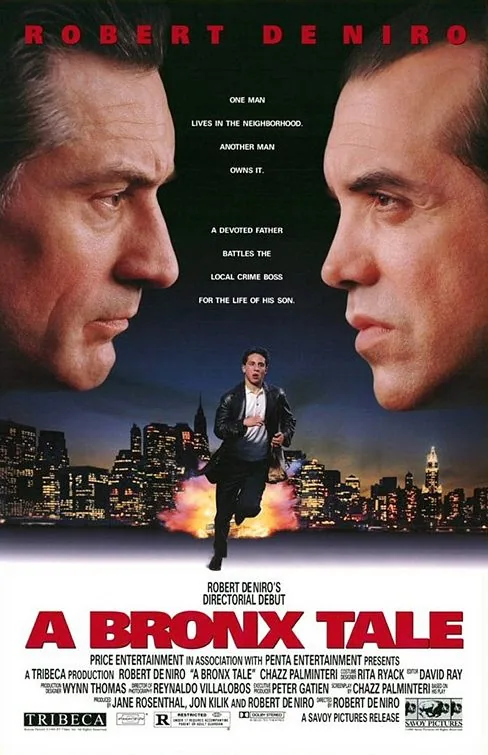
A childhood act of silence creates a criminal mentorship that competes with a father's ordinary moral example.
Why this matches +
These offer a related experience with a meaningful difference in story, tone, or presentation.
An adjacent discovery: a related idea with a different viewing experience.
Genres: Crime / Drama
Shared film traits
Based on recorded story, mood and style. Your preferences can change the order.
Coming of age
What changes A Bronx Tale views crime and racial divisions through a boy's coming of age and competing adult influences.
A boy in an Italian American neighborhood witnesses a killing and wins a local gangster's favor by refusing to identify him. As he grows up, he moves between the gangster's seductive authority and his bus driver father's insistence on honest work. An interracial romance and his friends' escalating racism make the choice between these models of adulthood increasingly urgent.
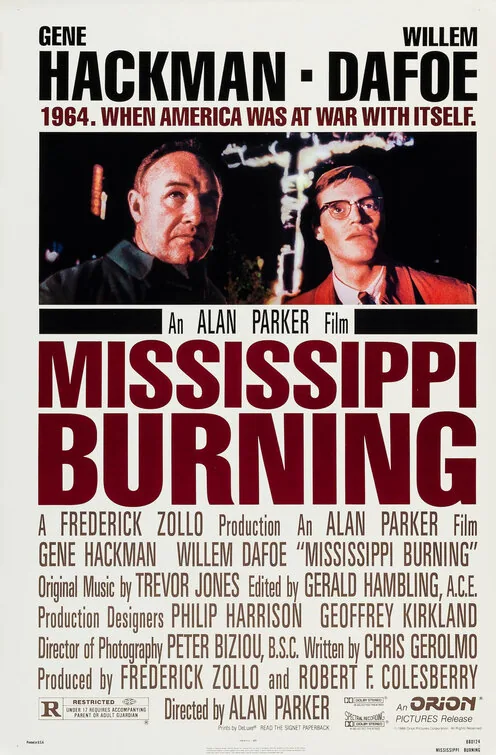
The procedural engine follows a blocked investigation: each official denial forces the agents to find witnesses, protect them and pursue a federal route around local impunity.
Why this matches +
These offer a related experience with a meaningful difference in story, tone, or presentation.
An adjacent discovery: a related idea with a different viewing experience.
Genres: Crime / Drama
Shared film traits
Based on recorded story, mood and style. Your preferences can change the order.
What changes Mississippi Burning confronts racist violence and institutional complicity in the American South.
In 1964, FBI agents Alan Ward and Rupert Anderson investigate the disappearance of three civil-rights workers in fictional Jessup County, Mississippi. Local law enforcement obstructs the inquiry and is tied to the Ku Klux Klan. Ward's formal approach and Anderson's local knowledge clash as intimidation prevents residents from speaking. A witness's family is attacked, and Anderson builds a relationship with Deputy Pell's wife, whose testimony helps locate the victims' bodies. The agents pursue federal civil-rights charges when local courts will not deliver justice, using coercive tactics that raise questions about the investigation even as the film frames the case as a reckoning with racist violence.
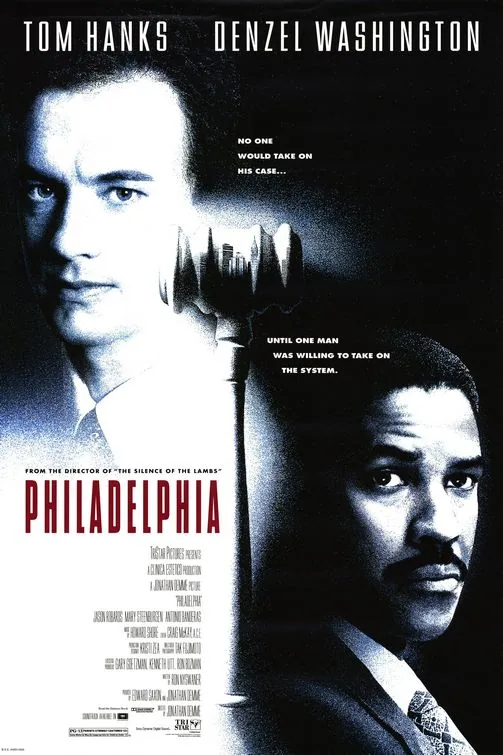
A wrongful-dismissal lawsuit requires proof that an apparently professional decision conceals prejudice, while the claimant's worsening illness makes legal procedure emotionally urgent.
Why this matches +
These offer a related experience with a meaningful difference in story, tone, or presentation.
An adjacent discovery: a related idea with a different viewing experience.
Genres: Drama / LGBTQ-related
Shared film traits
Based on recorded story, mood and style. Your preferences can change the order.
What changes Philadelphia follows a lawyer's struggle against prejudice through a consequential courtroom case.
A successful lawyer who has concealed his AIDS diagnosis is dismissed after a disputed failure at work. Believing the explanation masks discrimination, he seeks representation from a lawyer whose own fear and prejudice initially make assistance unlikely. Preparing and trying the case turns professional evidence into a demand for public dignity, while illness gives each delay a personal cost and exposes the difference between legal sympathy and actual acceptance.
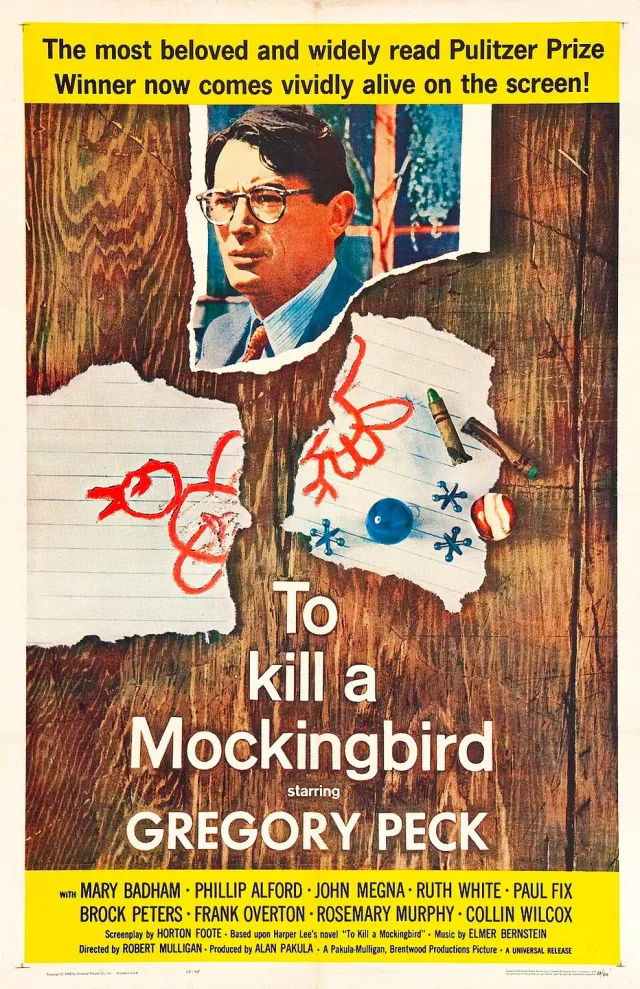
Children growing up in a Depression-era Alabama town turn a reclusive neighbour into the subject of stories and dares. Their father's defence of a Black man accused of assault brings them into contact with the racial violence and social expectations those childhood games have not prepared them to understand. The trial's evidence and the community's response expose a painful gap between a principled adult's example and the power of the surrounding system.
What drives the story
A child's imaginative account of local danger is transformed by a trial in which publicly available evidence cannot overcome entrenched racial authority.
The people at its centre
A father's insistence on empathy guides his children without fully shielding them, while their changing view of a neighbour tests how judgement becomes recognition.
What it feels like
Patient domestic observation and restrained courtroom tension connect childhood perception with an increasingly concrete awareness of injustice.
Worth knowing
The trial belongs to a historically specific racial order; it is not a generic puzzle whose correct answer ensures that legal institutions will act fairly.