Both share home invasion, plus themes of spectatorship and violence.
Why this matches +
Genres: Thriller / Horror
Shared film traits
Based on recorded story, mood and style. Your preferences can change the order.
Both directed by Michael Haneke.
Constructed reality
What changes Funny Games: two strangers hold a vacationing family hostage and force them to take part in sadistic games.. Funny Games U.S.: a family’s attempt to survive is repeatedly undermined by captors who control the story’s rules..
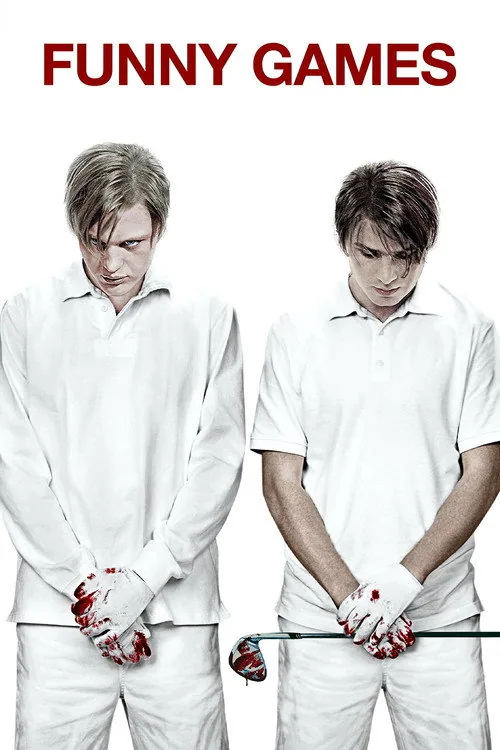
George and Ann Farber arrive with their son at a lake house, where two polite young men ask for small favors and then refuse to leave. The visitors injure George and force the family to participate in a sequence of cruel “games,” while the film repeatedly draws attention to the audience and its expectations of violence. Michael Haneke’s English-language remake closely reproduces his 1997 film and uses direct address and a startling rewind to frustrate conventional thriller rules. The violence is presented as an ethical challenge to spectatorship, not as triumphant action.
Both share themes of control, plus a disturbing atmosphere.
Why this matches +
Genres: Thriller / Drama
Shared film traits
Based on recorded story, mood and style. Your preferences can change the order.
What changes Funny Games: two strangers hold a vacationing family hostage and force them to take part in sadistic games.. Fatal Attraction: escalating.
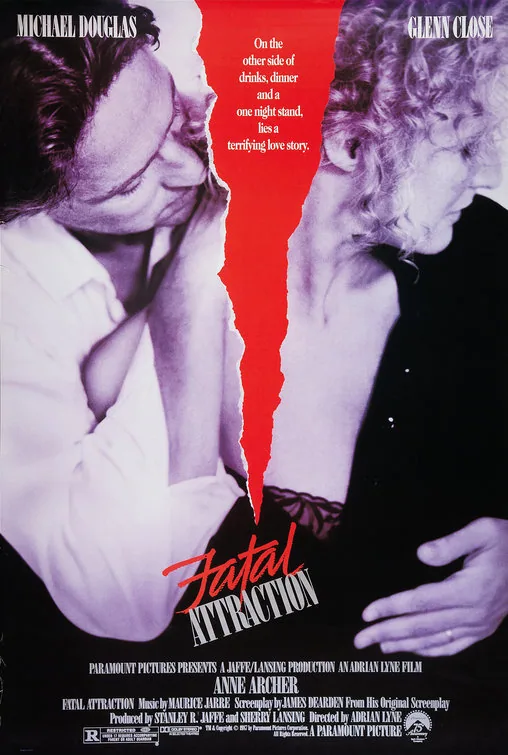
A married lawyer tries to contain a brief affair as the other participant’s attempts to continue the relationship become threats against his household. His secrecy delays his wife’s chance to understand the danger, so the thriller’s suspense grows partly from his own choices rather than from Alex alone. Domestic rooms become sites of surveillance and siege, while the film increasingly aligns viewers with the family’s fear. The ending changed after test screenings, but director Adrian Lyne said he made the change for dramatic reasons rather than because audiences demanded a harsher fate; the alternate ending later circulated on home video.
Both share themes of control, plus a disturbing atmosphere.
Why this matches +
Genres: Drama / Thriller
Shared film traits
Based on recorded story, mood and style. Your preferences can change the order.
Constructed reality
What changes Funny Games: two strangers hold a vacationing family hostage and force them to take part in sadistic games.. Dogtooth: small breaches in a closed system expose how its rules depend on obedience..
A couple raise their three adult children inside a fenced property and teach them that the world beyond it is dangerous, using invented meanings for ordinary words and strict rules to control their knowledge. Their carefully managed routine begins to fracture when the father brings an outside employee into the house and the eldest daughter gains access to forbidden films. Yorgos Lanthimos’s Greek drama presents family authority through deadpan rituals and deliberate disorientation, making the home feel like a self-contained system whose rules can no longer hold.
Both share themes of control, plus a disturbing atmosphere.
Why this matches +
Genres: Drama / Thriller
Shared film traits
Based on recorded story, mood and style. Your preferences can change the order.
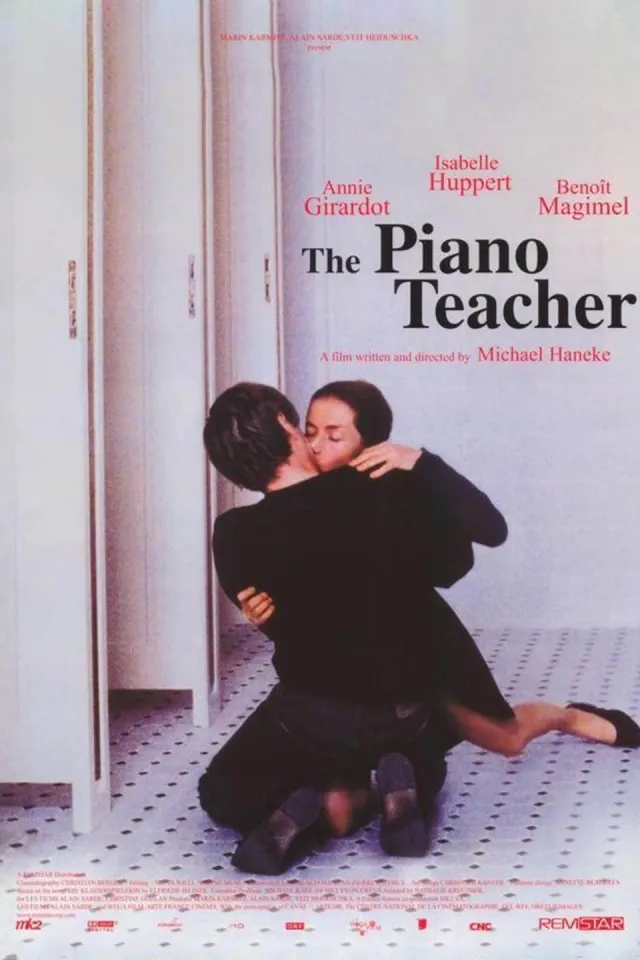
What changes Funny Games: two strangers hold a vacationing family hostage and force them to take part in sadistic games.. The Piano Teacher: measured and relentless.
Erika Kohut is a demanding piano professor in Vienna whose controlled public manner coexists with private compulsions, self-harm and a suffocating life with her mother. Student Walter Klemmer admires her playing and pursues her, but Erika tries to define the relationship through a written list of rules for sexual submission. Walter cannot accept the terms as Erika imagines them, and desire becomes a struggle over who controls the encounter. The film's conservatory world is also marked by performance pressure, jealousy and humiliation, as Erika harms another student's hand to prevent a rival from playing. Michael Haneke adapts Elfriede Jelinek's novel as a severe study of repression and power; its sexual violence is explicit and the ending refuses therapeutic closure.
Based on recorded story, mood and style. Your preferences can change the order.
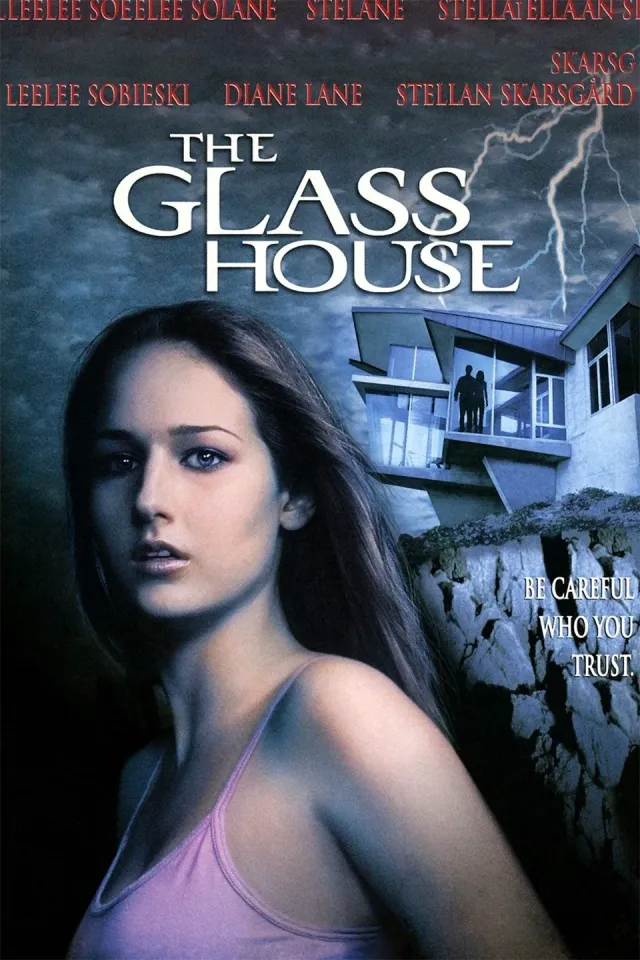
What changes Funny Games: two strangers hold a vacationing family hostage and force them to take part in sadistic games.. The Glass House: escalating and suspense-led.
After their parents die, two siblings are taken in by the wealthy couple named as their guardians. The new home initially appears generous, but the children notice inconsistencies in the adults' behavior and begin to question the motives behind their sudden inheritance and relocation. The thriller builds tension from the gap between a safe-looking household and the evidence the siblings can uncover as they try to protect one another.
Both share themes of violence, plus a disturbing atmosphere.
Why this matches +
Genres: Drama / Crime
Shared film traits
Based on recorded story, mood and style. Your preferences can change the order.
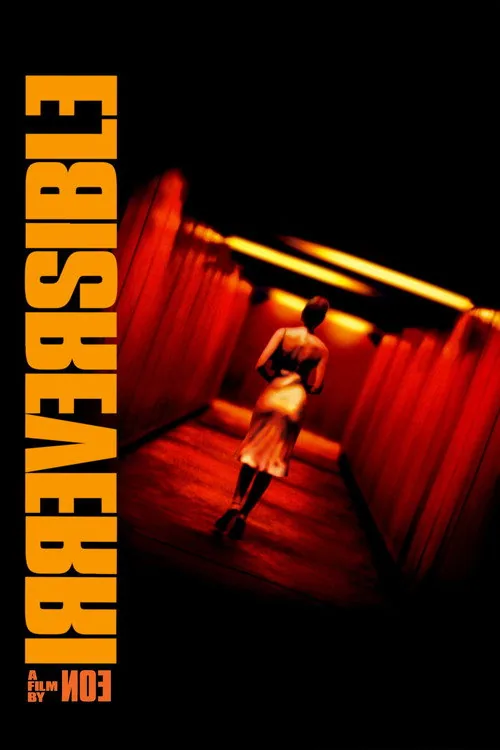
What changes Funny Games: two strangers hold a vacationing family hostage and force them to take part in sadistic games.. Irréversible: begins at its most chaotic point and moves backward.
Alex’s night out with her partner Marcus and her former partner Pierre is revealed in reverse order, beginning with the violent aftermath of a crime. As the film moves backward, the events that led to that night become clearer, and the audience must reconsider the characters’ earlier calm in light of what is already known. Gaspar Noé’s French drama is formally disorienting and contains prolonged sexual violence and brutal revenge violence, requiring careful consideration of content comfort.
Based on recorded story, mood and style. Your preferences can change the order.
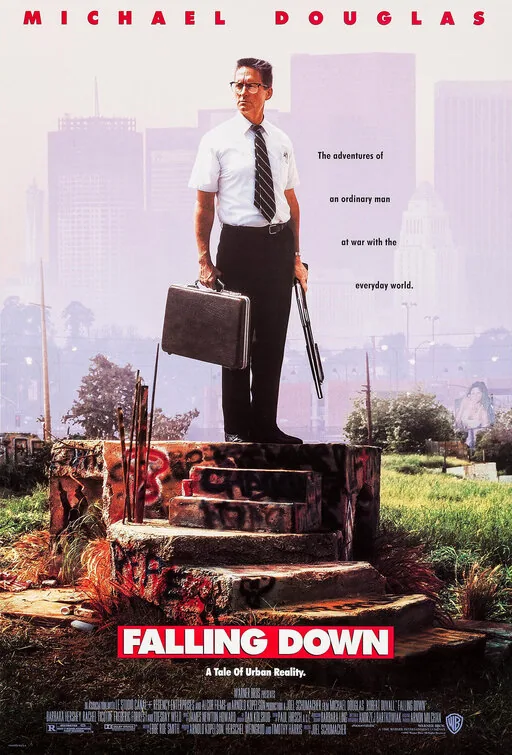
What changes Funny Games: two strangers hold a vacationing family hostage and force them to take part in sadistic games.. Falling Down: escalating.
A divorced, armed man abandons his car in Los Angeles traffic and walks toward the home from which he has been excluded. He narrates each encounter as proof that ordinary rules have become intolerable, but his demand for recognition repeatedly becomes intimidation and injury. A nearing-retirement detective follows the accumulating violence while trying to reach the family before the walker does. The film’s satire gives the grievance momentum, then exposes how a self-image of victimhood can conceal both racialized aggression and a direct threat to people who owe the protagonist no access.
Both share home invasion, plus themes of violence.
Why this matches +
Genres: Thriller
Shared film traits
Based on recorded story, mood and style. Your preferences can change the order.
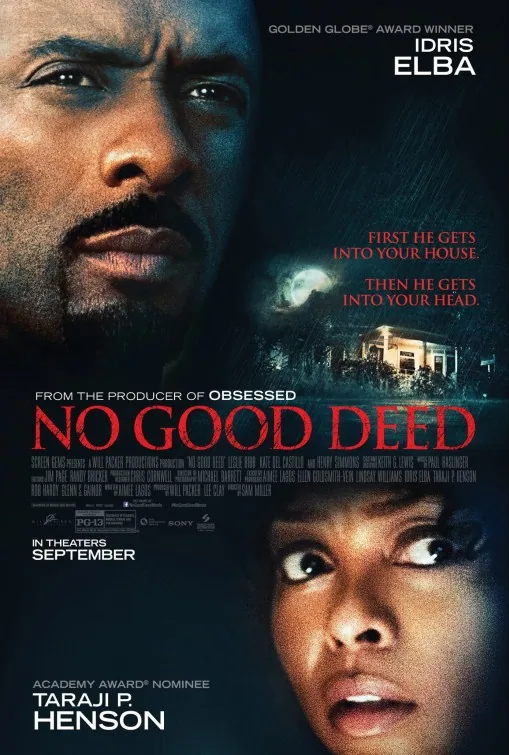
What changes Funny Games: two strangers hold a vacationing family hostage and force them to take part in sadistic games.. No Good Deed: tight real-time pressure with sudden reversals.
A woman alone at home offers shelter to a stranger whose car has broken down, then realizes that his charm conceals a violent danger. The visit becomes a struggle over control of domestic space, as she searches for a way to protect herself and her family. The thriller relies on limited locations and escalating intimidation, with trust turning into the central survival question.
Based on recorded story, mood and style. Your preferences can change the order.
What changes Funny Games: two strangers hold a vacationing family hostage and force them to take part in sadistic games.. Enough: escalating and character-led.
After escaping an abusive marriage, a young mother tries to build a safer life for herself and her daughter while her husband continues to pursue them. She changes her appearance, moves between places and eventually prepares to defend herself rather than depend on a system that has failed to keep her family safe. The thriller centers a survivor's agency and the frightening persistence of coercive control.
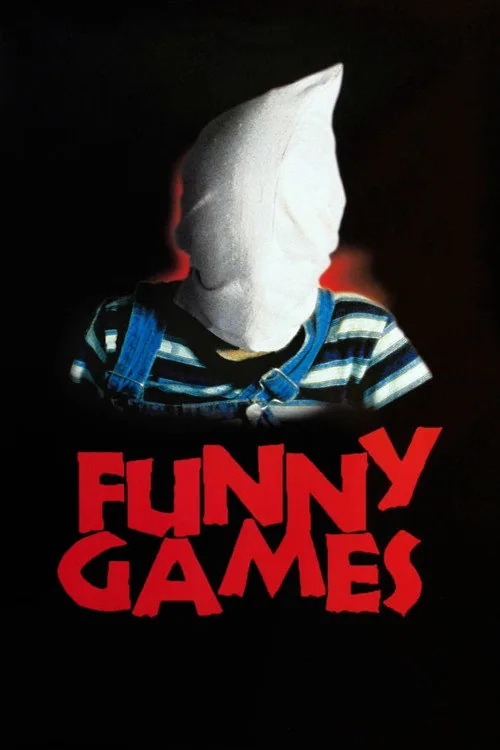
Georg and Anna Schober arrive with their son at their lakeside holiday home, where two polite young men ask to borrow eggs and gradually take control of the house. The intruders force the family into a series of cruel games and bets about how long they will survive. Michael Haneke’s Austrian thriller repeatedly breaks ordinary suspense conventions, including by making one attacker acknowledge the camera and the audience’s expectations. The film turns a home-invasion story into a confrontational study of spectatorship, violence, and the desire for a satisfying rescue.
What drives the story
The attackers control the family through arbitrary rules that deny them a reliable path to escape.
The people at its centre
The film directly challenges viewers who expect conventional thriller relief or a heroic reversal.
What it feels like
Contains torture, animal cruelty, child murder, and sustained psychological abuse.
Worth knowing
Its formal interruptions make the audience’s expectations part of the subject rather than offering a conventional home-invasion thriller.
SpectatorshipViolenceControl
Mood
Disturbing · Minimalist · Confrontational
Pacing
Two strangers hold a vacationing family hostage and force them to take part in sadistic games.
Visual style
Restrained domestic realism · Long takes · Deliberate fourth-wall breaks
Storytelling
Home invasion · Hostage games · Fourth-wall address