David tries to belong while concealing the identity that makes him a target.
Why this matches +
Selected for the central appeal: Social dramas examining prejudice, exclusion and the people who tolerate it.
Genres: Drama / American football
Shared film traits
Based on recorded story, mood and style. Your preferences can change the order.
What changes School Ties examines antisemitism within a privileged American institution through a Jewish student concealing his identity, rather than a journalist temporarily assuming one.
In 1950s New England, working-class student David Greene receives a football scholarship to an elite preparatory school and hides that he is Jewish. He becomes popular with teammates but faces antisemitism and a school honor code that is used unevenly. When his identity is exposed, his friends must decide whether loyalty means protecting him or preserving their own status.
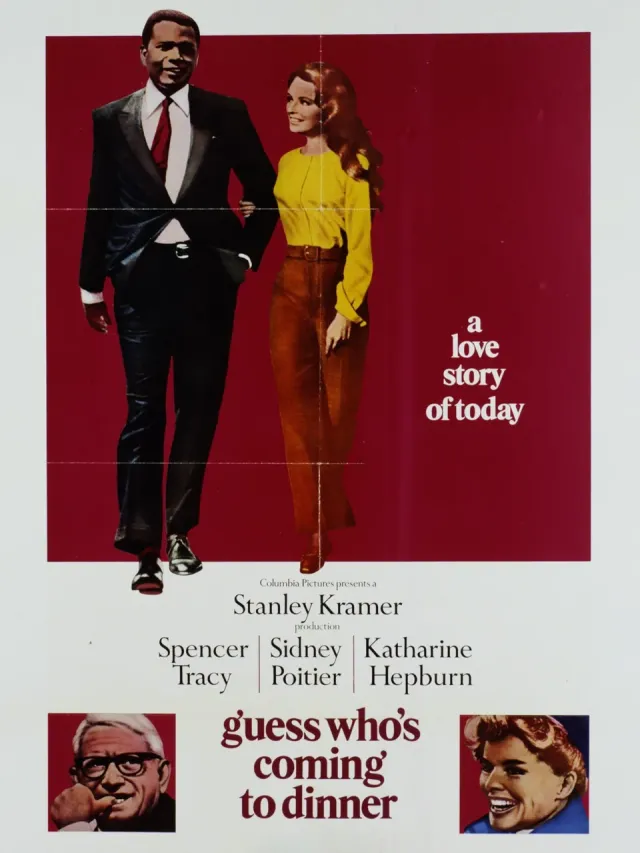
A planned marriage becomes an immediate family decision under a deadline, exposing the difference between professed equality and acceptance of a daughter’s choice. Jo and John’s planned marriage becomes subordinate to the older generation’s approval process.
Why this matches +
These offer a related experience with a meaningful difference in story, tone, or presentation.
An adjacent discovery: a related idea with a different viewing experience.
Genres: Drama / Romance
Shared film traits
Based on recorded story, mood and style. Your preferences can change the order.
What changes Guess Who's Coming to Dinner challenges a liberal family's stated tolerance when interracial marriage makes prejudice personal; its focus is racism rather than antisemitism.
Jo brings her fiancé John Prentice home to meet her parents, whose liberal convictions are tested when they learn he is Black and the couple plans to marry. John’s exceptional professional stature and the parents’ demand to approve the match make acceptance depend on a narrow set of conditions. The two families negotiate the decision through a single day of conversation, and the final speech gives the older generation much of the authority to resolve it. The film made interracial marriage its explicit subject in 1967, but its credentialed fiancé and parent-centered framing cannot stand in for the broader experience of interracial couples.
Two runners pursue Olympic success on distinct terms, with religious conviction and Jewish exclusion exposing different limits within the same British sporting establishment.
Why this matches +
These offer a related experience with a meaningful difference in story, tone, or presentation.
An adjacent discovery: a related idea with a different viewing experience.
Genres: Drama / Sport
Shared film traits
Based on recorded story, mood and style. Your preferences can change the order.
What changes Chariots of Fire depicts antisemitism within an elite British establishment through an athlete's experience, alongside a wider story about sporting ambition and faith.
Harold Abrahams and Eric Liddell prepare for the 1924 Paris Olympics from different positions: one confronts antisemitism and elite athletic culture, while the other organizes competition around his Christian faith. The film heightens Liddell's Sunday refusal as a last-minute crisis, although he had learned the Olympic timetable months earlier and trained for the 400 metres; Abrahams won the 100 metres. Their drive is not one generic inspirational lesson: faith, prejudice, class and national representation shape it differently. The film takes dramatic license with historical events, so its emotional argument should be separated from an exact record of the athletes' lives.
A wrongful-dismissal lawsuit requires proof that an apparently professional decision conceals prejudice, while the claimant's worsening illness makes legal procedure emotionally urgent.
Why this matches +
These offer a related experience with a meaningful difference in story, tone, or presentation.
An adjacent discovery: a related idea with a different viewing experience.
Genres: Drama / LGBTQ-related
Shared film traits
Based on recorded story, mood and style. Your preferences can change the order.
What changes Philadelphia confronts institutional prejudice through a discrimination lawsuit, addressing AIDS stigma and homophobia rather than a journalist's investigation of antisemitism.
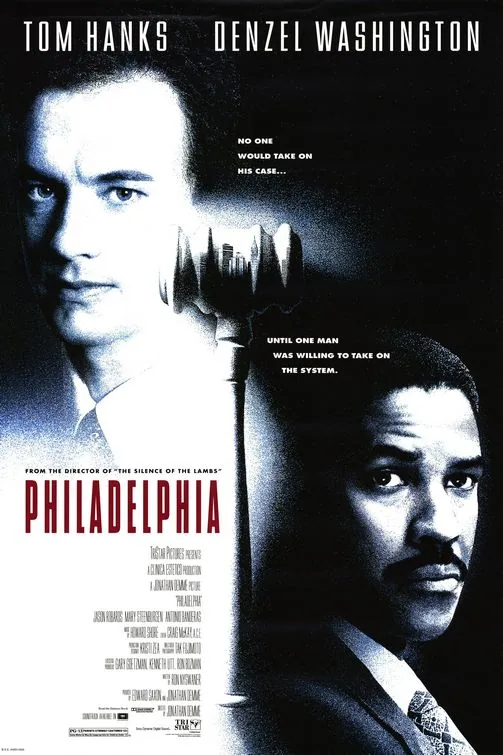
A successful lawyer who has concealed his AIDS diagnosis is dismissed after a disputed failure at work. Believing the explanation masks discrimination, he seeks representation from a lawyer whose own fear and prejudice initially make assistance unlikely. Preparing and trying the case turns professional evidence into a demand for public dignity, while illness gives each delay a personal cost and exposes the difference between legal sympathy and actual acceptance.
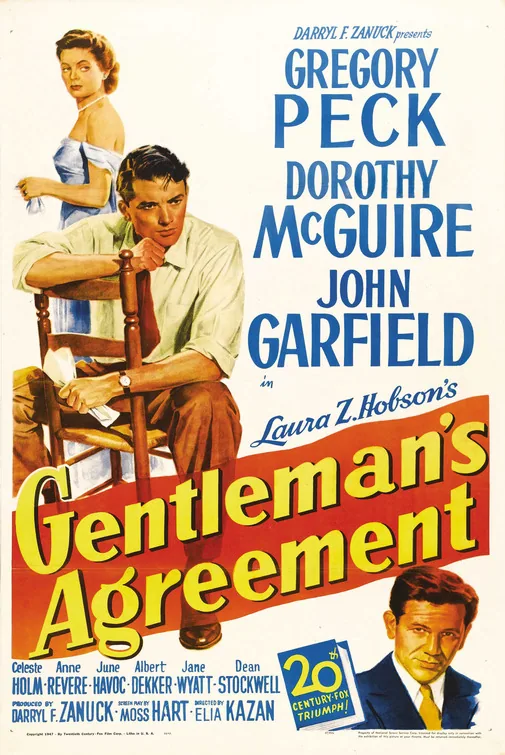
A journalist chooses to pose as Jewish in order to investigate antisemitism, discovering that discrimination can appear through housing, work, clubs and the social habits of people who consider themselves fair-minded. His experiment gives him access to a position he can later leave, while Jewish characters live with the consequences beyond the assignment. The film turns prejudice into a test of a privileged liberal community, and its direct moral argument has historical force without making its central perspective representative of Jewish experience. Its self-examination is valuable precisely when its limits remain visible.
What drives the story
A reporter’s temporary performance exposes routine exclusions, then tests whether professional and family circles can acknowledge prejudice when it reaches their own relationships. Phil’s ability to stop passing gives his experiment an exit unavailable to those facing ongoing antisemitism.
The people at its centre
Phil can enter and exit the identity he adopts, whereas Jewish colleagues and friends cannot; this unequal exposure shapes the film’s moral experiment. The film tests allies’ behavior in work and social settings, not just explicit bigotry.
What it feels like
Domestic conversations and workplace incidents build a restrained social melodrama around recognition rather than physical action, with the period production’s polished style containing its challenge. Restrained conversation turns familiar institutions into the drama’s main sites of conflict.
Worth knowing
Compare with liberal self-examination and everyday discrimination dramas, but do not confuse the protagonist’s temporary passing experiment with the sustained lived experience of Jewish people. Its liberal perspective can expose prejudice while still limiting whose experience structures the lesson.
PrejudiceComplicitySocial responsibility
Mood
Earnest · Reflective · Confrontational
Pacing
Measured
Visual style
Conversational realism · Social interiors
Storytelling
Journalistic passing · Institutional discrimination · Romantic moral conflict