A carefully ordered household reveals how social respectability can conceal pain and constrain honest connection.
Why this matches +
Selected for the central appeal: Relationship dramas about interracial couples, family approval and social prejudice.
Genres: Drama / Romance
Shared film traits
Based on recorded story, mood and style. Your preferences can change the order.
What changes Far from Heaven examines interracial connection and the limits of liberal appearances within a socially restrictive community.
In 1950s Connecticut, a suburban wife discovers that her polished marriage conceals a truth her community is unwilling to accept, while she forms a connection that crosses the era’s racial boundaries. Her husband and their children also face the consequences of a rigid social order. The film uses period melodrama and carefully controlled style to examine desire, respectability and the limits imposed on private life.
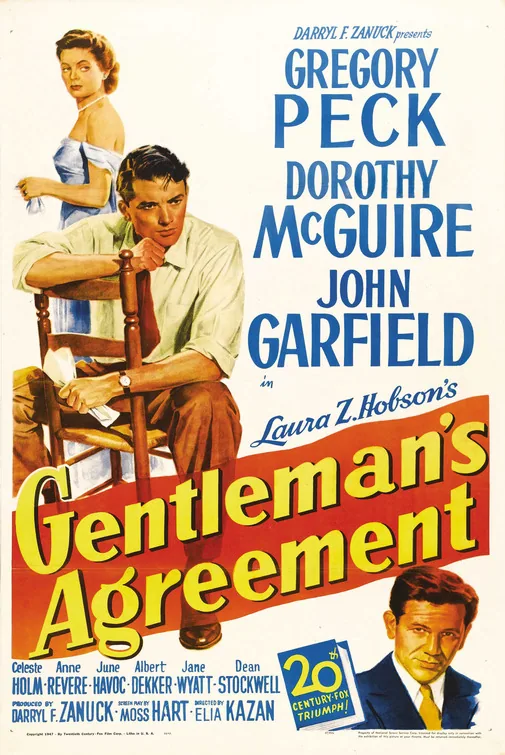
A reporter’s temporary performance exposes routine exclusions, then tests whether professional and family circles can acknowledge prejudice when it reaches their own relationships. Phil’s ability to stop passing gives his experiment an exit unavailable to those facing ongoing antisemitism.
Why this matches +
These offer a related experience with a meaningful difference in story, tone, or presentation.
An adjacent discovery: a related idea with a different viewing experience.
Genres: Drama
Shared film traits
Based on recorded story, mood and style. Your preferences can change the order.
What changes Gentleman's Agreement examines how respectable people respond to prejudice when it becomes personally inconvenient.
A journalist chooses to pose as Jewish in order to investigate antisemitism, discovering that discrimination can appear through housing, work, clubs and the social habits of people who consider themselves fair-minded. His experiment gives him access to a position he can later leave, while Jewish characters live with the consequences beyond the assignment. The film turns prejudice into a test of a privileged liberal community, and its direct moral argument has historical force without making its central perspective representative of Jewish experience. Its self-examination is valuable precisely when its limits remain visible.
A wedding visit reveals a wealthy family's expectations and turns a private romance into a social test.
Why this matches +
These offer a related experience with a meaningful difference in story, tone, or presentation.
An adjacent discovery: a related idea with a different viewing experience.
Genres: Romance / Comedy
Shared film traits
Based on recorded story, mood and style. Your preferences can change the order.
What changes Crazy Rich Asians follows a couple whose marriage plans test a wealthy family's stated values and expectations.
An American economics professor accompanies her boyfriend to a wedding in Singapore and discovers that his family occupies an extraordinary position of wealth. Their relationship becomes subject to judgments about status, upbringing and family duty that she had not anticipated. Navigating lavish gatherings and private confrontations, she must decide how to preserve her dignity and independence without treating love as a contest she can win through approval.
A recounted youthful romance traces repeated separations while its telling becomes part of a present-day effort to sustain recognition.
Why this matches +
These offer a related experience with a meaningful difference in story, tone, or presentation.
An adjacent discovery: a related idea with a different viewing experience.
Genres: Romance / Drama
Shared film traits
Based on recorded story, mood and style. Your preferences can change the order.
What changes The Notebook follows lovers whose relationship faces strong opposition from a privileged family.
An older man reads a story of a young couple whose summer attachment develops across a sharp difference in class and family expectation. Separation, war and other relationships make their eventual choices less straightforward than the intensity of the first encounter suggests. The framing situation gradually gives the remembered romance another emotional purpose, connecting the promise of enduring devotion with the vulnerability of memory and bodily aging.
A speech teacher and a deaf former student form a relationship while disagreeing about communication and autonomy.
Why this matches +
These offer a related experience with a meaningful difference in story, tone, or presentation.
An adjacent discovery: a related idea with a different viewing experience.
Genres: Drama / Romance
Shared film traits
Based on recorded story, mood and style. Your preferences can change the order.
What changes Children of a Lesser God follows a relationship shaped by unequal social assumptions and family expectations.
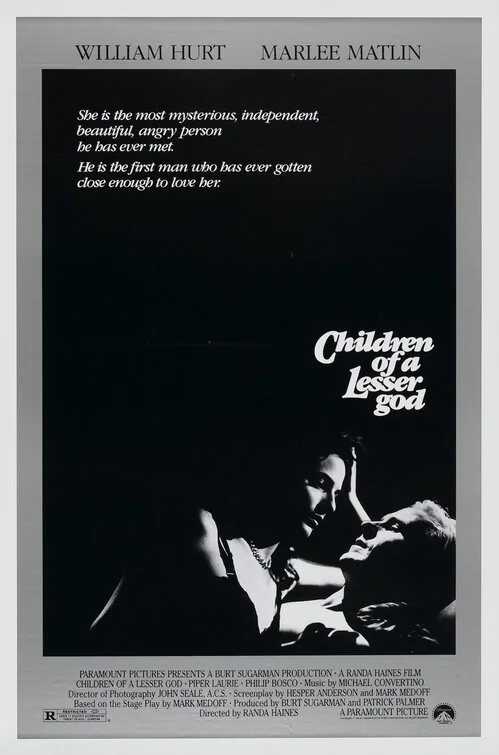
James Leeds takes a teaching position at a school for deaf students and meets Sarah Norman, a former pupil who works there and resists being treated as a problem to solve. James hopes to encourage speech and communication; Sarah values her own language and independence. Their attraction grows into a relationship in which good intentions, frustration, and differing views of access and identity force both to reconsider what listening and partnership require.
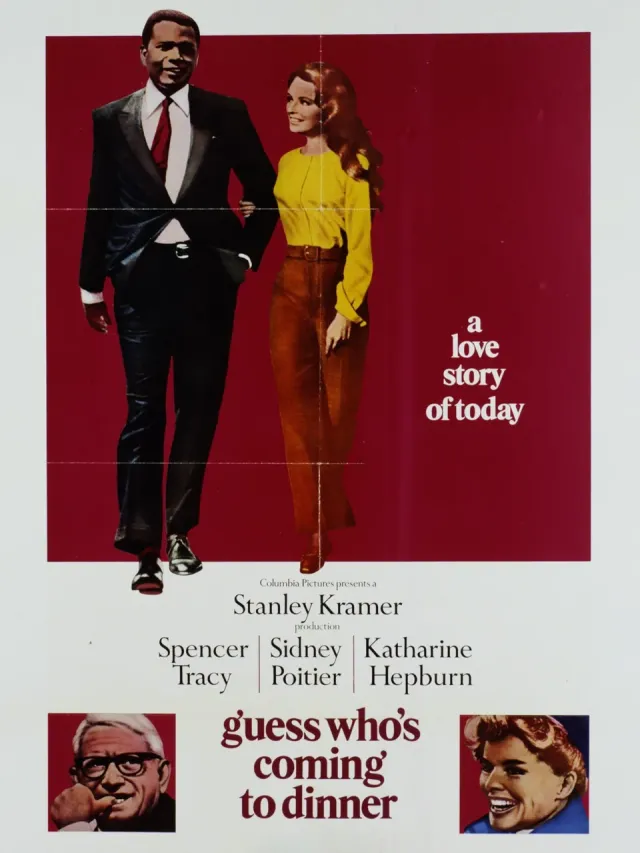
Jo brings her fiancé John Prentice home to meet her parents, whose liberal convictions are tested when they learn he is Black and the couple plans to marry. John’s exceptional professional stature and the parents’ demand to approve the match make acceptance depend on a narrow set of conditions. The two families negotiate the decision through a single day of conversation, and the final speech gives the older generation much of the authority to resolve it. The film made interracial marriage its explicit subject in 1967, but its credentialed fiancé and parent-centered framing cannot stand in for the broader experience of interracial couples.
What drives the story
A planned marriage becomes an immediate family decision under a deadline, exposing the difference between professed equality and acceptance of a daughter’s choice. Jo and John’s planned marriage becomes subordinate to the older generation’s approval process.
The people at its centre
Joey and John’s confidence is filtered through parental approval, while each family’s elders interpret protection and prejudice differently. John’s exceptional status narrows the film’s example of a couple facing prejudice.
What it feels like
A concentrated domestic setting, measured comedy and emphatic speeches make social conflict legible as an ensemble conversation rather than an outside action plot. The single-day setting and speeches make private conversation carry broad social stakes.
Worth knowing
Compare with family dramas about conditional acceptance, but preserve the exceptional-credential premise and the couple’s reduced agency within the parents’ approval-centered structure. Its historically direct intervention is not a general portrait of interracial couples or their families.