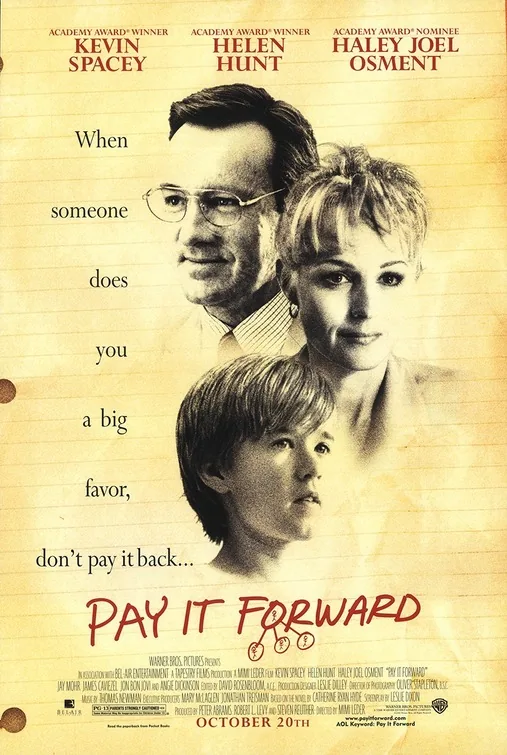
Trevor’s three-person chain makes kindness a repeatable social action, but its growth does not protect the people who start it from harm.
Why this matches +
These offer a related experience with a meaningful difference in story, tone, or presentation.
An adjacent discovery: a related idea with a different viewing experience.
Genres: Drama
Shared film traits
Based on recorded story, mood and style. Your preferences can change the order.
Coming of age
What changes A child tries to respond to suffering through a moral idea whose consequences spread through families and communities.
Seventh-grader Trevor McKinney takes his social-studies teacher’s challenge to devise a way to improve the world seriously: instead of repaying a favor, each recipient should help three other people. Trevor begins by sheltering Jerry, a homeless man trying to recover from addiction, and the idea connects his mother Arlene with Eugene, the teacher whose burn scars and guardedness mark a painful past. As the chain of favors grows, Trevor’s optimistic project meets relapse, disappointment and resistance. When he intervenes to protect a bullied classmate, violence interrupts the movement, but news of his plan has already spread far beyond his school.
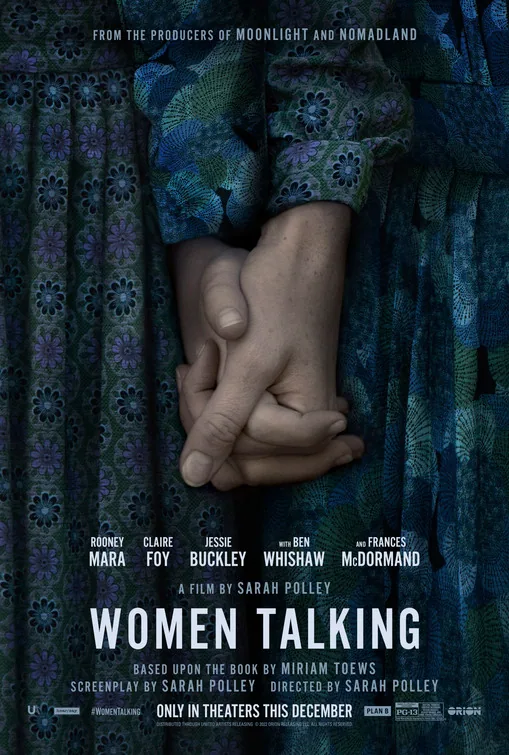
The vote gives each woman a formal voice in a crisis shaped by coercion.
Why this matches +
These offer a related experience with a meaningful difference in story, tone, or presentation.
An adjacent discovery: a related idea with a different viewing experience.
Genres: Drama
Shared film traits
Based on recorded story, mood and style. Your preferences can change the order.
Political resistance
What changes People collectively debate how to respond to harm when inherited institutions have failed to protect them.
Women in an isolated Mennonite colony gather after discovering that men have drugged and sexually assaulted them. With the perpetrators absent, they debate whether to stay, fight, or leave, weighing faith, safety, family, and the future of their children. The drama centers collective deliberation rather than depicting violence as spectacle, asking how a community can make a decision when its inherited rules have failed to protect it.
Escalating danger forces a religious community to decide what presence and responsibility require.
Why this matches +
These offer a related experience with a meaningful difference in story, tone, or presentation.
An adjacent discovery: a related idea with a different viewing experience.
Genres: Drama / History
Shared film traits
Based on recorded story, mood and style. Your preferences can change the order.
What changes People serving a vulnerable community confront violence and question how ethical commitments hold up under threat.
A small community of French Trappist monks lives alongside Muslim neighbours in an Algerian village during the country's civil conflict. As threats against foreigners grow and armed violence reaches the region, the monks debate whether to leave or continue the work that binds them to local residents. Xavier Beauvois builds the drama through ritual, practical disagreement and quiet acts of care rather than conventional action scenes.
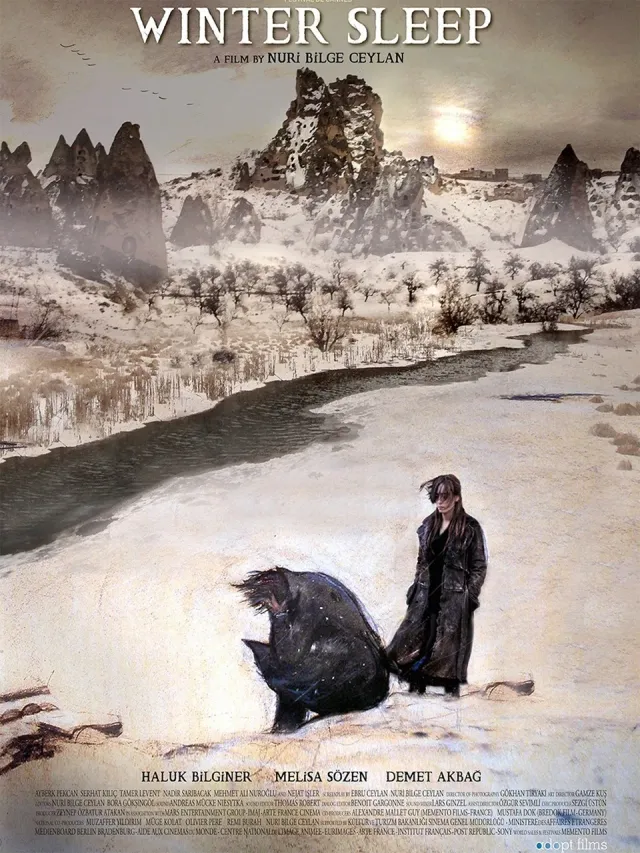
The hotel and rental relationships make Aydin’s moral self-image concrete: what he says about people is repeatedly tested by how he treats them.
Why this matches +
These offer a related experience with a meaningful difference in story, tone, or presentation.
An adjacent discovery: a related idea with a different viewing experience.
Genres: Drama
Shared film traits
Based on recorded story, mood and style. Your preferences can change the order.
Political resistance
What changes A family and its neighbors negotiate resentment, moral responsibility and unequal power through difficult conversations.
Aydin, a retired actor who writes about society, runs a small hotel in central Anatolia with his younger wife Nihal and divorced sister Necla. As winter closes in, tensions over his tenants, Nihal’s charitable work and Necla’s own dissatisfaction draw the family into long conversations about power and responsibility. Aydin’s public confidence does not prevent him from dominating those closest to him, and arguments change direction rather than resolve cleanly. Nuri Bilge Ceylan has said the film was inspired by several Chekhov short stories, rather than being a direct adaptation of one tale. Snowbound days make intellectual arguments expose unequal control inside the household.
A mother’s attempt to secure stability through a new marriage places her son inside a household where control masquerades as discipline.
Why this matches +
These offer a related experience with a meaningful difference in story, tone, or presentation.
An adjacent discovery: a related idea with a different viewing experience.
Genres: Drama / Biography
Shared film traits
Based on recorded story, mood and style. Your preferences can change the order.
Coming of age
What changes A child confronted with abusive authority struggles to find safety and a response to violence within family life.
In the 1950s, teenager Tobias and his mother Rosemary move to a small Washington town after she leaves her previous life behind. Rosemary hopes to build a stable home with Dwight, but his charm in public gives way to controlling behavior and abuse in private. Tobias responds with rebellion, evasions and dreams of a different future, while the boys around him model other ways to survive the household. The story is based on Tobias Wolff’s memoir, though the film is a dramatization rather than a documentary record. Its central conflict is the struggle to retain a sense of self in a coercive home. Tobias tests the adults’ promises, seeking a school and future that Dwight’s control seems designed to deny him.
Anton, a doctor, divides his time between a Danish family life and medical work in a Sudanese refugee camp. His sons and a friend’s child confront bullying and violence, while Anton questions whether restraint is moral when someone repeatedly abuses power. The drama moves between domestic conflict and humanitarian crisis, asking how ideals of forgiveness survive when people face injustice at vastly different scales.
What drives the story
Anton’s medical work links private ethics with visible human suffering.
The people at its centre
The boys’ friendship faces violence they cannot resolve by simply walking away.
What it feels like
The film compares restraint with passivity without giving an easy verdict.
Worth knowing
Its two settings create a moral conversation across very different forms of danger.
JusticeFamilyEthics
Mood
Reflective · Somber · Moral
Pacing
Parallel family and humanitarian stories test different responses to aggression
Visual style
Open Danish landscapes · Refugee-camp realism · Measured compositions
Storytelling
Coming-of-age friendship · Principled refusal · Political resistance