A trip home repeatedly converts attempted safety into a new ordeal, eventually expanding from a blocked journey into a public judgment of Beau's life. The structure makes guilt feel environmental and inescapable.
Why this matches +
A giant double outside his house makes an anxious man's withdrawal physically inescapable.
Genres: Drama / Comedy
Shared film traits
Based on recorded story, mood and style. Your preferences can change the order.
What changes A sprawling journey and maternal relationship replace confinement by a giant double.
Beau Wassermann sets out to visit his mother, but repeated setbacks and threats make each ordinary step feel like a crisis. A temporary refuge in the home of strangers expands into another unstable relationship, and his journey later shifts into a forest community and finally a reckoning with his family history. The events move through a subjective world where memory, fear and staged accusation are difficult to separate. Ari Aster turns maternal obligation into an extravagant odyssey, but the film's distortions should not be reduced to a literal travel account or used as a psychiatric diagnosis of Beau.
Simon's double gains the recognition and access he wants, pushing him to prove that he exists as a distinct person.
Why this matches +
A giant double outside his house makes an anxious man's withdrawal physically inescapable.
Genres: Comedy / Drama
Shared film traits
Based on recorded story, mood and style. Your preferences can change the order.
Memory and identity
What changes A socially successful workplace double replaces a colossal body blocking a house.
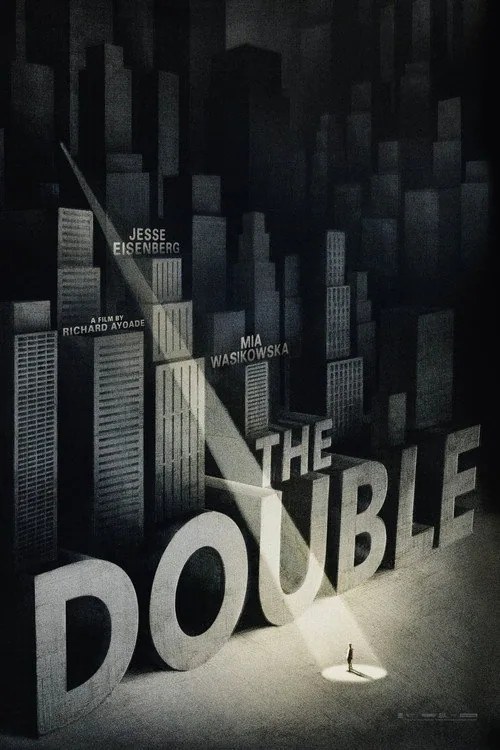
Quiet office worker Simon James has spent years being overlooked by his boss and colleagues. His routine is disrupted when James Simon, a confident new employee who looks exactly like him, arrives at work and quickly wins the attention Simon has long sought. The two men become entangled around Hannah, a co-worker Simon admires, while the double appropriates more of his professional and personal life. Richard Ayoade adapts Dostoevsky's novella as a bleakly comic, retro-futurist nightmare about invisibility and the fragility of identity.
A solitary professor discovers an actor who appears to be his exact double and seeks him out.
Why this matches +
A giant double outside his house makes an anxious man's withdrawal physically inescapable.
Genres: Thriller / Drama
Shared film traits
Based on recorded story, mood and style. Your preferences can change the order.
Memory and identity
What changes A psychological thriller about lookalikes replaces overt absurdist domestic comedy.
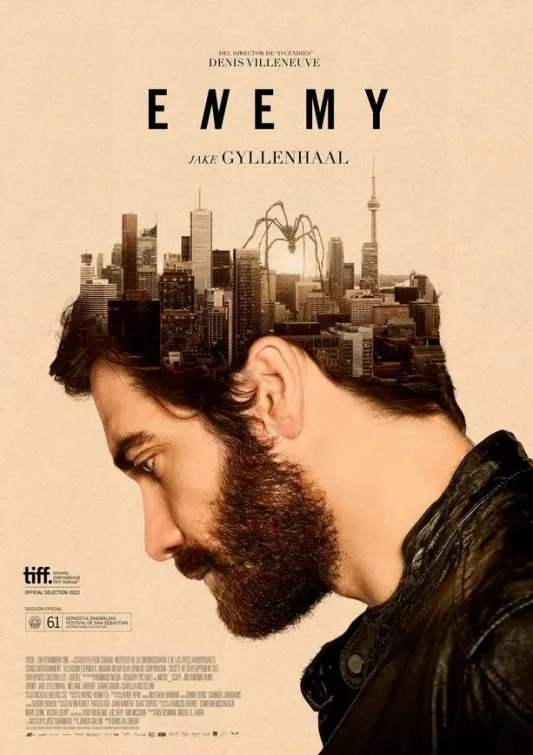
History professor Adam Bell notices an actor who looks exactly like him in a small film role and becomes determined to find the stranger. Their encounter draws both men and their partners into a pattern of secrecy, anxiety, and uncertainty about identity. Denis Villeneuve's psychological thriller adapts José Saramago through recurring images and an ambiguous structure, inviting attention to repetition and symbolism rather than offering a conventional explanation for every event.
An imposed domestic responsibility produces a sequence of failed attempts at comfort or escape, while recurring images transform ordinary parenthood into an unstable bodily and psychological ordeal. Henry’s strained domestic arrangement becomes a sequence of attempted escapes whose logic shifts with his perception.
Why this matches +
These selections share a specific story or viewing dimension; the recorded differences explain the limits of each comparison.
An adjacent discovery: a related idea with a different viewing experience.
Genres: Horror / Drama
Shared film traits
Based on recorded story, mood and style. Your preferences can change the order.
What changes Parenthood and an industrial nightmare replace an anxious recluse's giant counterpart.
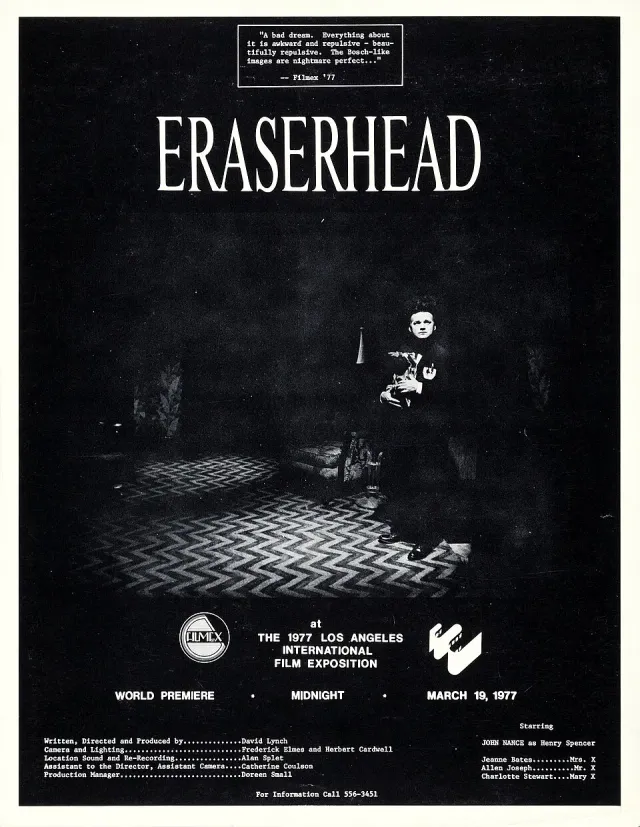
A young man's awkward encounter with his girlfriend's family leads to a household organized around an infant whose needs and bodily form he cannot comfortably understand. Sleeplessness, industrial surroundings and recurring visions make intimacy and reproduction feel inseparable from dread. Attempts to distinguish escape, desire and responsibility become less secure as the film changes the boundaries between perception and event, keeping the domestic situation distressingly immediate without supplying one stable explanatory key. The film makes domestic responsibility feel material and inescapable while refusing to stabilize the events as literal realism.
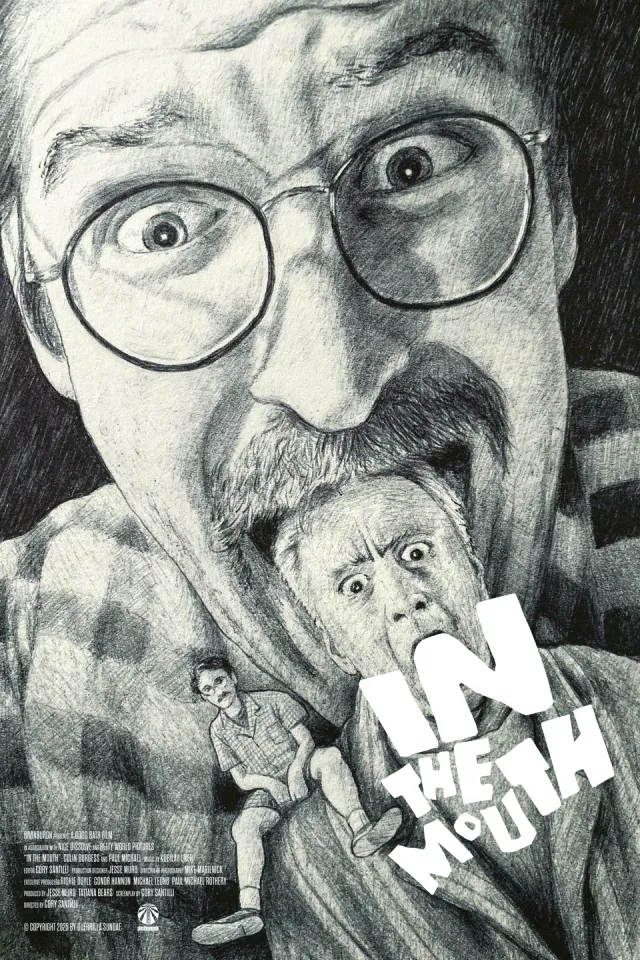
An anxious man discovers an enormous version of himself emerging from the lawn outside his home. The impossible presence prevents him from leaving, giving his habitual worries a physical obstacle he cannot ignore. This strange domestic predicament turns the familiar desire to stay safely inside into a surreal problem of selfhood, confinement and confrontation with an overwhelming double.
What drives the story
A giant double outside his house makes an anxious man's withdrawal physically inescapable.
The people at its centre
The protagonist's most immediate adversary is an impossible version of himself rather than another ordinary person.
What it feels like
Its compact premise suggests absurd comedy and discomfort rooted in an uncanny domestic interruption.
Worth knowing
No connection to John Carpenter's In the Mouth of Madness is established by the similar title.