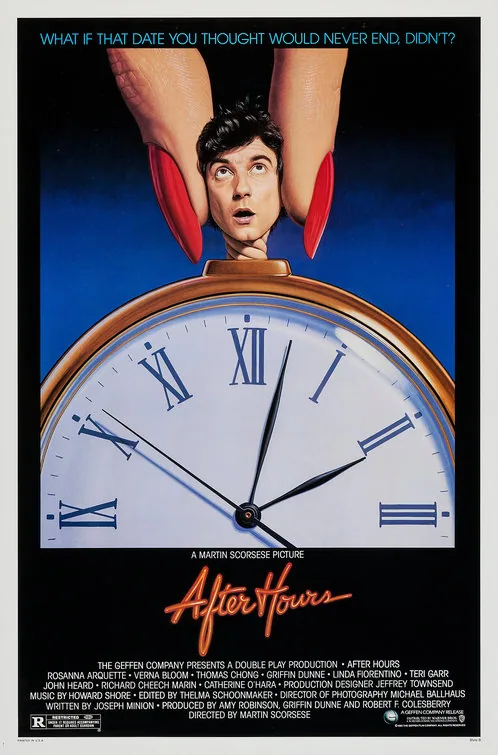
Paul's attempt to make one social visit becomes a night-long struggle to get safely back home.
Why this matches +
Selected for the central appeal: A fearful man’s journey to his mother becomes an extravagant, darkly comic nightmare of threatening encounters, obligation and unstable reality.
Genres: Comedy / Thriller
Shared film traits
Based on recorded story, mood and style. Your preferences can change the order.
What changes An anxious man trying to get somewhere is trapped in a chain of escalating urban mishaps and hostile encounters, with panic turning into cruel comedy. One sleepless New York night is shorter and more grounded than Beau’s sprawling maternal reckoning and fantasy.
After meeting a woman who invites him to SoHo, computer specialist Paul Hackett leaves his ordinary Manhattan routine for what should be a short evening visit. A chain of misunderstandings, strange encounters, and escalating mishaps leaves him unable to get home as the neighborhood grows more hostile and unpredictable. Each attempted solution creates another complication, turning a single night into an anxious comedy of chance, embarrassment, and urban disorientation.
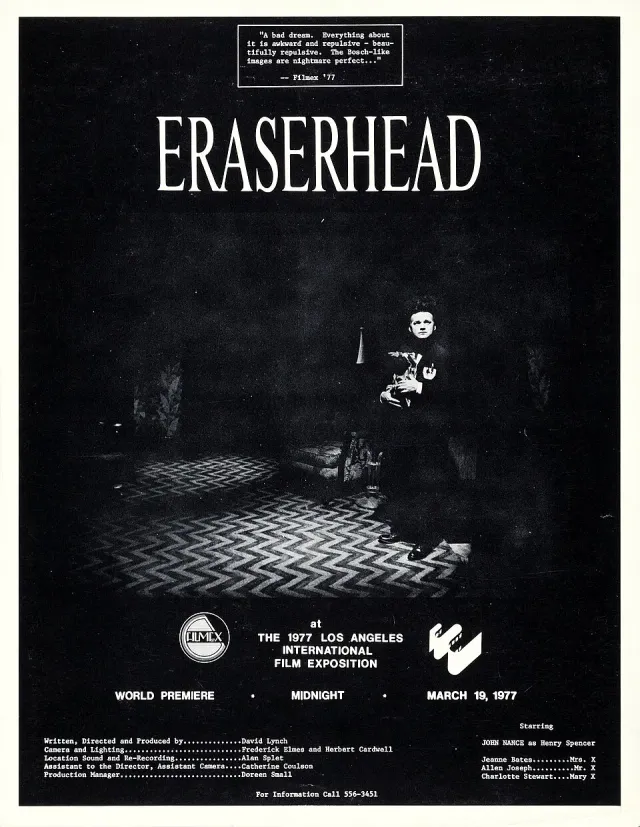
An imposed domestic responsibility produces a sequence of failed attempts at comfort or escape, while recurring images transform ordinary parenthood into an unstable bodily and psychological ordeal. Henry’s strained domestic arrangement becomes a sequence of attempted escapes whose logic shifts with his perception.
Why this matches +
Related viewing experiences with the specific differences recorded for each pair.
An adjacent discovery: a related idea with a different viewing experience.
Genres: Horror / Drama
Shared film traits
Based on recorded story, mood and style. Your preferences can change the order.
What changes Domestic obligation and bodily dread take nightmarish form as a vulnerable man moves through an unstable, hostile environment. Lynch’s spare industrial dream concentrates on parenthood and an infant rather than Beau’s episodic return to his mother.
A young man's awkward encounter with his girlfriend's family leads to a household organized around an infant whose needs and bodily form he cannot comfortably understand. Sleeplessness, industrial surroundings and recurring visions make intimacy and reproduction feel inseparable from dread. Attempts to distinguish escape, desire and responsibility become less secure as the film changes the boundaries between perception and event, keeping the domestic situation distressingly immediate without supplying one stable explanatory key. The film makes domestic responsibility feel material and inescapable while refusing to stabilize the events as literal realism.
A succession of guests converts hospitality into trespass, then turns the house itself into an escalating crisis that the couple cannot agree how to govern.
Why this matches +
Related viewing experiences with the specific differences recorded for each pair.
An adjacent discovery: a related idea with a different viewing experience.
Genres: Drama / Thriller
Shared film traits
Based on recorded story, mood and style. Your preferences can change the order.
What changes An escalating subjective nightmare turns home and intimate relationships into an overwhelming sequence of intrusions, with grotesque absurdity and dread. Its viewpoint follows a woman defending her home from guests and a poet’s need for adoration, rather than a son traveling toward his mother.
A poet known as Him lives with his younger wife, Mother, in a secluded house she is restoring. When a physician and his wife arrive uninvited, Him welcomes them; their sons then fight, and one dies. The mourners who descend on the home ignore Mother's objections and damage the house. Pregnancy briefly gives her and Him a shared future, but the poet's renewed fame brings crowds, escalating violence and invasions of domestic space. Mother tries to protect her newborn and the home while Him repeatedly privileges visitors and adoration over her safety.
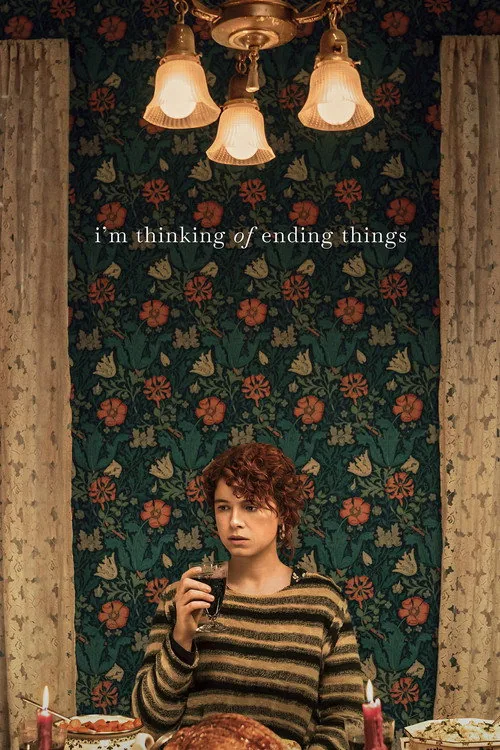
The young woman and Jake travel to the farm and later return toward the school where the janitor works.
Why this matches +
Related viewing experiences with the specific differences recorded for each pair.
An adjacent discovery: a related idea with a different viewing experience.
Genres: Drama / Thriller
Shared film traits
Based on recorded story, mood and style. Your preferences can change the order.
What changes A journey to a parent’s home becomes a destabilizing encounter with memory, identity and family, where reality shifts beneath awkward conversation. Its wintry, reflective puzzle is quieter and more restrained than Beau’s grotesque comic odyssey.
A young woman travels with her boyfriend Jake to meet his parents at their remote farmhouse, while an elderly school janitor’s workday is shown in parallel. The woman’s name, past, and account of how she met Jake shift, and the visit grows stranger as his parents change age and the couple’s drive home moves into a snowstorm. Charlie Kaufman’s adaptation of Iain Reid’s novel links the trip to the janitor’s memories and fantasies, using theatre, poetry, and film references to leave the story’s reality open to interpretation.
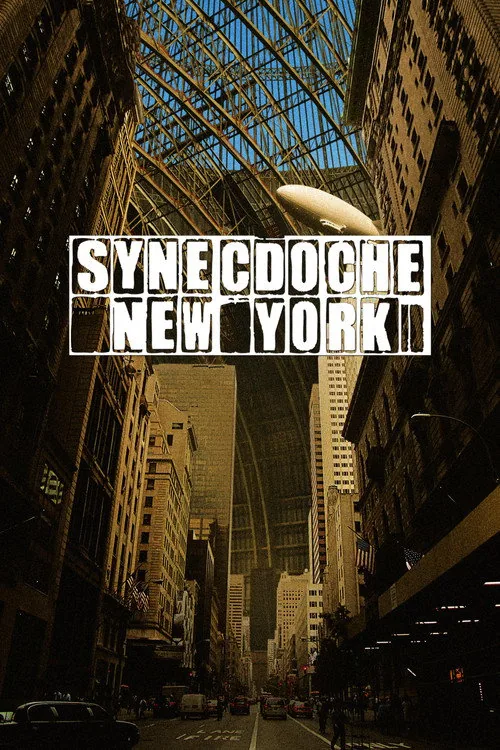
Caden’s effort to make his play truthful blurs the difference between directing life and living it.
Why this matches +
Related viewing experiences with the specific differences recorded for each pair.
An adjacent discovery: a related idea with a different viewing experience.
Genres: Drama
Shared film traits
Based on recorded story, mood and style. Your preferences can change the order.
What changes A man’s anxiety about his life and relationships expands into a surreal world of staged doubles where time and reality become hard to separate. Its theatrical construction and meditation on artistic mortality are more melancholy and less horror-driven than Beau’s flight through threats.
Theater director Caden Cotard receives a large arts grant and decides to create a radically realistic play based on his life. He builds a full-scale replica of New York inside a warehouse, hires actors to play people he knows, and eventually casts doubles who reenact the actors themselves. As Caden’s relationships falter and decades pass, the boundaries between his life and the production become increasingly difficult to locate. Charlie Kaufman’s drama uses an expanding theatrical project to explore mortality, artistic ambition, memory, and the impossibility of representing a whole life.
Beau Wassermann sets out to visit his mother, but repeated setbacks and threats make each ordinary step feel like a crisis. A temporary refuge in the home of strangers expands into another unstable relationship, and his journey later shifts into a forest community and finally a reckoning with his family history. The events move through a subjective world where memory, fear and staged accusation are difficult to separate. Ari Aster turns maternal obligation into an extravagant odyssey, but the film's distortions should not be reduced to a literal travel account or used as a psychiatric diagnosis of Beau.
What drives the story
A trip home repeatedly converts attempted safety into a new ordeal, eventually expanding from a blocked journey into a public judgment of Beau's life. The structure makes guilt feel environmental and inescapable.
The people at its centre
Beau's passivity and dependency are tested by people who offer care on provisional terms, while his mother's authority persists through fear, memory and family myth. His choices matter even in a world he experiences as hostile.
What it feels like
Grotesque comedy, panic, abrupt shifts in scale and long formal detours sustain an exhausting subjective perspective. The film does not provide a reliable boundary between plausible threat and extravagant mental image.
Worth knowing
Compare surreal odysseys where family guilt turns ordinary movement into accusation. Do not reduce the movie to a literal road plot or a single psychiatric explanation; its distortions are formal and interpretive choices.