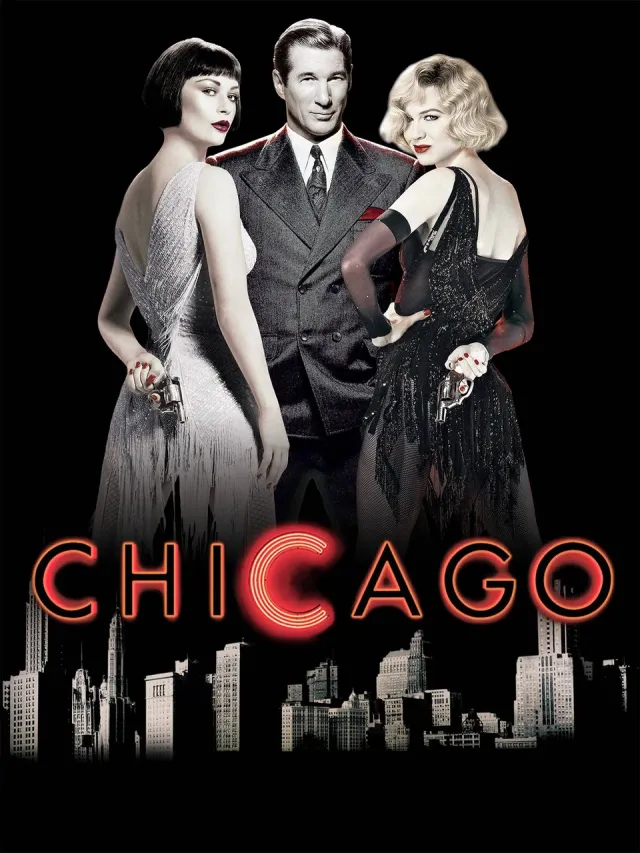
A defendant converts a criminal case into a publicity opportunity while competing for the limited attention on which her apparent value depends.
Why this matches +
Selected for the central appeal: Musical psychological dramas about public personas, performance and the gap between fantasy and responsibility.
Genres: Drama / Comedy
Shared film traits
Based on recorded story, mood and style. Your preferences can change the order.
Music and performance
What changes Chicago turns a criminal trial and celebrity into musical spectacle shaped by performance and public appetite.
An aspiring performer jailed after a killing discovers that publicity may be more useful to her future than innocence or professional ability. Competition with another notorious prisoner unfolds through a lawyer and a media environment willing to package violence as entertainment. Fantasies staged as musical performances turn legal strategy, sexual reputation and public attention into elements of the same transaction, exposing how little sustained recognition depends on truth.
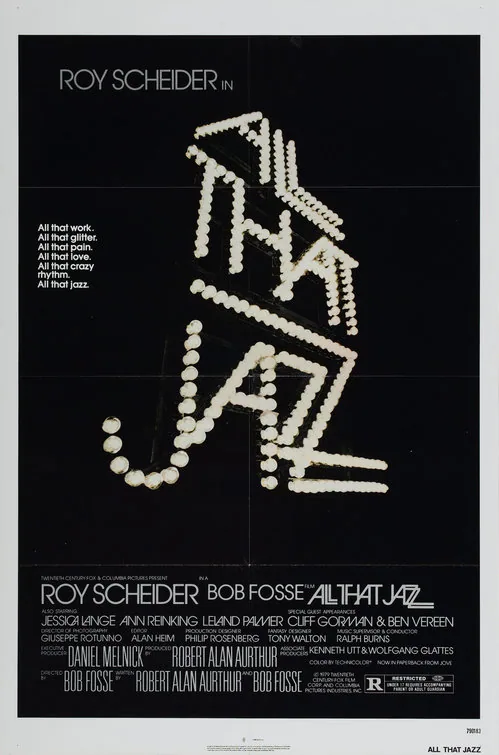
Gideon keeps moving between stage rehearsal, film editing and medical strain, trying to preserve work and appetite by editing out the evidence of collapse. The production process itself becomes the plot's accelerating clock.
Why this matches +
These offer a related experience with a meaningful difference in story, tone, or presentation.
An adjacent discovery: a related idea with a different viewing experience.
Genres: Drama / Musical
Shared film traits
Based on recorded story, mood and style. Your preferences can change the order.
Music and performance
What changes All That Jazz blurs musical fantasy and an unstable performer's struggle with his own identity.
Joe Gideon, a Broadway director and choreographer, juggles a new stage production, the editing of his latest film, family obligations and a punishing work routine. His theatrical discipline depends on treating exhaustion as something to be cut around, while the people close to him watch that self-image fail. Fantasies with an imagined figure of death interrupt rehearsals and daily life, making performance a way to control what he cannot admit. Bob Fosse's semi-autobiographical musical turns the labor of making a show into a show about the cost of making one.
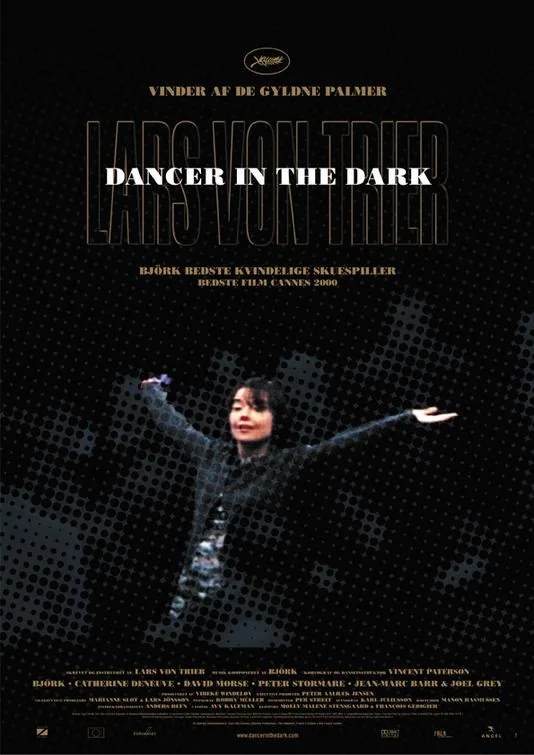
Selma's savings, concealment and fidelity to her son become entangled after betrayal, leaving her to face legal judgment with limited means to explain herself.
Why this matches +
These offer a related experience with a meaningful difference in story, tone, or presentation.
An adjacent discovery: a related idea with a different viewing experience.
Genres: Drama / Musical
Shared film traits
Based on recorded story, mood and style. Your preferences can change the order.
Music and performance
What changes Dancer in the Dark uses imagined musical numbers to contrast inner fantasy with a devastating legal ordeal.
Czech immigrant Selma works in a factory while concealing progressive vision loss and saving for an operation she hopes will protect her son Gene. When a neighbor takes the money she has guarded, her loyalty to a promise pulls her into a legal crisis that institutions judge without sharing her obligations. Her imagined musicals emerge from machinery and repeated sounds, offering brief release while intensifying the contrast with her material circumstances. The film's tragedy asks what sacrifices are demanded of a mother; it does not prove self-erasure is the most authentic form of care.
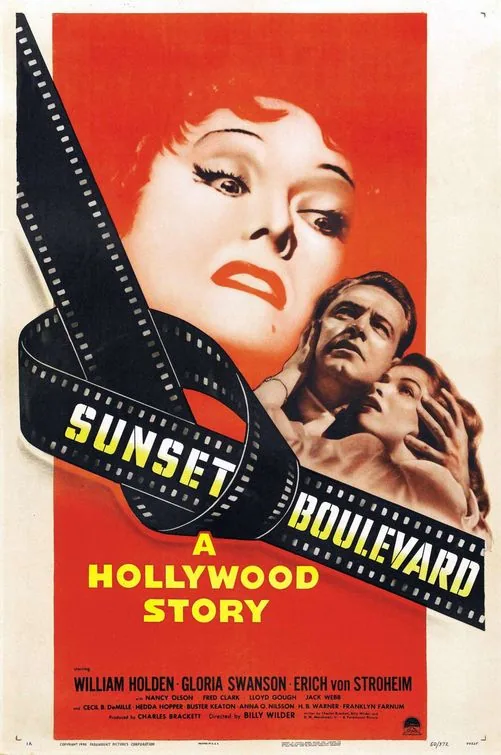
A writer's paid involvement in a star's imagined comeback becomes a dependency from which escape threatens the fantasy sustaining the household.
Why this matches +
These offer a related experience with a meaningful difference in story, tone, or presentation.
An adjacent discovery: a related idea with a different viewing experience.
Genres: Drama / Flashback
Shared film traits
Based on recorded story, mood and style. Your preferences can change the order.
Music and performance
What changes Sunset Boulevard follows a damaged performer whose public persona and private reality become dangerously entangled.
A struggling Hollywood screenwriter takes refuge in the mansion of a former silent-film star who believes her return to prominence is imminent. Agreeing to revise her screenplay gives him financial security at the cost of increasing dependence on her emotional demands and carefully maintained illusions. As another professional relationship offers creative and romantic possibility, the arrangement turns into a contest over control, humiliation and the refusal to accept time's passage.
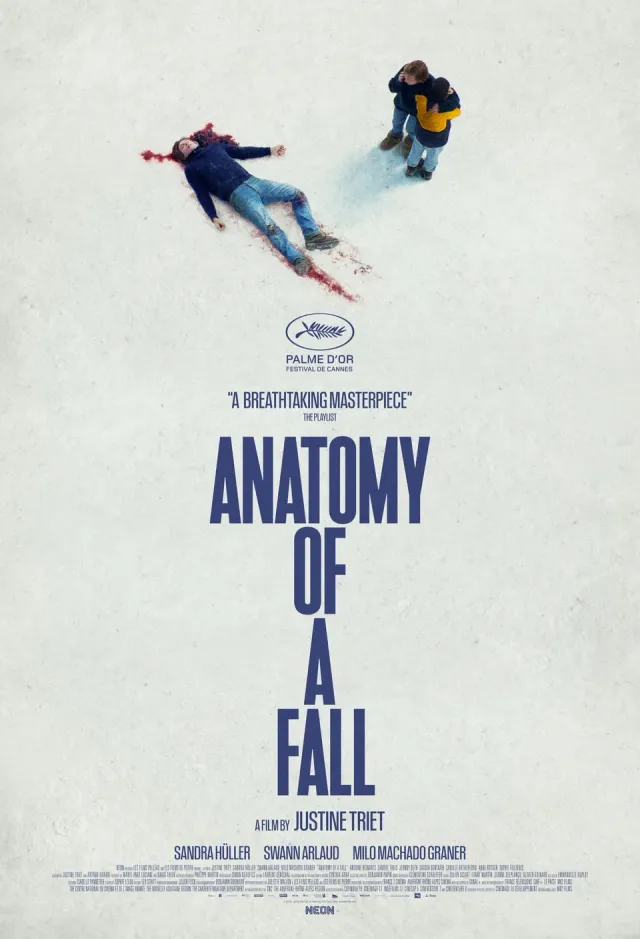
An unexplained death becomes a trial in which scraps of domestic life are assembled into incompatible accounts. The legal process seeks a verdict, but the film keeps the event's physical cause unresolved for viewers.
Why this matches +
These offer a related experience with a meaningful difference in story, tone, or presentation.
An adjacent discovery: a related idea with a different viewing experience.
Genres: Drama / Thriller
Shared film traits
Based on recorded story, mood and style. Your preferences can change the order.
What changes Anatomy of a Fall examines competing narratives of responsibility within an intense criminal trial.
When writer Samuel is found dead outside the family's remote Alpine home, the police question whether he fell, died by suicide or was killed, and his wife Sandra becomes the main suspect. Their son Daniel, who is visually impaired, is drawn into a trial that turns private conversations, recorded arguments and the couple's uneven marriage into public evidence. Translation and interpretation complicate what witnesses can claim to know. The film lets the courtroom organize competing stories without making one account settle the death, so its suspense comes from judgment under uncertainty as much as from the mystery.
Awaiting trial in Arkham, Arthur Fleck becomes the object of fascination for Lee, a fellow patient who seems to recognize him through the Joker persona celebrated by outsiders. Their connection takes shape through musical fantasy and a shared performance more than through ordinary intimacy. As his courtroom defense divides Arthur from the identity his audience wants, Lee’s admiration proves conditional: she is drawn to the symbol, not simply to the man who might relinquish it. The sequel shifts from public uprising to a conflict over authorship, responsibility and what recognition costs. Musical numbers belong to Arthur’s imagined perspective, and the film’s psychiatric language is a contested legal strategy inside the story, not a reliable diagnosis or explanation for violence.
What drives the story
The trial asks whether Arthur’s crimes can be attributed to a separate persona; the courtroom becomes a stage where the defendant, lawyers, press and spectators compete to define what the Joker means.
The people at its centre
Lee’s attraction intensifies when Arthur performs the figure she admires, then falters when he rejects that role. His attempt to speak as himself exposes how little reciprocal knowledge their fantasy bond has earned.
What it feels like
Confinement, procedural repetition and imagined musical scenes produce deliberately frustrated spectacle. The music briefly supplies the mutual world Arthur wants, while its abrupt relation to institutional routine prevents the film from becoming a conventional romance.
Worth knowing
Keep criminal responsibility, mental-health care and the film’s argument about celebrity separate. Arthur’s history does not turn violence into an illness shorthand, and Lee’s conditional recognition should not be simplified into proof that one person could have cured him.
IdentityAudienceConditional love
Mood
Claustrophobic · Tragic · Disillusioned
Pacing
Measured · Episodic
Visual style
Custodial interiors · Fantasy musical numbers · Courtroom repetition
Storytelling
Detained performer · Contested persona · Imagined musical romance