A concealed former convict's promise to protect a child keeps colliding with an officer's fixed account of identity, until a street uprising forces hidden loyalties into public action.
Why this matches +
Selected for the central appeal: Tragic musical dramas about poverty, maternal sacrifice and institutions that fail vulnerable people.
Genres: Musical / Drama
Shared film traits
Based on recorded story, mood and style. Your preferences can change the order.
Music and performance
What changes Les Misérables uses musical storytelling to portray poverty, injustice and sacrifices made for a child.
A former prisoner receives an act of mercy that allows him to build a new identity, but a pursuing officer treats the breached parole as a permanent definition of the man. Taking responsibility for a dying worker's daughter connects private redemption with the poverty around him. As the girl grows and political revolt reaches the streets, protecting her future demands choices that cannot be settled by hiding forever. The sung-through adaptation sets rigid legal certainty against forms of care that recognize change without pretending every loss can be repaired.
The road performances provide the story’s structure, but Gelsomina’s dependence on Zampanò limits her alternatives. The Fool’s claim that every object has a purpose offers meaning, not a practical escape from abuse.
Why this matches +
These offer a related experience with a meaningful difference in story, tone, or presentation.
An adjacent discovery: a related idea with a different viewing experience.
Genres: Drama
Shared film traits
Based on recorded story, mood and style. Your preferences can change the order.
Music and performance
What changes La Strada follows a vulnerable woman whose labor and suffering are exploited by a more powerful companion.
Poor Gelsomina is sold by her mother to Zampanò, a traveling strongman who takes her on the road as his assistant. His cruelty and her isolation become more visible when the Fool offers her a different account of what her companionship might mean. Gelsomina remains attached to the idea that she has a purpose, but the film does not grant her equal power to choose the life she is enduring. Zampanò abandons her after rejecting that bond, and only later recognizes the loss. Fellini’s fable uses circus performance and spiritual language to make tenderness feel possible, while its ending risks framing a woman’s suffering as a service that transforms an abusive man. Grief is not retroactive consent, redemption or proof that she had to stay.
Conditional hospitality becomes a labor bargain whose terms worsen whenever the fugitive's outside options narrow, making the town's claimed generosity a structure of coercion. After a search notice raises the town’s perceived risk, residents increase their demands while Grace’s alternatives shrink.
Why this matches +
These offer a related experience with a meaningful difference in story, tone, or presentation.
An adjacent discovery: a related idea with a different viewing experience.
Genres: Drama / Crime
Shared film traits
Based on recorded story, mood and style. Your preferences can change the order.
What changes Dogville examines a vulnerable outsider subjected to escalating exploitation by a community.
A woman fleeing gangsters accepts shelter in an isolated town, where an aspiring moral leader proposes her presence as a test of communal generosity. Work initially offered as gratitude becomes the condition of being allowed to remain, and her increasing vulnerability gives neighbors leverage to demand more. When the protection they claim to provide becomes systematic exploitation, a later reversal of power questions both the community's self-description and the moral certainty of punishing it. Its exposed stage makes spectators watch private coercion as collective behavior, not as unseen domestic misfortune.
Celie’s relationship with Nettie gives the long arc a persistent hope even when the sisters are separated.
Why this matches +
These offer a related experience with a meaningful difference in story, tone, or presentation.
An adjacent discovery: a related idea with a different viewing experience.
Genres: Musical / Drama
Shared film traits
Based on recorded story, mood and style. Your preferences can change the order.
What changes The Color Purple follows a woman surviving abuse and seeking agency and connection over many years.
Celie grows up under abuse and separation from her younger sister Nettie, then is forced into a marriage that leaves her isolated in rural Georgia. Over decades, friendships with Sofia and Shug Avery help her find confidence, economic independence and a path back toward family. This musical adaptation follows the story through song and ensemble performance, emphasizing endurance, chosen solidarity and the difficult recovery of a voice.
A disputed house becomes the focal point for Kathy’s effort to recover her inheritance and Behrani’s hope for security.
Why this matches +
These offer a related experience with a meaningful difference in story, tone, or presentation.
An adjacent discovery: a related idea with a different viewing experience.
Genres: Drama / Thriller
Shared film traits
Based on recorded story, mood and style. Your preferences can change the order.
What changes House of Sand and Fog follows vulnerable people whose conflicting claims lead to devastating institutional consequences.
Kathy Nicolo loses her California coastal home after a county tax error leads to its sale, and she struggles to regain a property she inherited from her father. The new owner, Iranian immigrant and former colonel Massoud Behrani, sees the house as a chance to restore his family’s security and dignity. Their competing claims draw in a deputy sheriff and deepen into a tragic confrontation. Vadim Perelman’s drama adapts Andre Dubus III’s novel as a story of displacement, pride, and institutions failing to resolve conflict humanely.
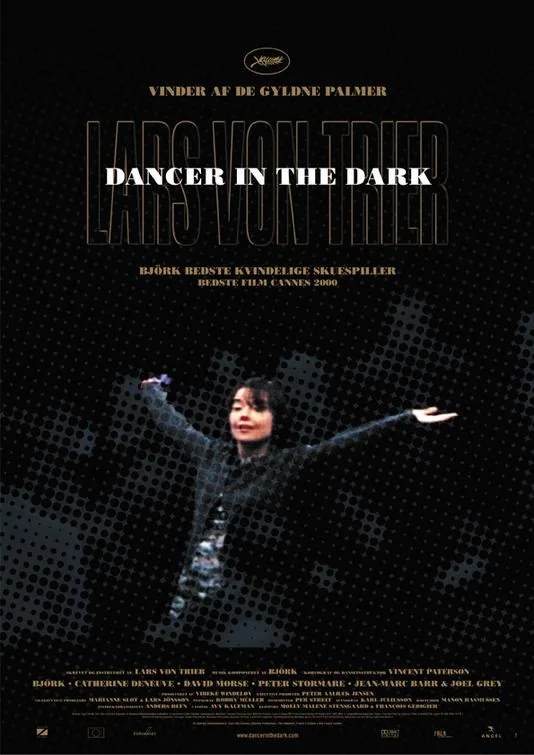
Czech immigrant Selma works in a factory while concealing progressive vision loss and saving for an operation she hopes will protect her son Gene. When a neighbor takes the money she has guarded, her loyalty to a promise pulls her into a legal crisis that institutions judge without sharing her obligations. Her imagined musicals emerge from machinery and repeated sounds, offering brief release while intensifying the contrast with her material circumstances. The film's tragedy asks what sacrifices are demanded of a mother; it does not prove self-erasure is the most authentic form of care.
What drives the story
Selma's savings, concealment and fidelity to her son become entangled after betrayal, leaving her to face legal judgment with limited means to explain herself.
The people at its centre
Selma's care is fierce but isolating; accepting protection conflicts with the future she has promised Gene, while those around her possess information and power she lacks. Neighbors' help and betrayal both shape what Selma can risk for Gene.
What it feels like
Rough handheld realism is interrupted by musical fantasies assembled from surrounding sounds, making each burst of release arrive beside accumulating distress.
Worth knowing
Match on sacrificial care, exploitation and musical refuge, not on self-sacrifice as proof of good motherhood or as a comforting story of artistic escape.
CareExploitationTrust
Mood
Distressing · Tender · Tragic
Pacing
Escalating
Visual style
Handheld · Musical staging · Subjective
Storytelling
Concealed vision loss · Stolen medical savings · Musical daydream refuge