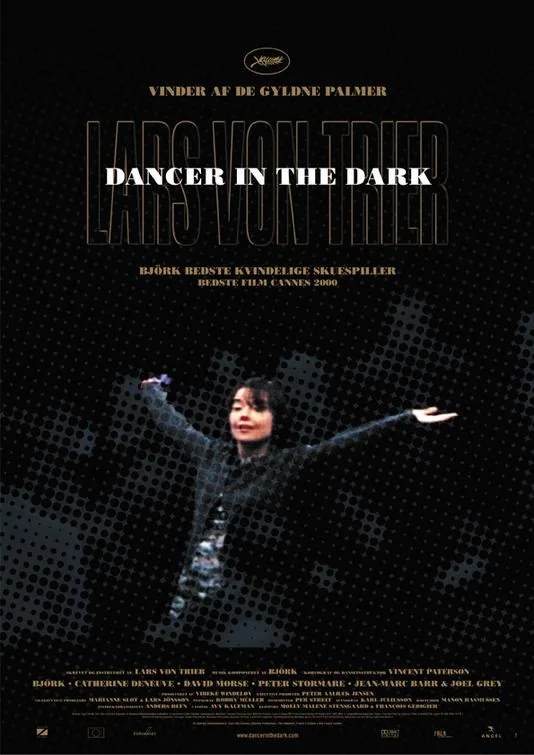
Selma's savings, concealment and fidelity to her son become entangled after betrayal, leaving her to face legal judgment with limited means to explain herself.
Why this matches +
Selected for the central appeal: Emotional musical dramas about injustice, redemption and care amid political upheaval.
Genres: Drama / Musical
Shared film traits
Based on recorded story, mood and style. Your preferences can change the order.
Music and performance
What changes Dancer in the Dark uses musical performance to express the suffering and sacrifice of a vulnerable worker facing injustice.
Czech immigrant Selma works in a factory while concealing progressive vision loss and saving for an operation she hopes will protect her son Gene. When a neighbor takes the money she has guarded, her loyalty to a promise pulls her into a legal crisis that institutions judge without sharing her obligations. Her imagined musicals emerge from machinery and repeated sounds, offering brief release while intensifying the contrast with her material circumstances. The film's tragedy asks what sacrifices are demanded of a mother; it does not prove self-erasure is the most authentic form of care.
A performer's ascent converts publicity and intimate alliance into political influence, with a critical countervoice continually contesting the public narrative of service and belonging. Eva’s access to political power grows through performance, partnership and popular identification, while class resentment frames the story.
Why this matches +
These offer a related experience with a meaningful difference in story, tone, or presentation.
An adjacent discovery: a related idea with a different viewing experience.
Genres: Musical / Drama
Shared film traits
Based on recorded story, mood and style. Your preferences can change the order.
Music and performance
What changes Evita combines large-scale musical storytelling with political change and the lives of the poor.
An actress and radio performer rises from provincial exclusion into a central public role beside an ambitious Argentine political leader. Her ability to command attention turns personal transformation into an instrument of popular identification, while elite hostility and a skeptical commentator challenge the image being presented. Public devotion, material assistance and personal advancement remain difficult to disentangle, especially when illness makes the construction of a lasting symbol more urgent than the limits of an individual life. The sung-through form turns Eva Perón’s rise into a contest over public memory, with Che as a critical narrator.
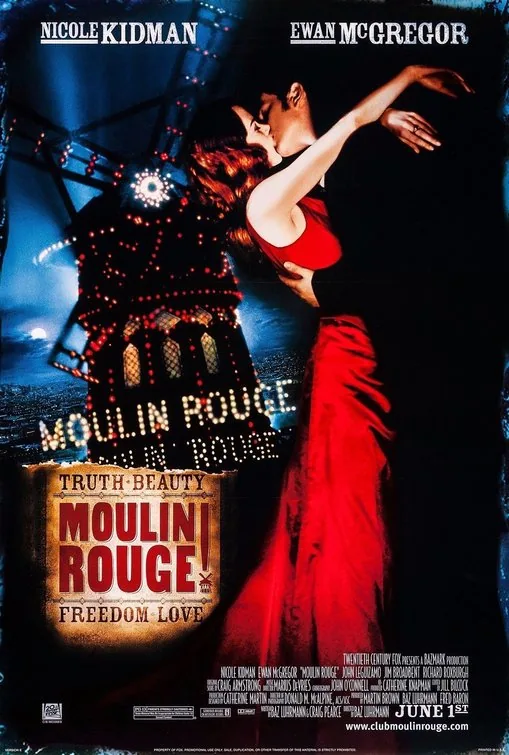
A secret romance develops inside a production financed by a possessive patron, forcing the lovers to turn performance into a means of concealment and expression.
Why this matches +
These offer a related experience with a meaningful difference in story, tone, or presentation.
An adjacent discovery: a related idea with a different viewing experience.
Genres: Drama / Romance
Shared film traits
Based on recorded story, mood and style. Your preferences can change the order.
Music and performance
What changes Moulin Rouge! uses emotionally heightened musical performance to tell a tragic story of love and sacrifice.
A young writer enters a Parisian cabaret hoping to join an artistic revolution and falls in love with its star performer. Their relationship must be concealed from a wealthy patron whose funding is expected to secure the venue's future and access to the woman he desires. A theatrical production becomes both cover and mirror for their romance, while illness and economic dependence make declarations of freedom increasingly fragile.
A long imprisonment becomes a struggle to preserve agency and hope inside a system that profits from dependency.
Why this matches +
These offer a related experience with a meaningful difference in story, tone, or presentation.
An adjacent discovery: a related idea with a different viewing experience.
Genres: Drama
Shared film traits
Based on recorded story, mood and style. Your preferences can change the order.
What changes The Shawshank Redemption follows an imprisoned man seeking dignity, friendship and a new life under a rigid system.
A banker convicted of murdering his wife enters a prison where brutality and institutional self-interest organise ordinary life. Friendship with an experienced inmate and the usefulness of his financial skills create limited space for work, learning and private hope. Years of adaptation expose different meanings of freedom, as the practical advantages that keep him alive also bind him more closely to people invested in maintaining his confinement.
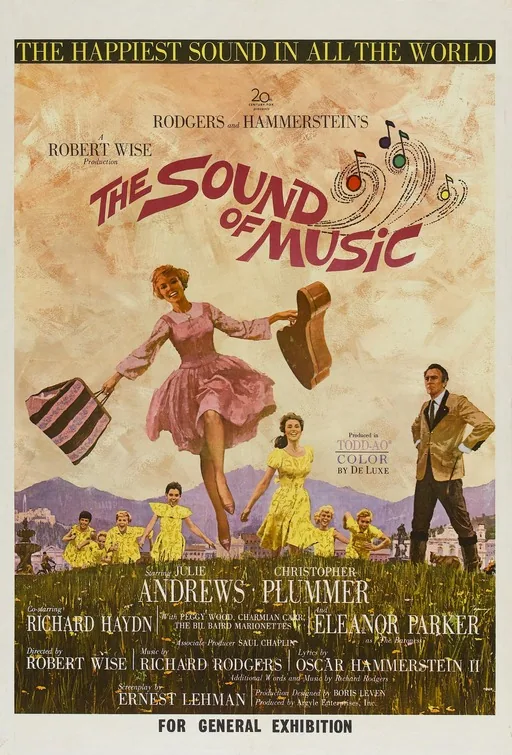
A new caregiver transforms a rigid household through music before political annexation forces the emerging family to choose between safety, status and conscience.
Why this matches +
These offer a related experience with a meaningful difference in story, tone, or presentation.
An adjacent discovery: a related idea with a different viewing experience.
Genres: Musical / Drama
Shared film traits
Based on recorded story, mood and style. Your preferences can change the order.
Music and performance
What changes The Sound of Music combines family care and sweeping musical storytelling with resistance to political oppression.
A novice leaves an Austrian convent to work as governess for a widowed naval officer's seven children, whose household is organised around strict discipline. Music and shared excursions restore a warmth the family has lost, while growing affection complicates her sense of vocation. As Nazi influence becomes unavoidable, private renewal must become collective courage, turning performance and family loyalty into practical resources for refusing submission.
A former prisoner receives an act of mercy that allows him to build a new identity, but a pursuing officer treats the breached parole as a permanent definition of the man. Taking responsibility for a dying worker's daughter connects private redemption with the poverty around him. As the girl grows and political revolt reaches the streets, protecting her future demands choices that cannot be settled by hiding forever. The sung-through adaptation sets rigid legal certainty against forms of care that recognize change without pretending every loss can be repaired.
What drives the story
A concealed former convict's promise to protect a child keeps colliding with an officer's fixed account of identity, until a street uprising forces hidden loyalties into public action.
The people at its centre
Valjean's care for Cosette and mercy toward Javert challenge possession and punishment in different ways, while the younger lovers encounter obligations beyond their own union.
What it feels like
Close vocal performance and large period tableaux give the musical a bodily immediacy, moving from intimate suffering toward collective and spiritual imagery.
Worth knowing
Distinguish the 2012 stage-musical adaptation from other versions of the novel; its compressed revolutionary setting and sung moral argument are not a comprehensive account of French political history.
MercyIdentitySocial injustice
Mood
Emphatic · Somber · Hopeful
Pacing
Episodic · Escalating
Visual style
Close vocal performance · Period tableaux · Sung-through form
Storytelling
Former prisoner pursued · Promised child protection · Street revolt