An improvised musical exchange becomes a local truce whose practical cooperation challenges command structures committed to renewing the enemy relationship.
Why this matches +
These offer a related experience with a meaningful difference in story, tone, or presentation.
An adjacent discovery: a related idea with a different viewing experience.
Genres: War / Drama
Shared film traits
Based on recorded story, mood and style. Your preferences can change the order.
War and civilian life
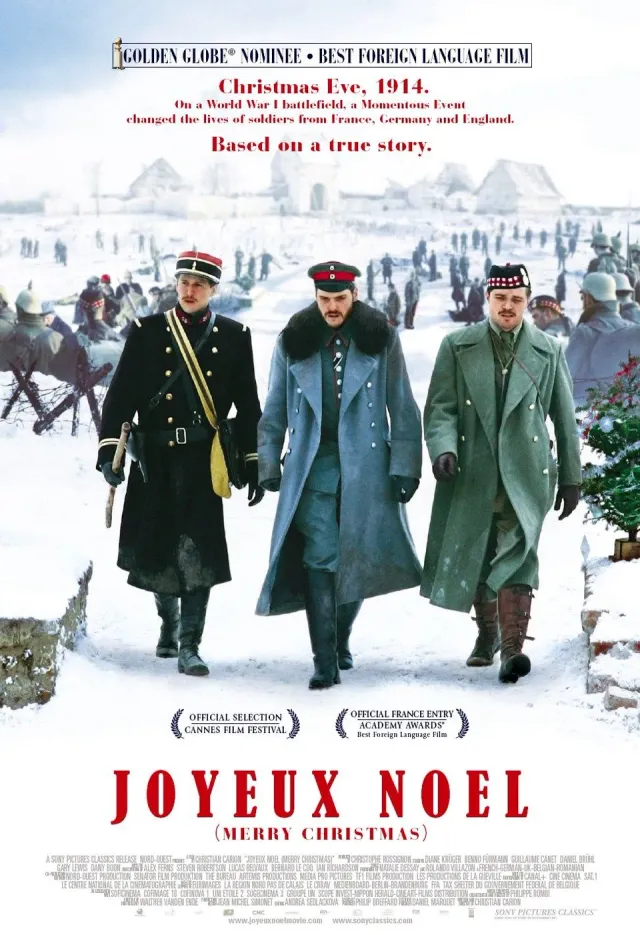
What changes Joyeux Noël follows soldiers from opposing sides forming brief connections during World War I, moving from a prisoner-of-war camp to a Christmas ceasefire in the trenches.
Soldiers facing one another across a First World War front hear Christmas music cross the space their orders define as a killing ground. A temporary ceasefire allows meetings, burial and recognition of lives that patriotic rhetoric has made abstract. Keeping the encounter possible soon conflicts with the authorities' need to restore disciplined hostility. The multilingual ensemble drama makes fellowship a brief act of disobedience rather than proof that the war has ended, preserving the costs of discovering a common humanity that the institution cannot readily accommodate.
Patriotic recruitment gives way to attrition, while the gap between civilian rhetoric and frontline experience makes return feel like another form of isolation.
Why this matches +
These offer a related experience with a meaningful difference in story, tone, or presentation.
An adjacent discovery: a related idea with a different viewing experience.
Genres: War / Drama
Shared film traits
Based on recorded story, mood and style. Your preferences can change the order.
War and civilian life
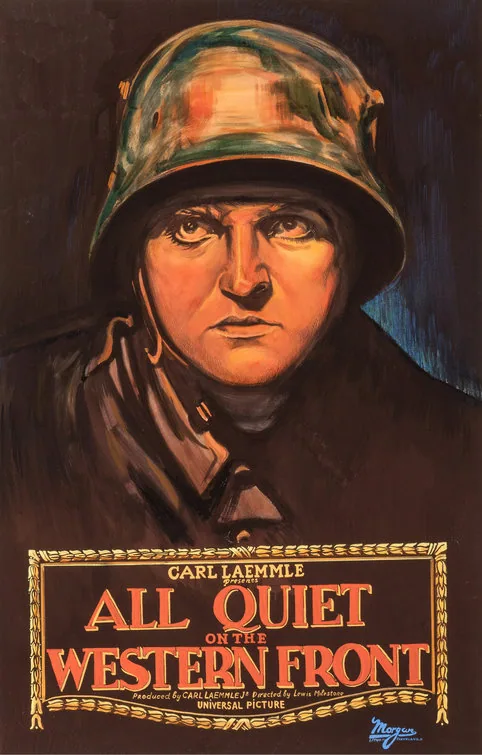
What changes All Quiet on the Western Front depicts the human cost of World War I through German soldiers, emphasizing front-line disillusionment rather than an escape and cross-class bonds.
German schoolboys enter the First World War encouraged by patriotic teaching and the promise of meaningful comradeship. Training and the front replace that expectation with fear, hunger, bodily injury, and the repetitive loss of friends. Returning briefly to civilian life reveals how little those urging sacrifice understand, making the young soldier's experience a widening estrangement from the language that first sent him to war.
An impossible military order produces a prosecution designed to displace responsibility down the chain of command.
Why this matches +
These offer a related experience with a meaningful difference in story, tone, or presentation.
An adjacent discovery: a related idea with a different viewing experience.
Genres: Drama / War
Shared film traits
Based on recorded story, mood and style. Your preferences can change the order.
War and civilian life
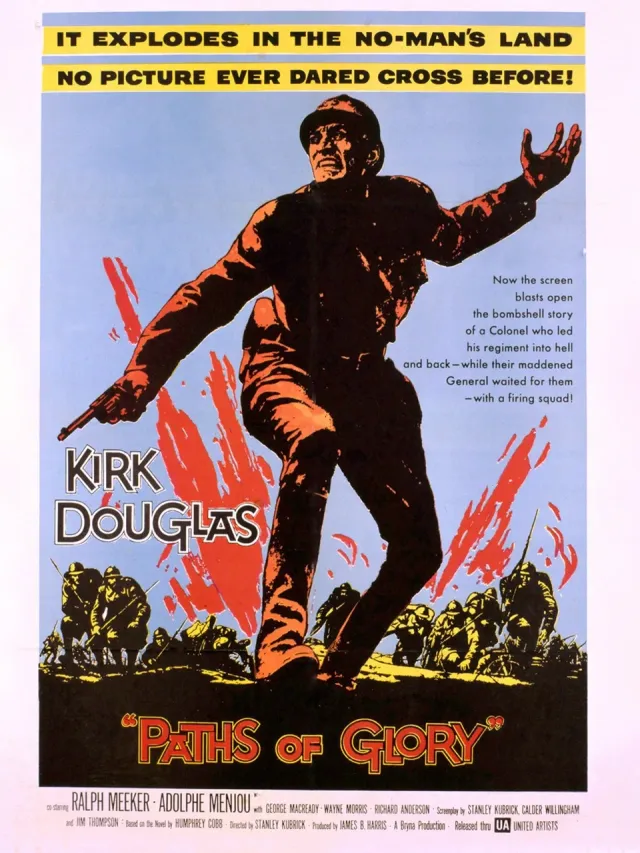
What changes Paths of Glory examines class and military authority during World War I, centering a French court-martial rather than relationships across a prison camp.
A French regiment is ordered into an attack that senior officers have little reason to expect it can survive. After failure, selected soldiers face trial for cowardice while their commander attempts to defend them. The proceedings expose a hierarchy more concerned with reputation and discipline than with the circumstances of the men whose lives it controls.
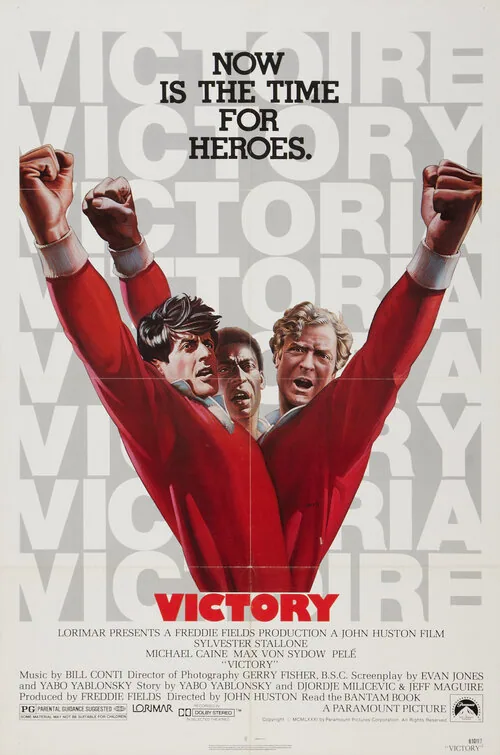
A football match gives Allied prisoners a choice between a risky escape plan and a public act of resistance.
Why this matches +
These offer a related experience with a meaningful difference in story, tone, or presentation.
An adjacent discovery: a related idea with a different viewing experience.
Genres: War / Sport
Shared film traits
Based on recorded story, mood and style. Your preferences can change the order.
War and civilian life · Escape and pursuit
What changes Escape to Victory brings prisoners together around a plan to escape a German camp, using a World War II football match and a more overt adventure structure.
During the Second World War, Allied prisoners in a German camp are invited to play an exhibition football match against a German team. Captain Robert Hatch initially sees the event as a chance to organize an escape, while his fellow prisoners and their British officer must decide whether to risk the plan or play before a huge crowd. The match turns sport into a public test of courage, solidarity, and survival.
A civilian shelters wounded soldiers from opposing sides in a village emptied by war.
Why this matches +
These offer a related experience with a meaningful difference in story, tone, or presentation.
An adjacent discovery: a related idea with a different viewing experience.
Genres: Drama / War
Shared film traits
Based on recorded story, mood and style. Your preferences can change the order.
What changes Tangerines follows a civilian sheltering wounded men from opposing sides of a conflict, focusing on a later war and a household rather than French officers in German captivity.
In a small village during the war in Abkhazia, Ivo and his neighbor Margus are among the last Estonians who remain. After a nearby clash leaves wounded soldiers on both sides in their care, the villagers must decide how to treat enemies sharing the same confined space. Zaza Urushadze makes the antiwar drama a study in hospitality and restraint, allowing everyday decisions to challenge inherited divisions.
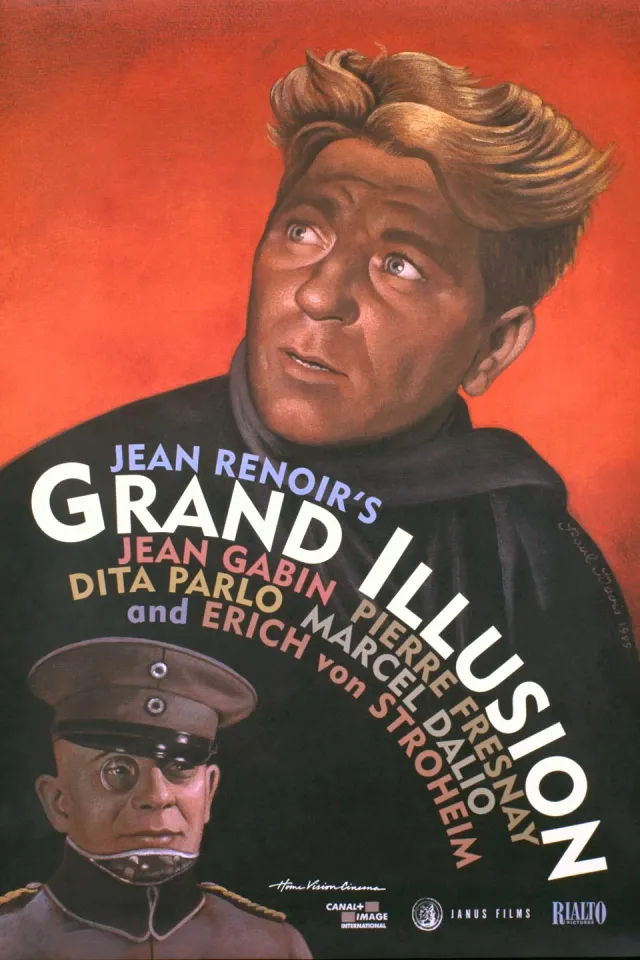
French officers held in German prisoner-of-war camps during the First World War form bonds that cross rank, nationality and class, but those bonds do not make their circumstances equal. Aristocratic captain de Boëldieu recognizes a shared code with German officer von Rauffenstein, while mechanic Maréchal and Jewish banker Rosenthal plan a more practical escape. The war’s changing fortunes expose the aristocrats’ fading social world and make the prisoners’ temporary solidarity less stable than it first appears. Renoir’s drama asks what holds people together when inherited class distinctions outlast formal declarations of fraternity. Its refuge story is humanist without presenting every character as interchangeable; Rosenthal’s Jewish identity and the contrasts in social mobility are central to what that humanism can and cannot include.
What drives the story
Escape plans structure the action, but each transfer between camps shifts the social meaning of captivity. De Boëldieu’s sacrifice protects others while also marking a class order he understands to be disappearing.
The people at its centre
Maréchal and Rosenthal depend on one another in ways the aristocrats do not, while Rauffenstein’s affinity with de Boëldieu rests on a shared rank unavailable to the other prisoners.
What it feels like
Renoir’s mobile staging and understated performances let relationships emerge through meals, routine and conversation as much as battle. The snowy civilian refuge at the end changes the pace from institutional confinement to fragile hospitality.
Worth knowing
The film’s antiwar humanism should not flatten class or Jewish difference into generic friendship. Its final refuge is conditional and temporary, and the aristocratic bond is a distinct strand within a broader prisoner experience.
ClassWarHuman recognition
Mood
Reflective · Somber · Compassionate
Pacing
Measured
Visual style
Restrained ensemble · Fortress interiors · Open countryside