Repeated patrols expose a recruit to an escalating division within his own unit, making combat inseparable from a struggle over the conduct of war.
Why this matches +
Military procedure reveals an institution's willingness to sacrifice ordinary lives to preserve authority and reputation.
Genres: Drama / Action
Shared film traits
Based on recorded story, mood and style. Your preferences can change the order.
War and civilian life
What changes Paths of Glory: measured and escalating. Platoon: intense.
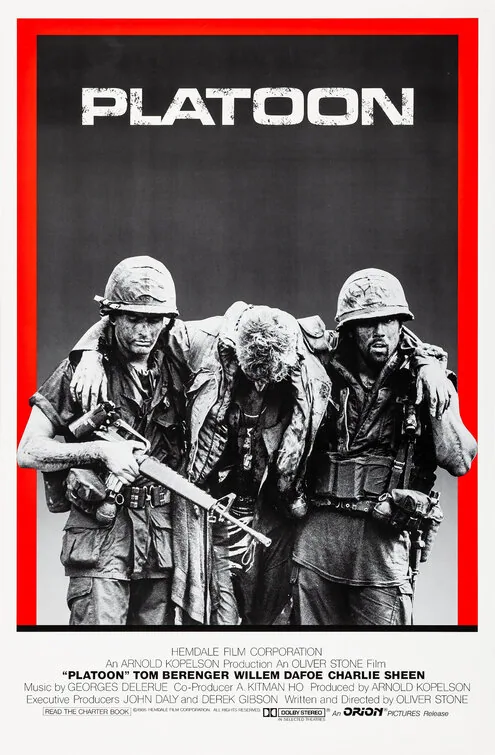
A young American volunteer arrives in Vietnam expecting a test of courage and finds exhaustion, fear and a unit divided between two experienced sergeants. Their conflicting responses to civilians and perceived betrayal turn the platoon's internal loyalties into another source of danger. The recruit's effort to understand what kind of soldier he can become is overtaken by acts that blur the separation between survival, obedience and moral responsibility.
A contested advance places command pressure against the cost of sending particular men into danger, while shifting perspectives continually exceed the official mission.
Why this matches +
Military procedure reveals an institution's willingness to sacrifice ordinary lives to preserve authority and reputation.
Genres: Drama / War
Shared film traits
Based on recorded story, mood and style. Your preferences can change the order.
War and civilian life
What changes Paths of Glory: measured and escalating. The Thin Red Line: meditative.
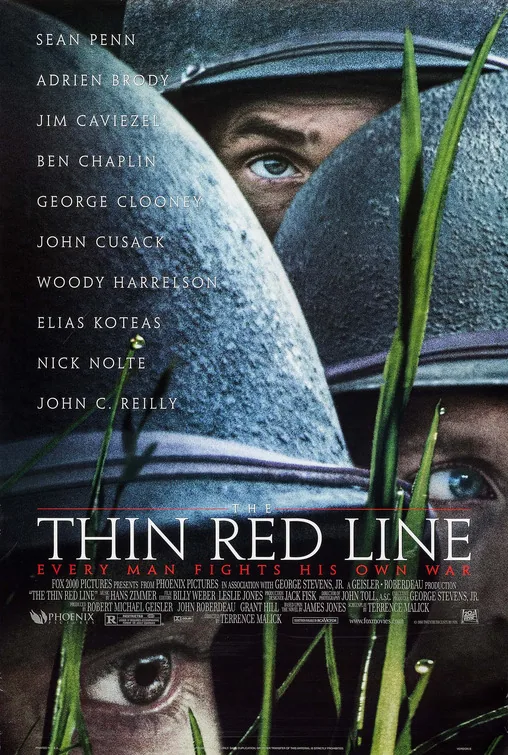
An American infantry company arrives on Guadalcanal and confronts a landscape whose beauty offers no protection from military objectives or unpredictable killing. Attempts to capture a defended position expose differences between career ambition, tactical responsibility and the soldiers' private attachments. Multiple voices reflect on nature, violence and loss as the campaign continues, making neither strategic progress nor individual courage sufficient to explain what the men experience.
Patriotic recruitment gives way to attrition, while the gap between civilian rhetoric and frontline experience makes return feel like another form of isolation.
Why this matches +
Military procedure reveals an institution's willingness to sacrifice ordinary lives to preserve authority and reputation.
Genres: War / Drama
Shared film traits
Based on recorded story, mood and style. Your preferences can change the order.
War and civilian life
Expect bleak and emotional, with measured and intense pacing.
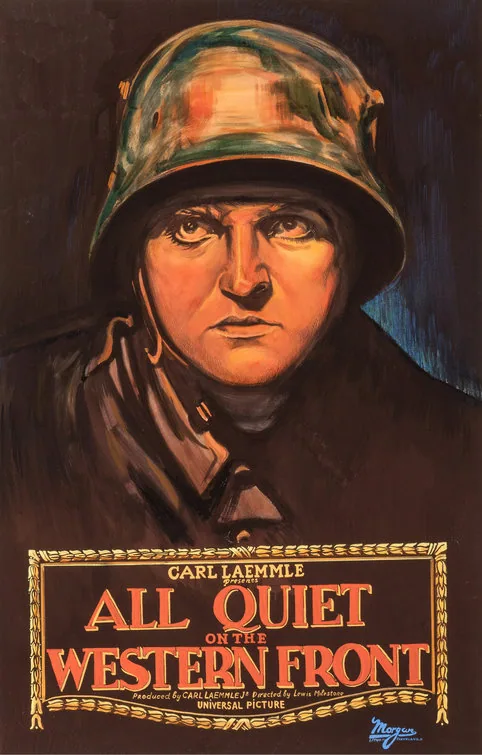
German schoolboys enter the First World War encouraged by patriotic teaching and the promise of meaningful comradeship. Training and the front replace that expectation with fear, hunger, bodily injury, and the repetitive loss of friends. Returning briefly to civilian life reveals how little those urging sacrifice understand, making the young soldier's experience a widening estrangement from the language that first sent him to war.
A two-part account connects the manufacture of military obedience with a combat environment that makes the resulting identities unstable and morally difficult to sustain.
Why this matches +
Military procedure reveals an institution's willingness to sacrifice ordinary lives to preserve authority and reputation.
Genres: Drama / War
Shared film traits
Based on recorded story, mood and style. Your preferences can change the order.
War and civilian life
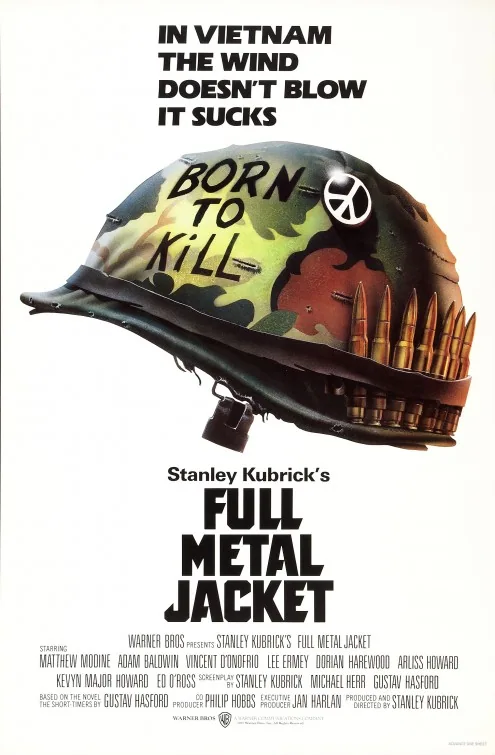
What changes Paths of Glory: measured and escalating. Full Metal Jacket: intense.
Young American recruits enter Marine training under an instructor who treats humiliation and the destruction of private identity as tools for producing soldiers. The story later follows a military journalist and other servicemen into urban fighting in Vietnam, where institutional language and actual violence do not remain comfortably aligned. Moving between the training system and its consequences exposes both the habits it creates and the ways individuals adapt, perform or fracture inside them.
A boy seeking to join the resistance is pulled into civilian extermination and the devastation of occupied Belarus, where each encounter removes another layer of childhood expectation. Flyora's changing face registers damage more than a conventional victory arc.
Why this matches +
Military procedure reveals an institution's willingness to sacrifice ordinary lives to preserve authority and reputation.
Genres: War / Drama
Shared film traits
Based on recorded story, mood and style. Your preferences can change the order.
War and civilian life
What changes Paths of Glory: measured and escalating. Come and See: intense.
Teenager Flyora joins partisans in Nazi-occupied Belarus, expecting resistance to be a path into action. Instead, the film follows a child through the destruction of villages and the murder of civilians, making atrocity a lived sensory experience rather than an abstract lesson about war. His face, sound and shifting perception carry the cost of witnessing; the historical specificity of occupation and extermination should not be flattened into a claim that every conflict is equivalent. This is an exceptionally intense film, not a conventional battlefield adventure. The film's closing newsreel montage runs backward, refusing a comforting return to innocence.
The tactical shift to a defense from caves and tunnels changes the battle from an open-front engagement into a prolonged survival problem. Letters provide a second structure, carrying home lives into a position where return is unlikely.
Why this matches +
Military procedure reveals an institution's willingness to sacrifice ordinary lives to preserve authority and reputation.
Genres: War / Drama
Shared film traits
Based on recorded story, mood and style. Your preferences can change the order.
War and civilian life
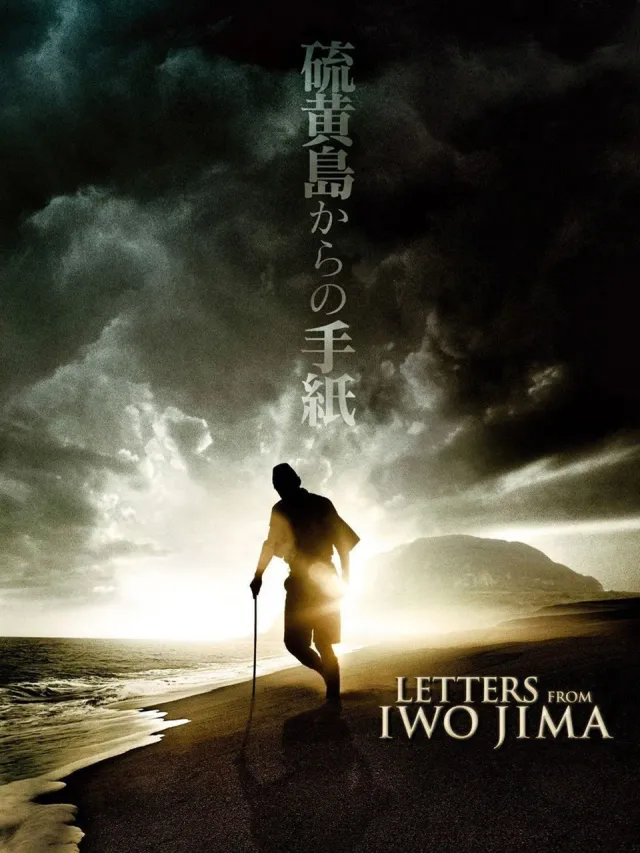
What changes Paths of Glory is tagged grave and angry; Letters from Iwo Jima is tagged mournful and claustrophobic.
As U.S. forces approach Iwo Jima in 1945, Japanese soldiers prepare to defend an island they know they may not survive. Letters and flashbacks follow General Kuribayashi, Saigo the baker and other men whose motives range from duty and fear to attachment to families at home. Their human individuality complicates the language of national honor without making the film a full account of the Pacific War or Japanese imperial responsibility. Clint Eastwood’s Japanese-language companion to Flags of Our Fathers focuses on one selected military perspective; it does not stand for every Japanese soldier or civilian. The battle’s underground tunnels and fragmented correspondence turn defense into an intimate, enclosed ordeal, while the historical context remains larger than the film’s sympathetic frame.
A prisoner's defence of military standards becomes identification with an enemy project that an allied sabotage team is trying to destroy.
Why this matches +
Military procedure reveals an institution's willingness to sacrifice ordinary lives to preserve authority and reputation.
Genres: Drama / War
Shared film traits
Based on recorded story, mood and style. Your preferences can change the order.
War and civilian life
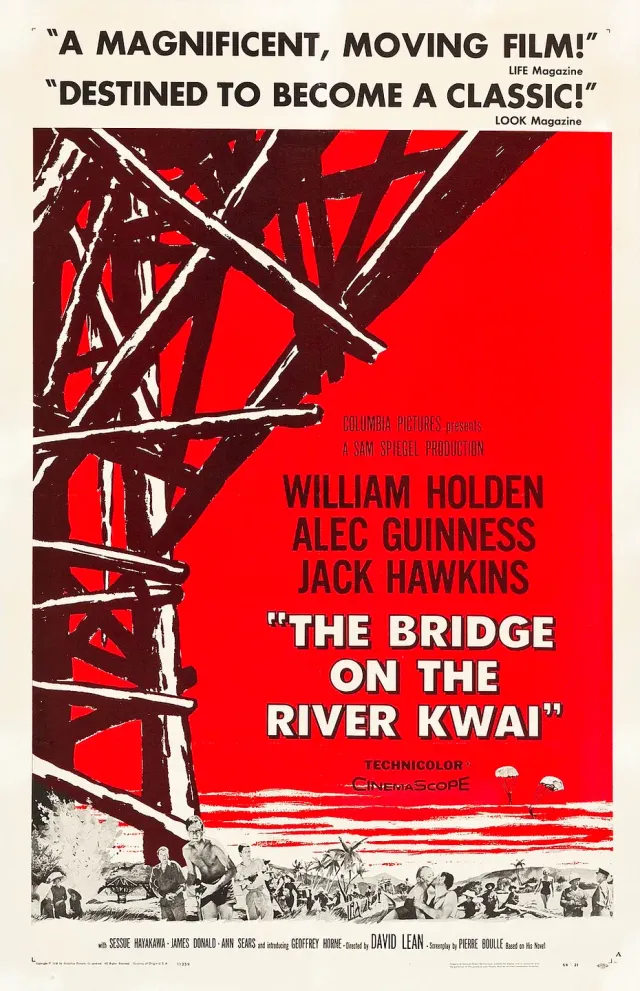
What changes Paths of Glory is tagged grave and angry; The Bridge on the River Kwai is tagged tense and epic.
British prisoners in a Japanese camp are ordered to construct a railway bridge serving the enemy's war effort. Their commanding officer first resists the commandant on matters of principle, then begins treating an efficiently built bridge as proof of his men's discipline and dignity. Meanwhile, a separate mission seeks to destroy the same structure, turning professional pride and military duty into forces capable of working against their supposed purpose.
A traumatized child insists on continuing reconnaissance while adult attempts to protect him collide with his determination to remain inside the conflict that destroyed his family.
Why this matches +
Military procedure reveals an institution's willingness to sacrifice ordinary lives to preserve authority and reputation.
Genres: War / Drama
Shared film traits
Based on recorded story, mood and style. Your preferences can change the order.
War and civilian life
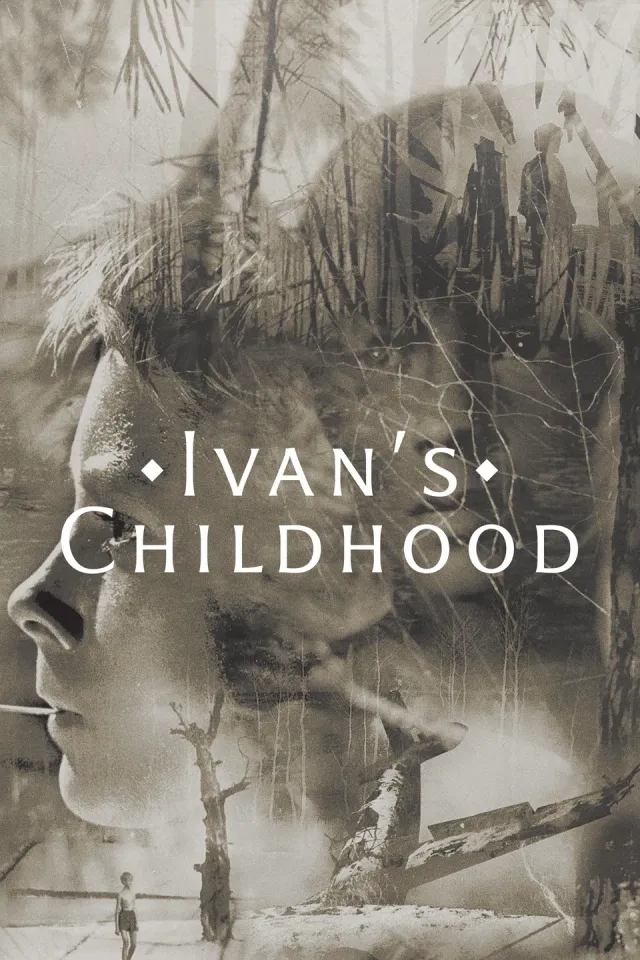
What changes Paths of Glory is tagged grave and angry; Ivan's Childhood is tagged lyrical and somber.
A boy whose family has been destroyed by war crosses dangerous territory to report intelligence to Soviet soldiers. Officers attempt to redirect him toward safety, but revenge and the disappearance of ordinary childhood make another life difficult for him to imagine. Dreams interrupt the military present with tactile images of affection and freedom. The film places a child's usefulness to war beside what that usefulness cannot restore, refusing to let competence in danger stand as proof that his damaged world has become acceptable.
A search for food turns into a test of conscience when two partisans are captured and forced to choose under pressure.
Why this matches +
Military procedure reveals an institution's willingness to sacrifice ordinary lives to preserve authority and reputation.
Genres: Drama / War
Shared film traits
Based on recorded story, mood and style. Your preferences can change the order.
War and civilian life
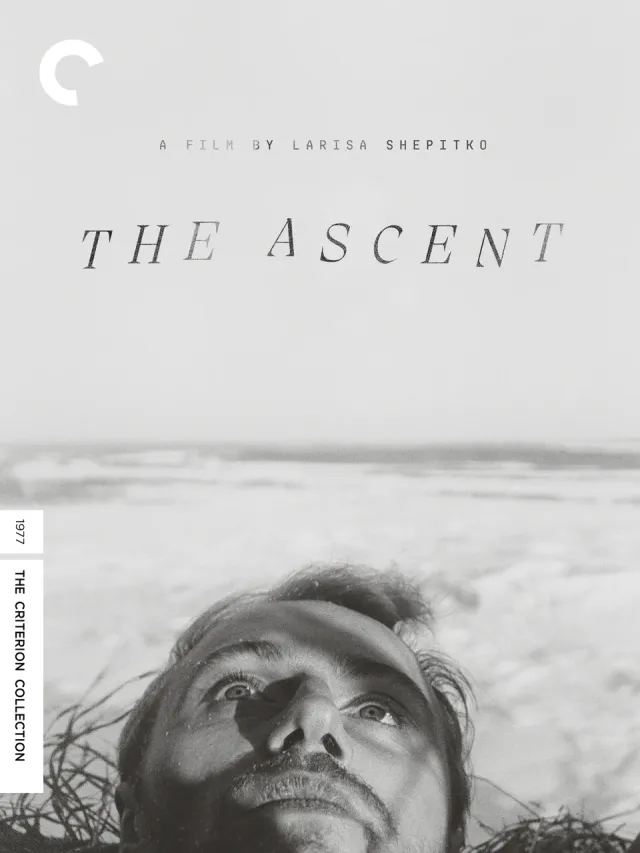
What changes Paths of Glory: measured and escalating. The Ascent: deliberate, intensifying and tragic.
During the Second World War, Soviet partisans Sotnikov and Rybak leave their unit to find food for their comrades. A German patrol wounds Sotnikov, and the men seek shelter in a village home before they are discovered and captured with its owner, Demchikha. Under interrogation by a local collaborator, Sotnikov refuses to betray others and endures torture. Rybak faces a different test as fear and the promise of survival press him toward a decision that will define his moral relationship to his companion.
Saul’s burial mission is a small, concrete act of care inside a system designed to erase both personhood and mourning.
Why this matches +
Military procedure reveals an institution's willingness to sacrifice ordinary lives to preserve authority and reputation.
Genres: Historical drama / war drama
Shared film traits
Based on recorded story, mood and style. Your preferences can change the order.
War and civilian life
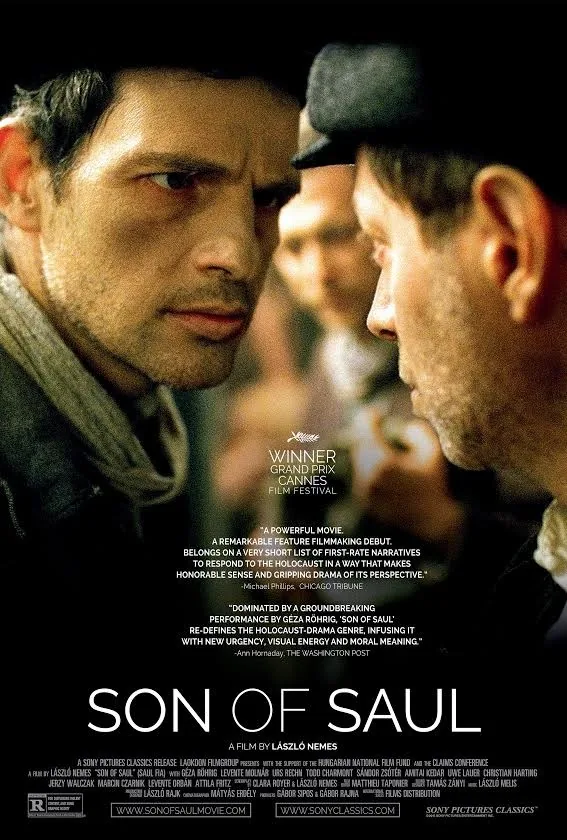
What changes Paths of Glory: measured and escalating. Son of Saul: continuous and urgent.
In Auschwitz in 1944, Sonderkommando prisoner Saul finds a boy still alive after a gassing and becomes fixated on securing a proper burial before the body is taken for autopsy and cremation. His search for a rabbi and ritual unfolds while fellow prisoners plan an uprising and try to document the camp’s atrocities. Saul offers help to the resistance, but his pursuit of a private act of dignity repeatedly interferes with their larger plan. The film keeps the violence at the edges of the frame, following his narrow field of attention through an almost unbearable environment.
The amnesty bargain is both recruitment and coercion: Reisman needs the prisoners to become a unit before using them in a mission designed around high expected losses.
Why this matches +
Accepted official duties cannot remove an individual's responsibility for the people harmed by institutional decisions.
An adjacent discovery: a related idea with a different viewing experience.
Genres: Drama / Action
Shared film traits
Based on recorded story, mood and style. Your preferences can change the order.
War and civilian life
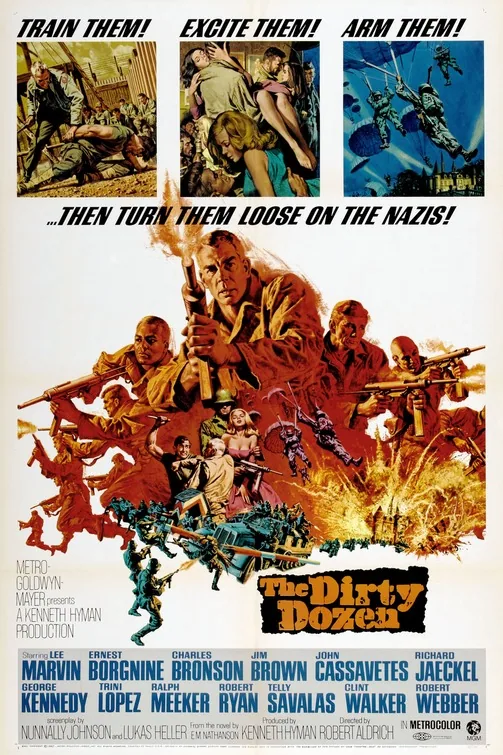
What changes Paths of Glory: measured and escalating. The Dirty Dozen: training ensemble and mission escalation.
Army major John Reisman is ordered to train twelve military prisoners for a dangerous mission behind German lines before D-Day. The men have been convicted of serious crimes, and the deal is that survivors may receive amnesty. Reisman first has to make a hostile group follow orders, then prepare them to attack a château where German officers are gathered. Their training exposes rivalries and the limits of discipline; during the operation, a change in the target’s circumstances makes the plan more morally fraught than its briefing suggested. The mission depends on teamwork among men who distrust one another, while Reisman weighs the strategic objective against the cost of treating them as expendable weapons.
Repeated cycles of waiting, attack and emergency repair make survival depend on collective work inside a vessel whose strategic orders keep exposing it to renewed danger.
Why this matches +
Accepted official duties cannot remove an individual's responsibility for the people harmed by institutional decisions.
An adjacent discovery: a related idea with a different viewing experience.
Genres: War / Drama
Shared film traits
Based on recorded story, mood and style. Your preferences can change the order.
War and civilian life
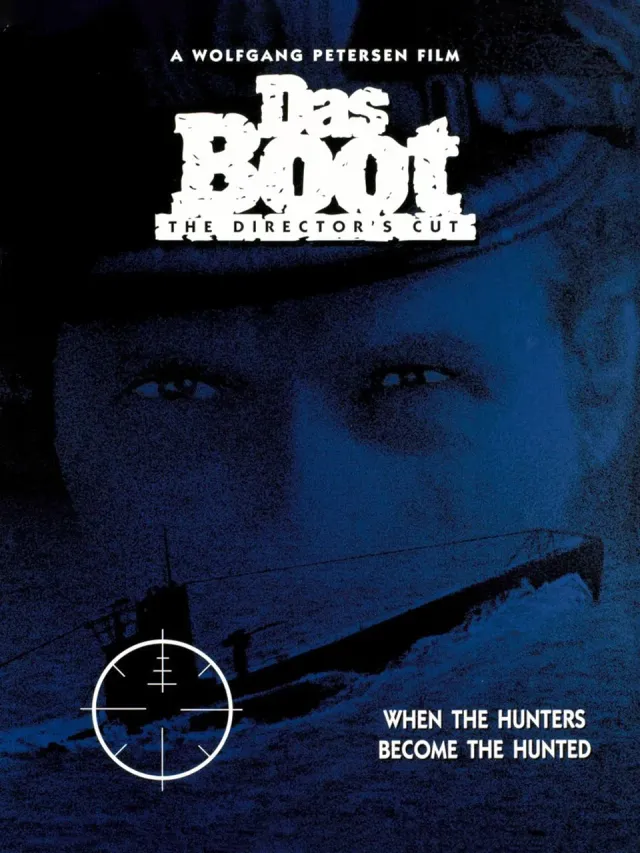
What changes Paths of Glory: measured and escalating. Das Boot: variable.
A young correspondent joins a German submarine crew whose long periods of boredom give way to pursuit, mechanical failure and pressure at depths the vessel may not withstand. Experienced sailors' practical cynicism contrasts with more committed ideological certainty, but shared confinement does not remove the war's human consequences outside the hull. Surviving one ordeal only produces another order, making technical solidarity an unreliable promise that anyone controls the voyage's larger purpose. The crew’s shared competence is repeatedly tested by orders issued for a war whose purpose they do not control.
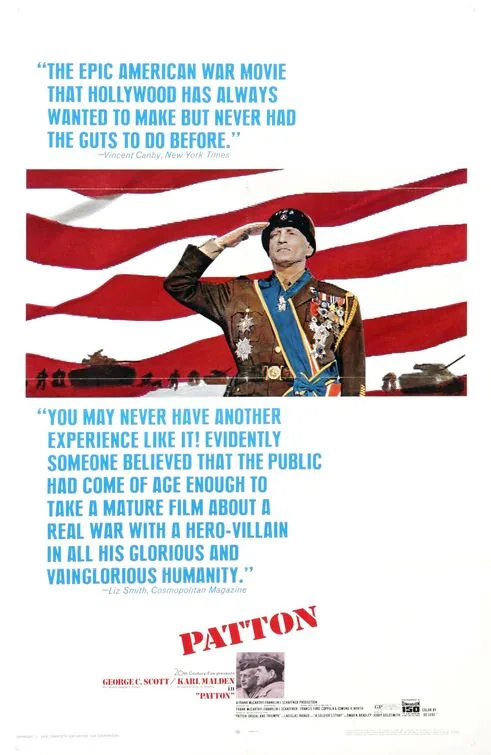
The film’s campaign episodes turn Patton’s appetite for decisive action into both an operational advantage and a recurring political liability.
Why this matches +
Accepted official duties cannot remove an individual's responsibility for the people harmed by institutional decisions.
An adjacent discovery: a related idea with a different viewing experience.
Genres: War / Biography
Shared film traits
Based on recorded story, mood and style. Your preferences can change the order.
War and civilian life
What changes Paths of Glory is tagged grave and angry; Patton is tagged forceful and austere.
After the American defeat at Kasserine Pass, General George S. Patton takes command of the II Corps and imposes demanding discipline. His rivalry with British General Bernard Montgomery sharpens during the campaign in Sicily, where Patton pushes for a more ambitious advance. Two historical incidents in which he struck hospitalized soldiers there trigger a reprimand and temporarily sideline him; the film compresses that scandal into its own dramatic portrait. Later, his command of the Third Army brings rapid victories across France, but his public remarks and political conduct repeatedly threaten his position. The film follows his military drive alongside his pride, theatrical self-image and belief that battle is the route to lasting glory.
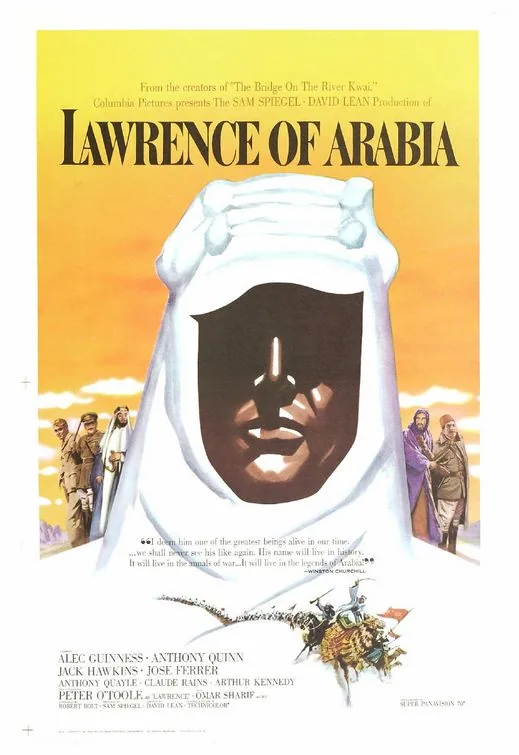
A liaison officer's military success magnifies the conflict between personal myth, a coalition's autonomy and the empire employing him.
Why this matches +
Accepted official duties cannot remove an individual's responsibility for the people harmed by institutional decisions.
An adjacent discovery: a related idea with a different viewing experience.
Genres: Drama / Adventure
Shared film traits
Based on recorded story, mood and style. Your preferences can change the order.
War and civilian life
What changes Paths of Glory is tagged grave and angry; Lawrence of Arabia is tagged epic and contemplative.
A British officer posted to the Middle East during the First World War joins Arab forces opposing Ottoman rule and becomes a celebrated figure in their campaign. His identification with the desert and hunger for extraordinary achievement grow entangled with competing local aims and British strategic interests. Victories intensify rather than resolve questions about violence, self-invention and who is permitted to claim ownership of a liberation struggle.
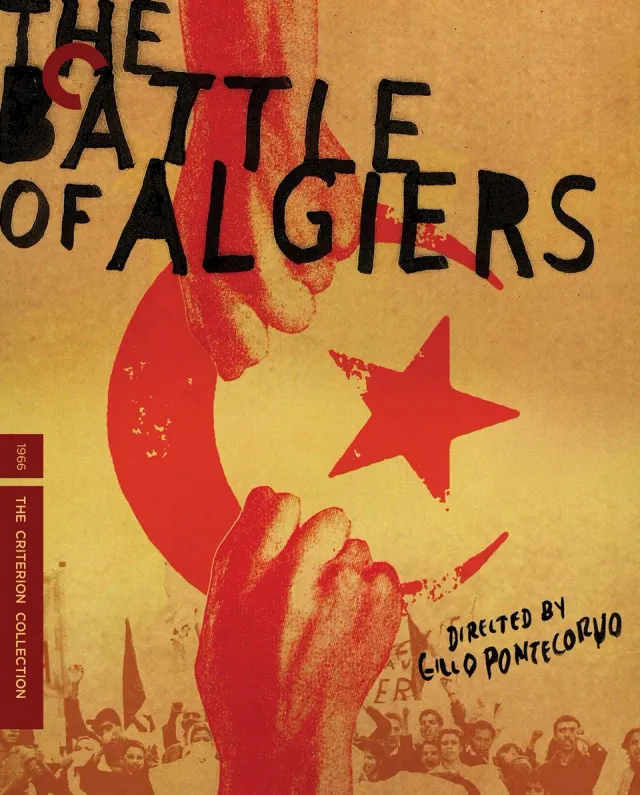
The story moves from cell-level resistance to counterinsurgency, showing how tactical victories fail to settle the political question of Algerian independence.
Why this matches +
Accepted official duties cannot remove an individual's responsibility for the people harmed by institutional decisions.
An adjacent discovery: a related idea with a different viewing experience.
Genres: Drama / Historical
Shared film traits
Based on recorded story, mood and style. Your preferences can change the order.
War and civilian life
What changes Paths of Glory: measured and escalating. The Battle of Algiers: chronological campaign and escalating reprisals.
Beginning with French forces closing in on Ali la Pointe, the film flashes back to the growth of the National Liberation Front in the Casbah between 1954 and 1957. It follows urban resistance cells and the French paratroopers sent to dismantle them, showing both insurgent attacks and the military campaign of arrests and torture. The struggle escalates through bombings, reprisals and the destruction of FLN leadership, but nationalist demonstrations continue after the immediate battle is lost. The film frames the city as a contested political space and connects tactical victories to a wider movement for independence.
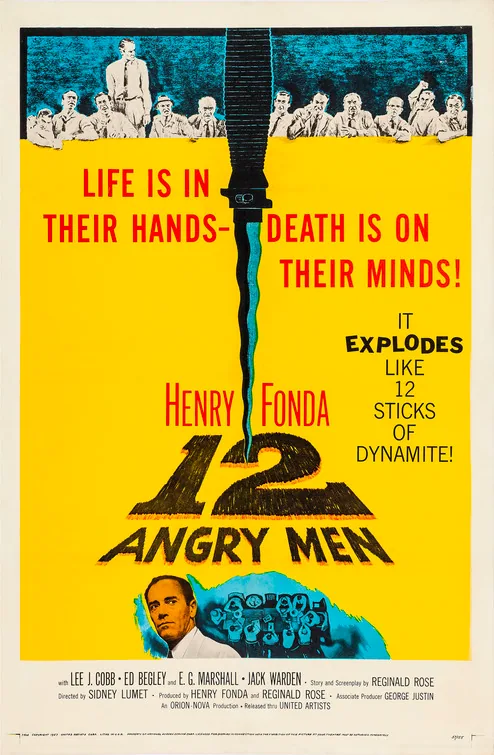
A required unanimous decision becomes a contest over whether uncertainty will be examined or dismissed for the convenience of the group.
Why this matches +
Accepted official duties cannot remove an individual's responsibility for the people harmed by institutional decisions.
An adjacent discovery: a related idea with a different viewing experience.
Genres: Drama / Huis-clos
Shared film traits
Based on recorded story, mood and style. Your preferences can change the order.
What changes Paths of Glory is tagged grave and angry; 12 Angry Men is tagged tense and contemplative.
A jury assembled after a murder trial initially expects to return a quick guilty verdict against a young defendant. One member's insistence on discussing the evidence interrupts that consensus and forces the others to revisit testimony they have accepted as settled. Confined deliberation exposes impatience, personal resentment and prejudice as influences on an apparently factual decision whose consequences cannot be reversed.
A politically motivated surveillance assignment turns a loyal operative's access to private evidence into a conflict between bureaucratic obedience and covert protection.
Why this matches +
Accepted official duties cannot remove an individual's responsibility for the people harmed by institutional decisions.
An adjacent discovery: a related idea with a different viewing experience.
Genres: Drama / Thriller
Shared film traits
Based on recorded story, mood and style. Your preferences can change the order.
What changes Paths of Glory: measured and escalating. The Lives of Others: slow burn.
An East German surveillance officer is assigned to monitor a celebrated playwright and his partner, ostensibly for national security. Listening to their private life reveals artistic friendships, fear and a senior official's exploitative motive behind the operation. The officer's identification with people he is meant to expose creates small opportunities to intervene, but every altered report risks his position within an institution that treats conscience as disloyalty.
Aida’s work gives her access to information but not the authority to guarantee safety.
Why this matches +
Accepted official duties cannot remove an individual's responsibility for the people harmed by institutional decisions.
An adjacent discovery: a related idea with a different viewing experience.
Genres: Drama / War
Shared film traits
Based on recorded story, mood and style. Your preferences can change the order.
War and civilian life
What changes Paths of Glory is tagged grave and angry; Quo Vadis, Aida? is tagged urgent and heartbreaking.
During the 1995 siege of Srebrenica, Aida works as a translator for the UN peacekeeping force while her husband and sons seek safety. She moves between officials, negotiations and the crowd outside the base, trying to use her access to protect her family as the crisis worsens. Jasmila Žbanić keeps the story close to Aida’s limited knowledge, making translation and bureaucratic procedure part of a harrowing drama about civilian survival and institutional failure.
A unilateral order activates a security system whose own rules repeatedly obstruct attempts to undo an irreversible escalation.
Why this matches +
Accepted official duties cannot remove an individual's responsibility for the people harmed by institutional decisions.
An adjacent discovery: a related idea with a different viewing experience.
Genres: Comedy / War
Shared film traits
Based on recorded story, mood and style. Your preferences can change the order.
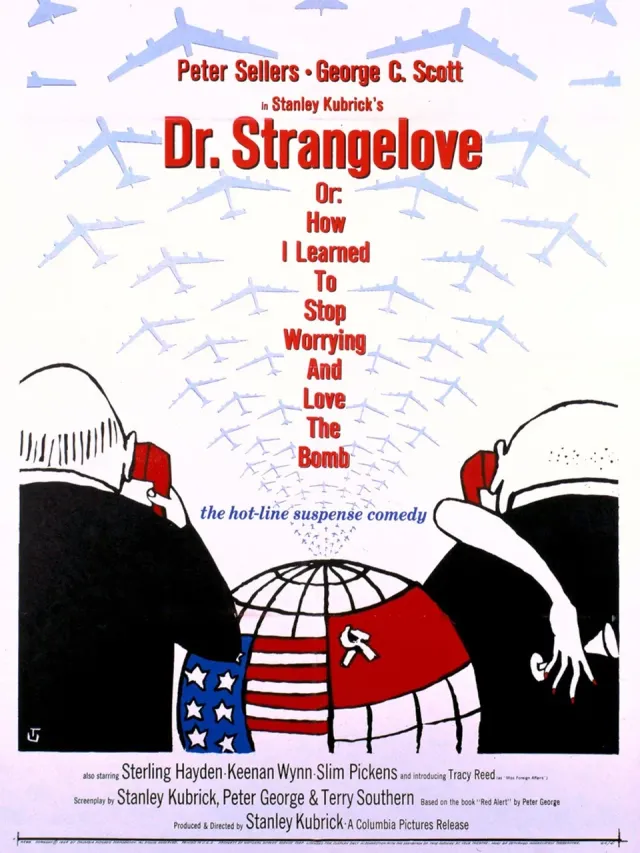
What changes Paths of Glory: measured and escalating. Dr. Strangelove: steady.
An American military commander initiates a nuclear attack through a system designed to preserve retaliation even when ordinary leadership is unavailable. Officials attempting to recall the aircraft discover that procedural safeguards and political pride can make stopping catastrophe harder than starting it. Simultaneous efforts in a command room, an airbase and a bomber expose a logic in which individuals behave purposefully while the organisation of their purposes moves towards collective annihilation.
The murder investigation becomes a fight over whether evidence can survive the pressure of a state that wants the crime reduced to a private or accidental act.
Why this matches +
Accepted official duties cannot remove an individual's responsibility for the people harmed by institutional decisions.
An adjacent discovery: a related idea with a different viewing experience.
Genres: Drama / Thriller
Shared film traits
Based on recorded story, mood and style. Your preferences can change the order.
What changes Paths of Glory: measured and escalating. Z: rapid procedural build.
After a prominent Greek left-wing politician is attacked and dies following a public rally, a magistrate investigates the case despite pressure from officials who want it contained. Journalists and witnesses help expose the gap between the public account and the network of people who planned and concealed the violence. Costa-Gavras shapes the story as a political investigation, using an unnamed country and documentary-like urgency to connect individual testimony with institutional complicity. The title’s protest slogan becomes both a demand to remember the victim and a challenge to an attempted cover-up. Its reportorial momentum makes the investigation itself the chief source of suspense.
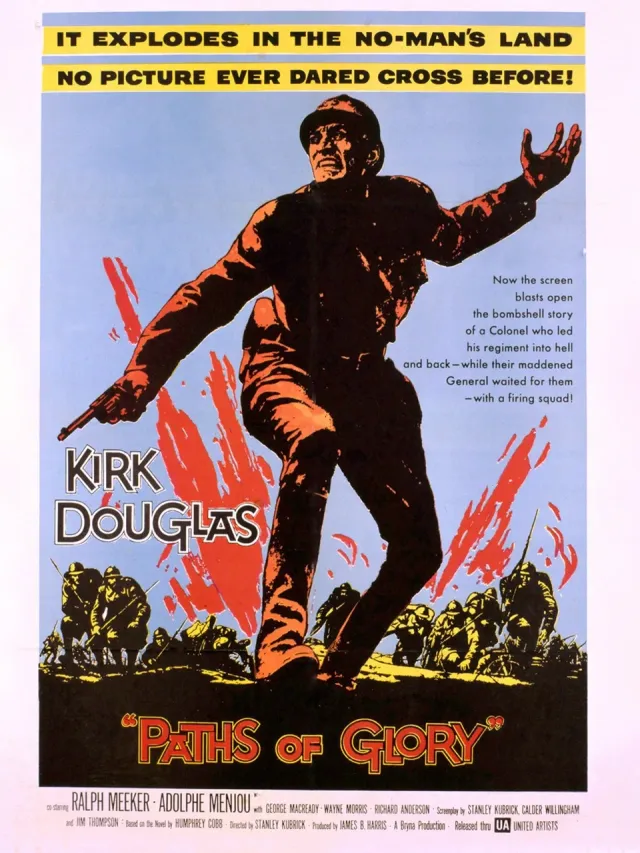
A French regiment is ordered into an attack that senior officers have little reason to expect it can survive. After failure, selected soldiers face trial for cowardice while their commander attempts to defend them. The proceedings expose a hierarchy more concerned with reputation and discipline than with the circumstances of the men whose lives it controls.
What drives the story
An impossible military order produces a prosecution designed to displace responsibility down the chain of command.
The people at its centre
An officer advocating for his men confronts superiors whose ambition depends on treating them as expendable.
What it feels like
Trench movement and formal courtroom exchanges create a concentrated, unsparing antiwar argument.
Worth knowing
Its emphasis is institutional injustice and moral resistance rather than battlefield victory or military spectacle.