Small inconsistencies accumulate into a publishable case through interviews, documents and repeated verification.
Why this matches +
Selected for the central appeal: A pressured investigation reconstructs political violence that powerful institutions need to misrepresent.
Genres: Drama / Thriller
Shared film traits
Based on recorded story, mood and style. Your preferences can change the order.
Investigation
What changes Investigators build a case against official power through witnesses and corroborating evidence despite pressure to abandon it; journalistic Watergate reporting replaces a magistrate’s political-assassination inquiry.
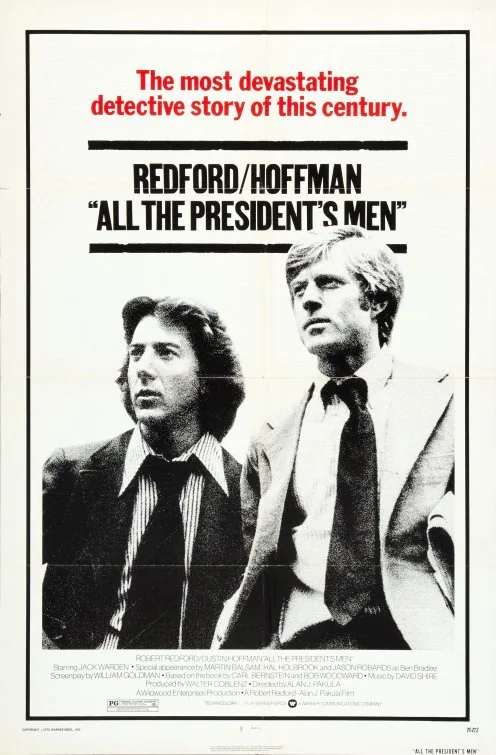
Two newspaper reporters investigate a burglary whose apparently minor details lead towards senior political figures. Interviews, records and reluctant sources gradually reveal a larger operation, but each claim requires corroboration before publication. Their progress depends less on a single revelation than on patient persistence inside a newsroom negotiating evidence, risk and the pressure exerted by powerful people.
Strassera and Moreno Ocampo must recruit a team and assemble testimony after the military courts decline to prosecute the junta.
Why this matches +
Selected for the central appeal: A pressured investigation reconstructs political violence that powerful institutions need to misrepresent.
Genres: Drama / History
Shared film traits
Based on recorded story, mood and style. Your preferences can change the order.
Political resistance
What changes Legal professionals gather dangerous testimony against entrenched state violence while intimidation tests the possibility of justice; a major post-dictatorship trial replaces a contemporary murder investigation.
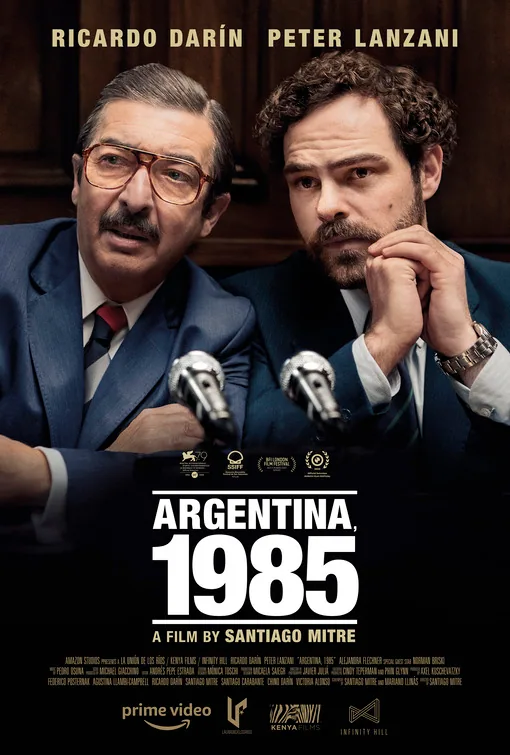
In newly restored democracy, prosecutor Julio César Strassera is assigned to build the civilian case against Argentina’s former military junta. With deputy prosecutor Luis Moreno Ocampo, he assembles a young legal team when established lawyers are reluctant to take part. The film follows their collection of testimony, the pressure surrounding the trial and the work of making individual accounts heard in a courtroom charged with national consequence.
A father searches for his missing son after a coup and uncovers evidence of political complicity.
Why this matches +
Selected for the central appeal: A pressured investigation reconstructs political violence that powerful institutions need to misrepresent.
Genres: Drama / History
Shared film traits
Based on recorded story, mood and style. Your preferences can change the order.
Investigation · Political resistance
What changes A search for a disappeared man exposes the gap between official reassurance and state complicity; a father’s personal inquiry during a coup replaces the public murder’s institutional investigation.
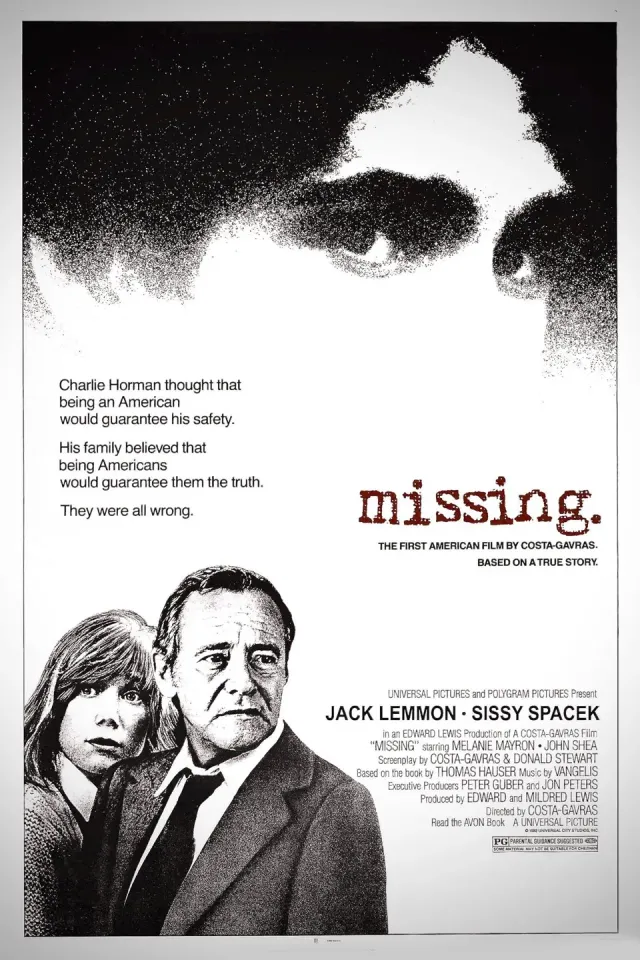
After his son Charles disappears during the 1973 military coup in Chile, American businessman Ed Horman travels to Santiago and joins his daughter-in-law Beth in searching for him. Ed initially trusts official assurances and his country's representatives, but documents and encounters with witnesses deepen the suspicion that the authorities know far more than they admit. As the search continues, a private family emergency becomes a confrontation with state power and political accountability.
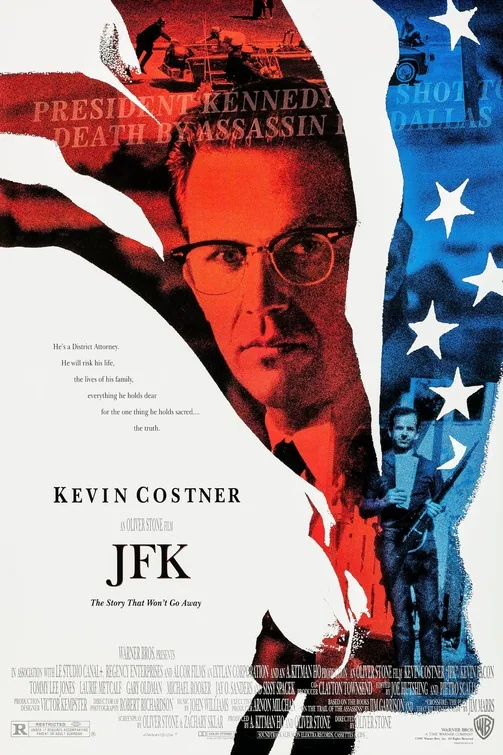
Garrison’s inquiry grows from doubts about a lone gunman into a sweeping institutional accusation. The trial organizes the case dramatically, but the film’s narrative is substantially broader than what a verdict or any single report could establish.
Why this matches +
Related viewing experiences with the specific differences recorded for each pair.
An adjacent discovery: a related idea with a different viewing experience.
Genres: Drama / Thriller
Shared film traits
Based on recorded story, mood and style. Your preferences can change the order.
Investigation
What changes A lawyer reconstructs an assassination through contested evidence and witnesses while questioning an official story; a sprawling, speculative American conspiracy argument replaces the source’s taut reportorial procedure.
New Orleans district attorney Jim Garrison reopens questions around President Kennedy’s assassination after rejecting the Warren Commission’s account. Interviews and reconstructions lead him toward a theory that stretches from Lee Harvey Oswald to a possible conspiracy involving intelligence agencies and political power. A courtroom presentation gives the inquiry a public climax, but the film’s rapid montage has already mixed recorded evidence, dramatized scenes and imagined connections into a single persuasive current. Its argument should be attributed to Oliver Stone’s political thriller rather than repeated as settled history. The House Select Committee on Assassinations later reached its own, qualified conclusion of probable conspiracy based in part on acoustic evidence; that finding does not validate every person, motive or causal link the film proposes.
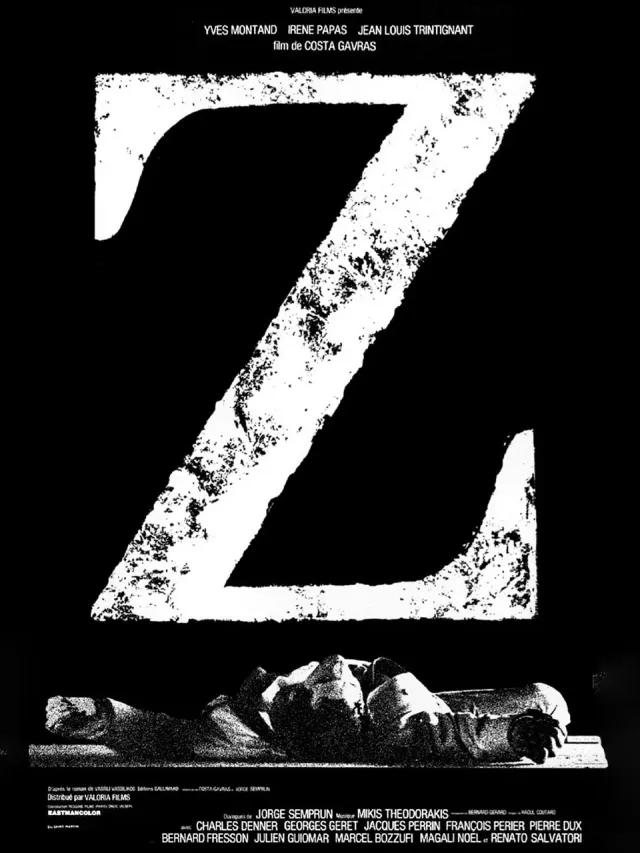
After a prominent Greek left-wing politician is attacked and dies following a public rally, a magistrate investigates the case despite pressure from officials who want it contained. Journalists and witnesses help expose the gap between the public account and the network of people who planned and concealed the violence. Costa-Gavras shapes the story as a political investigation, using an unnamed country and documentary-like urgency to connect individual testimony with institutional complicity. The title’s protest slogan becomes both a demand to remember the victim and a challenge to an attempted cover-up. Its reportorial momentum makes the investigation itself the chief source of suspense.
What drives the story
The murder investigation becomes a fight over whether evidence can survive the pressure of a state that wants the crime reduced to a private or accidental act.
The people at its centre
The magistrate’s insistence on procedure contrasts with the politicians’ efforts to control the narrative; the widow and witnesses keep the investigation connected to the human cost.
What it feels like
A brisk, tense political thriller that moves through testimony, press coverage and institutional obstruction. Its stylized use of an unnamed setting widens the political argument beyond one case.
Worth knowing
A fit for investigative political cinema about state violence and evidence. It is more procedural and openly political than a conventional assassination thriller.