A cab driver's obsessive theories lead an attorney into a real investigation and a struggle to keep him alive.
Why this matches +
Selected for the central appeal: Political investigation thrillers about disputed evidence, government power and possible conspiracies.
Genres: Action / Crime
Shared film traits
Based on recorded story, mood and style. Your preferences can change the order.
Investigation
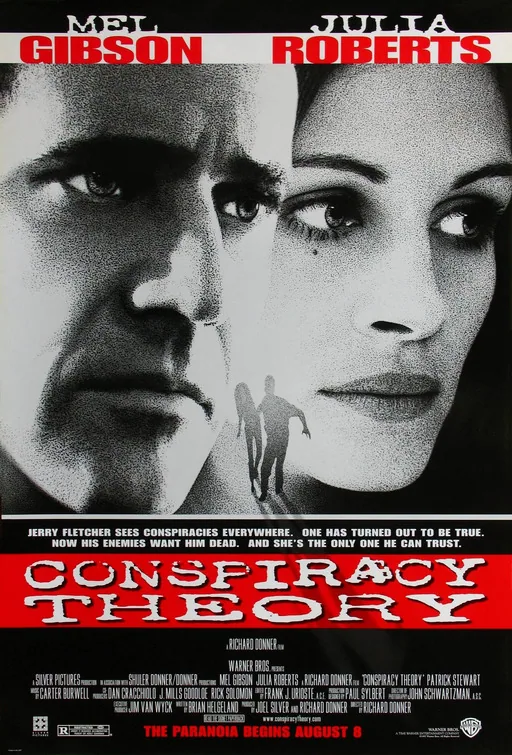
What changes Conspiracy Theory follows a protagonist whose suspicions draw him into a dangerous political plot.
Jerry Fletcher drives a cab and shares elaborate theories about hidden plots with anyone who will listen. One of those theories unsettles Justice Department attorney Alice Sutton, who is investigating a past political killing and begins to suspect Jerry knows more than he can explain. When powerful people try to silence him, the pair's search for answers becomes a dangerous test of which memories and institutions can be trusted.
Small inconsistencies accumulate into a publishable case through interviews, documents and repeated verification.
Why this matches +
Selected for the central appeal: Political investigation thrillers about disputed evidence, government power and possible conspiracies.
Genres: Drama / Thriller
Shared film traits
Based on recorded story, mood and style. Your preferences can change the order.
Investigation
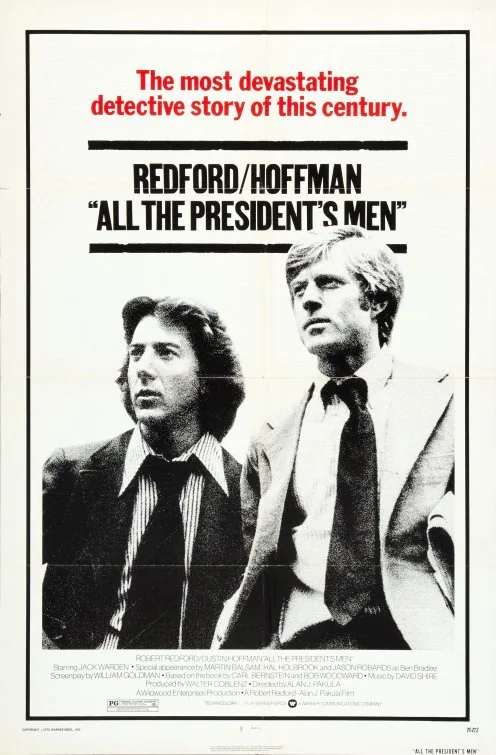
What changes All the President's Men follows investigators assembling evidence that points toward senior political power.
Two newspaper reporters investigate a burglary whose apparently minor details lead towards senior political figures. Interviews, records and reluctant sources gradually reveal a larger operation, but each claim requires corroboration before publication. Their progress depends less on a single revelation than on patient persistence inside a newsroom negotiating evidence, risk and the pressure exerted by powerful people.
A bookish intelligence analyst becomes a fugitive after discovering his colleagues killed, and must investigate his own institution to stay alive.
Why this matches +
Selected for the central appeal: Political investigation thrillers about disputed evidence, government power and possible conspiracies.
Genres: Crime / Drama
Shared film traits
Based on recorded story, mood and style. Your preferences can change the order.
Investigation
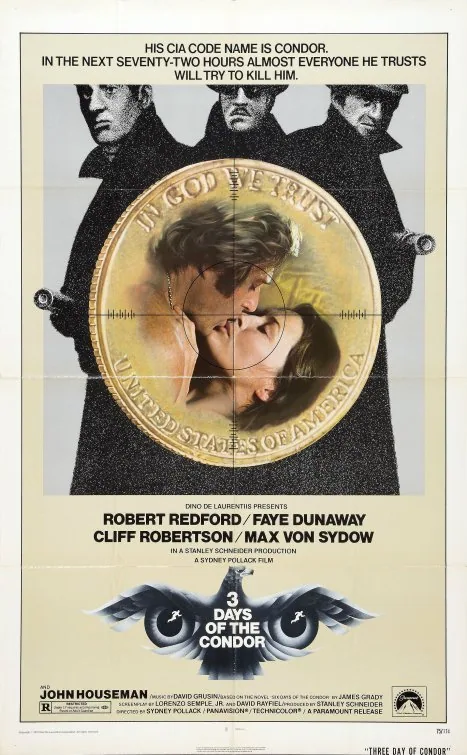
What changes Three Days of the Condor follows a man uncovering a concealed intelligence-agency conspiracy.
Joe Turner works as a reader for a small CIA research office in New York, where he studies books and newspapers for ideas that might matter to intelligence work. Returning from lunch, he finds the office staff murdered and realizes that his codename, Condor, has made him a target. With no reliable colleague to trust, he kidnaps Kathy Hale and seeks shelter while trying to learn who ordered the killings and why. His search reveals that the threat may come from within the agency, making the skills he uses to analyze information relevant to his own survival. Turner tries to contact a higher authority but discovers that the usual channel could expose him to the same killers.
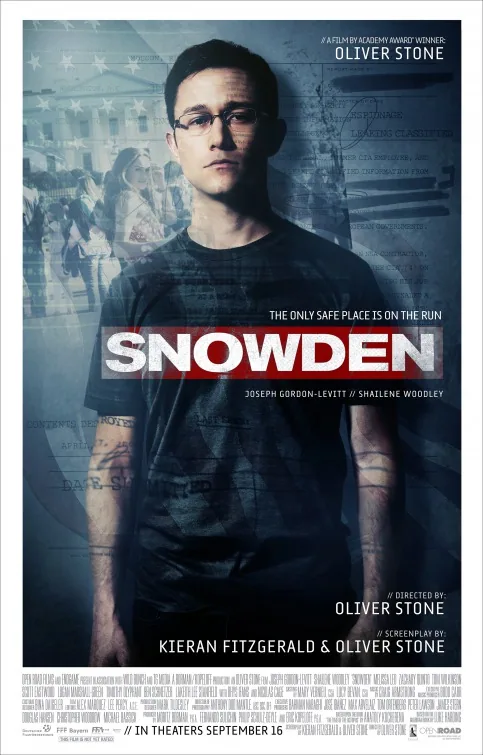
An intelligence contractor decides to disclose secret surveillance programs to journalists.
Why this matches +
These offer a related experience with a meaningful difference in story, tone, or presentation.
An adjacent discovery: a related idea with a different viewing experience.
Genres: Drama / Thriller
Shared film traits
Based on recorded story, mood and style. Your preferences can change the order.
What changes Snowden dramatizes a man's discovery of secret intelligence practices and the political consequences of disclosure.
Edward Snowden's work as a U.S. intelligence contractor exposes him to the scale of government surveillance and the secrecy surrounding it. He eventually shares classified materials with journalists, leaving his career and life in the United States behind as the disclosures become public. Oliver Stone's political thriller traces the personal and institutional pressures that lead to the leak, mixing biographical scenes with an argument about privacy, national security, and the public's right to know.
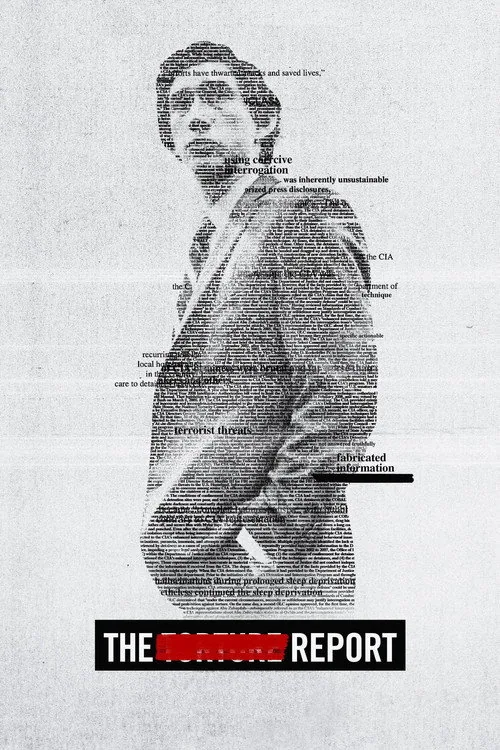
Jones and his small team examine a vast record and try to substantiate what the CIA did during interrogation.
Why this matches +
These offer a related experience with a meaningful difference in story, tone, or presentation.
An adjacent discovery: a related idea with a different viewing experience.
Genres: Drama / History
Shared film traits
Based on recorded story, mood and style. Your preferences can change the order.
Investigation
What changes The Report follows an official investigation into government conduct and the obstacles to public accountability.
In 2009, Senate staffer Daniel Jones is asked to review millions of pages of CIA records about the agency's post-9/11 interrogation program. Working with a small team, he documents how officials authorized and described the practices, while facing delays, political pressure, and resistance from the intelligence agency. Senator Dianne Feinstein backs the inquiry, but the report's publication becomes a struggle of its own. The political drama follows the patient work of assembling evidence and making an official record public.
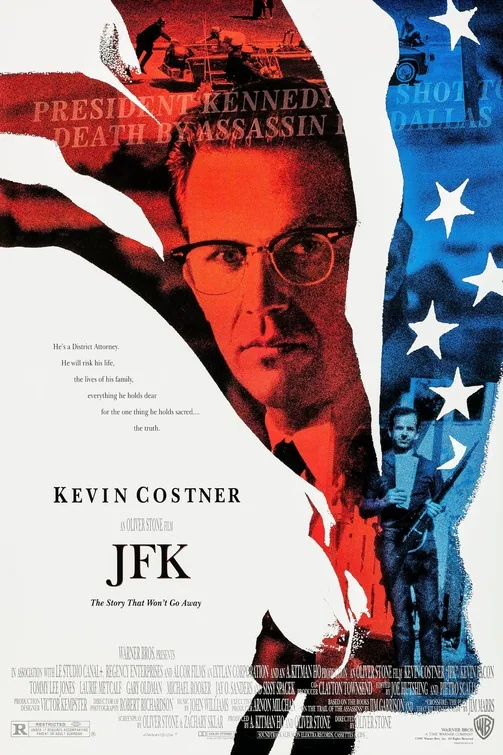
New Orleans district attorney Jim Garrison reopens questions around President Kennedy’s assassination after rejecting the Warren Commission’s account. Interviews and reconstructions lead him toward a theory that stretches from Lee Harvey Oswald to a possible conspiracy involving intelligence agencies and political power. A courtroom presentation gives the inquiry a public climax, but the film’s rapid montage has already mixed recorded evidence, dramatized scenes and imagined connections into a single persuasive current. Its argument should be attributed to Oliver Stone’s political thriller rather than repeated as settled history. The House Select Committee on Assassinations later reached its own, qualified conclusion of probable conspiracy based in part on acoustic evidence; that finding does not validate every person, motive or causal link the film proposes.
What drives the story
Garrison’s inquiry grows from doubts about a lone gunman into a sweeping institutional accusation. The trial organizes the case dramatically, but the film’s narrative is substantially broader than what a verdict or any single report could establish.
The people at its centre
Garrison’s commitment draws colleagues and witnesses into the investigation while straining his family life. Each account has a source and a context; testimony should not be treated as equally reliable merely because montage places it in the same sequence.
What it feels like
News footage, archival images, black-and-white reenactments and multiple film stocks collapse periods into an urgent visual argument. The technique makes inference feel immediate, which is precisely why viewers should separate visual plausibility from corroboration.
Worth knowing
The 1979 House committee report and later historical reassessments are essential comparison points, not simple confirmation or refutation of Stone’s full thesis. Keep the movie’s contested claims attributed and avoid treating its composite scenes as archival records.
TruthPowerHistorical interpretation
Mood
Urgent · Paranoid · Indignant
Pacing
Nonlinear · Accelerating
Visual style
Mixed image formats · Hypothetical reenactments
Storytelling
Assassination inquiry · Expanding conspiracy theory · Courtroom montage argument