Based on recorded story, mood and style. Your preferences can change the order.
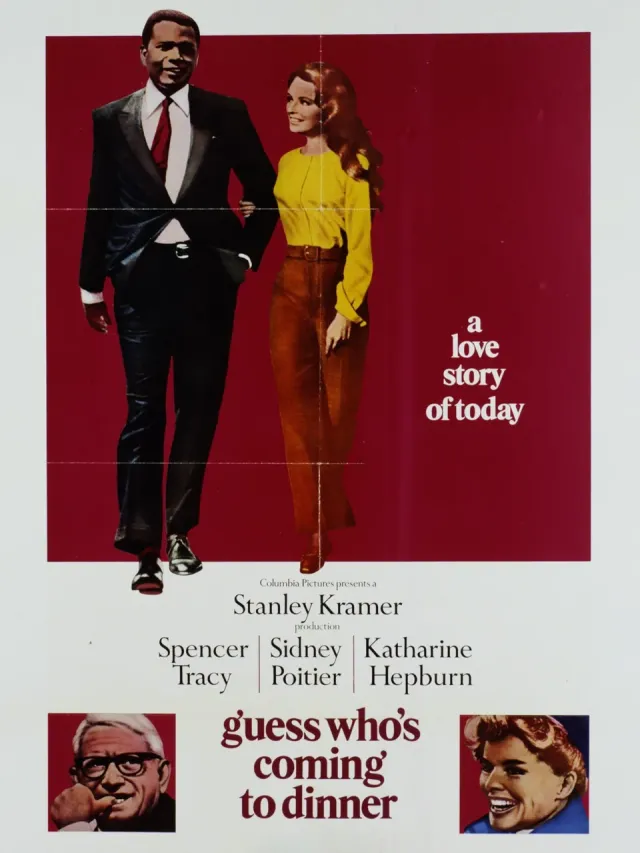
What changes Loving: patient, character-led and gradual legal escalation. Guess Who's Coming to Dinner: measured.
Jo brings her fiancé John Prentice home to meet her parents, whose liberal convictions are tested when they learn he is Black and the couple plans to marry. John’s exceptional professional stature and the parents’ demand to approve the match make acceptance depend on a narrow set of conditions. The two families negotiate the decision through a single day of conversation, and the final speech gives the older generation much of the authority to resolve it. The film made interracial marriage its explicit subject in 1967, but its credentialed fiancé and parent-centered framing cannot stand in for the broader experience of interracial couples.
Based on recorded story, mood and style. Your preferences can change the order.
Political resistance
What changes Loving: patient, character-led and gradual legal escalation. If Beale Street Could Talk: romance and housing search, legal struggle and reflective open ending.
In 1970s New York, childhood friends Tish Rivers and Fonny Hunt fall in love and try to build a life together despite housing discrimination. When Fonny is jailed for a crime he did not commit, Tish tells their story while pregnant and her family works to secure his release. The film moves across past and present, placing tenderness beside the legal and racial forces separating the couple. Barry Jenkins's adaptation centers Black family support, intimacy, and the emotional costs of a system built to deny justice.
Based on recorded story, mood and style. Your preferences can change the order.
What changes Loving: patient, character-led and gradual legal escalation. Mr. & Mrs. Smith: brisk and escalating.
John and Jane Smith attend marriage counseling while hiding that they are elite contract killers working for rival firms. A botched assignment reveals their secret, and both employers order one spouse to eliminate the other. The couple's first attempts turn their domestic resentment into a series of escalating attacks, until they recognize they cannot bring themselves to kill each other. The firms then join forces against them. John and Jane must combine the skills they had concealed from each other to survive a siege and decide whether honesty can rebuild a marriage that has been running on cover stories.
Based on recorded story, mood and style. Your preferences can change the order.
Family and care · Romance and intimacy
What changes Loving: patient, character-led and gradual legal escalation. The Story of Us: alternating memories and present-day encounters track the distance between shared love and entrenched habits.
After fifteen years of marriage, Ben and Katie Jordan find that their shared family life hides growing resentment and silence. Once their children leave for summer camp, the couple begins a trial separation and tries to remember why they fell in love. Flashbacks to their courtship and to years of arguments sit beside awkward phone calls, counseling and small attempts to reconnect. Time apart offers both spouses a chance to see the marriage from the other’s point of view, but affection alone does not erase their habits or the questions they must answer.
Based on recorded story, mood and style. Your preferences can change the order.
What changes Loving: patient, character-led and gradual legal escalation. House of Gucci: episodic and escalating.
A woman marries into a fashion dynasty and helps draw her initially reluctant husband into the struggle over its ownership. Family rivalries, legal maneuvering and competing visions of the brand turn intimacy into a route toward power. As the husband gains authority, the partnership that assisted his rise becomes increasingly unwanted. The biographical crime drama tracks an alliance collapsing into exclusion and revenge, with the family name functioning at once as commercial property, social identity and a claim people make on one another.
Both share themes of family, plus an earnest atmosphere.
Why this matches +
Genres: Comedy / Romance
Shared film traits
Based on recorded story, mood and style. Your preferences can change the order.
Family and care · Romance and intimacy
What changes Loving: patient, character-led and gradual legal escalation. The Bachelor: a parade of former girlfriends turns into a race against the deadline and a reconsideration of jimmie’s relationship with anne.
Jimmie Shannon runs the family’s pool-table business and has just fumbled a proposal to his longtime girlfriend Anne when his grandfather’s will imposes a new deadline: Jimmie must marry before his thirtieth birthday to inherit the company. If he fails, a competitor could buy the business and put its employees out of work. With only hours left, Jimmie revisits former girlfriends while Anne reconsiders their relationship. The scramble forces him to weigh a windfall against the person he actually wants beside him.
Based on recorded story, mood and style. Your preferences can change the order.
What changes Loving: patient, character-led and gradual legal escalation. Far from Heaven: deliberate and emotional escalation.
In 1950s Connecticut, a suburban wife discovers that her polished marriage conceals a truth her community is unwilling to accept, while she forms a connection that crosses the era’s racial boundaries. Her husband and their children also face the consequences of a rigid social order. The film uses period melodrama and carefully controlled style to examine desire, respectability and the limits imposed on private life.
Based on recorded story, mood and style. Your preferences can change the order.
Political resistance · Power and authority
What changes Loving: patient, character-led and gradual legal escalation. The Best of Enemies: meeting-centered debate, personal turning points and historical resolution.
In 1971 Durham, North Carolina, civil-rights organizer Ann Atwater campaigns for better conditions for Black residents while segregation shapes the schools and public life. After a school fire intensifies local conflict, organizer Bill Riddick asks Ann and Ku Klux Klan leader C. P. Ellis to co-chair a series of community meetings about desegregation. The dramatized account follows their antagonism, the deliberations, and the personal and political pressures surrounding the vote.
Based on recorded story, mood and style. Your preferences can change the order.
What changes Loving: patient, character-led and gradual legal escalation. The American President: dialogue-driven and relationship-led.
Widowed president Andrew Shepherd begins dating Sydney Ellen Wade, an environmental lobbyist whose public work makes the relationship politically visible. As the White House manages policy, an election and attacks from opponents, the couple must decide how private affection can coexist with public duty. The romantic comedy places a personal relationship inside presidential decision-making without treating political debate as mere background decoration.
Richard Loving, a white construction worker, and Mildred Jeter, a Black and Rappahannock woman, build a family in Virginia in the late 1950s. They marry in Washington, D.C., but their return home violates Virginia’s anti-miscegenation law. After arrest and exile, the couple challenges the restrictions that keep them from living together in their home state. Jeff Nichols centers the story on their private life and the legal campaign that becomes Loving v. Virginia.
What drives the story
The Lovings seek the right to live together in Virginia, turning a personal marriage into a challenge to state law.
The people at its centre
Richard and Mildred’s partnership is shown through everyday decisions and quiet support, while lawyers and relatives help carry their case into public view.
What it feels like
A landmark constitutional dispute is presented through a couple’s modest daily life and their wish to raise their children at home.
Worth knowing
Rather than treating the Supreme Court as the main spectacle, it stays close to Richard and Mildred’s relationship and domestic routines.