A long naval pursuit forces a captain to balance mission, ship and crew against the scientific detour promised to his closest friend.
Why this matches +
Selected for the central appeal: Historical seafaring adventures about leadership, discipline and survival on long voyages.
Genres: Adventure / Drama
Shared film traits
Based on recorded story, mood and style. Your preferences can change the order.
War and civilian life
What changes Master and Commander examines naval command, discipline and crew relationships aboard a historical sailing vessel.
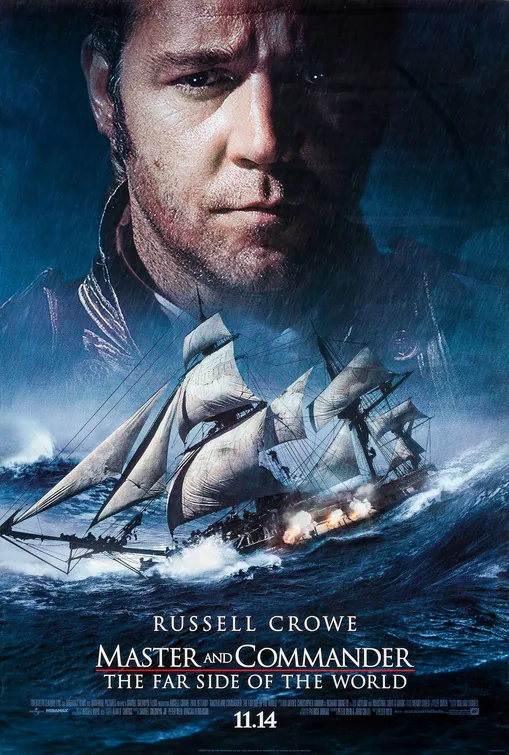
In 1805, French privateer Acheron ambushes the British frigate HMS Surprise, and Captain Jack Aubrey chooses to pursue it rather than return to port. The chase toward the Galápagos puts his duty to protect British whalers against his promise to let ship's surgeon Stephen Maturin study the islands. Aubrey's decisions affect a crew that depends on his command, while Maturin's scientific ambitions and friendship with the captain give the voyage another purpose. Repairs, discipline, illness and naval battles make the ship itself a close community under sustained danger.
A whaling voyage becomes a fight for survival after a crew encounters a powerful whale.
Why this matches +
Selected for the central appeal: Historical seafaring adventures about leadership, discipline and survival on long voyages.
Genres: Adventure / Drama
Shared film traits
Based on recorded story, mood and style. Your preferences can change the order.
What changes In the Heart of the Sea follows a nineteenth-century ship and crew facing an ordeal that tests leadership and survival.
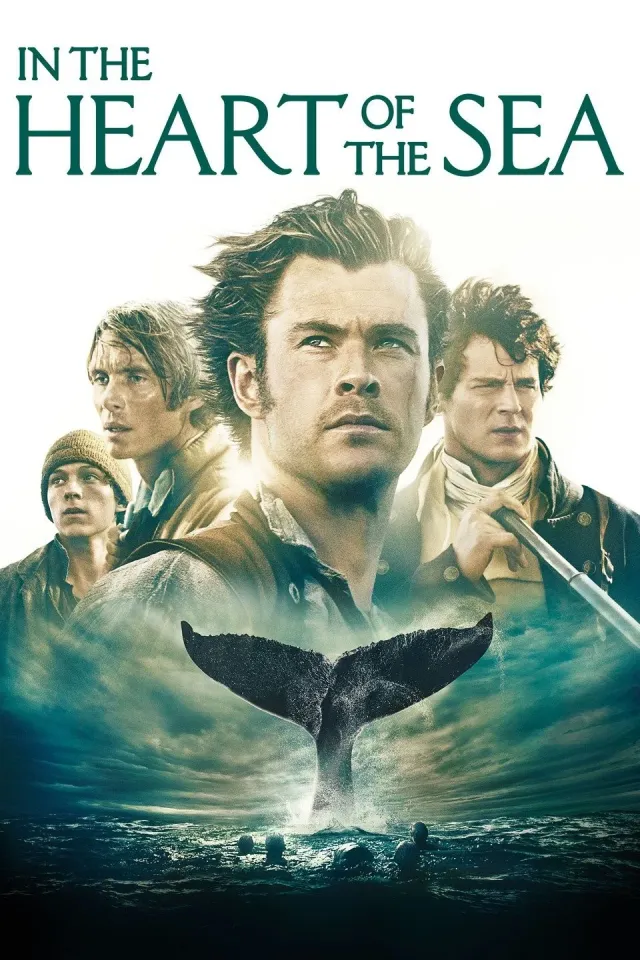
An older Thomas Nickerson recounts his time aboard the whaleship Essex, which was attacked by a sperm whale during an 1820 voyage. Captain George Pollard and first mate Owen Chase lead the stranded crew through hunger, exposure, and impossible decisions at sea. Ron Howard's survival drama uses Melville's later visit to frame the ordeal as both a harrowing maritime story and a reflection on the limits of human control.
A collision and severe weather force an unnamed sailor to solve one escalating survival problem after another.
Why this matches +
These offer a related experience with a meaningful difference in story, tone, or presentation.
An adjacent discovery: a related idea with a different viewing experience.
Genres: Adventure / Drama
Shared film traits
Based on recorded story, mood and style. Your preferences can change the order.
What changes All Is Lost centers on the physical demands of surviving at sea, with a much more solitary focus.
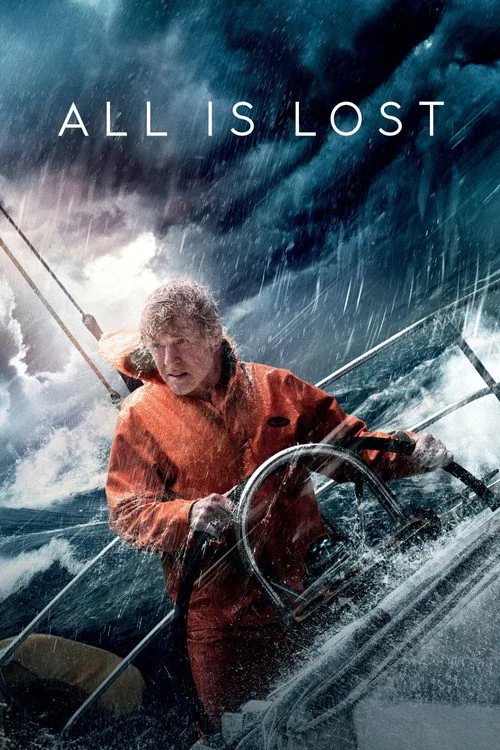
A lone sailor in the Indian Ocean discovers that his yacht has struck a shipping container and is taking on water. With communications damaged and a storm approaching, he repairs the hull, salvages supplies, and tries to navigate toward help. Each practical decision creates new problems as the vessel and the man’s strength decline. J. C. Chandor’s survival drama is nearly wordless, using Robert Redford’s performance and the precise stages of a maritime emergency to explore endurance and uncertainty.
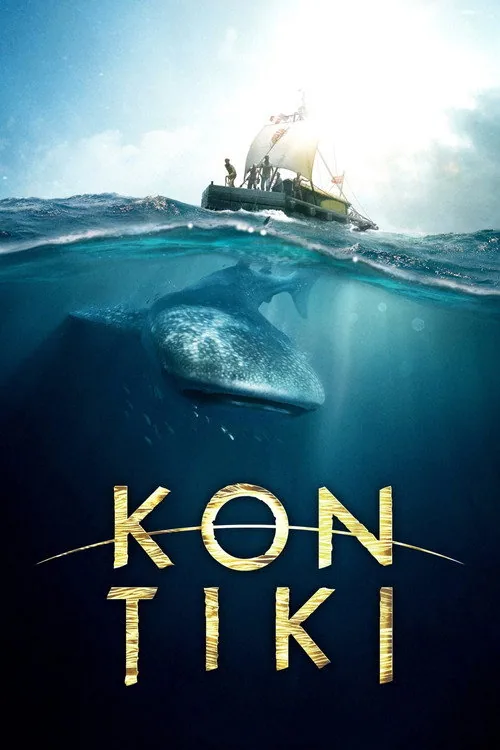
Heyerdahl's attempt to prove a theory requires a trans-Pacific crossing on a raft made from traditional materials.
Why this matches +
These offer a related experience with a meaningful difference in story, tone, or presentation.
An adjacent discovery: a related idea with a different viewing experience.
Genres: Adventure / Drama
Shared film traits
Based on recorded story, mood and style. Your preferences can change the order.
What changes Kon-Tiki follows a small crew confronting the dangers and tensions of a long ocean voyage.
Norwegian explorer Thor Heyerdahl believes that ancient South Americans could have settled Polynesia and sets out to test the theory by crossing the Pacific on a balsa-wood raft. With a small crew, he sails from Peru toward the islands in 1947, relying on simple materials and a route exposed to storms, currents, and sea life. Skeptics question his plan, while the voyage challenges the crew's confidence and the limits of their preparation. The adventure dramatizes a real expedition as a test of evidence, endurance, and conviction.
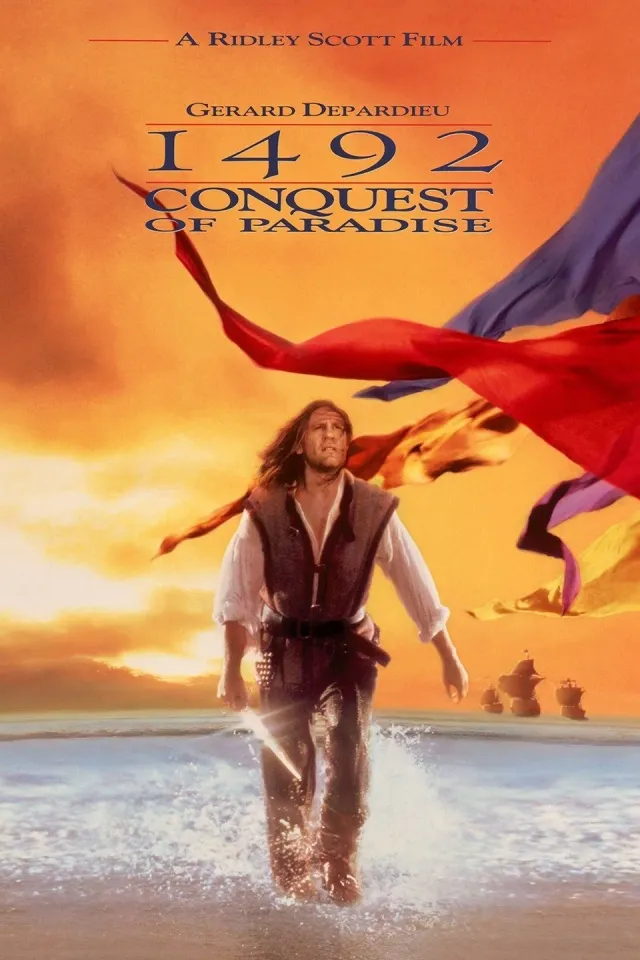
A difficult voyage becomes a colonial governance crisis when the dream of discovery meets exploitation and rebellion.
Why this matches +
These offer a related experience with a meaningful difference in story, tone, or presentation.
An adjacent discovery: a related idea with a different viewing experience.
Genres: Adventure / Drama
Shared film traits
Based on recorded story, mood and style. Your preferences can change the order.
What changes 1492 – Conquest of Paradise follows a historical sea expedition and the conflicting ambitions surrounding it.
Christopher Columbus seeks royal support for an Atlantic voyage and reaches islands whose inhabitants Europeans misunderstand through their own ambitions. Establishing a settlement brings exploitation, violence, and conflict among the newcomers. The promise of discovery gives way to the failures of colonial rule, as Columbus struggles to preserve authority within an enterprise increasingly defined by domination and competing interests.
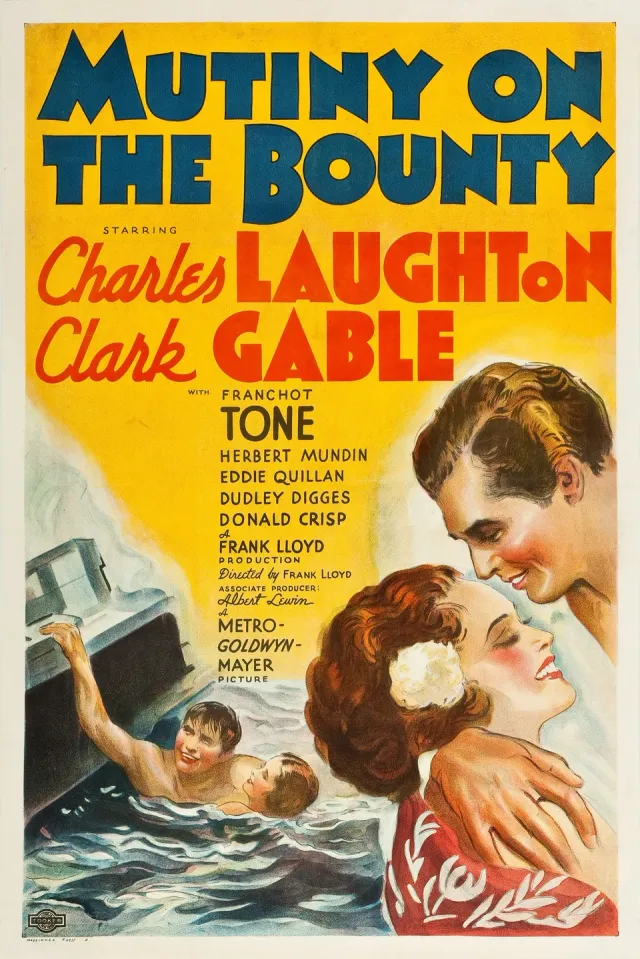
Captain William Bligh commands the Bounty on a voyage to transport breadfruit from Tahiti to Jamaica. His punitive rule strains executive officer Fletcher Christian and idealistic midshipman Roger Byam, whose loyalty is divided by friendship and family tradition. A stay in Tahiti gives the crew a glimpse of another life, but Bligh's renewed discipline and rationing after departure deepen resentment. Christian eventually leads a mutiny and casts Bligh and his supporters adrift in a boat. The revolt solves one immediate danger while leaving the mutineers to face responsibility, pursuit and the uncertain consequences of defying naval law.
What drives the story
Bligh's increasingly coercive command turns a difficult expedition into a contest over whether obedience can still claim moral authority.
The people at its centre
Christian is torn between humane protest and the danger of leadership; Byam's divided loyalty makes the trial's verdict a personal as well as institutional reckoning.
What it feels like
Seafaring adventure and studio-era spectacle lead into courtroom drama, framing authority through both physical hardship and retrospective testimony.
Worth knowing
It is the 1935 screen adaptation of the Bounty story, with its own historical simplifications; it is not interchangeable with later, differently interpreted versions.