Based on recorded story, mood and style. Your preferences can change the order.
What changes Oh, God!: conversational, gentle and episodic. OMG – Oh My God!: courtroom argument structure, comic confrontations and reflective resolution.
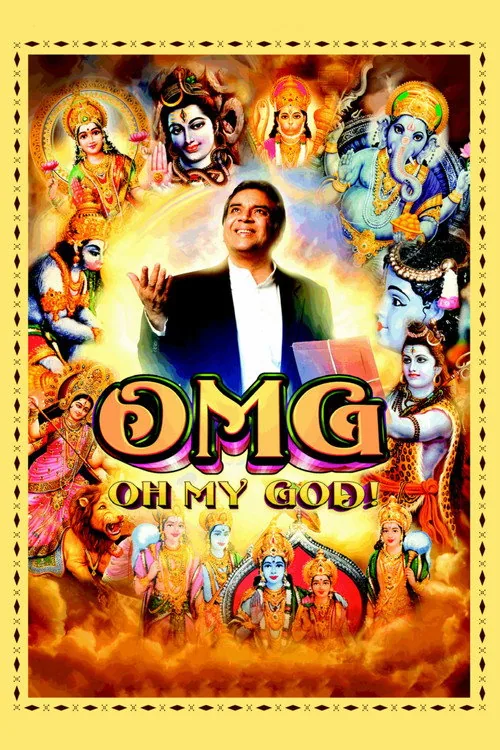
When an earthquake destroys his shop, skeptical antiques dealer Kanji Mehta learns that his insurance will not cover an act of God. He sues the insurers and the religious institutions he believes profit from faith, attracting public attention and a surprising ally who appears as Krishna. Umesh Shukla’s Hindi satirical comedy-drama turns a personal lawsuit into a debate about belief, exploitation, and religious authority, using humor and courtroom scenes to question the difference between spiritual practice and commercial manipulation.
Both share themes of responsibility and family, plus a whimsical and warm atmosphere.
Why this matches +
Genres: Comedy / Family
Shared film traits
Based on recorded story, mood and style. Your preferences can change the order.
Expect playful and whimsical, with episodic and escalating pacing.
A hotel handyman tells elaborate bedtime stories to his niece and nephew, only to discover that details from the stories begin appearing in his everyday life. As he experiments with the strange connection, his invented adventures collide with work, family bonds and a possible romance. The fantasy comedy treats storytelling as a shared activity whose consequences cannot be controlled, linking wish fulfillment to the responsibility of caring for children.
Based on recorded story, mood and style. Your preferences can change the order.
What changes Oh, God!: conversational, gentle and episodic. Mr. Destiny: a single imagined turning point opens a comic alternate-life test.
At a low point in his life, Larry Burrows wonders how his future would have changed if he had made a decisive play in a high-school baseball game. A mysterious bartender grants him a chance to live that alternative path, where greater wealth and status have come at the cost of his familiar relationships. Larry must decide which version of success matters to him.
Based on recorded story, mood and style. Your preferences can change the order.
What changes Oh, God!: conversational, gentle and episodic. Dogma: fast.
Two banished angels discover a church ceremony that appears to offer a route back to Heaven, but exploiting its promise would contradict the divine order on which existence depends. A woman struggling with her own faith is sent to prevent them, accompanied by unlikely helpers whose appearances challenge institutional expectations of holiness. Their journey makes doctrinal loopholes, personal resentment and the need for human connection parts of the same comic dispute over belief. Its premise makes religious loopholes literal, but the comedy retains emotional seriousness about belief and exclusion.
Based on recorded story, mood and style. Your preferences can change the order.
Expect macabre and whimsical, with episodic and stylized pacing.
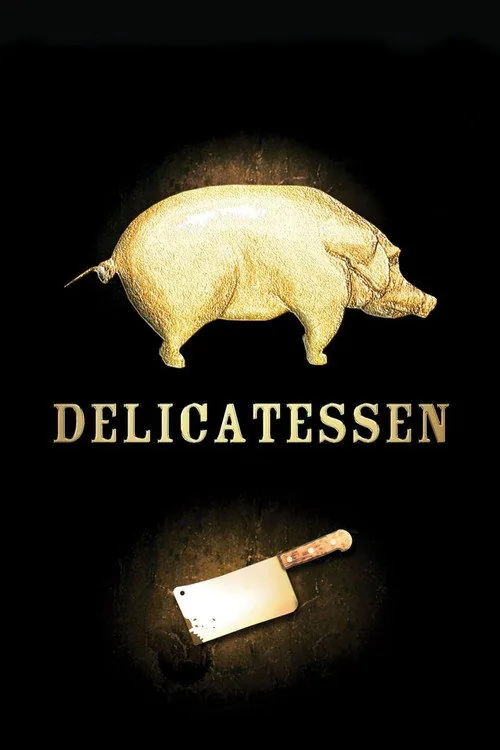
In a post-apocalyptic French apartment building where food is scarce, landlord and butcher Clapet lures workers there and kills them for meat. When former circus clown Louison takes the latest job, he wins over tenants and falls for Clapet’s daughter Julie. She knows her father’s secret and looks for allies among vegetarian rebels. Jean-Pierre Jeunet and Marc Caro’s black comedy turns hunger, romance, and household routines into a stylized fable about survival and collective resistance.
Based on recorded story, mood and style. Your preferences can change the order.
What changes Oh, God!: conversational, gentle and episodic. Mr. Magorium's Wonder Emporium: measured and wonder-building.
A shy manager has spent years helping run a magical toy store whose objects seem to respond to visitors’ emotions. When the elderly owner plans to leave, she must decide whether she can take responsibility and believe in the shop’s magic. This family fantasy treats imagination as a practice sustained by care, community and willingness to accept change.
Both share themes of responsibility, plus a warm atmosphere.
Why this matches +
Genres: Comedy / Fantasy
Shared film traits
Based on recorded story, mood and style. Your preferences can change the order.
What changes Oh, God!: conversational, gentle and episodic. Bruce Almighty: fast.
A frustrated television reporter blames God when professional disappointment disrupts the life he believes he deserves. Temporarily granted divine powers, he first uses them to repair status and romantic frustrations, then discovers that satisfying immediate wishes does not amount to caring for other people's lives. The experiment makes responsibility less compatible with effortless control, especially when the person he loves retains a freedom that power cannot legitimately remove.
Based on recorded story, mood and style. Your preferences can change the order.
What changes Oh, God!: conversational, gentle and episodic. The Incredible Shrinking Woman: escalating and comic set pieces.
Pat Kramer begins shrinking after exposure to a mysterious mixture of household chemicals, turning ordinary domestic routines into increasingly risky obstacles. A corporation sees her condition as a publicity opportunity, while Pat's family tries to protect her as her world grows physically larger around her. The comedy uses an absurd science-fiction premise to question consumer products and the expectation that women quietly manage every household burden.
Based on recorded story, mood and style. Your preferences can change the order.
What changes Oh, God!: conversational, gentle and episodic. Harvey: measured.
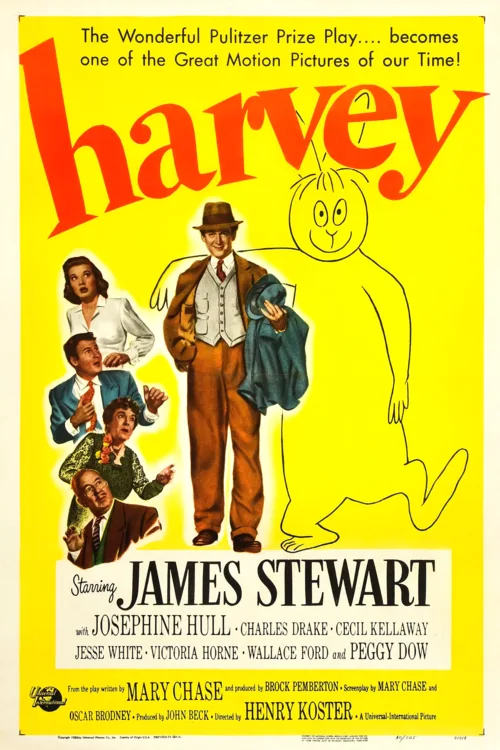
An unfailingly courteous man introduces everyone to an enormous invisible rabbit, creating social embarrassment for relatives who share his house. Their attempt to place him in a sanatorium produces a chain of mistaken commitments and encounters that unsettle the staff's own certainty. As a proposed treatment promises ordinary conformity, people must decide what kind of change they actually want. The comedy makes eccentric sociability a test of institutions and family ambition without requiring every viewer to settle the rabbit's existence in the same way.
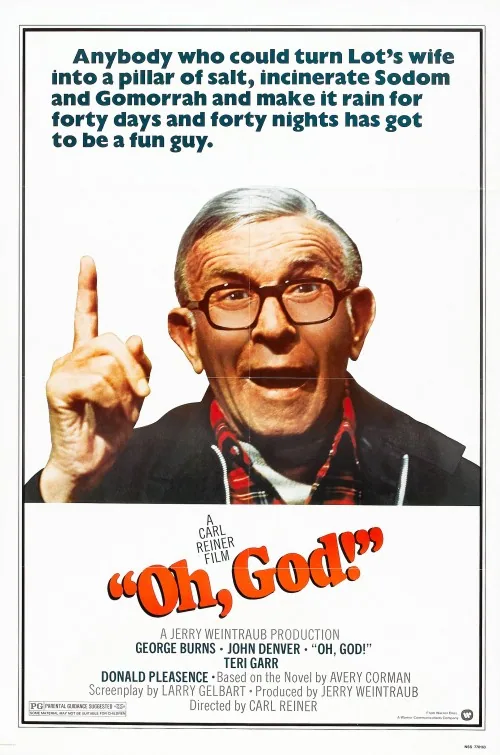
Jerry Landers, an ordinary assistant supermarket manager, is chosen by God to carry a simple message to the modern world. Jerry's attempts to tell his wife, family and a newspaper editor about the encounters turn him into a public curiosity and a target of religious skeptics. As theologians challenge him to prove the experience, Jerry must decide how to express the message without turning it into a spectacle. The film balances domestic comedy with a gentle debate about faith and responsibility.
What drives the story
Jerry's private encounters with God become public when he attempts to share a message and faces growing skepticism.
The people at its centre
Jerry's relationship with his wife and children changes under public attention, while George Burns's God remains calm and unshowy.
What it feels like
The film uses a kindly comic tone to make questions of belief, evidence and personal responsibility accessible.
Worth knowing
It is not a solemn miracle drama; its central contrast is between an ordinary life and a gently satirical public debate.