A collective codebreaking problem becomes a conflict between secrecy, strategic responsibility and an institution's treatment of the individual it has used.
Why this matches +
These films share central story, tone or viewing experiences with this selection.
Genres: Drama / Biography
Shared film traits
Based on recorded story, mood and style. Your preferences can change the order.
War and civilian life
What changes A more conventional biographical thriller about codebreaking and persecution.
During the Second World War, mathematician Alan Turing joins a secret British effort to decipher German communications and pursues a machine-based approach that initially alienates colleagues. Collaboration gradually becomes essential to making the device useful, while success introduces questions about how decoded information can be used without revealing its source. A later investigation of his private life places this hidden contribution beside the state's persecution of his sexuality.
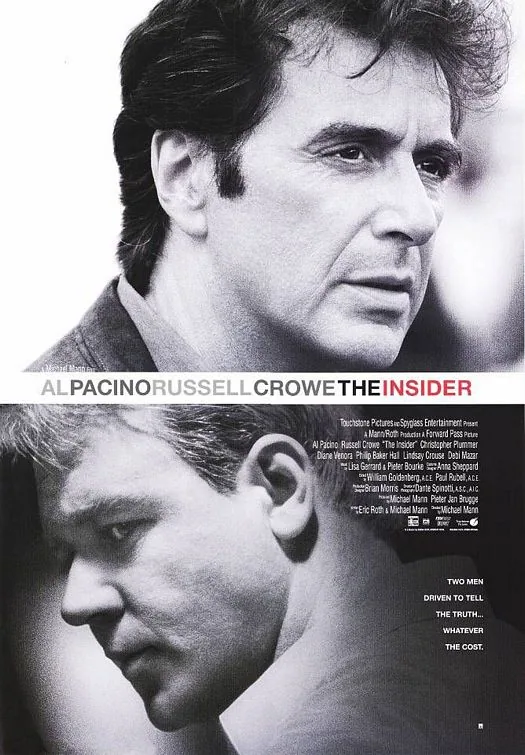
The threat of publication links two risks: Wigand may lose his safety and livelihood, while CBS may suppress the interview to protect itself.
Why this matches +
These films share central story, tone or viewing experiences with this selection.
Genres: Drama / Thriller
Shared film traits
Based on recorded story, mood and style. Your preferences can change the order.
What changes A corporate whistleblower faces institutional pressure in a quieter modern drama.
CBS producer Lowell Bergman persuades former tobacco executive Jeffrey Wigand to explain what he knows about Brown & Williamson’s practices for a 60 Minutes investigation. Wigand’s confidentiality agreement, threats and family pressures make cooperation dangerous, while CBS executives worry about legal and financial exposure. As the broadcast is delayed and edited, Bergman must decide whether protecting the story means confronting the network that employs him. The film turns investigative reporting into a battle over sources, corporate pressure and newsroom independence, dramatizing real events without serving as a transcript of every participant’s perspective.
incomplete intelligence and a deadline narrowing political choices. This pressure determines what the protagonist must do next and which risks become unavoidable.
Why this matches +
These films share central story, tone or viewing experiences with this selection.
Genres: Drama / History
Shared film traits
Based on recorded story, mood and style. Your preferences can change the order.
What changes A political crisis drama centers leaders confronting nuclear war rather than the bomb’s creation.
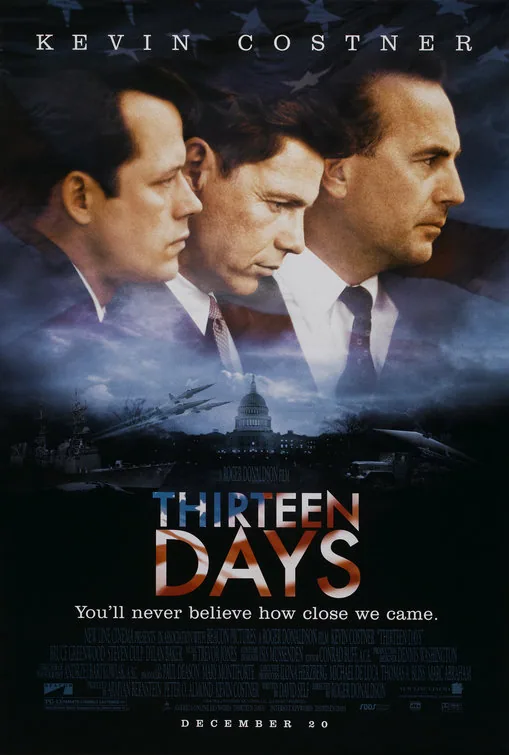
During the Cuban Missile Crisis, President Kennedy and his advisers confront evidence that Soviet missiles are being installed in Cuba. Meetings, intelligence reports and military recommendations make the danger immediate as the White House weighs a response that could trigger wider war. This historical drama concentrates on deliberation and communication, showing how uncertainty shapes decisions under an unforgiving deadline.
A platform's rapid expansion transforms collaboration and campus status competition into disputes over ownership, contribution and exclusion.
Why this matches +
These films explore a related idea in a different style, setting or audience.
An adjacent discovery: a related idea with a different viewing experience.
Genres: Drama / Biography
Shared film traits
Based on recorded story, mood and style. Your preferences can change the order.
What changes A contemporary business drama replaces wartime science with ambition and legal disputes.
A Harvard student's response to rejection and social competition leads him from an intrusive campus website to a rapidly expanding social platform. Growth brings investment, influence and disputes over who supplied the original idea and who deserves control. Intercut legal testimony revisits apparently decisive choices from incompatible positions, making the achievement of public connection coexist with broken friendships and a persistent private desire for recognition.
An intellectual ambition is complicated by unreliable perception, making practical adaptation as important as proving exceptional ability.
Why this matches +
These films explore a related idea in a different style, setting or audience.
An adjacent discovery: a related idea with a different viewing experience.
Genres: Drama / Biography
Shared film traits
Based on recorded story, mood and style. Your preferences can change the order.
What changes An intimate biography emphasizes mental illness and personal relationships over nuclear politics.
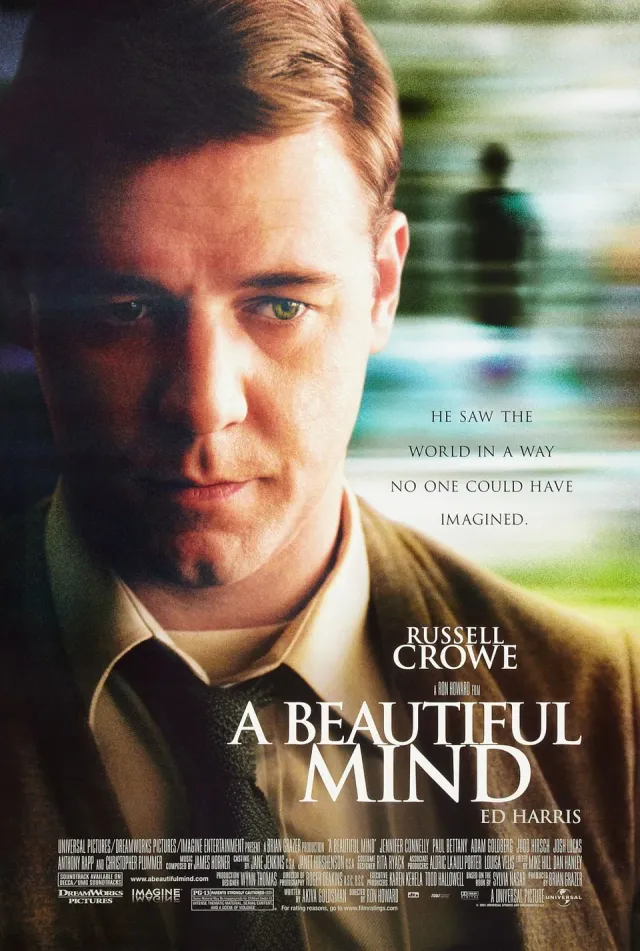
A gifted mathematician pursues an original contribution while struggling to find ordinary social ease among colleagues and a developing relationship. Work he believes carries national significance becomes entangled with perceptions that others cannot confirm. Learning to live with a condition that disrupts certainty requires sustained care and difficult adjustments, while recognition of his intellectual contribution offers no automatic solution to the vulnerabilities shaping his daily life.
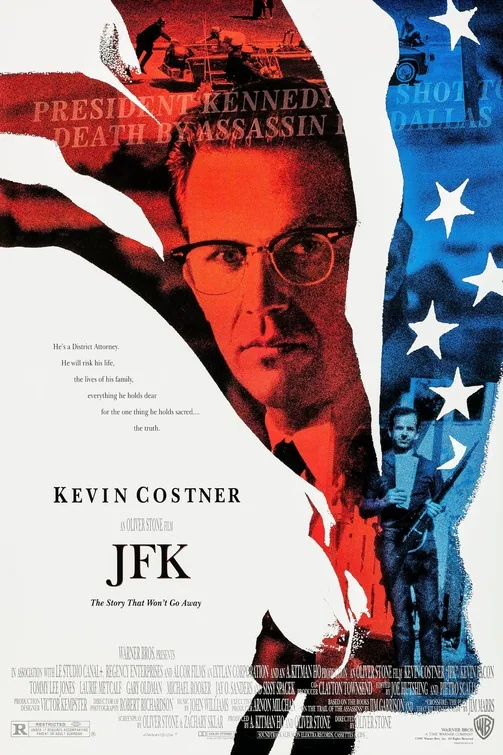
Garrison’s inquiry grows from doubts about a lone gunman into a sweeping institutional accusation. The trial organizes the case dramatically, but the film’s narrative is substantially broader than what a verdict or any single report could establish.
Why this matches +
These films explore a related idea in a different style, setting or audience.
An adjacent discovery: a related idea with a different viewing experience.
Genres: Drama / Thriller
Shared film traits
Based on recorded story, mood and style. Your preferences can change the order.
What changes An investigative conspiracy drama rather than a scientist’s biography.
New Orleans district attorney Jim Garrison reopens questions around President Kennedy’s assassination after rejecting the Warren Commission’s account. Interviews and reconstructions lead him toward a theory that stretches from Lee Harvey Oswald to a possible conspiracy involving intelligence agencies and political power. A courtroom presentation gives the inquiry a public climax, but the film’s rapid montage has already mixed recorded evidence, dramatized scenes and imagined connections into a single persuasive current. Its argument should be attributed to Oliver Stone’s political thriller rather than repeated as settled history. The House Select Committee on Assassinations later reached its own, qualified conclusion of probable conspiracy based in part on acoustic evidence; that finding does not validate every person, motive or causal link the film proposes.
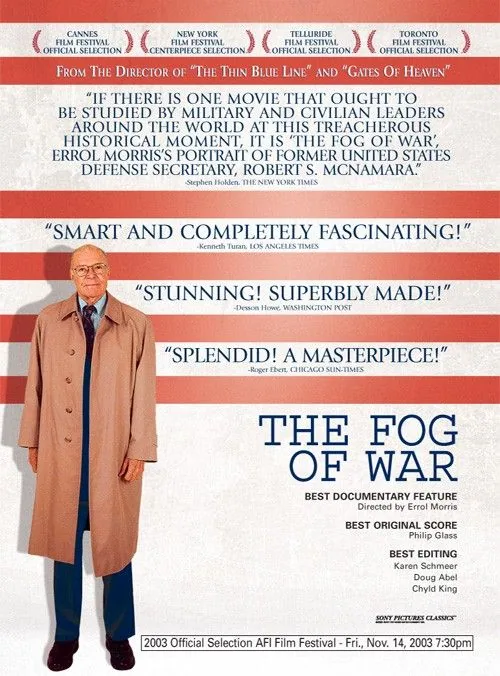
McNamara’s explanations reveal both his willingness to criticize past decisions and his limits in accounting for them.
Why this matches +
These films explore a related idea in a different style, setting or audience.
An adjacent discovery: a related idea with a different viewing experience.
Genres: Documentary / History
The approach A documentary treatment rather than a dramatic feature.
Shared film traits
Based on recorded story, mood and style. Your preferences can change the order.
War and civilian life
What changes A documentary interview explores wartime responsibility rather than dramatizing a single physicist.
Director Errol Morris interviews former U.S. Secretary of Defense Robert McNamara, pairing his recollections with archival footage and recordings from government discussions. Structured around eleven lessons, the documentary follows McNamara’s life and examines his role in the bombing campaigns of World War II, the Cuban Missile Crisis and the escalation of the Vietnam War. He reflects on how leaders make decisions with incomplete information and sometimes speaks critically about his own actions. The film leaves viewers weighing the distance between strategic reasoning and human consequences.
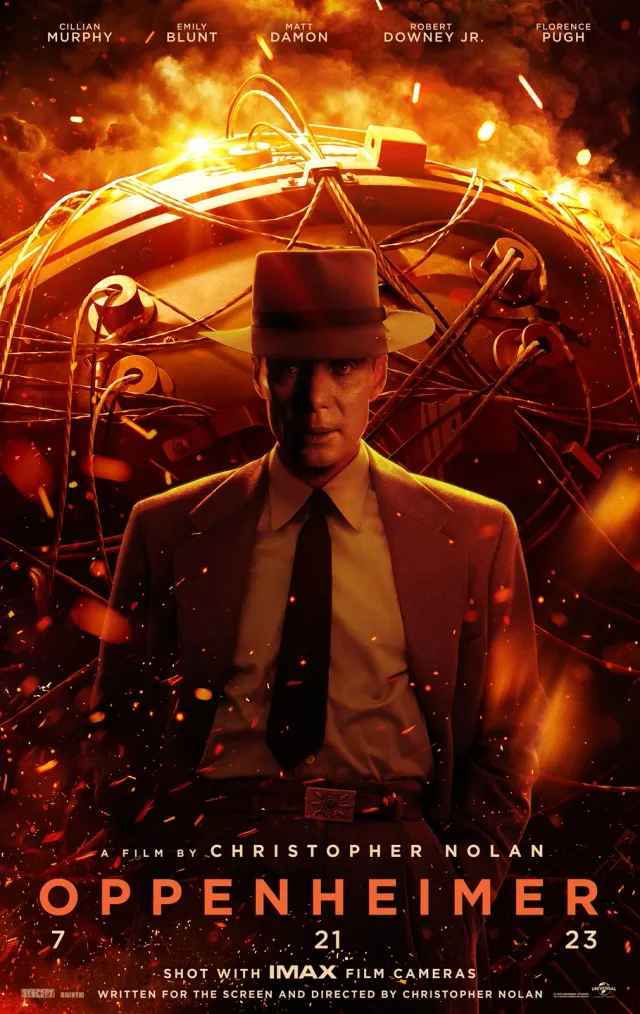
A theoretical physicist is asked to organise a secret wartime programme whose success could transform both military power and the future of civilisation. The collective urgency of building the weapon sits beside later hearings that reconstruct his associations and challenge his place in the state he served. Moving between scientific ambition, political rivalry and personal compromise, the film asks what responsibility remains after technical achievement passes into other people's control.
What drives the story
A scientific mobilisation and a later security inquiry unfold in interlocking timelines, making the consequences of a successful project part of the story of its creation.
The people at its centre
The scientist's need for influence and recognition entangles colleagues, intimate partners, military leadership and political opponents whose loyalties change with institutional priorities.
What it feels like
Propulsive sound, compressed debate and shifts in temporal perspective create sustained pressure, with moments of spectacle carrying dread rather than uncomplicated triumph.
Worth knowing
The scientific setting concerns wartime administration and moral responsibility, not speculative technology adventure; the hearings also make institutional reputation as important as laboratory discovery.