A changing social order exposes a protagonist's capacity for survival while intensifying her habit of treating intimacy and security as resources to be secured.
Why this matches +
These offer a related experience with a meaningful difference in story, tone, or presentation.
An adjacent discovery: a related idea with a different viewing experience.
Genres: Drama / Romance
Shared film traits
Based on recorded story, mood and style. Your preferences can change the order.
What changes A woman's romantic ambitions and attachment to land unfold against war, social upheaval and the loss of a privileged way of life.
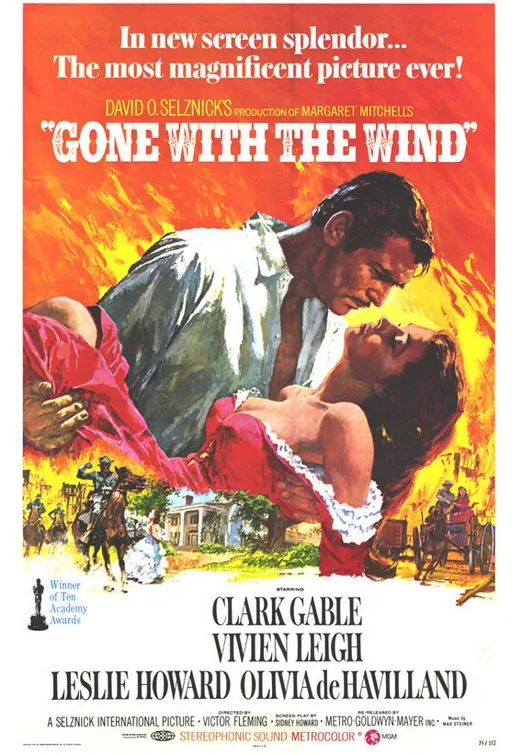
A privileged young woman on a Georgia plantation pursues an attachment to a man whose commitments lie elsewhere as the American Civil War destroys the material security of her household. Surviving loss makes property and economic control increasingly urgent, while a second man's attraction offers possibilities she struggles to value beyond immediate need. Her effort to recover a familiar world is presented through a romanticised white Southern viewpoint that leaves the people sustaining that world without equal narrative authority.
Oil wealth reshapes a ranch family’s power over generations, exposing tensions between inherited status, new money and the discrimination sustaining the regional order. Jett’s wealth changes the family hierarchy but does not by itself undo racial exclusion.
Why this matches +
These offer a related experience with a meaningful difference in story, tone, or presentation.
An adjacent discovery: a related idea with a different viewing experience.
Genres: Drama / Romance
Shared film traits
Based on recorded story, mood and style. Your preferences can change the order.
What changes A sweeping drama follows marriage, family and attachment to land across decades of social and economic change.
A marriage between Texas rancher Bick Benedict and Maryland socialite Leslie connects family life to a ranch economy built on land, oil and racial hierarchy. Jett Rink’s discovery of oil changes the balance of wealth and authority, while later generations confront discrimination against Mexican Americans that the older ranch culture normalizes. The narrative’s long span gives social change a personal scale, but its central white family still controls much of the film’s viewpoint. The famous diner confrontation complicates Bick’s inheritance of power without making one late gesture resolve the structures the story has spent decades establishing.
Bell’s departure from elite English society initiates a life organized around movement and encounter.
Why this matches +
These offer a related experience with a meaningful difference in story, tone, or presentation.
An adjacent discovery: a related idea with a different viewing experience.
Genres: Drama / History
Shared film traits
Based on recorded story, mood and style. Your preferences can change the order.
What changes A European woman travels in the Middle East, building a life through exploration, romantic attachment and political change.
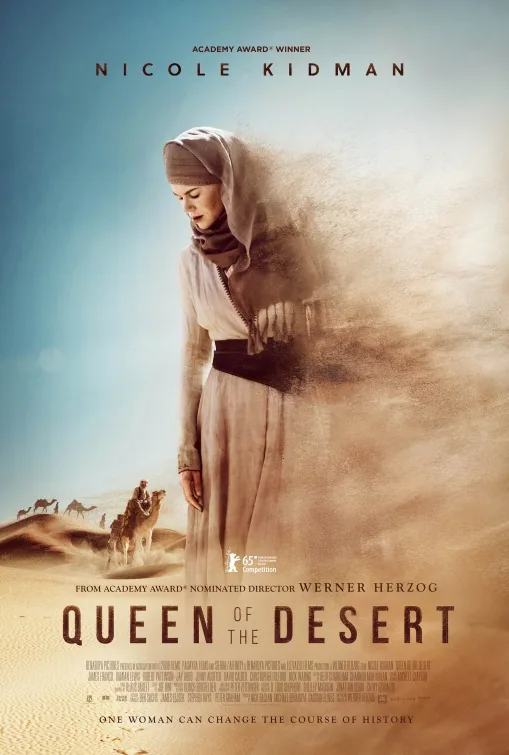
Gertrude Bell leaves the confines of turn-of-the-century England for travel in Tehran and across the Arab world, where she becomes an explorer, writer and political figure. Her relationships and encounters with regional leaders unfold against the changing reach of British power. Werner Herzog approaches the biography as a romanticized epic of a woman drawn to travel and diplomacy, with desert landscapes and personal ambition sharing the frame.
Anna's teaching assignment becomes a negotiation over custom and authority, while political threats keep private understanding subordinate to the court's survival. The plot gives no neutral observer outside Anna's perspective.
Why this matches +
These offer a related experience with a meaningful difference in story, tone, or presentation.
An adjacent discovery: a related idea with a different viewing experience.
Genres: Drama / Romance
Shared film traits
Based on recorded story, mood and style. Your preferences can change the order.
What changes A European woman builds a life in an unfamiliar country, navigating cultural difference and an emotionally complicated relationship.
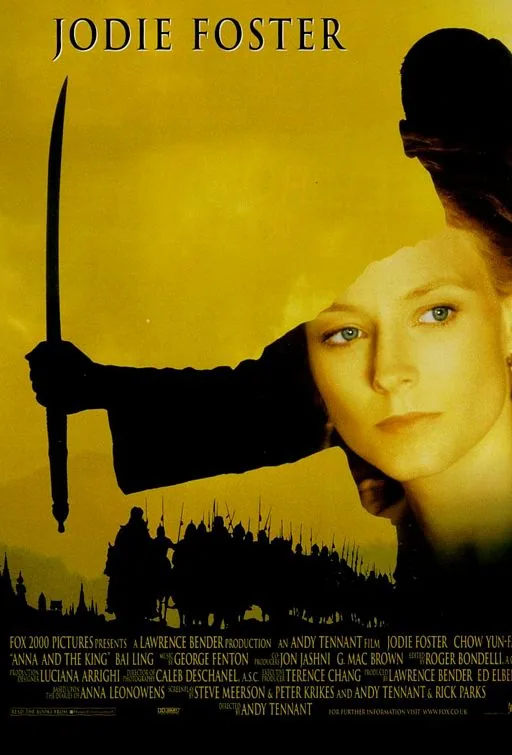
Anna Leonowens, a British widow, travels to Siam to teach the king's children and enters a court where education, diplomacy and royal authority are closely connected. Her disagreements with King Mongkut develop into mutual respect, but they take place within a political hierarchy she can neither fully understand nor escape. The film frames the encounter through Anna's outsider perspective and a romanticized historical melodrama. Because its source tradition is contested and its depiction of Siamese history has been criticized, the story should be treated as a dramatic construction rather than a reliable portrait of the court.
A Victorian romance between Charles and Sarah is echoed by the contemporary actors who portray them.
Why this matches +
These offer a related experience with a meaningful difference in story, tone, or presentation.
An adjacent discovery: a related idea with a different viewing experience.
Genres: Drama / Romance
Shared film traits
Based on recorded story, mood and style. Your preferences can change the order.
What changes A romance is shaped by historical conventions and unequal expectations, with a woman's choices constrained by the world around her.
In Victorian England, paleontologist Charles Smithson becomes fascinated by Sarah Woodruff, a socially disgraced woman known locally as the French lieutenant's former lover. Their growing attachment challenges Charles's engagement and the period's rules about class, reputation, and female independence. The film also follows contemporary actors Anna and Mike, who play the Victorian characters and develop a relationship of their own, allowing fiction and private life to reflect and complicate one another.
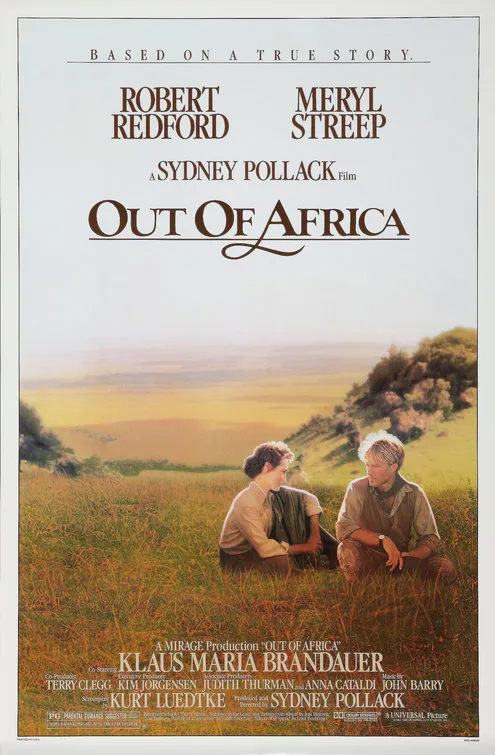
Danish writer Karen Blixen moves to colonial Kenya and marries Baron Bror Blixen, expecting a shared coffee farm that he does not manage as promised. She builds a life around the farm, its workers and her friendship with hunter Denys Finch Hatton, whose independence resists the future she imagines for them. War, illness, fire and financial failure gradually make the land less sustainable, while Denys’s death and the farm’s loss end Karen’s life there. The film frames romance and landscape through the memory of a woman looking back on a life that did not become the home she planned.
What drives the story
The farm anchors Karen’s hope for a durable life, but financial and colonial realities outlast both marriage and romance.
The people at its centre
Karen’s ambition and Denys’s refusal of possession create attraction and conflict; Kenyan characters, including Farah and the farm workers, are largely filtered through her colonial perspective and receive less narrative interiority than the European settlers.
What it feels like
Expansive East African landscapes and a reflective voice-over turn memory into the film’s organizing form, sometimes idealizing the world it depicts.
Worth knowing
It is a romantic biographical drama based loosely on Blixen’s writing, not an exhaustive or neutral account of colonial Kenya; African characters’ limited point of view is part of its framing.