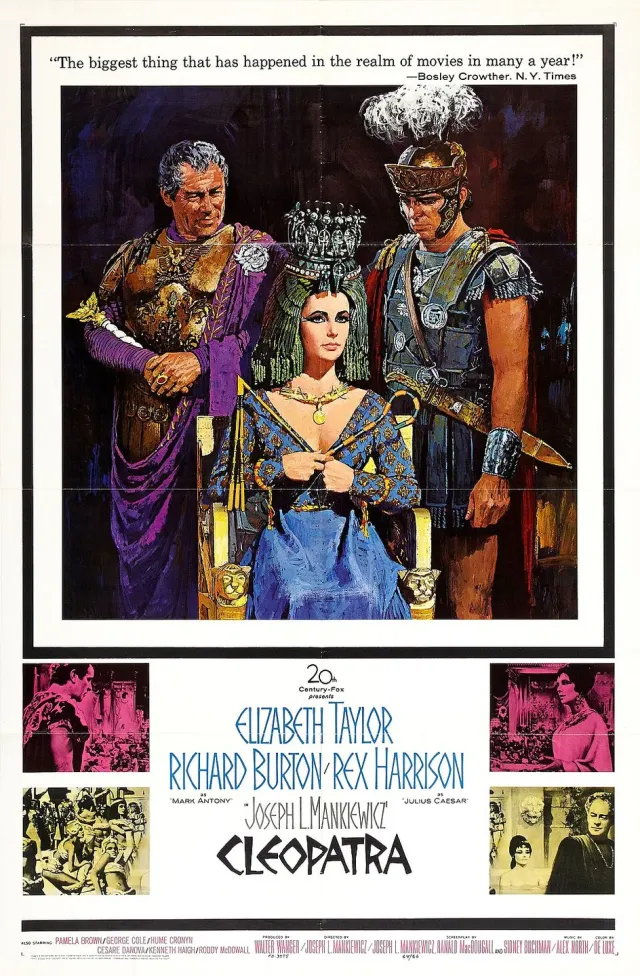
Cleopatra's changing alliances with Roman leaders test how much political independence Egypt can retain as succession and imperial power tighten around her.
Why this matches +
These offer a related experience with a meaningful difference in story, tone, or presentation.
An adjacent discovery: a related idea with a different viewing experience.
Genres: Historical / Drama
Shared film traits
Based on recorded story, mood and style. Your preferences can change the order.
What changes Cleopatra entwines a ruler's personal alliances with diplomacy and contested political authority.
Egypt's ruler Cleopatra negotiates Roman power through shifting alliances with Julius Caesar and Mark Antony, balancing personal attachment with dynastic survival and the sovereignty of her kingdom. The story's scale moves from Egyptian court to Roman politics and military conflict, making her romantic relationships part of a larger struggle over legitimacy rather than its only subject. The film's elaborate spectacle comes through a mid-century Hollywood interpretation, not a transparent reconstruction of ancient history; its characterization and political simplifications need to be kept distinct from historical evidence. Her alliances shift from Caesar's Roman campaign to Antony's contest with Octavian.
Training, rivalry and patronage organize Sayuri’s ascent, while war disrupts the social world on which her status depends. The romance with the Chairman shapes her goal but does not explain geisha life as a whole.
Why this matches +
These offer a related experience with a meaningful difference in story, tone, or presentation.
An adjacent discovery: a related idea with a different viewing experience.
Genres: Drama / Romance
Shared film traits
Based on recorded story, mood and style. Your preferences can change the order.
What changes Memoirs of a Geisha follows an outsider navigating an unfamiliar social hierarchy in a romanticized period setting.
Sold away from her fishing family as a child, Chiyo enters a Kyoto okiya and eventually becomes Sayuri, a celebrated geisha trained in dance, music and conversation. Mameha mentors her, Hatsumomo competes for status, and Sayuri’s attraction to the Chairman gives her ambition a personal focus. War displaces the women and interrupts the world of the house before Sayuri returns to Kyoto. Rob Marshall’s lush adaptation of Arthur Golden’s novel turns training, patronage and romance into a Cinderella-like story, but it is not a memoir or ethnographic account of geisha practice. The source novel drew criticism from a retired geisha who had advised Golden, and the film’s casting and visual choices prompted further debate. Its central perspective is cinematic fiction shaped by outsiders’ storytelling decisions.
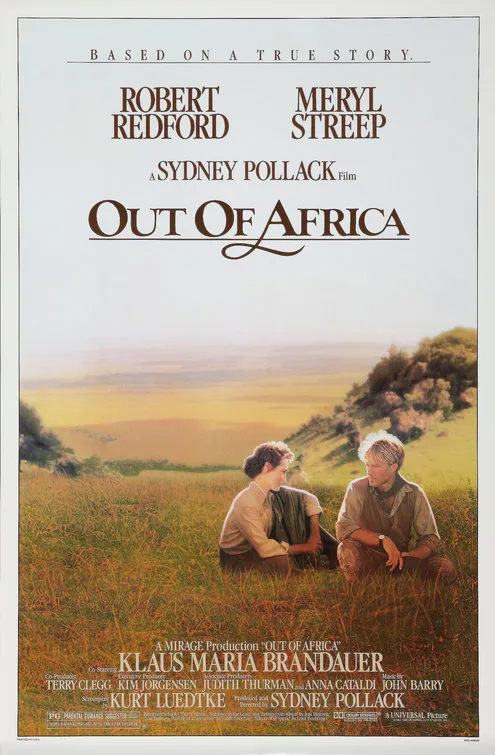
The farm anchors Karen’s hope for a durable life, but financial and colonial realities outlast both marriage and romance.
Why this matches +
These offer a related experience with a meaningful difference in story, tone, or presentation.
An adjacent discovery: a related idea with a different viewing experience.
Genres: Romance / Drama
Shared film traits
Based on recorded story, mood and style. Your preferences can change the order.
What changes Out of Africa follows a European outsider whose relationships develop amid colonial power and an unfamiliar society.
Danish writer Karen Blixen moves to colonial Kenya and marries Baron Bror Blixen, expecting a shared coffee farm that he does not manage as promised. She builds a life around the farm, its workers and her friendship with hunter Denys Finch Hatton, whose independence resists the future she imagines for them. War, illness, fire and financial failure gradually make the land less sustainable, while Denys’s death and the farm’s loss end Karen’s life there. The film frames romance and landscape through the memory of a woman looking back on a life that did not become the home she planned.
A military and succession crisis intersects with a romantic triangle, exposing the tension between a monarch's claim to personal feeling and the authority she exercises over others' lives. The Armada threat and court conspiracies run alongside Raleigh’s attraction to Elizabeth and his bond with Bess.
Why this matches +
These offer a related experience with a meaningful difference in story, tone, or presentation.
An adjacent discovery: a related idea with a different viewing experience.
Genres: Historical / Drama
Shared film traits
Based on recorded story, mood and style. Your preferences can change the order.
What changes Elizabeth: The Golden Age portrays a ruler balancing political authority with relationships others seek to influence.
An established queen faces foreign invasion and domestic plots while remaining under pressure to secure a succession through marriage. Attraction to a celebrated explorer offers an imagined freedom that his relationship with her attendant makes painful and politically unequal. Public defiance and private jealousy develop beside an intelligence struggle, turning the defense of sovereign independence into a spectacle whose confidence cannot remove the costs borne by people close to the throne. The sequel uses national defense as spectacle while connecting sovereign self-command to a painful romantic triangle.
Griet’s work in Vermeer’s home brings her visual intelligence into the painting process while patronage and household power place limits on what she can choose. Griet’s visual insight matters inside a household where her labor and status remain subordinate.
Why this matches +
These offer a related experience with a meaningful difference in story, tone, or presentation.
An adjacent discovery: a related idea with a different viewing experience.
Genres: Drama / Romance
Shared film traits
Based on recorded story, mood and style. Your preferences can change the order.
What changes Girl with a Pearl Earring follows a young outsider negotiating intimacy and unequal power within a privileged household.
A young domestic servant named Griet enters the household of Johannes Vermeer and becomes involved in the making of a portrait that draws her into the painter’s private workspace. Her eye for color and composition gives her a form of expertise, but it does not erase the class, gender and patronage structures governing her position. The film’s careful light and framing make looking itself feel intimate, while the portrait’s historical mystery invites viewers to fill gaps the evidence cannot answer. Based on Tracy Chevalier’s novel, it imagines a sitter and relationship; it should not be mistaken for documented biography of Vermeer or the unknown model.
Anna Leonowens, a British widow, travels to Siam to teach the king's children and enters a court where education, diplomacy and royal authority are closely connected. Her disagreements with King Mongkut develop into mutual respect, but they take place within a political hierarchy she can neither fully understand nor escape. The film frames the encounter through Anna's outsider perspective and a romanticized historical melodrama. Because its source tradition is contested and its depiction of Siamese history has been criticized, the story should be treated as a dramatic construction rather than a reliable portrait of the court.
What drives the story
Anna's teaching assignment becomes a negotiation over custom and authority, while political threats keep private understanding subordinate to the court's survival. The plot gives no neutral observer outside Anna's perspective.
The people at its centre
Anna and Mongkut respect one another through disagreement, but they do not meet as equals: he is sovereign, and she is a paid outsider with access to his household. The children and attendants experience consequences beyond their conversation.
What it feels like
Lavish sets and measured romantic tension turn court encounters into a large-scale historical spectacle. The film's polish can obscure how heavily the account is filtered through the western teacher's viewpoint.
Worth knowing
Compare cross-cultural court dramas about intimacy and unequal authority, not as dependable historical biography. The Anna Leonowens tradition and this film's romantic framing require independent scrutiny of Siamese history.
AuthorityClassCultural difference
Mood
Romantic · Solemn · Emotional
Pacing
Measured · Epic
Visual style
Lavish · Period detail
Storytelling
Court relationship · Teaching · Political vulnerability